
Mexico All-Inclusive Resorts Guide: Inclusions, Destinations, and Practical Tips

Mexico is the world's foremost destination for all-inclusive resort vacations, combining beachfront accommodations, unlimited dining, beverages, and daily activities under a single prepaid rate. From the tranquil Caribbean shores of Quintana Roo to the Pacific coastlines of Baja California Sur and Jalisco, all-inclusive properties cater to diverse travel styles, from multi-generational family getaways to adults-only wellness retreats. This comprehensive guide outlines typical resort inclusions, common exclusions, top regional destinations, industry economic realities, and practical advice for getting the most value from your stay.
In this article
- What Does an All-Inclusive Vacation in Mexico Include?
- Common Exclusions and Additional Costs
- From Cancún's Master Plan to Modern Luxury
- Top All-Inclusive Resort Regions in Mexico
- Economic Scale and Hospitality Statistics
- Choosing the Right Resort Category
- Practical Travel and Booking Advice
- Sustainability and Community Responsibility
- Frequently Asked Questions
What Does an All-Inclusive Vacation in Mexico Include?
At its core, an all-inclusive resort package in Mexico bundles your room, meals, drinks, and on-property entertainment into one upfront price. This model eliminates daily budgeting decisions, allowing guests to relax without calculating costs after every meal or beverage.
Standard inclusions across most Mexican resort properties typically comprise:
- Accommodations: Nightly lodging in your selected room category, complete with daily housekeeping and in-room amenities.
- Dining: Unlimited meals across buffet venues, snack bars, pool grills, and à la carte specialty restaurants (such as Mexican, Italian, Asian fusion, or French cuisine).
- Beverages: Unlimited non-alcoholic drinks, domestic beers, house wines, and standard spirits. Many mid-range and luxury properties also feature swim-up pool bars and cocktail lounges.
- Daily Activities: Non-motorized water sports (such as sea kayaking, stand-up paddleboarding, and snorkeling gear), fitness centers, pool games, yoga sessions, and beach volleyball.
- Evening Entertainment: Nightly live shows, musical performances, themed cultural nights, and access to on-site night clubs or lounges.
- Supervised Kids and Teens Clubs: Many family resorts offer structured daytime programs, craft workshops, and game rooms managed by trained resort staff.
Common Exclusions and Additional Costs
While the name suggests a completely cashless experience, travelers should be aware of standard exclusions that routinely appear on a final resort bill:
- Premium Liquors and Wine Lists: High-end scotch, vintage champagnes, and reserve wine cellars usually incur an à la carte surcharge.
- Spa and Wellness Treatments: Massages, hydrotherapy circuits, facial treatments, and salon services almost always require separate payment.
- Motorized Watersports and Excursions: Jet skis, scuba diving expeditions, deep-sea fishing charters, and off-property tours to archaeological sites or cenotes carry separate fees.
- Environmental Sanitation Taxes: Municipalities like Solidaridad (Playa del Carmen) and Benito Juárez (Cancún) levy a nominal environmental sanitation tax (derecho de saneamiento ambiental) per room per night, collected directly at check-in.
- Gratuities: While basic tips are technically included in room rates, tipping cash directly to bartenders, servers, and housekeeping staff is customary practice for attentive service.
- Cabana Rentals and Romantic Beach Dinners: Private poolside bali beds and private sunset dinners set up on the beach generally incur premium rental fees.
From Cancún's Master Plan to Modern Luxury
Mexico's supremacy in the all-inclusive sector is rooted in forward-thinking infrastructure planning. In the late 1960s, Mexico's central bank and the federal tourism agency FONATUR (Fondo Nacional de Fomento al Turismo) selected an uninhabited barrier island in Quintana Roo to construct Cancún as a master-planned tourism hub. The government built an international airport, paved highways, established potable water treatment facilities, and laid out the Cancún Hotel Zone specifically designed to host large-scale, self-contained beachfront resorts.
In its early decades, the all-inclusive concept primarily catered to value-conscious European and North American charter tourists seeking predictable vacation costs. Over the past two decades, however, Mexican operators and global hospitality brands elevated the model through 'premiumization.' Today, Mexico hosts some of the world's most sophisticated all-inclusive properties, showcasing Michelin-caliber dining programs, curated mezcal and wine tastings, world-class architecture, and high-end wellness spas, permanently dispelling the stereotype of mass-market buffets.
Top All-Inclusive Resort Regions in Mexico
Mexico's primary resort corridors offer vastly different geographical settings, ocean conditions, and cultural atmospheres:
- The Mexican Caribbean (Cancún and the Riviera Maya)
- Quintana Roo remains the undisputed capital of all-inclusive vacations in the Americas. Cancún's vibrant Hotel Zone features turquoise Caribbean waters, wide white-sand beaches, and high-energy nightlife. Further south, the Riviera Maya—stretching through Puerto Morelos, Playa del Carmen, Akumal, and Tulum—offers sprawling jungle-framed eco-resorts built around natural cenotes, mangrove reserves, and offshore barrier reefs. The calm, warm waters make this region ideal for swimming, snorkeling, and family beach activities.
- Baja California Sur (Los Cabos)
- Located at the southern tip of the Baja Peninsula where the Sea of Cortez meets the Pacific Ocean, Los Cabos encompasses the lively marina town of Cabo San Lucas and the historic, arts-focused San José del Cabo, connected by the 20-mile Tourist Corridor. Los Cabos is renowned for dramatic desert-and-ocean landscapes, championship golf courses, and ultra-luxury hospitality. Due to powerful Pacific swells and undertows, many beaches are unswimmable, so resorts compensate with magnificent multi-tiered infinity pool complexes, world-class gastronomy, and private beach clubs.
- The Central Pacific (Puerto Vallarta and Riviera Nayarit)
- Surrounded by the Sierra Madre mountains and Banderas Bay, Puerto Vallarta blends historic cobblestone streets and traditional Mexican architecture with established beachfront resorts. To the north in Nayarit, areas such as Nuevo Nayarit and Punta de Mita feature newer luxury developments, calm bay waters, and championship golf courses. This region offers warm waters, legendary Pacific sunsets, and easy access to authentic coastal Mexican culture.
- Mazatlán and the Northern Pacific
- Mazatlán combines a historic 19th-century colonial center with an extensive oceanfront malecón and a bustling resort strip. It offers a traditional Mexican seaside atmosphere with genuine culinary roots, renowned seafood, and attractive pricing compared to larger international hubs.
Economic Scale and Hospitality Statistics
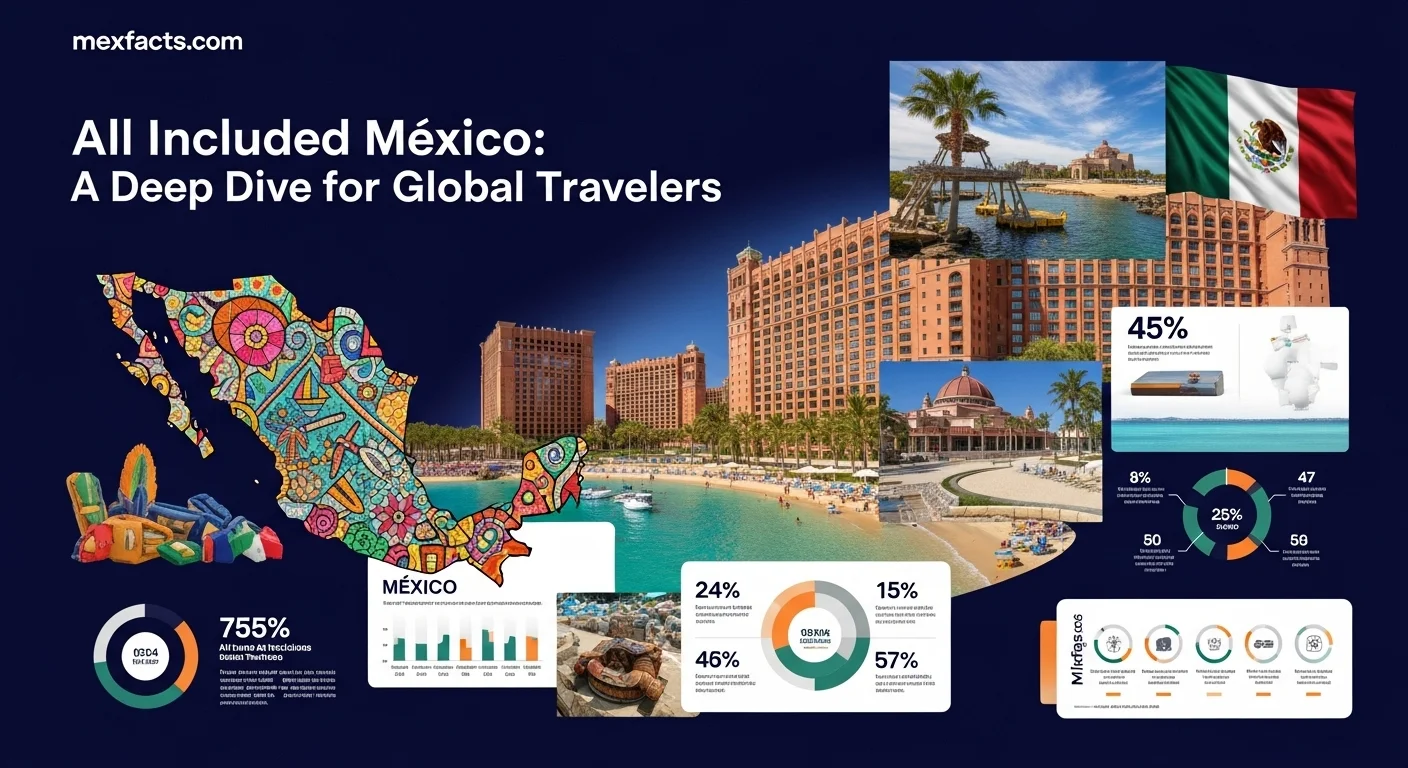
Tourism represents a cornerstone of the Mexican economy. According to data from Mexico's Secretariat of Tourism (SECTUR) and the National Institute of Statistics and Geography (INEGI), the tourism sector contributes roughly 8.5% to 8.7% of Mexico's national Gross Domestic Product (GDP) and supports over four million direct and indirect jobs nationwide.
The all-inclusive segment is a primary economic engine within this ecosystem, driving foreign currency earnings and sustaining hotel occupancy rates that regularly exceed 75% to 85% in peak corridors like the Riviera Maya, Cancún, and Los Cabos. International visitors from the United States and Canada comprise the vast majority of air arrivals to these resort corridors. The concentrated financial model allows resort operators to maintain large full-time culinary, groundskeeping, and entertainment staffs while generating substantial procurement demand for domestic agricultural producers, regional beverage distributors, and Mexican artisans.
Choosing the Right Resort Category
Selecting the right property requires aligning the resort's operational style with your travel party's preferences:
- Family-Oriented Mega-Resorts: Tailored for children and parents, these properties feature sprawling water parks, lazy rivers, multi-bedroom family suites, supervised kids' clubs, and diverse buffet selections that cater to picky eaters.
- Adults-Only Sanctuaries: Restricted to guests aged 18 and older, these resorts focus on relaxation, romance, and upscale dining. They offer quieter pool environments, swim-up suites, premium nightlife, and comprehensive spa facilities without family distractions.
- Ultra-Luxury and Boutique Properties: Emphasizing privacy, low room density, and personalized service, luxury all-inclusive resorts feature private plunge pools, 24-hour dedicated butler service, à la carte dining without reservations, and top-shelf wine and spirit collections.
- Eco-Centric and Wellness Retreats: Located in bio-diverse settings along the Riviera Maya and Pacific coast, these resorts integrate holistic wellness programs, oceanfront yoga pavilions, temazcal sweat lodge ceremonies, and organic farm-to-table cuisine.
Practical Travel and Booking Advice
Maximizing value and avoiding common pitfalls at Mexican all-inclusive resorts comes down to smart planning and clear expectations:
- Timing Your Visit: High season runs from December through April, featuring dry weather and calm seas, accompanied by peak room rates. The shoulder seasons (May and November) provide excellent weather alongside reduced rates and lower crowds. Late summer and early autumn (August through October) offer significant discounts, though travelers should monitor regional tropical weather patterns and purchase comprehensive travel insurance.
- Bundling Flights vs. Direct Booking: Vacation packages bundling round-trip airfare, airport transfers, and resort lodging often provide notable cost savings. However, always verify baggage allowance policies and ensure ground transportation is operated by authorized, pre-arranged transfer companies rather than airport timeshare touts.
- Navigating On-Site Upselling: Upon arrival, resort concierges may invite guests to a welcome breakfast or VIP facility presentation. These are frequently sales presentations for vacation clubs or timeshares. While attendance is optional, declining politely ensures your vacation time remains uninterrupted.
- Tipping Etiquette: Although service charges are included in your package, carrying small denominations of Mexican pesos (e.g., 20 to 100 pesos) or US dollars ($1 to $5) for bartenders, waitstaff, bellhops, and housekeeping is standard practice. Cash tipping directly rewards individual hospitality workers and guarantees attentive service.
Sustainability and Community Responsibility
As tourism continues to expand, sustainable resort management and community engagement have become critical priorities across Mexico's coastal corridors:
Leading resort operators actively pursue environmental certifications (such as EarthCheck, Green Globe, and Rainforest Alliance), investing in on-site reverse-osmosis desalination, solar water heating, and advanced wastewater treatment to protect sensitive marine habitats. On the Caribbean coast, resorts participate in sea turtle conservation programs and cooperative sargassum cleanup initiatives to safeguard the Mesoamerican Barrier Reef.
Travelers can support the local economy by venturing outside the resort perimeter. Dining at independent local restaurants, hiring certified indigenous guides for archaeological tours, purchasing directly from local craft cooperatives, and exploring regional transportation networks like the Tren Maya ensure that tourism spending directly benefits host communities and preserves Mexico's rich cultural heritage.
Frequently Asked Questions
- Are all beaches in Mexico open to the public?
- Yes. Under Mexican federal law, all ocean beaches are public federal property (Zona Federal Marítimo Terrestre). While private resorts may restrict access to their private lounge chairs, umbrellas, and facilities, the beach itself remains entirely open to the public.
- Do all-inclusive resorts in Mexico include premium alcohol?
- Standard all-inclusive packages include unlimited domestic beer, house wine, and standard liquor brands. Luxury-tier resorts and upgraded club-level rooms routinely include international top-shelf liquors, while standard resorts may charge extra for premium spirits and vintage bottled wines.
- Is tipping required at an all-inclusive resort?
- Tipping is not mandatory because service fees are incorporated into the room rate, but it is customary and deeply appreciated by Mexican hospitality staff. Providing modest tips in cash to your servers, bartenders, and housekeeping staff is standard traveler etiquette.
- What is the Environmental Sanitation Tax in Mexico?
- The Environmental Sanitation Tax is a small municipal fee (typically between 30 and 80 Mexican pesos per room per night) established by local governments in destinations such as Cancún, Playa del Carmen, and Los Cabos to fund beach cleanup and infrastructure maintenance. It is charged directly to the guest upon check-in or check-out.
Expert Reviews
Laura Chen, Chicago ⭐⭐⭐⭐⭐
This guide was a lifesaver for planning our family trip! The kids had the time of their lives at the resort in Cancún, and my husband and I actually got to relax knowing everything was taken care of. The author's personal touch made us feel so much more excited and prepared for the real Mexican hospitality we experienced. Truly a perfect vacation.
Mark & Sarah, London ⭐⭐⭐⭐⭐
My wife and I came to Los Cabos for our honeymoon, and we chose an all-inclusive based on articles like this one. It was the best decision. The level of luxury and romance was beyond our dreams. The point about gourmet dining is so true—we had some of the best meals of our lives! This article perfectly captures the magic of it all.
Elena Petrova, Toronto ⭐⭐⭐⭐
As a solo traveler, I was a bit nervous about Mexico, but this guide gave me the confidence to book an all-inclusive in the Riviera Maya. It was wonderful! I felt safe, pampered, and loved the freedom to either relax by the pool or join an excursion to see the cenotes. The article really gets what modern travelers are looking for.