
El Dorado Mexico: Luxury Resorts, All-Inclusive Inclusions, and Economic Impact

The legendary tale of El Dorado originated centuries ago in the northern Andes as a myth of unbounded gold, yet in modern Mexico, the name represents something entirely real: a multi-billion-dollar luxury hospitality sector and Karisma Hotels & Resorts' acclaimed collection of adults-only, beachfront properties along the Riviera Maya. From the sprawling beachfront grounds and farm-to-table culinary operations of El Dorado Royale to the overwater bungalows at Maroma Beach, these properties have set a benchmark for all-inclusive travel through Karisma's signature Gourmet Inclusive® concept. At the macroeconomic level, this luxury segment anchors Mexico's tourism industry, which accounts for approximately 8.6% of national GDP and supports nearly 4.9 million direct jobs. This guide examines the actual El Dorado resort portfolio, booking inclusions, guest eligibility rules, and the economic landscape shaping high-end Mexican tourism.
Table of Contents
What Is El Dorado in Mexico? Legend vs. Modern Reality
Popular mythology often associates El Dorado with Spanish conquistadors searching Central America for a hidden city paved with gold. Historically, however, the legend of El Dorado ("The Gilded One") did not originate in Mexico. It arose in the high Andes of modern-day Colombia, rooted in the Muisca ceremony where a new chieftain coated himself in gold dust and submerged into Lake Guatavita. Over centuries of European storytelling, the term became a generalized metaphor for boundless treasure across Spanish America.
In contemporary Mexico, "El Dorado" primarily refers to a tangible hospitality brand: the award-winning collection of adults-only, all-inclusive luxury properties operated by Karisma Hotels & Resorts along the Caribbean coast of Quintana Roo. Rather than chasing mythical gold, international travelers seeking "El Dorado Mexico" are looking for the brand's signature Gourmet Inclusive® experience, situated on premier beachfront stretches between Cancún and Tulum. Separately, travelers may also encounter private luxury villa rentals bearing the name, such as Casa El Dorado in the surf town of Sayulita along Mexico's Pacific Riviera Nayarit, illustrating how the name has come to represent upscale Mexican hospitality from coast to coast.
Understanding El Dorado in Mexico requires distinguishing between this resort portfolio, the independent regional properties that share the name, and the broader economic power of Mexico's high-end travel sector. While the 16th-century golden city never existed, Mexico's luxury hospitality corridor generates billions of dollars in foreign exchange earnings and employs hundreds of thousands of hospitality professionals each year.
The El Dorado Resort Collection: Properties and Inclusions
The core of the El Dorado brand in Mexico is Karisma's adults-only (18+) portfolio situated throughout the Riviera Maya. Each property caters to couples, honeymooners, and luxury vacationers with distinct room layouts, oceanfront locations, and upscale amenities:
- El Dorado Royale (Riviera Maya)
- Located along Punta Brava, roughly 25 minutes south of Cancún International Airport, El Dorado Royale spans hundreds of oceanfront acres. The resort features multiple beachfront swimming pools, a wide array of à la carte restaurants, swim-up bars, and a 76,000-square-foot on-site hydroponic greenhouse that produces organic vegetables, herbs, and microgreens directly supplying the kitchens across Karisma's regional properties.
- El Dorado Casitas Royale
- An exclusive, semi-private enclave nested within El Dorado Royale. Casitas guests enjoy standalone thatched-roof suites with outdoor open-air showers (Aguas del Amor), private plunge pools, personal concierge service, and access to all shared amenities of the larger Royale complex.
- El Dorado Maroma (Maroma Beach)
- Positioned on Maroma Beach, renowned for its powdery white sand and calm turquoise waters, this boutique resort is celebrated for introducing Mexico's first overwater bungalows, known as Palafitos. These suites feature glass-bottom flooring sections, direct sea ladders, private infinity plunge pools, and dedicated butler services.
- El Dorado Seaside Palms and Seaside Suites (Kantenah Bay)
- Located further south near Akumal along Kantenah Bay, this property is divided into two sections: Seaside Palms offers low-rise, coconut-palm-framed beachfront suites, while Seaside Suites features modern multi-story oceanfront architecture where every upper-level terrace includes a private swim-up balcony pool.
- Casa El Dorado (Sayulita, Nayarit)
- An independent, boutique private villa situated in Sayulita on Mexico's Pacific coast. Unlike the Karisma resorts in Quintana Roo, Casa El Dorado operates as a standalone rental catering to bohemian-chic group stays and private retreats, underscoring that not every property bearing the El Dorado name belongs to the Caribbean resort chain.
Across Karisma's El Dorado resorts, the booking foundation is the Gourmet Inclusive® Experience. Unlike conventional mass-market all-inclusive packages that rely on buffet lines and limited beverage selections, the El Dorado inclusions feature:
- Full à la carte dining with no mandatory reservations at most specialty restaurants.
- Premium international spirits, fine wines, and custom cocktail programs.
- 24-hour room service and daily restocked in-room minibars.
- Non-motorized water sports, including snorkeling gear, sea kayaking, and paddleboarding.
- Personalized concierge service, poolside service, and comprehensive wellness and fitness programming at Náay Spa facilities.
- A strict 18-and-over guest policy across all public areas and accommodations.
The Economic Engine: Tourism Statistics and Market Realities
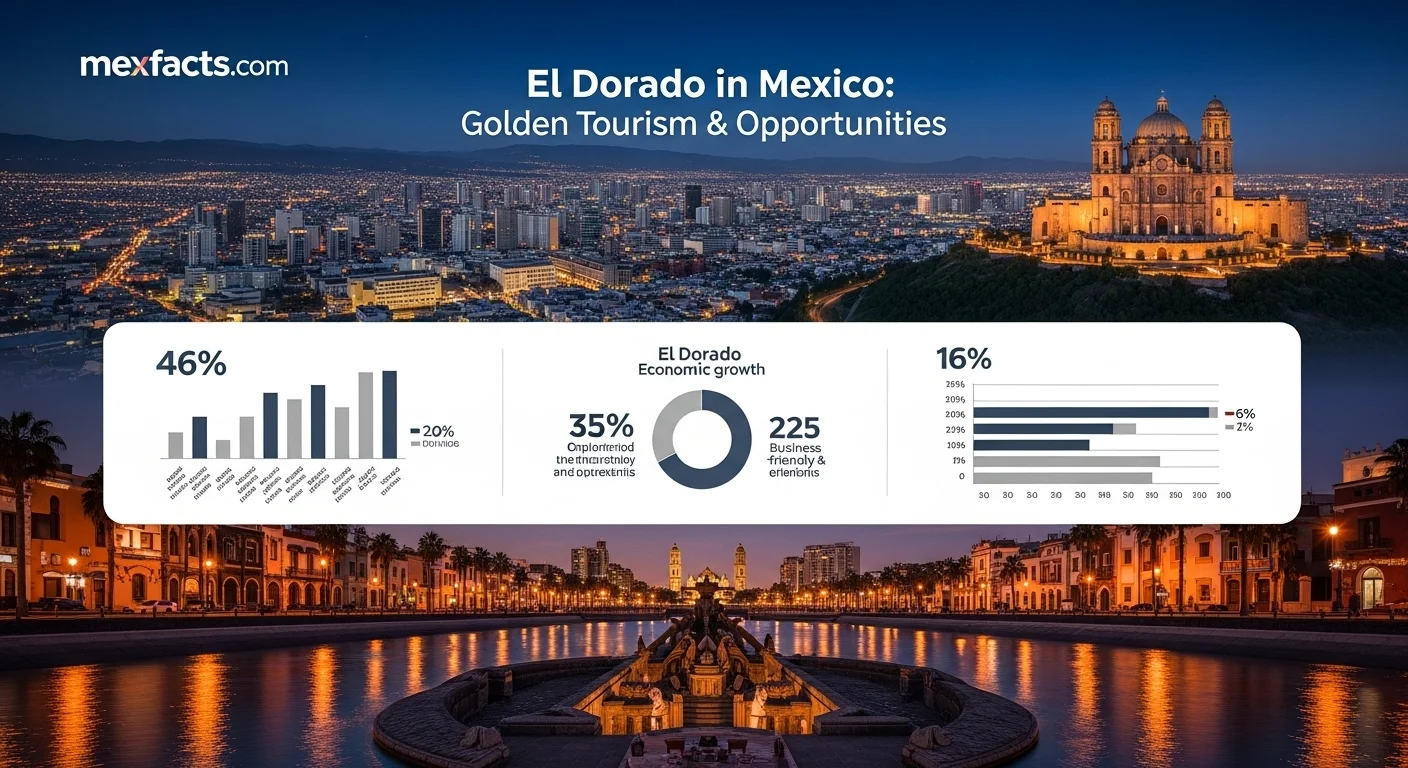
Beyond vacation itineraries, luxury properties like El Dorado serve as primary economic drivers for regional development and national GDP. Official figures from Mexico's Secretariat of Tourism (SECTUR) and the National Institute of Statistics and Geography (INEGI) demonstrate the scale of this industry:
- Contribution to National GDP: Tourism accounts for approximately 8.5% to 8.6% of Mexico's Gross Domestic Product, establishing it as one of the country's most resilient economic sectors.
- Employment Generation: Direct employment in tourism exceeds 4.8 million to 4.9 million individuals nationwide, representing nearly 9% of Mexico's total workforce. Properties like El Dorado Royale employ thousands of local hospitality workers, culinary specialists, and groundskeepers in Quintana Roo.
- International Visitor Spending: International tourism arrivals in Mexico regularly surpass 42 to 45 million visitors annually, generating upwards of $30 billion to $33 billion in foreign exchange revenue. High-end all-inclusive resorts command higher average daily rates (ADR), multiplying per-visitor economic contributions.
- Foreign Direct Investment (FDI): Tourism FDI remains focused on hotel construction and vacation residential projects, with Quintana Roo, Baja California Sur, and Nayarit consistently capturing the vast majority of hospitality capital inflows.
Future Outlook: Tren Maya, Sustainability, and Market Evolution
The Mexican Caribbean hospitality corridor is undergoing major structural evolution, driven by large-scale infrastructure investments and shifting luxury travel expectations.
A central development is the 1,554-kilometer Tren Maya (Maya Train) network, which connects Cancún International Airport with key stations across Quintana Roo, Yucatán, Campeche, Tabasco, and Chiapas. For guests staying at Riviera Maya resorts such as El Dorado Royale and El Dorado Seaside Suites, regional rail connectivity simplifies transit to inland UNESCO World Heritage sites like Chichén Itzá, Palenque, and historic colonial centers like Mérida and Valladolid. This infrastructure shifts luxury travel from isolated resort confinement toward integrated cultural exploration.
Simultaneously, environmental responsibility has become an operational requirement rather than a marketing slogan. Resorts operating along Quintana Roo's Mesoamerican Barrier Reef system face stringent expectations regarding water treatment, mangrove preservation, and waste reduction. Karisma's on-site hydroponic greenhouse model at El Dorado Royale exemplifies how luxury resorts can reduce the carbon footprint of food supply chains while supporting fresh, sustainable culinary practices.
Frequently Asked Questions About El Dorado in Mexico
- What is El Dorado in Mexico?
- In Mexico, El Dorado refers primarily to Karisma Hotels & Resorts' collection of adults-only, luxury all-inclusive beachfront resorts located in the Riviera Maya (including El Dorado Royale, El Dorado Casitas Royale, El Dorado Maroma, and El Dorado Seaside Suites). It does not refer to a lost historical city of gold, which was an Andean legend from South America.
- Are El Dorado resorts in Mexico adults-only?
- Yes. All Karisma El Dorado Spa Resorts properties in the Riviera Maya enforce a strict adults-only policy, requiring all guests to be at least 18 years of age.
- What does the Gourmet Inclusive® package include at El Dorado resorts?
- The Gourmet Inclusive® concept includes unlimited à la carte gourmet dining across specialty restaurants, premium alcoholic and non-alcoholic beverages, 24-hour room service, daily replenished minibars, non-motorized water sports, poolside and beach concierge services, and daily entertainment.
- Where are El Dorado resorts located?
- Karisma's El Dorado resorts are situated along Mexico's Riviera Maya in Quintana Roo, spanning coastal areas near Puerto Morelos, Maroma Beach, and Kantenah Bay south of Playa del Carmen. Separate independent boutique properties, such as Casa El Dorado in Sayulita, are located on Mexico's Pacific coast in Nayarit.
- What makes El Dorado Maroma distinct from El Dorado Royale?
- While El Dorado Royale is a large, expansive resort featuring extensive facilities and a 76,000-square-foot hydroponic greenhouse, El Dorado Maroma is an intimate boutique property set directly on Maroma Beach, best known for its Palafitos overwater bungalows.
Expert Reviews
Charles Bennet, International Investor ⭐⭐⭐⭐⭐
As an international investor, this article was exactly what I needed. It cut through the noise and connected the legend of El Dorado to real, actionable data. The insights on FDI in Quintana Roo helped solidify our decision. ¡Gracias!
Sofia Gutierrez, Traveler ⭐⭐⭐⭐⭐
My husband and I stayed at El Dorado Seaside Suites last year, and this article perfectly captures why it felt so special. It wasn't just a vacation; it was an 'experience.' Reading about the 'Gourmet Inclusive' concept and the economic impact on the local community makes me appreciate our trip even more.
David Chen, Culture Enthusiast ⭐⭐⭐⭐⭐
I've always been fascinated by the El Dorado myth. I loved how this piece beautifully connected the historical legend to modern Mexico's rich offerings. It's not about a city of gold, but a country rich in culture, hospitality, and opportunity. A truly insightful read.