
Tulum's True Price Tag: An Insider's Guide to Paradise for 2025

I remember my first trip to Tulum over fifteen years ago. It was a sleepy little town where the biggest decision of the day was which stretch of empty, white-sand beach to lay your towel on. Today, Tulum is a global icon, a place of vibrant energy, stunning beauty, and, let's be honest, a sometimes confusing price tag. This guide is my way of pulling back the curtain on the real 'Tulum cost.' We'll walk through everything from the price of a life-changing taco in town versus a fancy cocktail on the beach, to the actual monthly budget you'd need to live here as a digital nomad. With massive new projects like the Tren Maya and a brand-new airport changing the game, understanding the finances is more important than ever. Whether you're planning a week-long escape or thinking of making this Caribbean dream your reality, this guide will help you do it smartly and sustainably.
Table of Contents
What Exactly is the 'Tulum Cost'?
The Birth of a Chic Paradise: How Did We Get Here?
The Two Faces of Tulum: Pueblo vs. The Hotel Zone
Why Tulum's Costs Matter to Everyone
What is the Tulum Cost in Mexico and why is it important internationally?
Tulum. The name itself paints a picture: turquoise Caribbean waters kissing the shore, ancient Mayan ruins standing guard on a cliff, and a free-spirited, bohemian vibe that you can feel in the air. I've watched this place transform from a quiet refuge for backpackers into a world-renowned destination. This incredible popularity has created a complex economic situation I call the 'Tulum Cost.' This isn't just about the price of your hotel; it's the entire financial picture, from the cost of a week-long vacation to the nitty-gritty details of living here full-time.
Internationally, people are fascinated by the 'Tulum Cost' because it's a living example of how tourism, powered by social media, can reshape a place almost overnight. For travelers, understanding this cost is the key to planning a trip that's magical, not just monstrously expensive. For the growing community of digital nomads and expats who dream of this lifestyle, getting a handle on the real cost of living is the first step to making that dream last. And for investors, the 'Tulum Cost' is a pulse check on one of Mexico's most dynamic and promising markets.
The Genesis of a High-Cost Paradise
To really get why things cost what they do today, you have to look back. Not so long ago, Tulum was a rustic, off-the-grid hideaway. I remember simple cabanas on the beach with electricity for only a few hours a day. It was cheap because it was simple. But starting in the early 2000s, something shifted. A perfect storm of breathtaking nature, the romance of the ruins, and a carefully crafted image of eco-spiritual luxury created a frenzy. Instagram became its best salesperson, and the world wanted a piece of the Tulum dream. That insatiable demand is what sent the 'Tulum Cost' soaring.
The Tale of Two Tulums: Pueblo vs. Zona Hotelera
Here’s the most important piece of advice I can give you: you cannot understand the cost of Tulum without knowing its two different personalities: Tulum Pueblo (the town) and the Zona Hotelera (the Hotel Zone). They are worlds apart, especially in price.
Tulum Pueblo (The Town): This is the real, beating heart of Tulum, a few kilometers from the beach. It’s where you'll find supermarkets like Chedraui, the incredible smells of street-side taquerias, bustling local markets, and neighborhoods where locals and many expats actually live. Life in the Pueblo is where the cost of living becomes manageable. You can get an amazing meal for a few dollars, and rent, while rising, won't necessarily break the bank. It feels like a real Mexican town, albeit one with a very trendy twist.
The Zona Hotelera (The Hotel Zone): This is the Tulum you see on Instagram. It’s a narrow beach road lined with stunning boutique hotels, exclusive beach clubs, and world-class restaurants. Let me be clear: the prices here don't just feel high for Mexico; they compete with places like Miami or Ibiza. A cocktail can easily set you back $25 USD, and a nice dinner can run into the hundreds. Many beach clubs require you to spend $100-$150 USD per person just to use a chair for the day. This is the luxury experience many seek, but it's a very different financial reality from the rest of Tulum.
Why the 'Tulum Cost' Matters on an International Stage
Tulum's journey holds lessons for everyone.
For Travelers: That dream of a cheap Mexican beach vacation? It's still possible in Tulum, but it takes planning. You'll want to stay in the Pueblo, eat where the locals eat, and get around on a bicycle or the local 'colectivo' vans. The difference is huge: you could spend $50 a day on a budget or over $400 a day for luxury. Knowing this ahead of time is everything.
For Digital Nomads & Expats: Tulum is a magnet for remote workers, but it’s one of Mexico's more expensive spots. A comfortable, single-person lifestyle will likely run you between $1,500 and $3,000 USD a month. That's a lot more than in places like Oaxaca or Mérida. You have to weigh the incredible lifestyle against practical things like high rent in popular areas like Aldea Zama and La Veleta, and sometimes-spotty internet.
For Investors: The rising costs reflect a red-hot real estate market. Property values have been climbing steadily, and rental income can be very attractive. But it's not a guaranteed win. There are growing worries about too many condos being built, and investors have to navigate complex environmental laws and the unpredictable sargassum seaweed problem. The 'cost' for an investor here is a detailed calculation of risk and reward.
Ultimately, the 'Tulum Cost' is a story about what happens when a small piece of paradise becomes a global phenomenon. With huge projects like the Tren Maya and the new international airport promising even more growth, understanding these costs is essential for anyone who wants to experience this magical corner of the Caribbean.
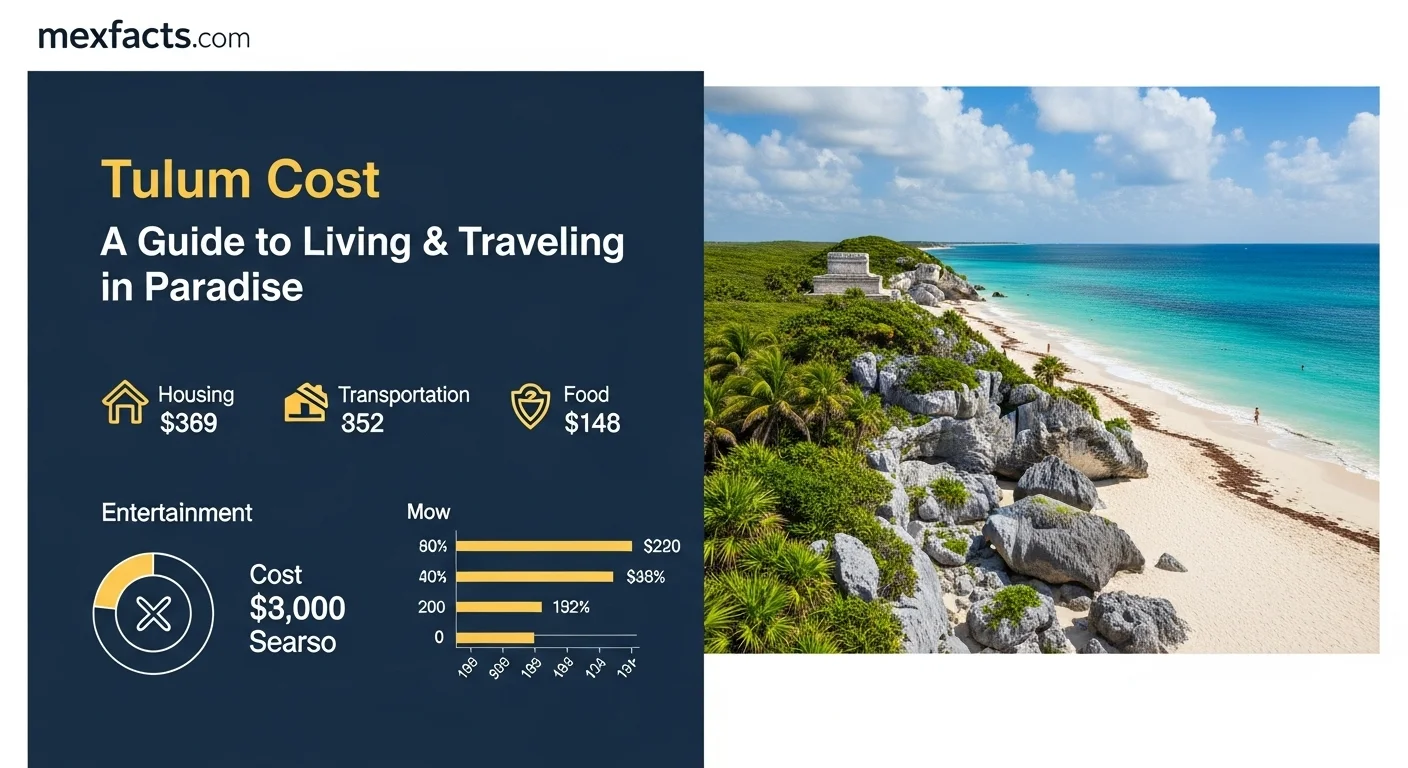
Current statistics and data about Tulum Cost in Mexico
To really get a grip on the 'Tulum Cost,' you have to look at the numbers. But don't think of it as a single price tag; it's more like a spectrum. Your lifestyle choices and, most importantly, whether you're living life in the vibrant Pueblo or the chic Hotel Zone, will determine where you land on that spectrum. Let's break down the data to give you a clear financial map for 2025.
Housing and Accommodation: The Cornerstone of Your Budget
Let's talk about the biggest piece of your budget pie: where you'll lay your head at night. This is the single largest expense for both visitors and residents.
- For Expats/Digital Nomads (Monthly Rentals): Your rent will define your cost of living. The new, popular neighborhoods for expats are Aldea Zama and La Veleta.
- Studio/One-Bedroom: In a cool area like La Veleta or right in the town center, a modern, furnished apartment will run you $800 to $1,500 USD a month. In the more developed and polished Aldea Zama, expect that to climb to $1,200 - $2,000+ USD.
- Two-Bedroom: Need more space? A two-bedroom in these same areas will typically be in the $1,500 to $3,500 USD range per month.
- Luxury Villas: If you're looking for high-end living with a private pool, monthly rents can easily go from $4,000 to over $10,000 USD.
- For Tourists (Nightly Rates): Your trip cost will vary wildly depending on your choice.
- Budget: You can find a dorm bed in a fun hostel in the Pueblo for about $15–$30 USD a night.
- Mid-Range: A stylish boutique hotel in town or a nice Airbnb will typically be in the $100–$250 USD per night range. I once found a great mid-range spot right on the beach road for $150/night and felt like I'd won the lottery.
- Luxury: The sky's the limit in the Hotel Zone. Beachfront resorts start around $300 and can easily soar past $1,000 USD a night.
A crucial tip: prices can jump 20-40% during the high season from December to April. Plan accordingly!
Food and Dining: A Tale of Two Cuisines
Your food budget is where you have the most control. You can eat like a king for very little, or spend a fortune on a single meal.
- Groceries: Hitting the local supermarkets like Chedraui is your most budget-friendly option. A couple can expect a weekly grocery bill of $75 to $150 USD. For even fresher and cheaper produce, the local markets are the way to go.
- Local Eateries (Pueblo): This is where the magic happens. A plate of incredible tacos al pastor or a delicious local meal can cost as little as $1–$5 USD. You could eat this way every day and be very happy.
- Mid-Range Restaurants: A nice sit-down dinner for two with a couple of drinks in town will probably cost between $40 and $80 USD.
- Upscale Dining (Hotel Zone): Welcome to a different league. Dinner for two at a famous beach restaurant can easily run from $150 to over $400 USD. Main courses alone often start at $30-$50 USD.
Transportation: Getting Around a Geographically Spread-Out Town
Don't underestimate transportation costs. Tulum is spread out—the town, the beach, the ruins, and the cenotes are not right next to each other. With no Uber, your options are limited.
- Taxis: Be warned, taxis are famously expensive here. A short ride from the Pueblo to the beach can cost a shocking $30 to $50 USD one-way. Always agree on the price before you get in.
- Bicycle/Scooter Rental: This is my favorite way to get around and the most cost-effective. A bike costs about $10-15 USD a day, and a scooter around $30-50 USD, with much better deals for longer rentals. A bike is your best friend in Tulum.
- Colectivos: These are shared vans, the way most locals travel. They are incredibly cheap (just a couple of dollars) and run along the main highway.
- Car Rental: A car gives you freedom but adds about $30-$50 USD per day plus insurance and gas to your budget.
Utilities and Monthly Services: The Hidden Costs of Living
If you're planning a long-term stay, you need to budget for these.
- Electricity (CFE): This can be a shocker, especially in the summer if you love your air conditioning. Bills can range from $50 to over $200 USD a month.
- Internet: A solid internet plan is about $30 to $60 USD a month, though reliability can still be a challenge in developing areas.
- Water and Gas: These are quite affordable, usually around $10-20 USD for water and $20-30 USD for gas each month.
- Cellphone Plan: A local SIM card from a provider like Telcel is a great deal, typically around $20-30 USD a month for plenty of data.
Entertainment and Leisure: The Price of Paradise
From sacred cenotes to vibrant beach clubs, the activities are endless, with prices to match.
- Beach Clubs: To enjoy the best beaches, you'll often need to pay up at a beach club. This usually means meeting a minimum spending requirement, which can be $50 USD at a modest place or over $150 USD per person at a high-end club.
- Cenotes: Entrance fees to these natural swimming holes vary. Smaller, local ones might be $5 USD, while the famous ones like Gran Cenote can be $15-$30 USD.
- Mayan Ruins: Visiting the iconic Tulum ruins is a bargain at around $5 USD.
- Wellness: A drop-in yoga class is typically $20-30 USD. A monthly gym membership in town is around $50-60 USD.
Sample Budgets: Putting It All Together
So what does this all add up to? Here are some rough estimates.
One-Week Trip (per person, without flights):
* On a Shoestring: $500 - $800 USD (Hostels, local food, bike rentals).
* Comfortable & Fun: $1,200 - $2,000 USD (Boutique hotels/Airbnb, mix of dining, some taxis).
* Luxury Escape: $3,000+ USD (Beachfront resorts, fine dining, private tours).
Monthly Cost of Living (for a single person):
* The Savvy Local: $1,500 - $2,000 USD (Living in the Pueblo, cooking often, mindful spending).
* The Comfortable Nomad: $2,500 - $4,000 USD (Living in Aldea Zama/La Veleta, dining out regularly, scooter/car).
* The High Life: $5,000+ USD (Premium villa, frequent fine dining, full-time vehicle, high-end entertainment).
The numbers show that while you can absolutely enjoy Tulum on a budget, its reputation as a luxury destination is well-earned. The 'Tulum Cost' is ultimately a choice you make every day between the authentic, affordable life of the town and the glamorous, expensive allure of the beach.
Future outlook and opportunities regarding Tulum Cost in Mexico
The story of Tulum's cost is far from over. In fact, we're entering a new chapter. The future of what it costs to visit or live here is being shaped right now by huge infrastructure projects and a constant dance between explosive growth and the need for sustainability. Looking ahead to the next few years, all signs point to costs continuing to rise, but this evolution is also creating unique opportunities for those who know where to look.
The Impact of Mega-Projects: Tren Maya and Tulum's International Airport
Two massive projects are fundamentally changing the game for Tulum, altering how people get here and, consequently, how much everything costs.
- Felipe Carrillo Puerto International Airport (TQO): Tulum now has its own international airport, and it’s a huge deal. For years, I, like everyone else, had to fly into Cancún and then make the 90-minute to two-hour drive down. With direct flights to TQO, Tulum is now a feasible weekend trip for millions more people. This convenience is already boosting demand for hotels and services, which naturally pushes prices up. For real estate, it cements Tulum's status as a top-tier destination, likely driving property values and rents even higher.
- The Tren Maya (Mayan Train): This incredible train network connects the entire Yucatán Peninsula, with Tulum as a star station. Imagine being able to easily take a day trip to see ancient ruins deep in the jungle or visit a colonial city like Mérida, all from your base in Tulum. This connectivity will bring a flood of new tourists, further increasing demand for vacation rentals and sparking new businesses around the train station. This will almost certainly mean a higher cost of living in the long run, but it also spells opportunity for savvy entrepreneurs in hospitality and tourism.
Real Estate: Investment Opportunities and Emerging Challenges
The Tulum real estate market has been a wild ride, with property values climbing 8% to 15% annually in recent years. Looking forward, I see both incredible opportunity and reasons for caution.
Opportunities:
The core reasons to invest in Tulum—tourism and growth—remain strong. Vacation rentals can offer a fantastic return on investment, often between 8% and 15%. The demand for eco-chic, wellness-focused properties is still very high. For those willing to get in early, buying a pre-construction condo can still offer a significant discount. There's also huge potential for new boutique hotels and businesses in the right locations.
Challenges and Risks:
The gold rush might be maturing. There are growing concerns about an oversupply of condos, with some reports showing a dip in buyer interest as the market gets saturated. This means investors need to be smarter and more selective. The prime, established areas like Aldea Zama or the beachfront are proving more resilient than the newer, developing zones.
More importantly, we have to talk about the environment. The rapid growth has put a huge strain on the fragile ecosystem, from the water supply to waste management. And the unpredictable sargassum seaweed problem is a real economic threat that can devastate a tourist season. Future environmental regulations, which are desperately needed, could increase construction and operating costs for property owners, directly impacting the cost of living.
The Future for Residents and Tourists: Adapting to the New 'Tulum Cost'
For individuals, the Tulum of the future will be more expensive, but also more developed and convenient. The rising cost of living may push some budget-conscious nomads to other parts of Mexico. I'm already hearing from people who are choosing less expensive cities to get more for their money.
However, this growth will also bring better services. Those bumpy roads and spotty internet connections will gradually improve, raising the quality of life. For tourists, while a trip might cost more, the ease of getting here and the sheer number of things to do will also increase.
The key to enjoying the Tulum of the future will be adaptability. Residents might explore emerging neighborhoods or nearby towns to find a lower cost of living. Tourists might use the Tren Maya to stay in a more affordable location for part of their trip. The digital nomad community will have to weigh the high cost against the incredible lifestyle and networking that Tulum offers.
In conclusion, the future of the 'Tulum Cost' is one of dynamic growth. Fueled by massive infrastructure and global fascination, prices will continue to climb. This creates a challenging environment but also a landscape rich with opportunity. For investors, it's a time for strategic, well-researched decisions. For everyone else, Tulum will increasingly be a premium destination where the price of admission is high, but the rewards—in beauty, lifestyle, and experience—are, for many, still worth every penny. For a broader look at Mexico's exciting economic future, resources like Deloitte's Mexico Economic Outlook offer great context.
Expert Reviews
Jessica L., Freelance Designer ⭐⭐⭐⭐⭐
As someone who just moved to Tulum, this guide was a lifesaver. The breakdown of living costs between La Veleta and Aldea Zama was spot-on and helped me set a realistic monthly budget. I was prepared for my CFE bill thanks to this article! Gracias!
Mark & Sarah Thompson, Tourists ⭐⭐⭐⭐⭐
My husband and I just got back from our first trip to Tulum. We read this before we went and it completely shaped our vacation for the better. We stayed in the Pueblo, rented bikes, and ate at the incredible local spots mentioned. We felt like we got a much more authentic and affordable experience than if we had just stuck to the Hotel Zone.
Carlos Gutiérrez, Real Estate Consultant ⭐⭐⭐⭐
An excellent and sober analysis of the Tulum market. The insights on the new airport's impact and the potential condo oversupply are crucial for anyone looking to invest. This article provides the kind of balanced perspective that is often missing in overly hyped reports. Very valuable.