
La Catrina: Origins, Symbolism, and Day of the Dead in Mexico
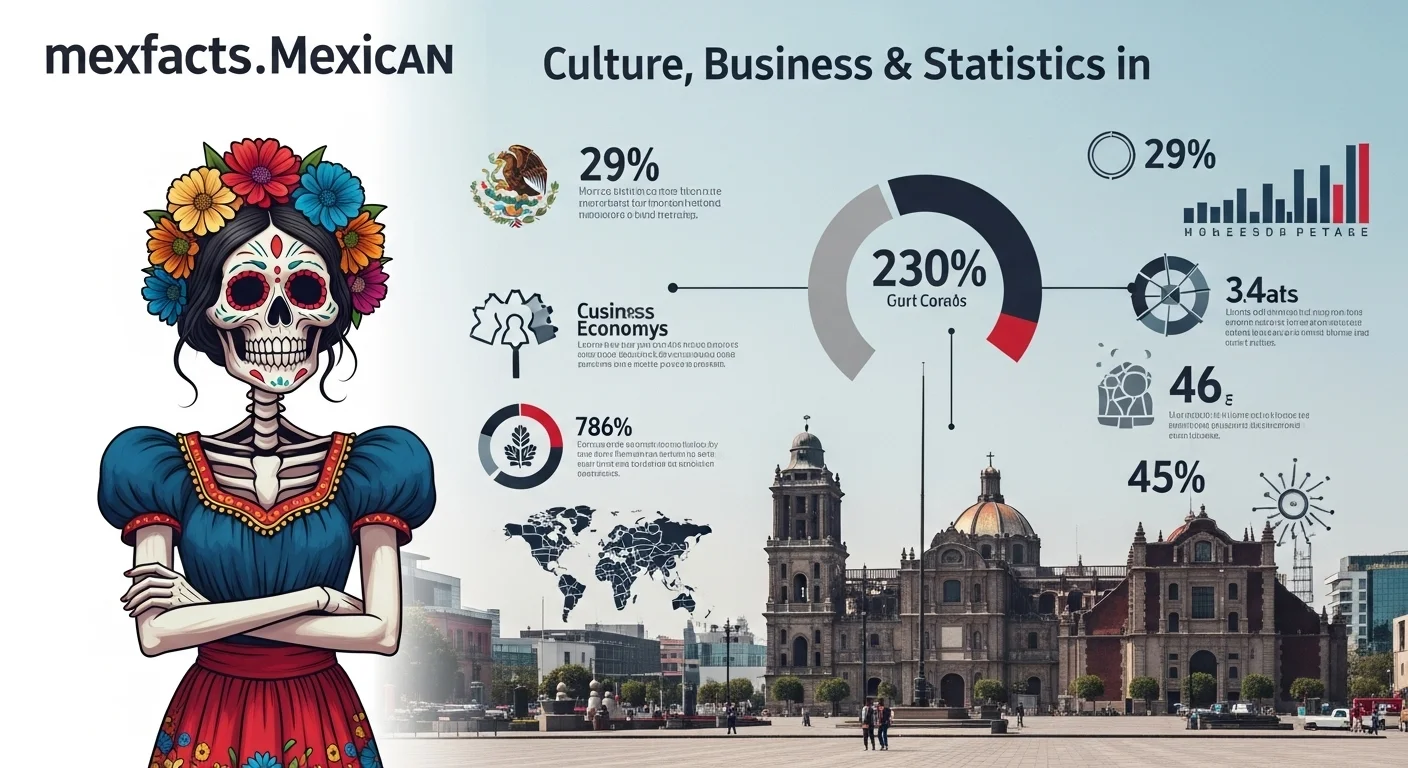
La Catrina is Mexico's most internationally recognized cultural icon of mortality, depicted as an elegantly dressed female skeleton adorned with an extravagant floral hat. Originating as a sharp political satire titled La Calavera Garbancera by master printmaker José Guadalupe Posada in the early 1910s, she was later immortalized in 1947 by muralist Diego Rivera, who gave her a full body, formal attire, and her lasting name. Today, La Catrina stands at the emotional and visual center of Mexico traditions during Día de Muertos (Day of the Dead). Far from representing fear or grief, her joyful elegance embodies the profound Mexican philosophy that death is a natural, democratic part of existence—reminding humanity that beneath social status, titles, and wealth, everyone shares the same common destiny.
- What Is La Catrina, and Why Is She Important to Mexico?
- The Genesis: José Guadalupe Posada and Social Satire
- Diego Rivera and the Creation of 'La Catrina'
- Cultural Meaning and Indigenous Roots
- Her Central Role in Día de Muertos
- Artisanal Heritage and Regional Traditions
- Cultural Tourism and Economic Significance
- Global Iconography and the Question of Authenticity
- Frequently Asked Questions About La Catrina
What Is La Catrina, and Why Is She Important to Mexico?
La Catrina is the quintessential personification of death in Mexican culture: a grinning female calavera (skeleton) dressed in aristocratic finery and crowned with an elaborate, flower-decked European hat. Rather than evoking terror or mourning, La Catrina reflects a uniquely Mexican philosophy that approaches mortality with humor, intimacy, and celebration. She serves as the symbolic matriarch of Día de Muertos, bridging Mexico's pre-Columbian reverence for the deceased with modern artistic identity.
Her cultural importance stems from her dual identity as a poignant philosophical statement and a historic triumph of popular art. La Catrina reminds the living to embrace life fully while accepting death as an inescapable, equalizing certainty. In Mexican homes, civic plazas, and global diaspora communities, she represents resilience, artistic brilliance, and the unbroken chain connecting the living to their ancestors.
The Genesis: José Guadalupe Posada and Social Satire
La Catrina did not begin as an ancient Aztec goddess or a religious effigy. Her direct lineage traces to the prolific Mexican illustrator and printmaker José Guadalupe Posada (1852–1913). Around 1910–1912, during the turbulent final years of Porfirio Díaz's dictatorship (the Porfiriato), Posada carved a zinc etching that he titled La Calavera Garbancera. Published posthumously as a broadsheet in 1913 by the Antonio Vanegas Arroyo publishing house, the image was conceived as biting political commentary.
In late 19th- and early 20th-century Mexico, the word garbancera was a derogatory term for indigenous street vendors who sold garbanzos (chickpeas) and disowned their native heritage. These individuals powdered their faces white, adopted French fashions, and put on aristocratic European airs to mask their indigenous background. Posada's original engraving depicted only the skull and bust of a skeleton, stark naked except for an ostentatious French hat adorned with ribbons and ostrich plumes. Posada's social critique was devastatingly simple: underneath the imported finery, expensive cosmetics, and elite posturing, everyone is made of bone. Posada famously observed that death is the ultimate democrat—claiming the wealthy and the impoverished alike.
Diego Rivera and the Creation of 'La Catrina'
While Posada created the iconic satirical skull, it was the legendary Mexican muralist Diego Rivera who transformed her into the full-bodied cultural matriarch recognized around the world today. In his monumental 1946–1947 mural, Sueño de una tarde dominical en la Alameda Central (Dream of a Sunday Afternoon in Alameda Central), Rivera placed the skeletal figure at the absolute center of four centuries of Mexican history.
Rivera made several transformative artistic decisions. First, he gave her a complete body, dressing her in a high-collared, elegant Edwardian evening gown. Second, he draped a feathered serpent stole across her shoulders—a direct visual homage to the Mesoamerican deity Quetzalcóatl, thereby uniting indigenous spiritual heritage with European colonial aesthetics. Third, Rivera rechristened her La Catrina, derived from catrín, the 19th-century Mexican slang for an overdressed dandy or bourgeois aristocrat.
In the mural, La Catrina holds hands with a ten-year-old Diego Rivera, while Frida Kahlo stands maternally behind the young boy holding a yin-yang symbol. On La Catrina's other side stands José Guadalupe Posada, linking arms with his creation. Through this masterwork, Rivera rescued Posada's popular broadsheet from the margins of print journalism and elevated La Catrina into a national monument of Mexican identity.

Cultural Meaning and Indigenous Roots
Although La Catrina was created during the early 20th century, her emotional resonance taps directly into ancestral Mesoamerican worldviews. Long before the arrival of the Spanish, civilizations such as the Mexica (Aztecs), Maya, Purépecha, and Zapotec honored cyclical concepts of existence where death was not an end, but an essential stage of cosmic rebirth. The Aztec underworld, Mictlán, was ruled by Mictlantecuhtli and his consort Mictecacíhuatl, the Queen of Death who presided over ancient ancestral feasts.
Following the Spanish conquest, Catholic observances of All Saints' Day (November 1) and All Souls' Day (November 2) merged with these indigenous practices. Over the centuries, this syncretism shaped modern Mexico traditions. La Catrina stepped naturally into this syncretic void. She inherited the majestic authority of Mictecacíhuatl while channeling the irreverent, popular humor that defines Mexican folklore. Rather than viewing the grave with solemn dread, Mexican culture welcomes the departed back as honored annual guests, with La Catrina presiding over the reunion.
Her Central Role in Día de Muertos
During Día de Muertos on November 1st and 2nd, La Catrina appears across every facet of celebration. She stands vigil on household ofrendas (altars), surrounded by fragrant orange marigolds (cempasúchil), flickering copal incense, sugar calaveras, pan de muerto, and traditional Mexican foods such as tamales prepared for visiting souls.
Beyond private altars, La Catrina has become a living, participatory art form. In cities and towns across Mexico, women, men, and children paint their faces with intricate skeletal makeup—highlighted with glitter, gemstones, and floral crowns—and wear vintage garments. In Mexico City, the annual Mega Procesión de las Catrinas draws hundreds of thousands of participants and spectators along Paseo de la Reforma, transforming the capital's most famous avenue into an awe-inspiring open-air celebration of cultural heritage and living memory.
Artisanal Heritage and Regional Traditions
La Catrina is sustained year-round through Mexico's vibrant folk art communities, where master artisans pass traditional sculpting techniques down through generations:
- Capula, Michoacán: Celebrated as Mexico's capital of clay Catrinas. In the 1970s, renowned artisan Juan Torres began crafting slender, highly detailed ceramic Catrinas from local terracotta. Today, nearly the entire town produces unique handmade clay sculptures, celebrated each autumn during the annual Feria Nacional de la Catrina.
- Aguascalientes: As the birthplace of José Guadalupe Posada, this central Mexican state celebrates its native son with the National Museum of Death (Museo Nacional de la Muerte) and the vibrant Festival de Calaveras, honoring Posada's artistic legacy.
- Cartonería Masters: In Mexico City, Guanajuato, and Oaxaca, sculptors create monumental papier-mâché Catrinas using traditional paste and reed structures, bringing towering skeletal figures to life for public squares and cultural exhibitions.
These artisanal traditions provide essential livelihoods for indigenous and rural communities, ensuring that La Catrina remains rooted in authentic craftsmanship rather than mass industrial reproduction.
Cultural Tourism and Economic Significance
The enduring popularity of La Catrina and Día de Muertos has made early November one of the most vital periods for Mexico's cultural tourism economy. Historic destinations such as Oaxaca, Mexico City, Pátzcuaro, and Janitzio in Michoacán experience peak occupancy as domestic and international travelers arrive to witness the festivities.
According to official estimates from Mexico's Secretariat of Tourism (SECTUR), the nationwide Día de Muertos holiday period regularly generates tens of billions of Mexican pesos in economic impact. This revenue supports a wide ecosystem of local businesses, from small family-owned hotels and neighborhood fondas to municipal markets, regional transport providers, and independent artisan collectives. By drawing cultural travelers who value authentic heritage, the holiday directs vital resources into regional economies that preserve centuries-old customs.
Global Iconography and the Question of Authenticity
Over recent decades, La Catrina has evolved from a Mexican national icon into a global pop-culture phenomenon. She has been featured in major animated films such as The Book of Life (2014) and Disney-Pixar's Coco (2017), showcased in international art galleries, and adapted into global collector editions like Mattel's annual Day of the Dead Barbie dolls.
However, this worldwide acclaim presents serious challenges regarding commercialization and cultural appropriation. As international retail chains and hospitality businesses adopt Catrina imagery as decorative motifs or seasonal Halloween novelty items, her profound philosophical meaning risks being trivialized into a generic caricature. Conflating Día de Muertos with Halloween strips the figure of her sacred connection to ancestral memory.
Preserving the integrity of La Catrina requires ethical engagement. Cultural travelers and international consumers can support authentic heritage by purchasing directly from Mexican artisans, learning the historical origins of Posada's satire, and respecting Día de Muertos as a meaningful ceremony of remembrance rather than a simple costume party.
Frequently Asked Questions About La Catrina
- Who created La Catrina?
- The original figure was created by Mexican printmaker José Guadalupe Posada around 1910–1912 as an etching titled La Calavera Garbancera. In 1947, muralist Diego Rivera painted her in full formal dress in his mural Sueño de una tarde dominical en la Alameda Central and named her La Catrina.
- What does La Catrina symbolize?
- La Catrina symbolizes the inevitability and equality of death, the celebration of ancestral memory, and the joyful Mexican philosophy that death is an inseparable part of life. Posada also intended her as a critique of social pretension, showing that beneath worldly wealth, all humans are equal.
- Is La Catrina the same as Santa Muerte?
- No. La Catrina is an artistic, satirical, and cultural symbol associated with Mexican national identity and Día de Muertos. Santa Muerte (Holy Death) is a distinct, separate figure of folk religious devotion that is not affiliated with Posada's artwork or mainstream Day of the Dead traditions.
- What does the word 'Catrina' mean?
- The name comes from the Mexican Spanish word catrín, which referred to an elegantly dressed gentleman or dandy during the late 19th and early 20th centuries. Rivera feminized the term to reflect her aristocratic European attire.
Expert Reviews
Isabella Rossi, Traveler ⭐⭐⭐⭐⭐
I visited Oaxaca for Día de Muertos last year, and this article perfectly captures the feeling. La Catrina isn't spooky; she's beautiful and everywhere. This piece really helped me understand her history and why she's so important to the celebration. It's more than just a costume.
Michael Chen, Future Restaurateur ⭐⭐⭐⭐⭐
As someone looking to open a Mexican-themed restaurant in the US, this was incredibly insightful. The discussion on branding with culture and the difference between appreciation and appropriation is crucial. It’s given me a much deeper respect for the story I want to tell with my business.
Dr. Elena Castillo, Latin American Studies ⭐⭐⭐⭐
A wonderfully accessible read. It connects Posada's political art to Rivera's national vision and today's global economy without losing the soul of the subject. A great starting point for anyone curious about one of Mexico's most powerful icons.