
Beyond the Sombrero: The True Beauty of Traditional Mexican Clothing
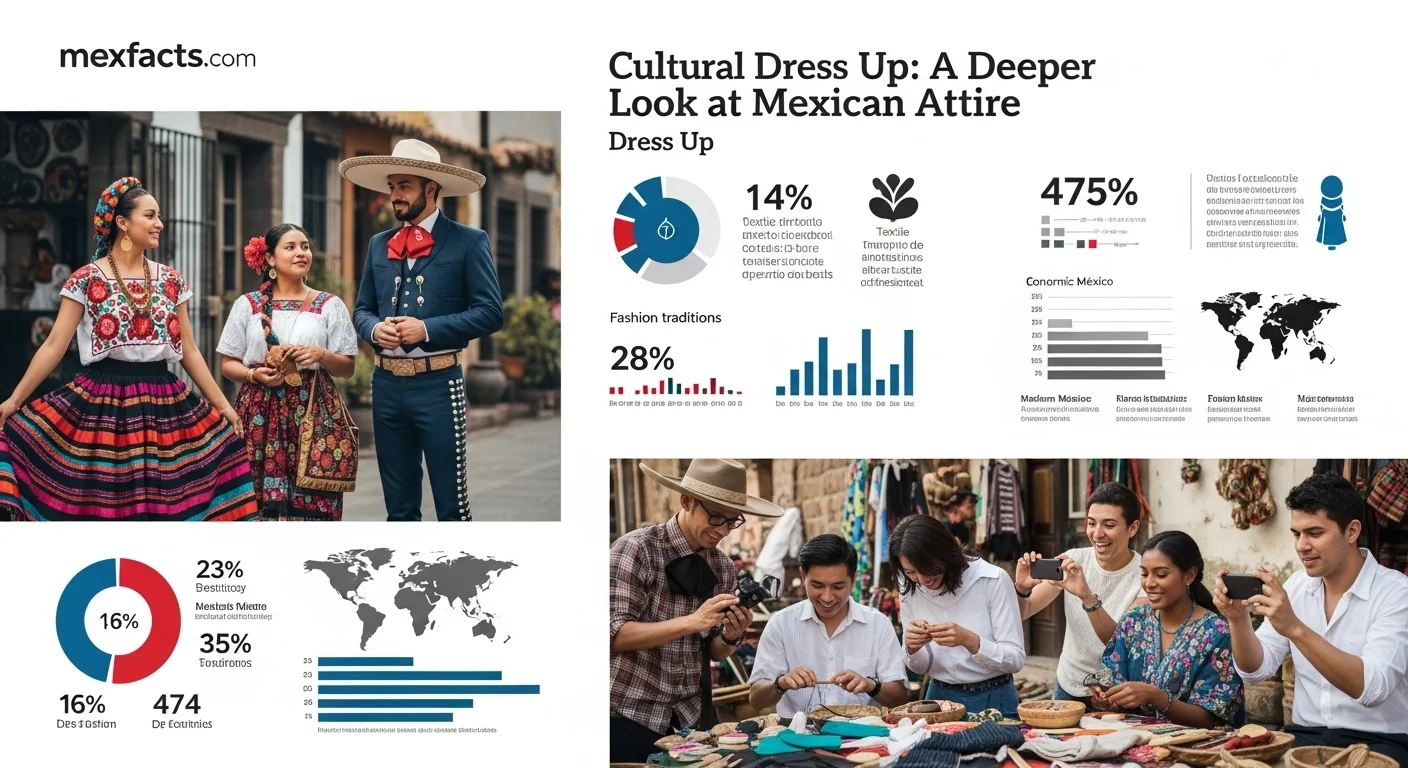
When people think of 'dressing up like a Mexican,' the image that usually comes to mind is a caricature: a colorful poncho, a giant sombrero, maybe a fake mustache. It’s an image I’ve seen countless times at parties abroad, and honestly, it always makes me a little sad. It misses the point entirely. To me, the true clothing of Mexico is a story woven in thread, a vibrant history you can wear. It’s the elegant guayabera shirt I saw men wearing to evening gatherings in Mérida, keeping them cool and dignified. It's the breathtakingly embroidered huipiles in Oaxaca, each one a unique masterpiece telling the story of its village. It's the powerful, formal suit of a Charro in Jalisco, radiating national pride. This article is your invitation to look past the harmful stereotype and discover the soul of Mexico's traditional attire. We'll explore its deep meaning, celebrate the incredible artisans who keep this heritage alive, and talk about how we can all admire and wear these pieces with the respect they deserve.
What is Traditional Mexican Clothing and Why Does it Matter?
Table of Contents
- Dismantling the Harmful Stereotype
- The True Diversity of Mexican Attire: A Regional Tour
- From Appropriation to Appreciation
The phrase 'dress up as a Mexican' often conjures a very specific, and deeply problematic, image for people around the world. It’s usually a mix of a multi-colored serape (which is more of a blanket), an oversized straw sombrero, and often a cartoonish mustache. This 'costume' is a fixture at theme parties and Halloween, but it's a lazy and hurtful caricature of a culture that is anything but one-dimensional. To truly understand what it means to dress in the Mexican style, you have to forget the party costume and step into the rich, complex world of indumentaria tradicional mexicana (traditional Mexican attire). The first thing to know is there's no single outfit that represents all of Mexico. This country is a vibrant mosaic of different regions, indigenous communities, and histories, each with its own unique and deeply meaningful way of dressing. What you see people wearing in the northern deserts is completely different from the clothes worn in the humid southern jungles or the cool central highlands.
Dismantling the Harmful Stereotype
Let's be clear: that popular 'Mexican costume' is a cultural shortcut born from old Hollywood movies and historical misunderstandings. It mashes together the image of a rural farmer, a revolutionary figure like Pancho Villa, and festive gear into one inaccurate package. While sombreros and serapes are real things in Mexico, using them as the sole symbols of an entire country is incredibly reductive. The sombrero de charro, for instance, is part of a formal, highly respected suit worn by charros—the skilled horsemen who practice Mexico's national sport, charrería. Wearing one is a sign of national pride and expertise, not a goofy party hat. Similarly, the serape has its roots in places like Saltillo, with specific uses and cultural value. When these items are ripped from their context and worn as a joke, it trivializes their importance and feeds a shallow view of Mexican people. Wearing them without understanding is a classic example of cultural appropriation—taking meaningful elements from a culture without permission or respect, usually for personal amusement.
The True Diversity of Mexican Attire: A Regional Tour
To truly appreciate Mexican clothing, you have to take a journey through its states and communities. This is where you'll find the authentic meaning of dressing 'Mexican style,' approached with knowledge and respect.
- Oaxaca: The Land of a Thousand Textiles
I'll never forget my first time in a Oaxacan market. The sheer variety of textiles is breathtaking. It's often called the cultural heart of Mexico, home to many indigenous groups like the Zapotec and Mixtec peoples. The women from the Isthmus of Tehuantepec are famous for their stunning floor-length velvet dresses covered in huge, vibrant embroidered flowers—the 'traje de tehuana.' This is the style that the artist Frida Kahlo famously adopted, wearing indigenous clothing as a powerful political and cultural statement. In the Mixe region, I saw women wearing the Xaam Nïxuy, a blouse with a striking geometric pattern that holds the community's entire worldview in its symbols. Throughout Oaxaca, the huipil (a sleeveless tunic) is a staple, but its design, length, and patterns change dramatically from one village to the next, telling you about the wearer’s community, marital status, and social role. - Jalisco: The Elegance of the Charro and Mariachi
Jalisco is the birthplace of two of Mexico's most beloved cultural icons: mariachi music and tequila. It's also the home of the traje de charro. This isn't a costume; it's a formal suit. It consists of tightly fitted trousers or a skirt, a short jacket, and a wide bow tie, all beautifully decorated with silver buttons (botonadura). It's the official dress of the charros and was adopted by mariachi musicians. When someone wears this suit, they are embracing a proud tradition. It's considered formal wear on par with a tuxedo. - Yucatán Peninsula: Caribbean Cool and Mayan Heritage
The sticky heat of the Yucatán has given rise to its own breezy, elegant style. For men, the guayabera is essential. It's a lightweight shirt, usually made of cotton or linen, with vertical pleats and four pockets. It's perfect for everything from a casual walk on the beach to a formal wedding. For women, the traditional dress is the terno, a three-piece outfit featuring a square-necked tunic (huipil), a long skirt (fustán), and a decorative collar (jubón). The terno is known for its brilliant white cotton, which serves as a canvas for exquisite, colorful floral embroidery. - Chiapas: The Intricate World of Mayan Weaving
In the highlands of Chiapas, I've had the privilege of watching Mayan artisans from communities like the Tzotzil and Tzeltal work on backstrap looms, a technique passed down for centuries. In the town of Zinacantán, the fabrics they create explode with floral designs and color. These patterns aren't just pretty; they are a language, communicating stories and beliefs from one generation to the next. To wear a piece from Chiapas is to wear a living work of art.
From Appropriation to Appreciation
The international fashion world has long been captivated by Mexican design, but that fascination has often turned into plagiarism. In recent years, big fashion brands like Zara, Carolina Herrera, and Isabel Marant have been called out for copying indigenous textile designs without giving credit or compensation to the communities that created them. These incidents show what’s at stake. A person 'dressing up as a Mexican' for a party and a corporation stealing a sacred design for profit are part of the same problem: cultural disrespect.
Thankfully, there's a growing movement towards cultural appreciation. This means engaging with the culture respectfully and with a genuine desire to learn. For anyone, anywhere in the world, this means:
- Ditching the Stereotypes: Recognize that the poncho-and-sombrero costume is a caricature and choose not to wear it.
- Learning the Stories: Take a moment to understand where a garment comes from and what it means.
- Supporting Artisans Directly: When you buy, look for authentic, handmade pieces. Make sure your money goes to the people who made them. This transforms wearing the clothing into an act of solidarity and economic support.
- Wearing with Respect: Treat the clothing as the work of art it is, not as a disposable costume.
The conversation isn't about what you can't wear, but about how you can wear it with honor and understanding. It's about shifting from taking to sharing, from mockery to celebration. This approach doesn't just enrich your own understanding; it provides real support to the Mexican artisans who are the true guardians of this incredible cultural heritage.

The Real Numbers: The Economy and Impact of Traditional Attire
These beautiful clothes are more than just cultural symbols; they are the lifeblood of entire communities. The conversation around traditional Mexican attire goes far beyond aesthetics—it's about the economy, people's livelihoods, and a fight for legal rights. When a tourist decides they want to 'dress up like a Mexican' in an authentic way, their purchase has real-world consequences. A look at the data reveals a complex world of opportunity and challenge, highlighting just how much this sector matters and why it needs to be protected.
The Artisan Economy: A Pillar of Local Communities
The handicraft sector, which includes textiles, is a vital part of Mexico's economy, especially in rural and indigenous areas where other jobs are scarce. The numbers show a powerful story.
- Market Size and Contribution: In 2023, the Mexican handicrafts market was valued at an astounding USD 30.1 billion, and it's expected to grow even more. [37] This isn't just a niche market; it represents a key source of income for thousands of families. The broader textile industry, including both factory-made and artisanal goods, is one of the top ten most important manufacturing activities in the country. [21] While factories produce more, the artisanal sector holds immense cultural weight.
- The People Behind the Craft: There are over half a million people—524,000 to be exact—who identify as 'Artisans and Workers in the Elaboration of Textiles.' [14] If you zoom out to include artisans working with wood, paper, and leather, that number jumps to 1.27 million. [23] A crucial point here is the central role of women. In states like Oaxaca, Chiapas, and Puebla, it’s often the women who are the keepers of ancient weaving and embroidery techniques. For so many, creating textiles is not just a job; it's a core part of their identity and their path to economic independence. [2]
- The Challenge of Informality: Here's a sobering statistic: over 91% of these artisans work in the informal economy. [14] That isn't just a number; it means nine out of ten artisans, often women who are the sole providers for their families, work without a formal contract, social security, or legal protections. This vulnerability makes them easy targets for exploitation and shows why consumers must be diligent to ensure their purchases truly benefit the creators.
The Double-Edged Sword of Tourism
Tourism is the main engine driving the Mexican artisan economy, but it cuts both ways. International visitors, often looking to bring a piece of authentic Mexican culture home, are the primary customers. Tourism makes up over 8% of Mexico's GDP, and a huge chunk of that is spent on local crafts. [4]
- The Positive Side: When done right, tourism is a wonderful thing. I've seen it firsthand in places like Teotitlán del Valle in Oaxaca, where community-based tourism initiatives are thriving. [4] Visitors can meet artists in their workshops, learn about the craft, and buy directly from them. This creates a beautiful cultural exchange and ensures the money stays in the community. It’s the ideal scenario, turning a tourist's interest into a sustainable livelihood.
- The Negative Side: On the flip side, mass tourism fuels a market for cheap, mass-produced knock-offs. These imitations flood tourist hotspots, undercutting the real artisans who can't possibly compete on price. This devalues the craft and tricks well-meaning tourists into buying something fake. The desire for a cheap souvenir 'to dress up like a Mexican' unfortunately harms the very culture people are trying to celebrate.
The Legal Battle for Cultural Heritage
In recent years, the issue of cultural theft has exploded. Major international fashion corporations have systematically plagiarized indigenous designs. This is a far more damaging version of the insensitivity seen in wearing a party costume. Between 2012 and 2019, there were at least 39 documented cases of plagiarism by 23 major brands, including Zara, Louis Vuitton, and Carolina Herrera. [8, 9, 17] They took sacred designs from communities in Oaxaca, Chiapas, and Hidalgo without permission, credit, or payment. The Mixe community of Santa María Tlahuitoltepec has had their sacred Xaam Nïxuy blouse design copied at least five times. [8]
These incidents sparked an outcry, leading to real action:
- New Legal Protections: In January 2022, Mexico passed a landmark law: the General Law for the Protection of the Cultural Heritage of Indigenous and Afro-Mexican Peoples and Communities. This law finally recognizes the collective intellectual property of these communities. [16] It gives them the legal power to fight back against the unauthorized use of their cultural heritage. The law makes it a crime to copy or misuse designs without the community's free and informed consent, with penalties including fines and prison sentences. [30]
- Government Action: Mexico's Secretariat of Culture has started actively calling out brands. They have sent formal letters to companies like Carolina Herrera and Anthropologie, demanding they explain how they plan to compensate the communities whose designs they used. [9, 17]
The fight isn't over. Western ideas of individual ownership don't always fit with the collective, ancestral ownership of designs in indigenous cultures. [22] But these new laws are a huge step. They reframe the conversation, shifting focus from just an individual's costume choice to the systemic damage caused by powerful corporations profiting from stolen heritage. For international businesses and consumers, this means the ethics of using Mexican designs are now enforceable by law.
The Future: Weaving a New Story for Mexican Attire
The future of traditional Mexican clothing is at a fascinating crossroads. It faces threats from fast fashion and globalization, but it also holds incredible potential to become a global symbol of sustainable style, ethical choices, and true cultural exchange. How the world evolves from 'dressing up as a Mexican' to truly appreciating Mexican dress will define this future. I'm personally very hopeful. I see immense opportunities for Mexico's artisans, its economy, and its global image, but it will take a joint effort from everyone—artisans, government, businesses, and consumers—to get there.
The Rise of Ethical and Sustainable Fashion
One of the most exciting paths forward is positioning Mexican textiles within the global slow fashion movement. As more people wake up to the environmental and human cost of fast fashion, the demand for authentic, sustainable, and ethically made products is soaring. [3] Mexican handicrafts are perfectly suited for this moment.
- A Story in Every Thread: Today's consumers, especially younger generations, want products with meaning. A hand-embroidered huipil from Oaxaca is more than a blouse; it's a story of a community, a lineage of craftswomen, and a connection to the land. Sharing this narrative on a global stage can create a powerful identity for Mexican textiles that cheap, mass-produced clothing can never match.
- Sustainability as a Standard: Many traditional textile processes are naturally sustainable. They use materials like cotton and wool, dyes from plants and insects (like cochineal), and tools like the backstrap loom, which has a tiny carbon footprint. Highlighting these eco-friendly credentials can attract a dedicated international market and show that Mexican artisans are leaders in sustainable fashion.
Business Opportunities in Ethical Collaboration
For international businesses, the future isn't in exploitation; it's in partnership. The old model of taking 'inspiration'—which often meant stealing—is now legally and reputationally toxic. [29, 30] The new model is collaboration, and it's full of opportunity.
- Ethical Sourcing Platforms: There's a huge opportunity for tech and social enterprises to build platforms that connect artisan cooperatives directly with global customers. These platforms can ensure transparent supply chains, fair wages, and give artisans a space to share the stories behind their work. This empowers everyone and makes it easy for people to buy authentic pieces instead of cheap costumes.
- Collaborative Design Ventures: Forward-thinking designers can partner directly with artisan communities. Instead of copying designs, they can co-create collections that blend ancient techniques with modern style. When done with equitable contracts and royalty agreements, these collaborations are a win-win. They bring fresh energy to the artisans, give designers access to unique, high-quality work, and offer consumers a product that is both contemporary and culturally rich. Designer Carla Fernández is a wonderful example of how to do this right. [17]
- Cultural and Educational Tourism: The future of tourism in this area is immersive and educational. [4, 13] Imagine tours that take you to artisan villages not just to shop, but to learn. A workshop on weaving or natural dyeing gives you a profound appreciation for the skill involved. [7] You go home with not just a beautiful garment, but a personal connection to the people and place it came from—a far more meaningful experience than just 'dressing up.'
Challenges and the Path Forward
Despite the promise, challenges remain. It's a struggle to preserve ancient techniques when younger generations might seek jobs elsewhere. [6] Competition from cheap fakes is a constant threat, and making sure that the profits from global demand flow back to the artisans is a critical hurdle. The new legal framework is a powerful tool, but making it work will require ongoing effort. [16]
The path forward is built on these pillars:
- Education: This is the most important piece. We need to change the narrative, both in Mexico and abroad. The goal is to make the stereotypical 'Mexican costume' as socially unacceptable as other cultural caricatures. By showcasing the beauty and diversity of authentic attire, we can elevate the conversation.
- Technology: Empowering artisans with digital tools for e-commerce, marketing, and protecting their intellectual property is essential for connecting them to the global market on their own terms.
- Legal Protection: We must continue to strengthen and enforce laws like the 2022 Cultural Heritage Law. It is the foundation of security for these communities. [16]
- Government Support: Institutions like FONART (Fondo Nacional para el Fomento de las Artesanías) are vital for providing artisans with funding, training, and sales channels. [50, 51] Their work must be supported and expanded.
In the end, the future of Mexican traditional dress is a story waiting to be written. By moving past the outdated and offensive idea of 'dressing up as a Mexican' in a costume, we can open our eyes to a world of profound artistry. For the international community, it's a chance to engage with Mexico on a deeper level and wear clothing that has a soul. For Mexico, it is an opportunity to reclaim its narrative, protect its heritage, and share its incredible artistic gifts with the world, on its own terms. For anyone wanting to directly support this sector, I highly recommend visiting the website of the Fondo Nacional para el Fomento de las Artesanías (FONART) to see the amazing work they do.
Expert Reviews
Elena Vargas, Traveler ⭐⭐⭐⭐⭐
I read this article before my trip to Oaxaca, and it completely changed my perspective. Instead of just looking for a souvenir, I sought out a small women's cooperative mentioned in a blog. I bought a huipil directly from the woman who made it and heard the story behind the patterns. It's my most treasured piece of clothing now. This guide helped me travel with respect and curiosity.
Ben Carter, Fashion Design Student ⭐⭐⭐⭐⭐
The discussion on cultural appropriation versus appreciation and the legal battles was incredibly insightful. As a future designer, it's so important to understand the ethical lines. This article provided context and real-world examples that we just don't get from textbooks. The links to cases like Carolina Herrera and the new Mexican laws are invaluable.
Sofia Ramirez, Mexican-American living in Chicago ⭐⭐⭐⭐⭐
Thank you for writing this. It's so frustrating seeing my culture reduced to a cheap party costume every Halloween. This article handled the topic with so much dignity and love. It perfectly explained the beauty and diversity of our 'indumentaria' and gave people a clear path to appreciating it properly. I've already shared it with all my non-Mexican friends.