
Mexican Sombrero: History, Styles, and Cultural Significance
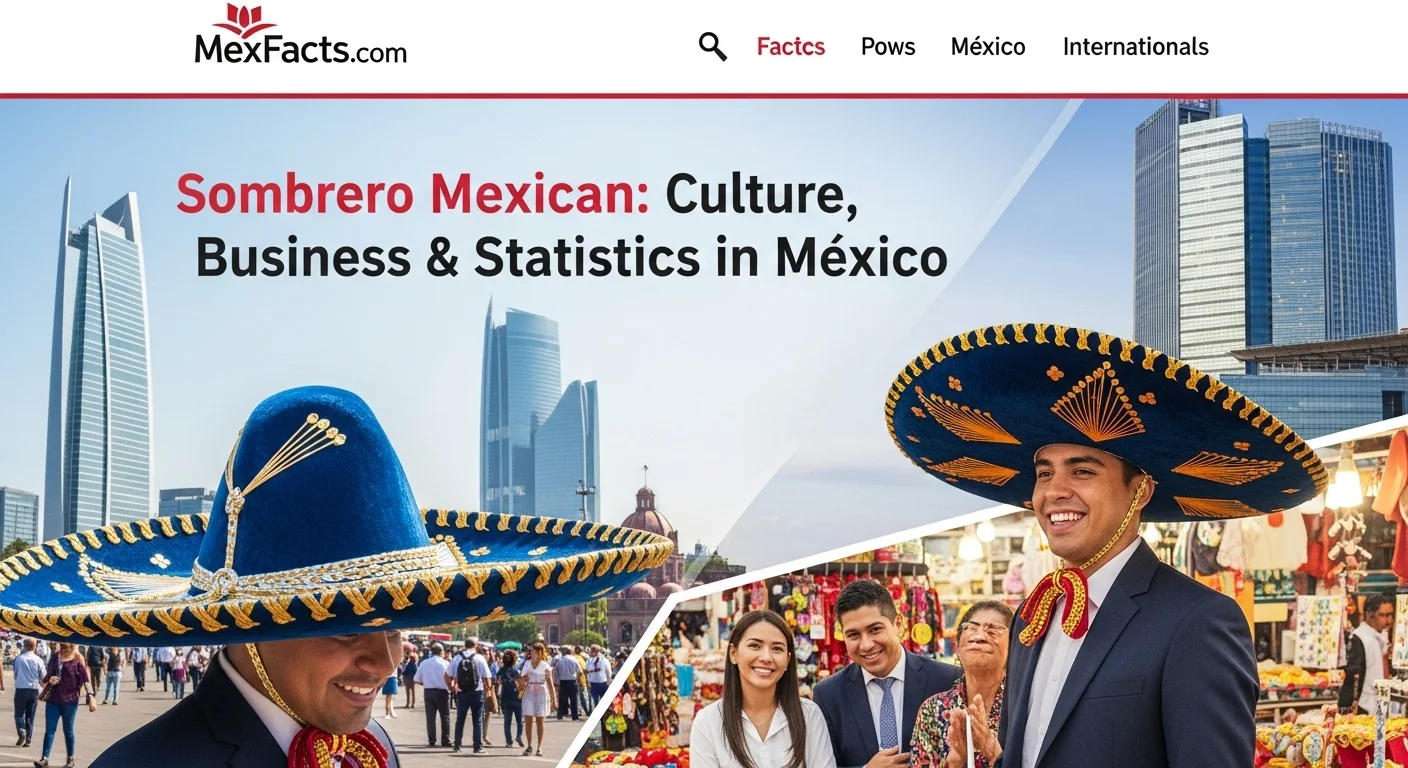
The Mexican sombrero is an iconic wide-brimmed hat developed to provide protection against the elements for rural horsemen and agricultural workers across Mexico. Originating from Spanish colonial designs adapted by vaqueros and 19th-century chinacos, it evolved into an emblem of Mexican equestrian culture, formalized within the national sport of charrería, and popularized globally through music, cinema, and folklore. This guide explores the history, regional varieties, anatomical craftsmanship, and enduring symbolism of Mexico's most recognizable headwear.
Table of Contents
Origins and Historical Evolution
The word sombrero derives directly from the Spanish sombra, meaning shade. While in Spanish the term can refer to any brimmed hat, in international English usage "sombrero" specifically denotes the wide-brimmed, high-crowned Mexican hat. The garment arose from practical necessity in the central and northern ranchlands of New Spain during the colonial era.
Spanish colonists brought broad-brimmed Iberian hats, such as the flat-brimmed Andalusian Cordobés, to the Americas. However, the intense Mexican sun, seasonal torrential rains, and thick brush required adaptations. Indigenous and mestizo ranch hands, known as vaqueros, modified these designs by raising the crowns to provide an insulating pocket of air above the skull and broadening the brims to cast full shade across the neck and shoulders.
By the 19th century, the sombrero had become closely associated with the chinacos—liberal horsemen and guerrilla fighters celebrated during the Mexican War of Independence and the Reform War. Their distinctive equestrian costume, topped by a broad felt or palm hat secured with a leather chin strap, laid the stylistic foundation for modern Mexican equestrian dress. Today, the garment stands as a vital pillar in Mexican history and culture, representing the intersection of pastoral utility, artisan mastery, and national identity.
Anatomy and Traditional Craftsmanship
A traditional Mexican sombrero is an engineered piece of functional craftsmanship rather than a simple decorative accessory. Its classic construction incorporates several defined components:
- Crown (Copa): The vertical section of the hat. In charro sombreros, the crown is intentionally tall—typically 15 to 20 centimeters—to allow air circulation that keeps the rider cool. It often features four longitudinal indentations known as pedradas (stone dents) or a central crease.
- Brim (Ala or Falda): The expansive brim extends outward by 15 centimeters or more. In equestrian designs, the back and sides are often subtly curled upward to prevent the hat from interfering with the rider's shoulders, lariat, or saddle horn during maneuvers.
- Hatband (Toquilla): The band wrapping around the base of the crown. Depending on the formality of the hat, toquillas range from braided horsehair or leather straps to intricate bands embroidered with metallic silver or gold wire.
- Chin Strap (Barboquejo): A leather cord or braided ribbon anchored inside the brim and secured beneath the chin or behind the nape of the neck, preventing the hat from blowing off during brisk gallops.
- Edge Binding (Ribete): A reinforced fabric or leather trim sewn along the outer rim of the brim to prevent fraying and maintain structural stiffness over years of wear.
Crafting an authentic sombrero requires specialized materials. Working hats are meticulously braided from palm fronds, wheat straw, or woven jipijapa fibers, while formal equestrian hats utilize dense felt made of pressed wool or fine hare and rabbit hair (pelo de conejo), which naturally sheds water and holds precise steam shaping.
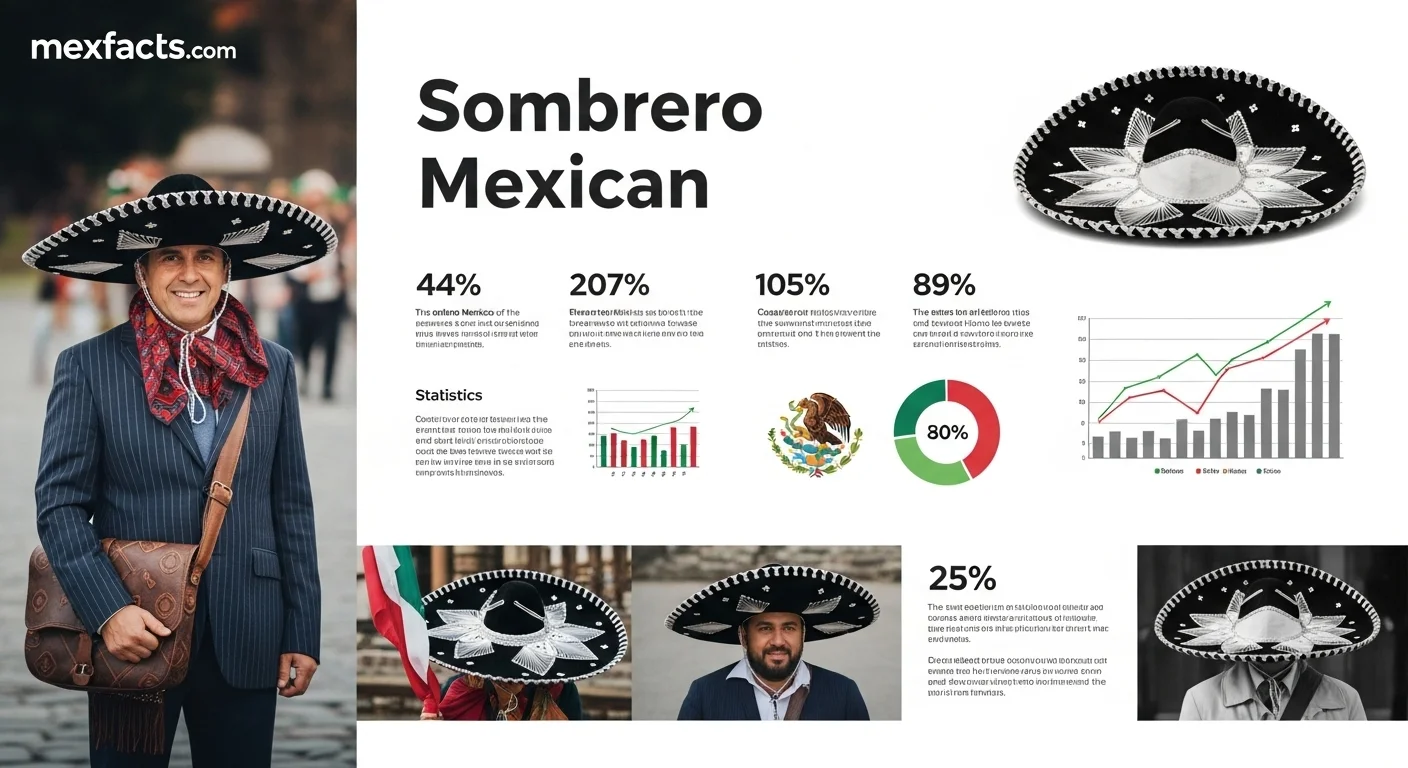
Regional Styles: Charro, Campesino, and Beyond
While the charro silhouette is the most widely recognized abroad, Mexico possesses a diverse spectrum of regional sombreros adapted to distinct microclimates, local vegetation, and cultural traditions:
- Sombrero Charro
- Associated with Jalisco, Hidalgo, and the central bajío plateau, this formal equestrian hat is the crown jewel of Mexican millinery. It is produced in several classes of formal wear, ranging from practical working felt (faena) to luxurious gala versions decorated with piteado (intricate embroidery using wild agave fibers) or silver filigree (galonería).
- Sombrero Campesino (Agricultural Straw Sombrero)
- A lightweight, breathable hat hand-plaited from palm leaf or straw, used by rural field workers across central and southern Mexico. During the Mexican Revolution (1910–1920), broad campesino sombreros became the signature headwear of General Emiliano Zapata and his Liberation Army of the South.
- Sombrero Calentano
- Native to the hot, arid Tierra Caliente region spanning parts of Guerrero and Michoacán, the calentano is made from extraordinarily fine palm braiding (palma de costura). Renowned for its lightweight flexibility and durability, it features a distinctive crown crease and a crisp, slightly rolled brim.
- Sombrero Jarocho
- Integral to the coastal culture of Veracruz and traditional Son Jarocho music, this white palm hat features four pronounced indentations in the crown and a wide, flat brim. Musicians wear it tilted slightly back during festive community fandangos.
These regional variations reflect how local communities transformed indigenous weaving knowledge and imported hat-making techniques to celebrate authentic Mexico traditions across different geographic landscapes.
Charrería, Cinema, and Global Iconography
The sombrero's ascension into a worldwide cultural symbol is intertwined with the institutionalization of charrería, recognized as Mexico's national equestrian sport. In 2016, UNESCO officially inscribed charrería on the Representative List of the Intangible Cultural Heritage of Humanity. The Federación Mexicana de Charrería enforces strict regulations governing the dimensions, materials, and etiquette of the sombrero charro, ensuring that riders honor historical standards during roping, reining, and riding competitions.
The visual power of the sombrero expanded globally during the Golden Age of Mexican Cinema (Época de Oro) between the 1930s and 1950s. Iconic actors and singers like Pedro Infante, Jorge Negrete, and Tito Guízar starred in popular ranchera films, portraying gallant charros who embodied chivalry, musical virtuosity, and patriotism. Their films traveled across Latin America, the United States, and Europe, establishing the charro suit and hat as the ultimate visual shorthand for Mexican identity.
Similarly, mariachi ensembles—inscribed separately by UNESCO as Intangible Cultural Heritage in 2011—adopted the formal charro gala suit, complete with the structured sombrero, as their definitive concert uniform. Through international touring and folkloric dance performances such as the Jarabe Tapatío (internationally recognized as the Mexican Hat Dance), the sombrero cemented its status as one of the world's most instantly recognizable cultural garments.
Cultural Etiquette and Living Heritage
Within traditional communities, the authentic sombrero is treated with high respect rather than as a casual costume piece. Several customary rules of etiquette govern its wear and maintenance:
- Handling and Storage: A formal felt sombrero is never placed upside down on its crown, which can permanently deform the shape. Instead, it is hung from a peg, rested flat on its brim, or stored in a specialized protective wooden or leather hat box (sombrerera).
- Civic Protocol: Like traditional headwear across many cultures, the sombrero is respectfully removed during the performance of the Mexican National Anthem, inside churches, and during formal indoor civic ceremonies, unless the wearer is on active equestrian duty.
- Artisanal Preservation: Modern manufacturing centers, such as San Francisco del Rincón in Guanajuato (often called the hat capital of Mexico), Sahuayo in Michoacán, and Bécal in Campeche (famous for its subterranean cave-woven jipijapa hats), continue to preserve generations of artisanal knowledge against mass-produced synthetic alternatives.
Frequently Asked Questions
- What is the difference between a sombrero charro and a regular Mexican straw hat?
- A sombrero charro is a structured equestrian hat specifically regulated by equestrian tradition, made from high-grade wool or rabbit fur felt or fine interlocking palm, and decorated with formal embroidery. In contrast, standard rural straw hats (sombreros de paja or campesinos) are lightweight, unadorned utilitarian hats designed for agricultural field work.
- Why is the brim of a Mexican sombrero so wide?
- The expansive brim was engineered to protect riders and laborers working long hours under intense subtropical sun and sudden heavy rainfall, casting shade over the face, neck, and shoulders while channeling rain away from the body.
- Are sombreros still worn in daily life in Mexico?
- Yes. While formal felt charro sombreros are reserved for equestrian events, mariachi performances, and patriotic celebrations, practical straw and palm sombreros remain everyday workwear for agricultural workers, farmers, and horsemen across rural Mexico.
Expert Reviews
David Chen, Entrepreneur ⭐⭐⭐⭐⭐
As someone looking to invest in the international food market, this article was a goldmine. It didn't just give me numbers; it gave me the story behind the 'Sombrero Mexican' brand. Understanding the cultural significance of the sombrero helped me shape a more authentic and respectful business approach. ¡Gracias!
Sofia Garcia, Cultural Blogger ⭐⭐⭐⭐⭐
I've always loved Mexican food, but I never thought deeply about the name 'El Sombrero' on so many restaurants. This piece connected the dots for me, from the history of the charros I've seen in parades in Jalisco to the business side of sharing our culture abroad. It made me proud and gave me a deeper appreciation for my own heritage.