
Playacar, Mexico: Complete Guide to Resorts, Beaches, and Phase I vs. Phase II

Playacar is an upscale, master-planned gated enclave situated directly south of downtown Playa del Carmen in Quintana Roo, Mexico. Designed to balance private residential living with world-class hospitality, the community is divided into two distinct sectors: Phase I (an exclusive, low-density beachfront residential neighborhood with preserved Maya ruins) and Phase II (a master-planned golf community home to major all-inclusive resorts, private condominiums, and commercial centers).
Whether planning a vacation at one of its beachfront properties or evaluating long-term residential real estate, understanding Playacar's internal layout, beach access regulations, transport links, and seasonal climate patterns ensures a seamless experience in the Mexican Caribbean.
Contents
- What Is Playacar? Location and Overview
- Playacar Phase I vs. Phase II: Key Differences
- Public Beach Access and Mayan Archaeological Ruins
- All-Inclusive Resorts and Golf Amenities
- Best Time to Visit: Weather, Crowds, and Sargassum
- Transportation: Getting to Playacar from Cancun and Beyond
- Residential Living and Real Estate Considerations
- Frequently Asked Questions About Playacar
What Is Playacar? Location and Overview
Located on the coast of the Riviera Maya in the municipality of Solidaridad, Playacar serves as the southern anchor of Playa del Carmen. The development borders the downtown core and the Cozumel ferry terminal to the north, the Caribbean Sea to the east, and Highway 307 to the west. Conceived in the late 1970s and developed extensively through the 1980s and 1990s, Playacar was the Riviera Maya's first comprehensive master-planned gated resort community.
Before modern infrastructure arrived, this coastal stretch was known in the Yucatec Maya language as Xaman-Há, meaning “Waters of the North.” During the Postclassic period (circa 1200–1521 CE), it functioned as a vital maritime trading post and the primary embarkation point for Maya pilgrims making the ocean crossing to the island sanctuary of Cozumel to honor Ixchel, the goddess of fertility and the moon.
Playacar Phase I vs. Phase II: Key Differences
A frequent point of confusion for visitors is the distinction between Playacar's two subdivisions, which operate under different layouts, zoning rules, and gate systems:
- Playacar Phase I (Fase I): Situated directly along the oceanfront south of the downtown ferry dock, Phase I is strictly residential. It features custom private luxury villas, detached single-family residences, and low-density boutique developments. There are no commercial hotels, large all-inclusive resorts, or retail strips in Phase I. Cobblestone streets, dense coastal foliage, and quiet residential lanes characterize this section. It is within an easy 5- to 10-minute walk to Quinta Avenida (Fifth Avenue) and downtown Playa del Carmen.
- Playacar Phase II (Fase II): Located inland and wrapping around the southern hotel strip, Phase II is significantly larger and mixed-use. It is designed around the 18-hole championship golf course and contains gated condominium complexes, private residential subdivisions, commercial plazas, and an oceanfront hotel zone featuring major all-inclusive resorts. Phase II features a 6-kilometer paved pedestrian and cycling loop (Paseo Xaman-Há) and dedicated security access gates connecting to Highway 307 and southern Playa del Carmen.
Public Beach Access and Mayan Archaeological Ruins
Under Article 27 of the Mexican Constitution and federal maritime regulations (ZOFEMAT), all coastal beaches in Mexico are public property up to 20 meters inland from the highest tide line. Playacar's shoreline features wide stretches of soft white coral sand and clear turquoise water. While the beach itself is public, the land-based entrance gates into Playacar are private and guarded around the clock. Non-resident visitors can reach Playacar Beach on foot by walking south along the open shoreline from downtown Playa del Carmen (just past the ferry dock), while vehicle entry through the gates requires proof of residence, a confirmed resort reservation, or visitor registration.
Within Phase I, several clusters of ancient masonry structures remain preserved in open green areas and residential gardens. Designated by Mexico's National Institute of Anthropology and History (INAH) as Group C of Xaman-Há, these Postclassic ruins include stone temples, residences, and shrines. They can be viewed directly from the community's quiet paved sidewalks, offering a tangible link to pre-Columbian maritime history without the crowded ticket gates of major regional ruins.
All-Inclusive Resorts and Golf Amenities
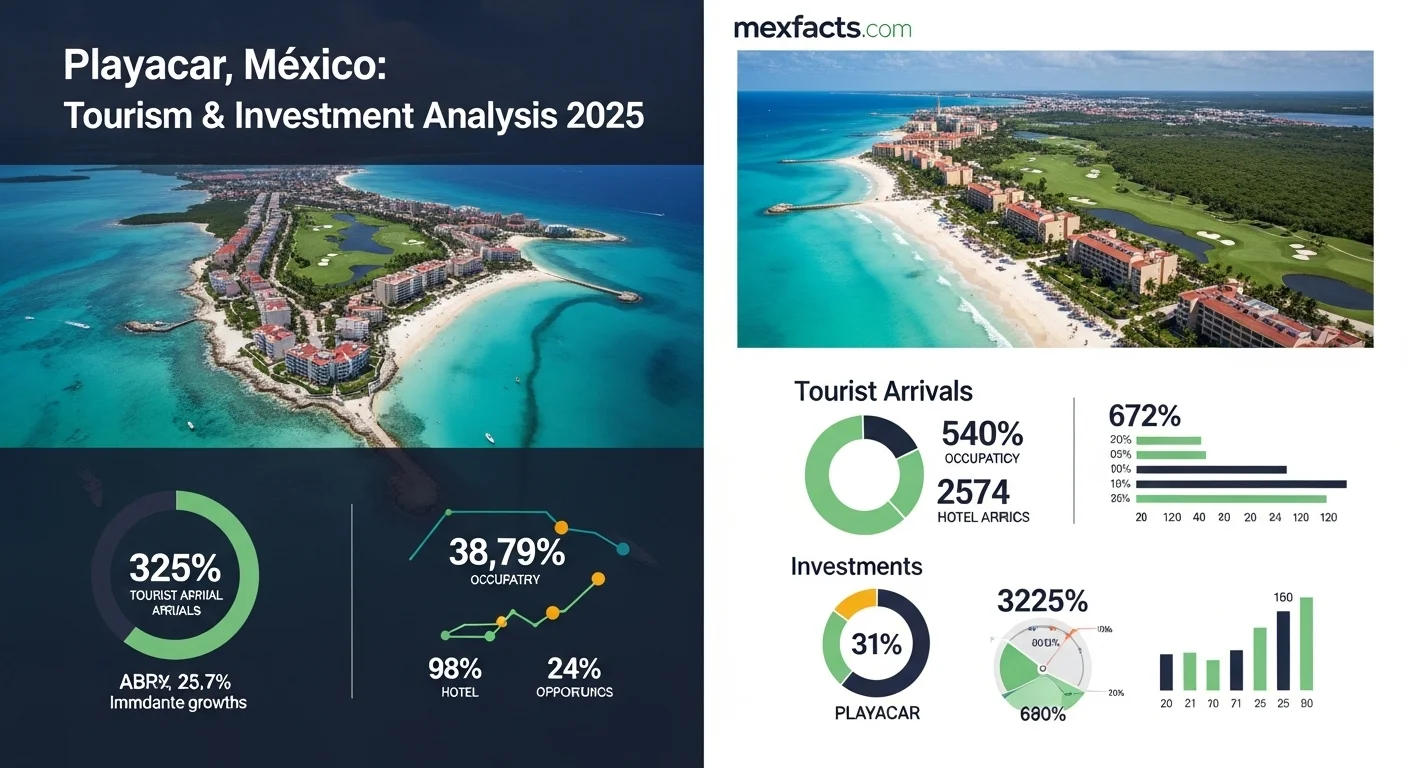
Playacar Phase II contains a prominent hotel zone fronting the Caribbean Sea, offering convenient access to Playa del Carmen while maintaining gated security. Well-known properties situated within the enclave include Sandos Playacar, Riu Palace Riviera Maya, Riu Yucatan, Riu Tequila (situated across Paseo Xaman-Há with dedicated beach club access), Iberostar Tucan and Quetzal, and Viva Maya by Wyndham.
These properties operate on comprehensive packages covering accommodations, multi-restaurant dining, water sports, and evening entertainment. While families gravitate toward properties with dedicated kids' water play zones and family suites, adult travelers often utilize the quieter beachfront wings or adults-only sections available across the hotel row.
At the center of Phase II lies the Hard Rock Golf Club Riviera Maya (formerly Playacar Golf Club). Designed by architect Robert von Hagge and opened in 1994, this par-72, 18-hole championship course measures 7,144 yards from the back tees. Carved directly out of native limestone jungle and surrounded by endemic vegetation and historic stone walls, the course offers all-inclusive green fees that bundle shared golf cart access, practice facility use, and on-course food and beverages.
Best Time to Visit: Weather, Crowds, and Sargassum
Understanding the tropical climate of the Riviera Maya allows travelers to plan around weather, costs, and environmental conditions:
- Dry and High Season (December to April): This period brings the most stable weather, with daytime temperatures averaging 26°C to 29°C (78°F–84°F) and cool evening breezes around 20°C (68°F). Humidity and rainfall are at their lowest. Because this coincides with North American winter travel, resort occupancy peaks and rates are at their annual high, requiring reservations well in advance.
- Shoulder Season (May to June, November): May and June bring warmer temperatures (30°C–32°C / 86°F–90°F) and rising humidity, but lower crowds and competitive room rates. November represents an appealing window as tropical storm activity subsides and temperatures become moderate before peak winter rates take effect.
- Rainy and Hurricane Season (July to October): While mornings are frequently sunny, brief and intense afternoon showers are common. The Atlantic hurricane season peaks in September and October, bringing the highest annual precipitation and occasional tropical depressions. Budget-conscious travelers benefit from significant promotions across vacation packages during these months.
Like much of the Caribbean basin, the Riviera Maya experiences seasonal influxes of pelagic sargassum (macroalgae), typically between April and August. Influx volumes vary substantially year-to-year based on currents and ocean temperatures. In Playacar, major beachfront resorts deploy daily maintenance teams and offshore barriers to clear coastal corridors each morning, ensuring shoreline usability for guests.
Transportation: Getting to Playacar from Cancun and Beyond
Playacar is located approximately 55 to 60 kilometers south of Cancun International Airport (CUN), a drive of roughly 50 to 60 minutes along the four-lane Federal Highway 307.
Travelers have several practical transport alternatives:
- Private Airport Transfers: Pre-booked private shuttles remain the standard option for families and resort guests. Drivers meet arriving travelers outside airport terminals and provide direct point-to-point service through Playacar's security checkpoints directly to hotel lobbies or villa entrances.
- ADO Public Express Buses: Budget-conscious travelers can take the frequent ADO express bus from Cancun Airport directly to the Playa del Carmen Tourist Bus Station on Quinta Avenida and Juárez. From the bus station, authorized local taxis reach Playacar Phase I or Phase II in 5 to 10 minutes.
- Tren Maya: The Playa del Carmen passenger station on the Tren Maya railway network is situated west of Highway 307. Arriving rail travelers connecting from Cancun or southern Quintana Roo can hire licensed station taxis to complete the 15- to 20-minute drive to Playacar's security gates.
- Internal Mobility: Within Playacar, walking and cycling are common along Paseo Xaman-Há. Authorized taxis operate from designated ranks (sitios) outside major resort lobbies and at Plaza Playacar, utilizing standardized zone-based fare sheets for trips into downtown Playa del Carmen.
Residential Living and Real Estate Considerations
Beyond hospitality, Playacar is one of the Riviera Maya's most established residential markets for international homeowners, expatriates, and retirees. The community appeals to buyers seeking subterranean utility infrastructure, landscaped greenbelts, 24-hour guarded checkpoints, and quiet roads isolated from downtown traffic.
Under Mexican real estate law, foreign nationals acquiring residential property within the “Restricted Zone” (50 kilometers from any coastline or 100 kilometers from international borders) do so via a 50-year renewable bank trust known as a fideicomiso bank trust, holding full beneficial ownership rights, including the legal authority to lease, remodel, inherit, or sell the property.
Inventory ranges from golf-view condominiums and townhouses in Phase II to multi-million-dollar custom villas in Phase I. Prospective buyers evaluating real estate in Mexico should account for community-specific operational elements, including the local Homeowners Association (Asociación de Colonos de Playacar) maintenance fees, which fund security personnel, common area landscaping, trash management, and road maintenance.
Frequently Asked Questions About Playacar
- Can non-guests enter Playacar?
- Vehicle and pedestrian gates into Playacar are strictly monitored by private security. Access is granted to residents, registered resort guests, individuals visiting residents with prior authorization, or patrons with confirmed reservations at the golf club. However, the beach itself is public under federal law and can be accessed on foot by walking along the shoreline south from central Playa del Carmen.
- How far is Playacar from Fifth Avenue (Quinta Avenida)?
- Phase I borders the southern terminus of Quinta Avenida directly, making it an easy 5- to 10-minute walk. Phase II is larger; walking to Quinta Avenida takes between 15 and 40 minutes depending on the location of the villa or resort, though a short 5- to 10-minute taxi ride connects any Phase II gate to central Playa del Carmen.
- Is Playacar safe to walk around at night?
- Yes. Playacar is widely regarded as one of the safest communities in the Riviera Maya due to perimeter fencing, controlled checkpoint gates, private security patrols, and well-lit interior streets and jogging paths.
- Are the Mayan ruins inside Playacar open to the public?
- The Xaman-Há ruins are located in open green zones throughout Phase I. While there is no ticket booth or visitor center, anyone legally inside Phase I (such as residents, villa renters, or guests walking through from authorized points) can view the ancient stone structures from the public sidewalks free of charge.
Expert Reviews
The Peterson Family, Toronto ⭐⭐⭐⭐⭐
My family and I just returned from a week at the Sandos Playacar, and this article perfectly captures the magic. The advice on the 'best time to visit' was spot on for us—we went in November and the weather was glorious! It felt safe, beautiful, and truly all-inclusive.
Michael Chen, Real Estate Investor ⭐⭐⭐⭐⭐
As someone looking to invest in a vacation rental, this analysis was invaluable. The breakdown of property values and the realistic look at the Tren Maya's impact gave me the confidence to move forward. This is more than just data; it's genuine insight.
Sofia Valerio, First-Time Visitor ⭐⭐⭐⭐
I was a little overwhelmed planning my trip to the Riviera Maya, but this guide to Playacar was a lifesaver. It helped me understand the difference between Phase I and II and choose the right vibe for my vacation. So helpful!