
Tecate, Mexico Guide: Culture, Living, Safety, and Border Travel

Situated in the rugged inland valleys of Baja California just steps from the United States border, Tecate stands apart from neighboring border metropolises. Recognized since 2012 by Mexico's Ministry of Tourism (SECTUR) as the country's only northern border Pueblo Mágico (Magical Town), Tecate balances quiet provincial charm, deep indigenous Kumeyaay heritage, and an active industrial base known for precision manufacturing and brewing heritage.
This comprehensive guide details everything visitors, prospective residents, and cross-border investors need to know about Tecate. From border crossing hours and transportation corridors to real estate acquisition rules in the Mexican border zone, realistic cost-of-living figures, regional safety conditions, and the town's role as the northern gateway to the Valle de Guadalupe wine country, explore the realities of life in northern Baja California.
What is Tecate, Mexico, and Why Does It Matter?
While the name Tecate is recognized internationally due to the iconic beer label first canned here in 1944, the city itself is an inland municipality with a distinctive character. Set at an elevation of roughly 540 meters (1,770 feet) above sea level in the rolling chaparral hills of northern Baja California, Tecate offers a Mediterranean semi-arid climate that differs noticeably from the marine layer of coastal Tijuana or the extreme desert heat of Mexicali.
Officially established as an agricultural and ranching settlement on April 2, 1892, Tecate serves as a strategic crossroads. It connects the San Diego metropolitan area directly to the interior of the Baja California peninsula via California State Route 188 and Mexican Federal Highway 2. For travelers, retirees, and investors seeking an authentic genuine Mexican experience, Tecate provides tree-lined plazas, celebrated bakeries, and a slower communal tempo without sacrificing immediate overland connectivity to the United States.
Heritage and Pueblo Mágico Identity: Kumeyaay Roots to Mount Cuchumá
Tecate's cultural lineage predates European contact by thousands of years. The region has long served as an ancestral homeland of the Kumeyaay (Kumiai) people. Towering over the city's southern skyline is Cerro Cuchumá (Mount Cuchuma), a mountain recognized by UNESCO as a sacred natural site and protected reserve, historically utilized by Kumeyaay shamans for initiation rites, ceremonial gatherings, and medicinal plant harvesting.
Roughly 45 minutes east of the city center lies El Vallecito Archaeological Zone in the high-elevation windswept boulders of La Rumorosa. Managed by the National Institute of Anthropology and History (INAH), El Vallecito preserves dozens of ancient rock art panels, including the famed pictograph El Diablito (The Little Devil or The Sun Watcher), which precisely aligns with the winter solstice sunrise every December.
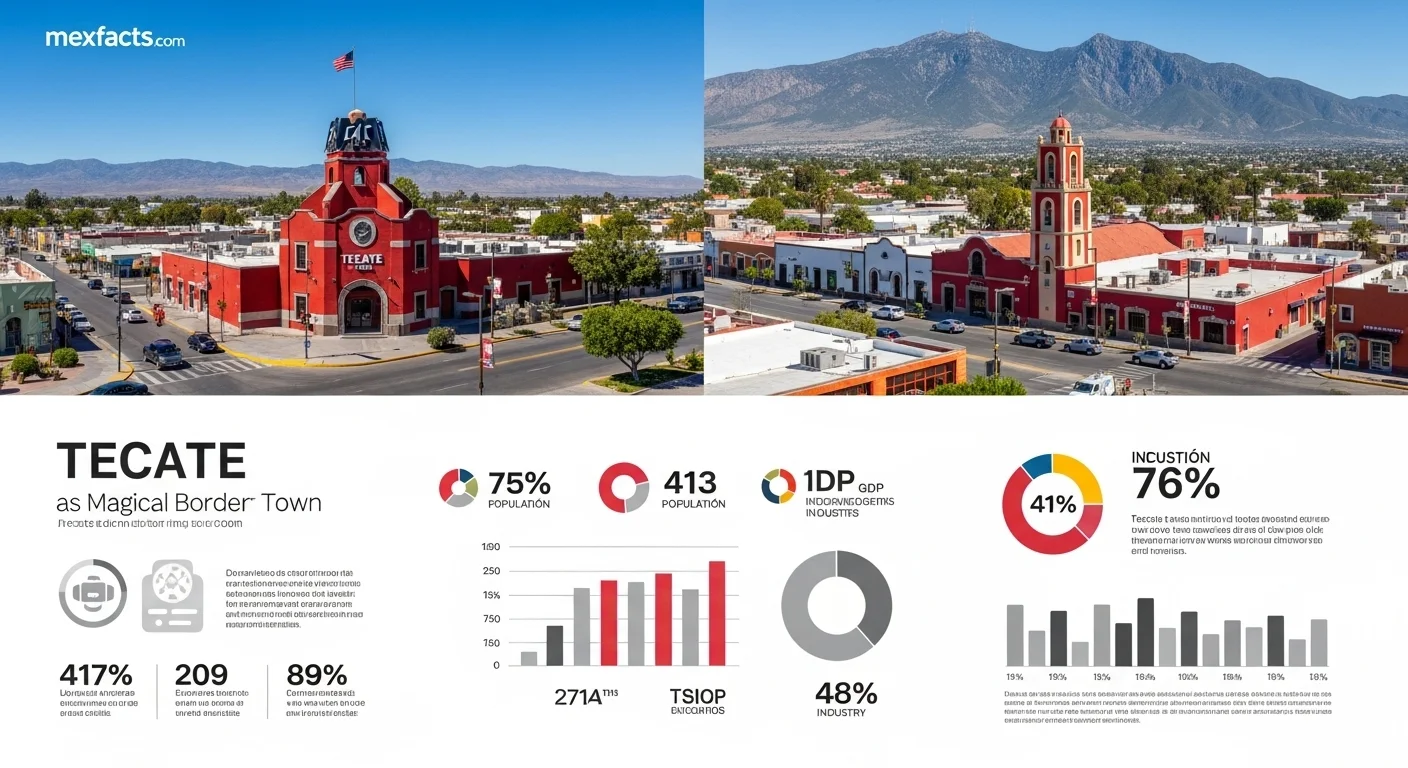
In 2012, Tecate received official designation as a Pueblo Mágico from Mexico's Secretariat of Tourism (SECTUR). It remains the sole municipality along the entire 3,145-kilometer US–Mexico border to hold this status. The heart of the community centers around Parque Miguel Hidalgo, anchored by a historic stone kiosk, shade-giving ash trees, traditional street vendors, and Spanish Colonial Revival public buildings.
Border Crossing and Transportation Logistics
Unlike the massive multi-lane international ports of entry at San Ysidro or Otay Mesa, the Tecate Port of Entry is one of the quietest and most manageable commercial and passenger crossings on the California border. Connecting Tecate, Baja California with the unincorporated community of Tecate in southeastern San Diego County, the port offers distinct operational considerations:
- Operating Hours: Unlike Tijuana's 24-hour crossings, passenger vehicle and pedestrian lanes at the Tecate port operate on restricted daily schedules (historically 6:00 AM to 10:00 PM; travelers should confirm exact operational hours via U.S. Customs and Border Protection before transit).
- Access from California: From downtown San Diego, drivers reach the crossing via California State Route 94 East through Jamul and Dulzura, connecting to CA-188 South for the final two miles. The scenic 45-mile mountain drive takes approximately one hour.
- Highways in Mexico: Tecate provides direct access to Mexican Federal Highway 2 (both the free Libre route and the modern Cuota toll highway), linking westbound to Tijuana in 45 minutes and eastbound through La Rumorosa to Mexicali. Heading south, Mexican Federal Highway 3 serves as the primary gateway to the Valle de Guadalupe wine country and Ensenada.
- Documentation: Foreign visitors driving into Tecate must obtain an Forma Migratoria Múltiple (FMM) tourist card and standard Mexican auto insurance, as US policies do not fulfill liability requirements under Mexican law.
Key Attractions: Bakeries, Brewing, Rock Art, and Wine
Tecate's cultural offerings span culinary traditions, wellness retreats, and outdoor adventure:
- Artisan Bakeries: Tecate is famous across Northwest Mexico as the bread capital of the border. Established in 1969, El Mejor Pan de Tecate operates around the clock, baking hundreds of varieties of traditional sweet breads (pan dulce), artisanal empanadas, and rustic sourdoughs in brick-lined ovens. Several competing neighborhood bakeries line the surrounding blocks.
- Cervecería Tecate: Established in 1944 by Alberto Aldrete and later integrated into Cuauhtémoc Moctezuma (now Heineken México), the historic brewery dominates several city blocks near the town center. While industrial production has modernized, the facility remains an architectural landmark offering guided museum exhibits, tasting gardens, and historic memorabilia.
- Rancho La Puerta Wellness Resort: Founded in 1940 by Edmond and Deborah Szekely, Rancho La Puerta pioneered the modern fitness spa retreat concept. Spread across 4,000 private acres at the base of Mount Cuchumá, this destination remains one of North America's most decorated exclusive wellness resorts, drawing international visitors for organic gastronomy, hiking, and holistic therapies.
- Northern Gateway to the Ruta del Vino: Highway 3 begins in Tecate and heads south through Valle de las Palmas directly into the Valle de Guadalupe. Several boutique vineyards and historic olive ranches operate in the immediate Tecate municipal zone, including Rancho Tecate and San Valentín.
Demographics, Manufacturing, and the Economic Engine
According to official census figures from the National Institute of Statistics and Geography (INEGI), the municipality of Tecate has an estimated population of approximately 108,000 residents. This intermediate scale shields Tecate from the infrastructure strain and high population turnover experienced by larger urban centers along the northern border.
Economically, Tecate is an established player in cross-border industrial manufacturing. Over 100 maquiladora operations are distributed across planned industrial complexes such as Parque Industrial Tecate and the newer developments along Highway 2. Key export sectors include:
- Aerospace & Defense: Precision metal fabrication, composite assemblies, and electronic wiring harnesses.
- Medical Devices: Specialized manufacturing and cleanroom packaging of sterile medical components.
- Precision Hardware & Electronics: Global brands, including lock manufacturers, electronics assemblers, and automation component providers, maintain long-standing operations here.
- Beverage and Agriculture: Commercial brewing, viticulture, stone fruit, and olive oil production support the regional agribusiness base.
Compared to larger border manufacturing hubs, Tecate features a multi-generational workforce with lower turnover rates, making it an attractive destination for foreign direct investment under global nearshoring initiatives.
Real Estate Overview and Restricted Zone Buying Rules
For cross-border professionals, remote workers, and retirees comparing options between Southern California and Baja California, Tecate's property market offers substantial land and residential value. Property styles generally fall into four categories:
- Centro and Historic Districts: Single-family adobe or brick homes within walking distance of Parque Hidalgo, offering urban convenience and rental appeal.
- Modern Subdivisions: Gated master-planned communities on the municipal perimeter, offering contemporary infrastructure, private security, and suburban floor plans.
- Country Estates (Ranchos): Acreage properties tucked into the oak-forested canyons around Nueva Colonia Hindú and along Highway 3, favored by buyers seeking private equestrian facilities, vineyards, or retreat residences.
- Commercial and Industrial Parcels: Logistics land positioned along Federal Highway 2D, targeting nearshoring supply chains.
Prospective international buyers must understand Mexican property legislation. Because Tecate sits entirely within 100 kilometers (62 miles) of the international land border, it lies within the constitutional "Restricted Zone" (Zona Restringida) established by Article 27 of the Mexican Constitution. Non-Mexican citizens acquire residential real estate legally via a fideicomiso—a renewable 50-year bank trust held through an authorized Mexican financial institution—or through a Mexican corporation for commercial ventures.
Cost of Living Breakdown: Tecate vs. Southern California
The primary economic draw for cross-border commuters and retirees choosing Tecate is the significant disparity in living expenses compared to San Diego County. While prices for imported goods and vehicles remain relatively uniform, day-to-day services provide substantial savings:
- Housing and Rent: Long-term rental leases for modern two- or three-bedroom residences in Tecate typically range between 40% and 65% below comparable suburban housing in southern San Diego County. Property purchase costs per square meter offer an even wider margin of advantage.
- Utilities and Telecommunications: High-speed fiber-optic internet is widely available through regional telecommunications carriers at competitive monthly rates. Water and municipal service costs are moderate, though summer electrical bills require management due to air-conditioning demands during inland heatwaves.
- Food and Fresh Produce: Local open-air markets, butcher shops, and regional supermarkets provide locally sourced Baja California produce, dairy, and meats at a fraction of US grocery store prices.
- Healthcare and Dental Care: Tecate has experienced, bilingual dentists, general practitioners, and pharmacies near the border crossing. Out-of-pocket medical visits and routine procedures cost substantially less than uninsured or co-pay costs in California.
- Dining and Entertainment: From neighborhood taco stands to upscale vineyard restaurants, dining out remains exceptionally cost-effective, with premium meals costing significantly less than equivalent dining in Southern California.
Safety, Security Realities, and Travel Precautions
Security is the most critical question for prospective visitors and new residents. Travel advisories issued by the US Department of State and foreign consulates categorize the state of Baja California under elevated advisory levels, citing homicides and criminal organization activity that primarily concentrate in specific non-tourist sectors of Tijuana and Mexicali. For context on neighboring urban conditions, review our Tijuana travel guide.
In Tecate, the municipal core, central business district, and primary highway corridors maintain a peaceful, tight-knit atmosphere. However, as an inland transit route through rugged mountain terrain, rural parts of the municipality have experienced localized organized crime activity. Travelers and expats can minimize risk by adhering to standard security protocols:
- Travel During Daylight: Plan overland journeys between sunrise and sunset, particularly when traversing rural side roads or driving through La Rumorosa.
- Use Toll Highways: Always select the Federal Highway 2D toll road (Cuota) instead of isolated free secondary roads (Libre) for transit between Tecate, Mexicali, and Tijuana.
- Maintain Situational Awareness: Avoid flashing luxury items, high amounts of cash, or expensive jewelry. Park in secured or well-lit lots in the city center.
- Emergency Contacts: Dial 911 in Mexico for police, medical, or fire emergencies. The Green Angels (Ángeles Verdes) provide free roadside mechanical assistance along major toll highways by dialing 078.
Frequently Asked Questions About Tecate, Mexico
- Is Tecate safe for day trips and tourists?
- Yes, for travelers who exercise sensible cross-border precautions. The historic downtown area around Parque Miguel Hidalgo, the main bakeries, the brewery district, and established wellness resorts like Rancho La Puerta are peaceful and welcoming during daylight hours.
- What are the border crossing hours at Tecate?
- Unlike the 24-hour ports at San Ysidro or Otay Mesa, the Tecate Port of Entry operates on fixed daily hours, typically from 6:00 AM to 10:00 PM. Travelers should verify exact operational schedules with U.S. Customs and Border Protection prior to departure, especially when returning on Sunday evenings or holiday weekends.
- Can foreigners buy real estate in Tecate?
- Yes. Because Tecate is within 100 kilometers of the international border, foreign nationals purchase residential real estate through a 50-year renewable bank trust called a fideicomiso, which grants full rights to sell, lease, or bequeath the property.
- Do you need a car to visit Tecate?
- For day trips focused purely on downtown Tecate—sampling bread at local bakeries, walking around Parque Hidalgo, and dining at central restaurants—visitors can park on the US side in Tecate, California, and walk across the pedestrian border lane. A vehicle is necessary to visit El Vallecito, Rancho La Puerta, or the vineyards along Highway 3.
- What is the best time of year to visit Tecate?
- Spring (March through May) and Autumn (September through November) offer optimal weather, with mild daytime temperatures and crisp evenings. Inland summer temperatures frequently exceed 32°C (90°F), while winter nights can drop near freezing in the higher elevations around La Rumorosa.
Expert Reviews
Robert K., American Expat ⭐⭐⭐⭐⭐
My wife and I retired to Tecate three years ago. We were looking for a slower pace of life without being too far from family in San Diego. We found a beautiful little rancho just outside of town. The community is so welcoming, the cost of living is a relief, and honestly, we feel safer here than we did in many parts of the US. This guide is spot on about the town's real character.
Ana Sofia Torres, Entrepreneur ⭐⭐⭐⭐⭐
As an investor in the nearshoring boom, I found this article incredibly insightful. It correctly identifies Tecate's stable workforce and strategic location as key assets. It goes beyond the typical business brief, giving a real feel for the culture and quality of life, which is crucial when relocating management. Excellent and comprehensive.
Mark P., Frequent Visitor ⭐⭐⭐⭐
I've been crossing into Tecate for weekend trips for years to visit the brewery and start my drive to the Valle de Guadalupe. This article captures the relaxed vibe perfectly. It's a great, honest look at the town. The safety section is particularly well-balanced and reflects my personal experience—use common sense and you'll have an amazing time.