
Mexican Street Food: Authentic Guide to Antojitos, Regional Traditions, and Culture

Mexican street food, collectively known as antojitos ("little cravings"), represents the culinary backbone and daily rhythm of Mexico. Built upon thousands of years of nixtamalized maize tradition, street food brings together rich culinary history, local craftsmanship, and massive economic vitality. From early-morning tamale stands and market comales to late-night taquerías serving tacos al pastor, street-level dining serves millions of commuters, workers, and families every day. Across Mexico, an estimated 874,000 vendors—over half of whom are women—prepare and sell street fare, forming a vital pillar of the nation's informal economy and cultural heritage. This comprehensive guide details the core styles of antojitos, regional traditions across Mexico, practical street dining and hygiene guidance, and the economic landscape shaping this world-renowned gastronomy.
Table of Contents
- What Is an Antojito? The Core of Mexican Street Food
- The Foundation: Nixtamalization and Corn Masa
- Essential Antojitos: Anatomy and Varieties
- Regional Mexican Street Food Traditions
- Economic and Cultural Role of Street Stalls
- Market Data and Street Food Statistics
- Practical Ordering and Hygiene Guide for Diners
- Modern Evolution, Global Reach, and Future Outlook
- Frequently Asked Questions
What Is an Antojito? The Core of Mexican Street Food
In Mexican culinary culture, an antojito translates literally to a "little craving." Far from being a mere snack or quick bite, antojitos constitute a formal, sophisticated category of informal gastronomy. They are typically informal, masa-based dishes prepared quickly on street corners, in bustling municipal markets (mercados públicos), and at specialized neighborhood stalls known as puestos.
Unlike formal, multi-course sit-down meals (comida corrida or banquet dining), antojitos are designed for immediate consumption. They serve distinct social and temporal functions: providing quick, hearty breakfasts on urban commutes, satisfying mid-day sustenance, or fueling late-night gatherings. In 2010, UNESCO inscribed Traditional Mexican Cuisine onto the Representative List of the Intangible Cultural Heritage of Humanity, recognizing the communal traditions, indigenous agrarian practices, and continuous culinary heritage that street-level food exemplifies.
The Foundation: Nixtamalization and Corn Masa
At the center of almost every authentic Mexican street food dish is masa, the fresh corn dough produced through nixtamalization. Developed by Mesoamerican civilizations thousands of years ago, nixtamalization is the process of steeping and cooking dried field corn in an alkaline solution, typically water mixed with food-grade slaked lime (calcium hydroxide).
This biochemical process fundamentally transforms the maize:
- Nutritional bioavailability: It frees bound niacin (vitamin B3), prevents pellagra, and dramatically increases dietary calcium absorption.
- Structural pliability: The chemical breakdown of the pericarp allows the wet kernels (nixtamal) to be ground in a mill (molino) into an elastic dough capable of holding its shape without gluten.
- Aroma and taste: It imparts the distinctive, nutty, earthy fragrance and flavor unique to authentic Mexican corn tortillas and masa creations.
The mastery of street food lies in how a skilled vendor works this single dough on a comal (a flat, circular griddle made of clay or cast metal) using variations in thickness, shaping, and cooking technique—baking, shallow frying, deep frying, or steaming.
Essential Antojitos: Anatomy and Varieties
Mexican street gastronomy features an extensive taxonomy of dishes, each defined by how the masa is manipulated, cooked, and garnished:
- Tacos
- The world's most versatile street food. A pliable, freshly griddled corn tortilla folded around diverse fillings, including spit-roasted marinated pork (al pastor), braised pork slow-cooked in its own fat (carnitas), thinly sliced confit beef (suadero), pit-roasted lamb or mutton (barbacoa), or stewed fillings (guisados). Usually garnished with minced white onion, chopped cilantro, fresh lime juice, and spicy salsa.
- Sopes
- Thick rounds of corn masa griddled on the comal until firm, after which the vendor pinches the outer edges upward by hand while still hot to form a shallow rim. The dough is lightly fried, then layered with refried pinto or black beans, shredded chicken, beef, or vegetables, crumbled queso fresco or cotija, Mexican crema, shredded lettuce, and salsa.
- Tlacoyos
- Ancient, diamond- or oval-shaped masa cakes of pre-Hispanic origin. Before cooking on a dry comal, the raw dough is filled along its center with refried black beans, ground fava beans (habas), or fresh requesón (Mexican ricotta). Once cooked through, tlacoyos are customarily topped with tender nopal (prickly pear cactus) salad, diced onion, fresh cheese, and fiery salsa verde or roja.
- Gorditas
- Thick masa cakes pressed small and either baked on a comal or deep-fried until puffed. The vendor slits the edge open to create a pocket, stuffing it with ingredients such as chicharrón prensado (pressed seasoned pork cracklings), braised carnitas, rajas con queso (poblano strips with cheese), or refried beans.
- Huaraches
- Named for their resemblance to traditional woven leather sandals, huaraches are elongated, flattened cakes of masa filled with a thin internal layer of smashed beans. Griddled and lightly fried, they are covered with steak (bistec), chorizo, costilla, or eggs, accompanied by diced onions, salsa, and fresh cheese.
- Tamales
- A morning staple across the nation. Ground nixtamalized corn masa is whipped with lard or vegetable oil and rich broth to create a light batter, spread inside dried corn husks (totomoxtle) or tender banana leaves, filled with meat and salsa (such as pork in salsa verde, chicken in mole poblano, or rajas con queso), and steamed inside tall aluminum pots (tamaleras).
- Pambazos
- A signature urban street sandwich. Soft white bread rolls (pan pambazo) are soaked in a bright red, mildly spicy guajillo chile marinade, lightly crisped on a greased comal, and stuffed with cooked potatoes mashed with spicy pork chorizo. They are finished with shredded lettuce, crema, and crumbled queso añejo.
- Elotes and Esquites
- The ultimate street-side corn snacks. Elotes consist of whole ears of sweet or field corn boiled with epazote or roasted over hot coals on a skewer. Esquites feature loose corn kernels simmered in a savory broth of epazote, bone marrow, and chiles. Both are generously slathered with mayonnaise, fresh lime juice, finely grated cotija cheese, and mild or hot chile powder.
Regional Mexican Street Food Traditions
Mexico's geographical and cultural diversity produces distinct regional street food ecosystems:
- Central Mexico and Mexico City (CDMX): Known as the capital of street stalls, offering tacos de suadero cooked in circular concave comales, blue-corn tlacoyos, quesadillas (which in CDMX do not automatically contain cheese unless requested), pambazos, and cemitas poblanas loaded with avocado, papalo, and stringy quesillo.
- The Pacific Coast and Baja California: Famous for seafood street stands. In Ensenada and San Felipe, fresh fish and shrimp are dipped in a light beer batter, deep-fried until crisp, and served in warm corn tortillas with shredded cabbage, pico de gallo, and spicy crema. In Sinaloa and Nayarit, seafood carts serve fresh ceviches, aguachiles cured in lime juice and serrano chiles, and smoked marlin tacos.
- Northern Mexico: Dominated by wheat flour tortillas (tortillas de harina) and wood-fired grilling. Specialties include carne asada cooked over mesquite charcoal in Sonora and Monterrey, hearty burritos filled with machaca or deshebrada in Chihuahua, and tacos de discada (mixed meats cooked in an agricultural plow disc).
- Southern and Southeastern Mexico (Oaxaca and Yucatán): In Oaxaca, night markets serve tlayudas—large, crispy toasted corn tortillas spread with unrefined pork lard (asiento), refried black beans, shredded quesillo, and grilled tasajo or cecina. In the Yucatán Peninsula, street carts feature panuchos (tortillas stuffed with black bean paste and topped with pickled red onions and shredded turkey) and salbutes, alongside slow-roasted cochinita pibil.
Economic and Cultural Role of Street Stalls
Street food vendors (taqueros, tamaleros, and garnacheros) do not merely prepare meals; they anchor neighborhoods and sustain social cohesion. The street stall (puesto) serves as a democratic communal space where professionals, construction workers, students, and families gather elbow-to-elbow on plastic stools or eat standing up.
In major metropolitan centers like Mexico City, Guadalajara, and Monterrey, street stalls provide affordable, fresh, hot meals that keep daily urban life moving. For millions of commuting workers, antojitos offer accessible nutrition at prices significantly lower than formal dining establishments, mitigating the cost of living while celebrating ancestral foodways.
Market Data and Street Food Statistics
Behind the sensory experience of Mexico's street corners lies a massive economic engine characterized by robust employment and supply chain integration:
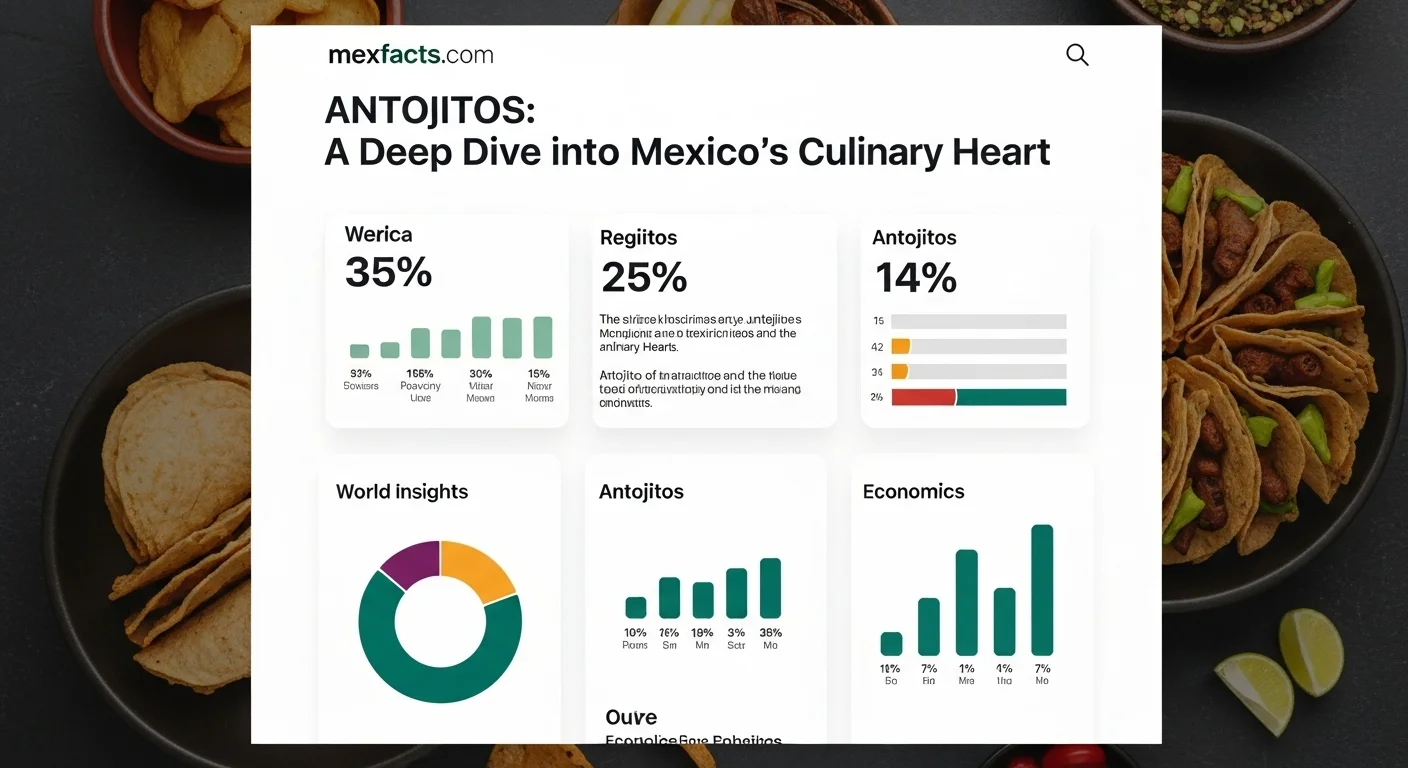
- Employment scale: According to data from the National Survey of Occupation and Employment (ENOE) published by Mexico's National Institute of Statistics and Geography (INEGI), approximately 874,000 workers are dedicated to preparing and selling food in street stalls and informal settings across the country.
- Gender distribution: Women represent nearly 57% of street food preparers and vendors in Mexico, making street gastronomy one of the primary avenues for female economic autonomy, micro-entrepreneurship, and household income generation.
- National restaurant and food sector contribution: The broader food service and restaurant sector generates nearly 4 million direct jobs in Mexico, according to industry estimates from the National Chamber of the Restaurant and Seasoned Food Industry (CANIRAC).
- Economic output: Market analyses of Mexico's street and informal food sales estimate the annual market volume at upwards of $11.5 billion USD, reflecting steady consumer demand that remains resilient across inflationary cycles.
- Agricultural supply chain integration: The foundation of antojitos connects directly to the domestic agricultural economy. Mexico produces over 27 million metric tons of corn annually, supporting thousands of municipal mills (molinos de nixtamal) and community tortillerías that feed both residential kitchens and commercial street stalls daily.
Practical Ordering and Hygiene Guide for Diners
Navigating street food safely and confidently requires practical knowledge of stall dynamics, basic etiquette, and established food safety principles.
Assessing Food Safety and Stall Hygiene
Health authorities and food safety experts recommend following these clear, observational guidelines when choosing a street vendor:
- High customer turnover: Choose stalls with a steady, bustling stream of local customers. High turnover ensures that ingredients are fresh and cooked continuously rather than sitting at room temperature.
- Cooking to order on high heat: Prioritize dishes prepared or reheated on a sizzling comal, in hot oil, or directly over a flame immediately before serving. Thorough cooking eliminates common foodborne pathogens.
- Division of labor and cash handling: Look for stalls where the person handling physical money is not directly touching raw ingredients or assembled food, or where the cook uses tongs or clean food-grade barriers.
- Safe water and ice: Verify that fruit drinks (aguas frescas) are made with commercial purified water (agua purificada). When in doubt, opt for bottled or canned beverages.
- Fresh condiments: Check that salsa bowls, limes, and diced herbs look vibrant, are kept covered, and are regularly refreshed by the stall operator.
Ordering Etiquette and Common Vocabulary
Street carts operate at a brisk pace. Understanding common terminology helps make the experience smooth and enjoyable:
- "Con todo" (With everything)
- The standard default garnishing for tacos and antojitos, usually consisting of freshly diced white onions and minced cilantro, plus salsa depending on the vendor.
- "Con copia" / "Sin copia"
- Refers to tacos served with two tortillas (the traditional "copy" that catches juices and prevents tearing) or a single tortilla.
- "Para llevar" / "Para comer aquí"
- Indicates whether your order is "to take away" (wrapped in butcher paper and placed in a plastic bag) or "to eat here" (often served on a plastic plate lined with a thin plastic sleeve for rapid sanitation).
- "¿Cuánto le debo?" / "La cuenta"
- Used to ask for your total. At most traditional street carts, customers keep mental track of what they consumed and pay the vendor or cashier at the end of the meal.
- "¡Buen provecho!"
- A courteous, universal greeting meaning "enjoy your meal," customarily exchanged when arriving at or leaving a shared street counter.
Modern Evolution, Global Reach, and Future Outlook
Mexican street food has evolved from a local cultural tradition into one of the most celebrated and commercially dynamic culinary forces globally:
Global Recognition and Fast-Casual Scaling
International appreciation for authentic Mexican cuisine has grown rapidly. In major culinary capitals from London and Tokyo to New York and Los Angeles, traditional antojito concepts have transitioned from informal immigrant establishments into high-profile culinary destinations, Michelin-recognized taquerías, and successful fast-casual restaurant groups. The global market for Mexican food service continues to expand, driven by consumer demand for bold, scratch-cooked, customizable dishes.
Culinary Modernization and Plant-Based Adaptation
Modern chefs and street vendors are increasingly blending traditional preparation methods with modern dietary preferences. Pre-Hispanic culinary traditions—which relied heavily on indigenous vegetables, wild greens (quelites), beans, squash blossoms, and mushrooms—make authentic Mexican street food naturally adaptable to vegetarian and plant-based diners. Innovative stalls across urban centers now offer plant-based versions of al pastor, vegan chorizo, and grilled nopal tacos without sacrificing traditional adobo marinades and salsa profiles.
Supply Chain Integrity and Native Maize Preservation
As international demand grows, culinary advocates and agronomists place heightened focus on protecting native heirloom maize varieties (maíz criollo). Projects connecting small-scale farmers in Oaxaca, Puebla, and the State of Mexico directly with urban taquerías and international exporters are revitalizing heirloom corn production. This ensures that traditional nixtamalization remains viable against industrial, hyper-processed corn flours.
Frequently Asked Questions
What is the difference between an antojito and a regular Mexican meal?
An antojito is an informal, masa-based food typically prepared on a comal or in a fryer and eaten at street stalls, markets, or casual counters. In contrast, a standard Mexican sit-down meal (such as a multi-course comida corrida) features an appetizer soup or rice, a main stewed dish with tortillas, and a beverage, structured around a formal dining setting.
Are Mexican antojitos inherently spicy?
Most antojitos are not excessively spicy when prepared. Heat is primarily customized by the diner through table salsas (such as salsa verde, salsa roja, or habanero sauces) and pickled chiles provided at the counter. This allows diners to adjust spice levels to their personal tolerance.
What are the primary differences between tacos, sopes, and tlacoyos?
While all three utilize nixtamalized corn masa, their structural form and preparation differ:
- Taco: A flat, thin tortilla griddled and folded around a filling.
- Sope: A thicker disk whose outer edges are pinched upward to create a rim that holds toppings after being lightly fried.
- Tlacoyo: An oval- or torpedo-shaped cake stuffed internally with beans, cheese, or fava beans before being griddled dry on a comal.
Is Mexican street food safe for international travelers to eat?
Yes, street food can be enjoyed safely by selecting stalls with high local customer turnover, choosing foods cooked fresh to order at high temperatures, ensuring drinks use purified water, and observing that cooks maintain separate cash-handling procedures.
Expert Reviews
Daniel Carter, Entrepreneur ⭐⭐⭐⭐⭐
As an entrepreneur exploring the food industry, this article was a goldmine. I knew Mexican food was popular, but I never understood the deep cultural roots and the sheer economic scale of antojitos. This piece connected the dots between the history and the business potential, giving me a much clearer vision. Thank you!
Sofia Garcia, Culinary Blogger ⭐⭐⭐⭐⭐
I grew up watching my grandmother make sopes and tamales from scratch. Reading this felt like coming home. It beautifully explains that a street food stall is more than a place to eat—it's the heart of the neighborhood. I felt so proud to see our culinary heritage described with such care and depth.
Liam Murphy, World Traveler ⭐⭐⭐⭐⭐
My wife and I traveled through Puebla and Oaxaca last year and were blown away by the food. This article is the perfect guide for anyone who wants to understand what they're eating. It breaks down the differences between tlacoyos, chalupas, and gorditas in a way that's easy to grasp. A must-read for any food-loving traveler!