
Living in Querétaro: Housing Costs, Neighborhoods, and Practical Relocation Guide
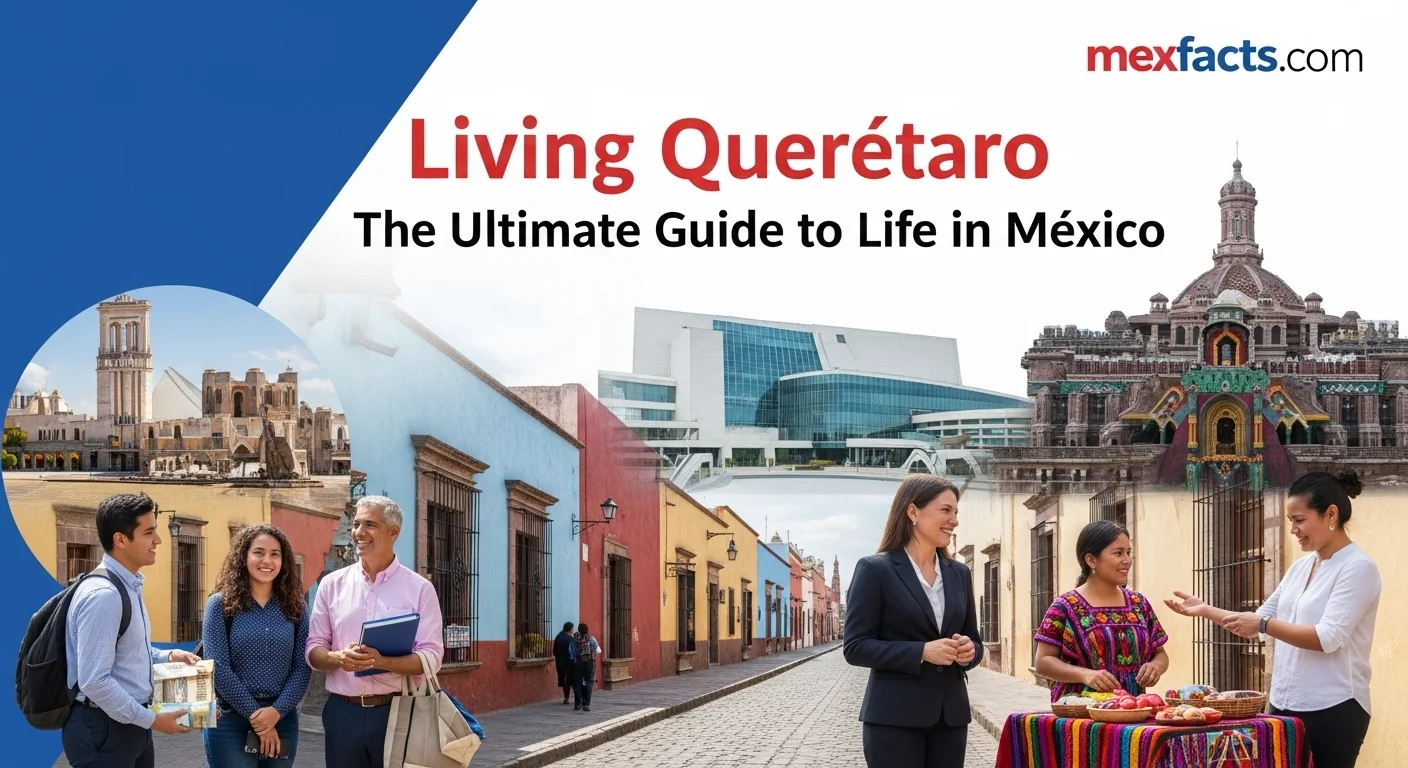
Living in Querétaro offers a compelling balance of strong public safety ratings, modern infrastructure, and preserved colonial heritage in central Mexico. With a comfortable monthly budget ranging from $1,500 to $2,500 USD for individuals and couples, the city attracts foreign professionals, families, and retirees seeking first-tier amenities without the congestion of Mexico City. When planning on moving to Mexico, understanding Querétaro's specific rental mechanics, distinct suburban micro-climates, private healthcare network, and local public safety data is essential for a seamless relocation.
Table of Contents
- Why Querétaro: Modern Economy and Quality of Life
- Safety Reality: What Crime Statistics and Daily Life Show
- Cost of Living Overview: Monthly Budget Benchmarks
- Querétaro Neighborhood Guide: Where to Live
- Renting in Querétaro: Leases, Deposits, and Pólizas Jurídicas
- Daily Expenses: Utilities, Groceries, and Transport
- Healthcare and Insurance Infrastructure
- Urban Growth, Traffic, and Infrastructure Challenges
- Frequently Asked Questions
Why Querétaro: Modern Economy and Quality of Life
Santiago de Querétaro, the capital of the state of Querétaro, sits in Mexico's central Bajío region at an elevation of roughly 1,820 meters (5,970 feet). This high-plateau geography provides a semi-arid, temperate climate with mild winters and sunny, warm days year-round. Located approximately 220 kilometers (137 miles) northwest of Mexico City, Querétaro has evolved from a quiet colonial outpost into one of Latin America's most dynamic industrial and technological hubs.
The city's appeal lies in its dual identity. The historic center (Centro Histórico) was designated a UNESCO World Heritage site in 1996 for its well-preserved baroque monuments, cobblestone pedestrian corridors, and the iconic 74-arch aqueduct constructed in the 18th century. Surrounding this historic core are extensive modern business parks, international research facilities, and expanding data center campuses hosting operations for companies like Microsoft, Amazon Web Services, Safran, Bombardier, and Airbus.
Administratively, newcomers should distinguish between the municipal center of Santiago de Querétaro and its broader metropolitan area, which incorporates the adjacent municipalities of Corregidora to the southwest and El Marqués to the east. Many of the modern gated developments popular with international residents technically sit within these neighboring municipalities while sharing the municipal core's cultural and commercial amenities.
Safety Reality: What Crime Statistics and Daily Life Show
Safety is consistently the primary question for anyone evaluating international relocation. Within the Mexican national context, Querétaro maintains a strong safety record. Independent data published annually in the Mexico Peace Index by the Institute for Economics & Peace (IEP) regularly ranks Querétaro among the top ten most peaceful states in Mexico.
Statewide homicide figures typically register between 7 and 9 per 100,000 residents, a fraction of the national average and notably lower than neighboring states in the central corridor. International security evaluations, including the official travel advisory tiers for Mexico, generally assign Querétaro mild exercise-normal-precautions advisory status, contrasting sharply with more volatile regions.
However, an objective assessment requires recognizing that Querétaro is an urban area of more than 1.5 million metropolitan inhabitants. Petty theft, vehicle break-ins, and opportunist property crimes occur, particularly around public transit terminals, unmonitored street parking, and peripheral neighborhoods. In response, a significant portion of middle- and upper-income residents live in private master-planned communities known as fraccionamientos cerrados or privadas, which feature perimeter fencing, 24-hour security guards, and electronic entry control. Exercising standard situational awareness—such as avoiding walking alone late at night in unfamiliar areas and keeping valuables out of parked cars—remains standard practice.
Cost of Living Overview: Monthly Budget Benchmarks
While Querétaro is more expensive than southern Mexican states or small rural towns, it offers substantial purchasing power compared to major cities in the United States, Canada, and Europe. When evaluating where to live in Mexico, Querétaro sits in a comfortable middle ground: more affordable than Mexico City or coastal resort destinations like Puerto Vallarta and Los Cabos, but slightly above industrial peers like Puebla or San Luis Potosí.
The following benchmarks represent realistic monthly operating budgets for international residents:
- Single Professional: $1,400 to $2,100 USD (approx. 24,000 to 36,000 MXN) per month. This covers a modern one- or two-bedroom apartment, utilities, high-speed fiber internet, private healthcare coverage, regular dining out, and ride-hailing services.
- Couple: $2,000 to $2,900 USD (approx. 34,000 to 50,000 MXN) per month. This budget accommodates a three-bedroom house or luxury apartment in a gated subdivision, comprehensive groceries, two vehicle upkeep costs or daily Uber use, entertainment, and weekend travel.
- Family of Four: $2,800 to $4,500 USD (approx. 48,000 to 77,000 MXN) per month. The primary variable for families is private bilingual education, which ranges from $300 to $800 USD per month per child, alongside larger residential rentals and family health plans.

Querétaro Neighborhood Guide: Where to Live
Choosing the right neighborhood in Querétaro dictates your day-to-day lifestyle, commute times, and living costs. Because the metropolitan area is geographically sprawling, residential zones are divided between historic urban enclaves and self-contained suburban master developments.
- Centro Histórico: Ideal for residents who value walkability, historic architecture, and immediate access to plazas, cafes, and cultural events. Properties consist primarily of restored colonial homes and low-rise apartments. Downsides include scarce street parking, higher street noise levels during public holidays, and older municipal piping. Rents typically range from 12,000 to 22,000 MXN ($650 to $1,200 USD) per month.
- Juriquilla: Located roughly 15 kilometers north of downtown, Juriquilla is an established upscale community favored by corporate executives and expat families. It features artificial lakes, a golf club, multiple universities (including UNAM and UAQ campuses), private schools like the John F. Kennedy American School of Querétaro, and proximity to luxury retail at Antea Lifestyle Center. Monthly rents for modern houses and luxury condominiums range from 16,000 to 35,000+ MXN ($880 to $1,900+ USD).
- Zibatá (El Marqués): A master-planned golf community characterized by modern architecture, extensive parks, walking trails, and panoramic valley views. It is popular among young professionals and remote workers. A personal vehicle is practically mandatory due to its distance from downtown. Rental apartments and cluster houses cost between 12,000 and 22,000 MXN ($650 to $1,200 USD).
- El Refugio: Situated adjacent to the Fray Junípero Serra ring road, El Refugio offers gated clusters with well-maintained public parks, dog runs, and neighborhood shopping plazas. It is family-oriented and moderately priced, with rents averaging 11,000 to 18,000 MXN ($600 to $1,000 USD).
- Milenio III and Centro Sur: Positioned closer to major transit corridors and downtown, these neighborhoods offer modern mid-rise condominium towers, sweeping city views, and fast access to private hospitals like Hospital Ángeles. They provide an excellent middle ground between suburban tranquility and urban connectivity. Rents range from 13,000 to 24,000 MXN ($700 to $1,300 USD).
For those considering long-term residency, exploring the legal process for buying property in Mexico through direct deed transfer (escritura pública) is straightforward in Querétaro, as the interior state sits well outside the restricted coastal and border zones.
Renting in Querétaro: Leases, Deposits, and Pólizas Jurídicas
Navigating the local rental market requires understanding formal Mexican tenancy procedures. Unlike short-term vacation rentals, standard long-term residential leases require specific documentation and third-party underwriting:
- Lease Duration: Standard residential contracts in Querétaro are signed for 12-month terms. Leases under 12 months are uncommon in formal agency channels and typically command substantial monthly premiums.
- The Póliza Jurídica: Traditionally, Mexican landlords required an aval or fiador—a co-signer who owns debt-free real estate within the state of Querétaro. Because foreign tenants rarely have local property-owning guarantors, the modern standard is a póliza jurídica (legal rental warranty). This service is provided by legal underwriting companies that review your proof of income, bank statements, and identification. The annual fee typically ranges from 3,000 to 6,000 MXN ($165 to $330 USD), occasionally shared between tenant and landlord.
- Deposits and Advance Rent: Tenants are expected to pay one month of rent as a security deposit (depósito en garantía) along with the first month of rent upon signing. Deposits are held against damage or unpaid utility bills at checkout.
- Maintenance Fees (Mantenimiento): When renting in gated communities (fraccionamientos) or apartment complexes, always verify whether the monthly HOA maintenance fee (covering 24/7 security, landscaping, and trash collection) is included in the quoted rent. Maintenance fees typically run between 800 and 2,500 MXN ($45 to $140 USD) monthly.
- Furnishing Status: Most standard rentals are rented sin amueblar (unfurnished). In Mexican rental terminology, unfurnished units often lack a refrigerator, washing machine, and sometimes even kitchen stoves, though built-in closets are standard. Units advertised as amueblado (fully furnished) are available at a 20% to 35% premium.
Daily Expenses: Utilities, Groceries, and Transport
Recurring living costs in Querétaro remain very manageable, contributing to a high disposable income ratio for foreign earners and pension holders.
- Electricity (CFE): Residential electricity is billed bimonthly by the Comisión Federal de Electricidad. Because Querétaro rarely experiences extreme sustained heat or freezing winter temperatures, most homes operate without central HVAC, relying on ceiling fans and natural ventilation. Average bimonthly electric bills range from 300 to 800 MXN ($16 to $45 USD), though heavy use of space heaters or portable air conditioning can trigger high-consumption tariffs (DAC).
- Water and Gas: Municipal water is administered by the Comisión Estatal de Aguas (CEA), with monthly bills typically averaging 250 to 500 MXN ($14 to $28 USD). Cooking and domestic hot water rely on stationary propane gas tanks or piped natural gas (Engie), averaging 400 to 700 MXN ($22 to $38 USD) per month.
- Internet and Telecommunications: Fiber-optic internet is widespread across Querétaro through providers like Totalplay, Telmex, and Megacable. Symmetrical speeds of 100 to 500 Mbps cost between 450 and 850 MXN ($25 to $47 USD) per month.
- Groceries and Food: Sourcing produce from traditional markets like Mercado de la Cruz or Mercado Escobedo keeps grocery bills modest, offering fresh fruits, vegetables, and meats at local prices. Large supermarkets such as HEB, La Comer, Walmart, and wholesale clubs like Costco offer imported goods at international price points. A realistic monthly grocery budget for two people is 6,500 to 10,000 MXN ($360 to $550 USD).
- Transportation: The metropolitan public transit system (QroBús) costs 11 MXN (approx. $0.60 USD) per ride using a reloadable smart card. Ride-hailing apps (Uber, DiDi) operate reliably, with average city rides costing between 45 and 110 MXN ($2.50 to $6.00 USD). However, residents living in outlying master communities like Zibatá, El Refugio, or Juriquilla typically find owning a car essential for commuting and errands.
Healthcare and Insurance Infrastructure
One of Querétaro's strongest advantages for retirees and families is its advanced medical infrastructure. The city features accredited private hospitals staffed by bilingual specialists trained in Mexico and abroad.
Key private healthcare centers include:
- Hospital Ángeles Centro Sur: A flagship tertiary-care facility offering emergency services, intensive care, oncology, cardiology, and comprehensive surgical suites.
- H+ Querétaro: Located near the city center, known for modern diagnostic technology, orthopedics, and international patient coordination.
- Hospital San José de Querétaro: Positioned near the highway corridor, featuring extensive specialized surgical departments and pediatric care.
- Star Médica: Situated in northern Querétaro, delivering full-service emergency and outpatient specialty care.
Consultations with board-certified medical specialists typically cost between 700 and 1,200 MXN ($38 to $66 USD) out of pocket, without requiring referrals. Routine general practitioner visits in clinic settings often cost under 200 MXN ($11 USD). Most international residents maintain comprehensive international major medical insurance or purchase private Mexican policies through underwriters like AXA, GNP, or Seguros Monterrey, with annual premiums ranging from $1,200 to $3,200 USD depending on age and coverage terms. Legal foreign residents holding temporary or permanent residency can also access the public IMSS (Instituto Mexicano del Seguro Social) healthcare system via voluntary enrollment, though private facilities remain the preferred standard for routine expat care.
Urban Growth, Traffic, and Infrastructure Challenges
While Querétaro offers an enviable standard of living, rapid population expansion over the last two decades has introduced concrete growing pains that potential residents must evaluate:
- Traffic and Roadway Congestion: Querétaro's industrial growth has concentrated vehicle traffic along key thoroughfares, notably Avenida 5 de Febrero, Boulevard Bernardo Quintana, and Federal Highway 57 (the primary trucking route linking Mexico City to the U.S. border). Commute times between suburban developments and the urban core can triple during peak hours.
- Water Resource Pressures: The Bajío region is semi-arid, and rapid urbanization puts pressure on local aquifers. The state government manages water delivery via complex conveyance infrastructure like Acueducto II. Periodic supply maintenance can cause temporary service disruptions, making residential cisterns (aljibes) and rooftop storage tanks (tinacos) essential household features.
- Suburban Car Dependency: Newer residential enclaves are separated by high-speed transit rings and industrial corridors. Unlike the walkable Centro Histórico, daily life in Juriquilla or Zibatá requires private vehicle transit for shopping, school runs, and healthcare appointments.
- Cultural Conservatism: Compared to cosmopolitan Mexico City or arts-centric San Miguel de Allende, Querétaro is socially more traditional and family-centered. Integrating into local social circles generally requires learning conversational Spanish and participating in local community activities.
Frequently Asked Questions
Is Santiago de Querétaro safe for solo female expats and retirees?
Yes. Querétaro is widely recognized as one of the safest metropolitan areas in central Mexico. Living in gated developments with private security, using ride-hailing services after dark, and observing standard urban precautions provide a peaceful and secure daily environment.
Do I need a Mexican residency visa to rent a home in Querétaro?
While landlords and legal agencies (pólizas jurídicas) prefer a Temporary or Permanent Resident card (Tarjeta de Residente), some will accept a valid passport and FMM tourist status if backed by verified foreign income, bank statements, and the required security deposit.
Can I manage daily life in Querétaro without speaking Spanish?
While English is spoken by doctors, corporate executives, and real estate agents in international hubs like Juriquilla, everyday errands—such as interacting with maintenance staff, retail clerks, and municipal offices—require at least conversational Spanish. Dedicated language study significantly enhances quality of life.
How far is Querétaro from other major destinations?
Querétaro serves as an exceptional base for exploring central Mexico. It is approximately one hour by car from San Miguel de Allende, two hours from Guanajuato City, and two and a half to three hours from Mexico City, with modern highway connectivity and frequent luxury intercity bus services.
Expert Reviews
Elena G., moved from California ⭐⭐⭐⭐⭐
This article is spot on. We moved our family to Juriquilla two years ago, and the sense of community and safety is exactly as described. My kids ride their bikes outside until the sun goes down, something I was always nervous about back home. The affordable cost of living is just the cherry on top of a wonderful life here.
Mark T., Aerospace Engineer ⭐⭐⭐⭐⭐
As someone who relocated for a job in the aerospace sector, this guide perfectly captures the professional and personal appeal of Querétaro. The article's breakdown of neighborhoods was so helpful when my wife and I were choosing where to live. We settled on Zibatá and couldn't be happier. It’s a smart, data-driven city with a lot of heart.
Susan and Robert P., Retirees ⭐⭐⭐⭐
A very realistic and encouraging overview. The piece on healthcare costs and quality was what convinced us to seriously consider Querétaro for our retirement. It’s not just cheap; the care we've received is excellent. The city is clean, beautiful, and we feel incredibly safe walking around the Centro Histórico in the evenings.