
Living in Morelia, Mexico: Expat Guide to Safety, Housing, and Daily Life
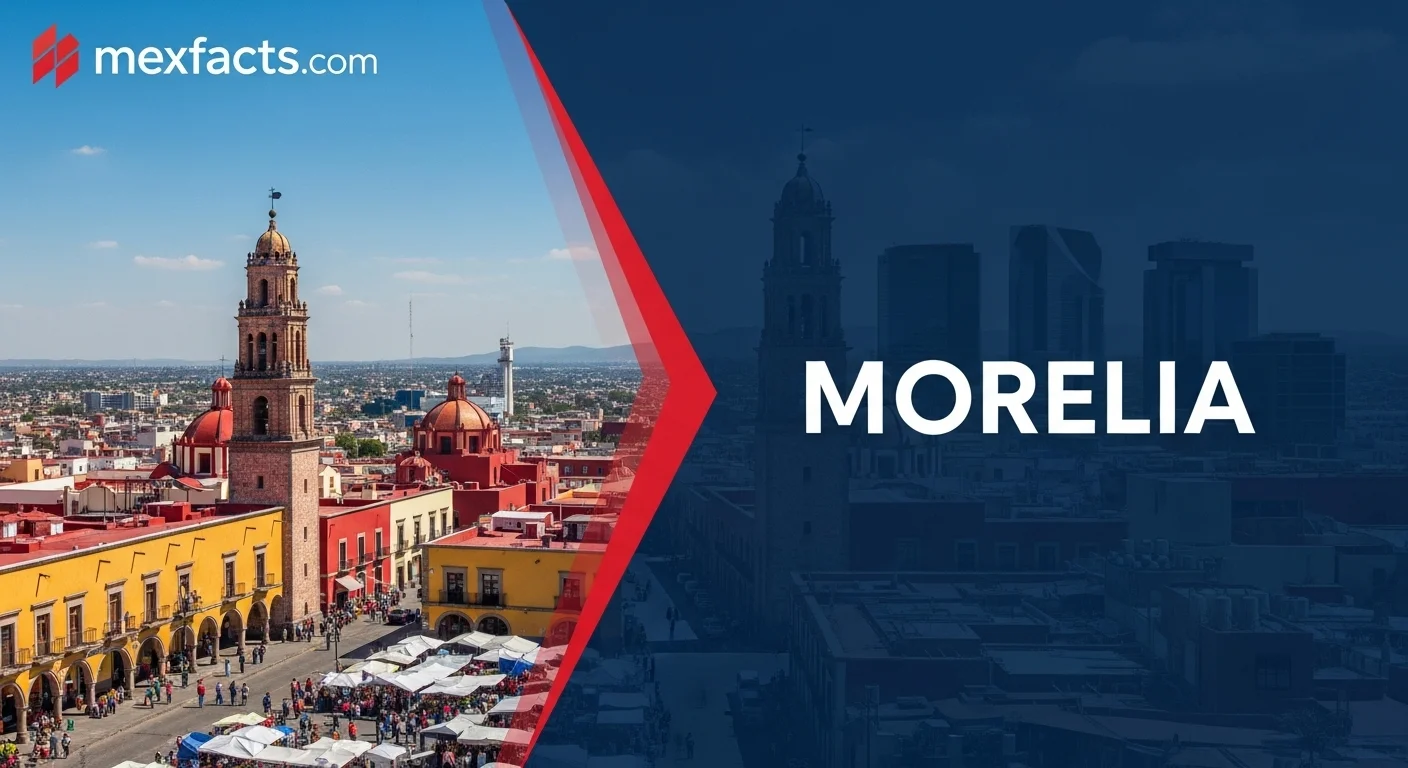
Morelia, the capital of the central Mexican state of Michoacán, offers an appealing combination of colonial architecture, cultural vitality, and practical affordability compared to saturated expat destinations like San Miguel de Allende or Mexico City. Designated a UNESCO World Heritage Site in 1991 for its historic center built of distinctive pink cantera stone, the city functions as both an intellectual center and a regional commercial hub. For prospective residents, retirees, and remote workers, deciding whether to settle in Morelia requires looking past promotional travel copy to analyze neighborhood safety, lease norms, real estate purchase laws, healthcare facilities, and transit infrastructure. This guide delivers a factual, practical evaluation of what relocation and day-to-day life in Morelia actually involve.
- Heritage and Urban Character
- Safety Reality: Morelia vs. Michoacán State
- Housing and Real Estate Overview
- Cost of Living, Demographics, and Municipal Profile
- Infrastructure, Healthcare, and Relocation Logistics
Heritage and Urban Character
Founded in 1541 as Valladolid and renamed in 1828 in honor of independence hero José María Morelos, Morelia preserves one of Mexico's most coherent colonial urban plans. Its historic center encompasses more than 200 preserved monuments and civil structures built primarily from local pink volcanic stone (*cantera rosa*). The architectural layout reflects Spanish Renaissance planning combined with indigenous stonemasonry, centered on the baroque Morelia Cathedral, the 18th-century aqueduct featuring 253 arches, and grand former convents such as the Palacio Clavijero.
Rather than functioning merely as an open-air museum, Morelia remains an active administrative and cultural city. It hosts high-profile international events, notably the Morelia International Film Festival (FICM)—one of Latin America's premier showcases for Mexican and global cinema—and the Miguel Bernal Jiménez Music Festival. In 2017, UNESCO designated Morelia a Creative City of Music. Prospective travelers and residents planning cultural itineraries can consult our detailed guide to Morelia Michoacan for museum schedules and historical landmark tours.
Safety Reality: Morelia vs. Michoacán State
Safety is the primary concern for prospective foreign residents considering Morelia. The broader state of Michoacán carries a U.S. Department of State "Level 4: Do Not Travel" advisory due to criminal violence and conflict between organized groups, particularly in rural agricultural regions such as Tierra Caliente and municipalities near state borders. However, consular notices specifically distinguish the capital city: U.S. government personnel are permitted to travel to Morelia via air transit through General Francisco J. Múgica International Airport (MLM) and by highway using the federal toll road (Highway 15D).
Within the city's urban boundaries, the security reality is markedly distinct from rural hotspots. The historic downtown, residential districts, and major commercial corridors maintain a visible municipal and state police presence. Violent crime rarely involves foreign residents or tourists who avoid illicit activities. The chief security concern in urban Morelia is opportunistic petty property crime, including pickpocketing and vehicle break-ins. Practical precautions include avoiding unlit secondary roads outside urban limits at night, using official taxi stands or ride-hailing apps (Uber and DiDi), and selecting homes in secure residential complexes. For those comparing regional safety benchmarks across the country, evaluating where to live in Mexico helps contextualize Morelia relative to other colonial cities.
Housing and Real Estate Overview
Morelia's real estate and rental market offers significant financial advantages over heavily Americanized expat pockets. Housing inventory falls into two distinct categories: colonial restorations in the historic urban core and contemporary suburban homes in newer southern and eastern subdivisions.
Rental prices reflect local economic conditions rather than inflated expat pricing. A modern two-bedroom apartment or house in upscale neighborhoods generally leases between 10,000 and 20,000 MXN per month (roughly 550 to 1,100 USD, depending on exchange rates). Historic center properties vary widely: unrestored spaces require substantial upkeep, while fully renovated colonial homes with interior courtyards command premium rental rates.
The principal residential zones favored by professionals and foreign residents include:
- Centro Histórico: Walkable access to cafes, plazas, and cultural events; best suited to residents who tolerate street noise, stone dust, and limited private parking.
- Chapultepec (Norte and Sur): Established, tree-lined residential neighborhoods just east of downtown featuring mid-century homes, quiet avenues, and neighborhood grocery stores.
- Las Américas: A major commercial and upper-middle-class enclave home to upscale shopping centers, financial institutions, and modern apartment towers.
- Altozano: A modern master-planned hillside district overlooking the city from the south, characterized by private gated subdivisions (*fraccionamientos*), private schools, golf facilities, and cooler microclimates.
- Tres Marías: An expansive suburban development on the eastern perimeter offering gated communities, country club amenities, and contemporary infrastructure.
For buyers, property acquisition in Morelia follows direct purchase rules. Because Morelia lies in Mexico's interior—far beyond the constitutional restricted zone (50 kilometers from the coastline and 100 kilometers from international land borders)—foreigners can purchase real estate via direct fee-simple deed (*escritura pública*) without requiring a bank trust (*fideicomiso*). Working with an established local real estate agent and an accredited Mexican *notario público* ensures that titles are free of liens, municipal land taxes are paid, and historic zoning constraints (enforced strictly by INAH in the Centro Histórico) are fully documented before closing.

Cost of Living, Demographics, and Municipal Profile
Evaluating Morelia requires examining its demographic and economic structure. The municipality of Morelia has a population exceeding 840,000 residents, with the surrounding metropolitan area surpassing one million people. Unlike tourist enclaves that empty during the off-season, Morelia operates year-round as the administrative seat of Michoacán state government and a prominent educational hub.
The city's intellectual life is anchored by the Universidad Michoacana de San Nicolás de Hidalgo (UMSNH), one of the oldest higher education institutions in the Americas, with roots tracing back to 1540. A substantial student population supports a diverse dining scene, affordable public lectures, libraries, and indie art galleries.
Monthly living costs in Morelia compare favorably with nearly every major colonial city in Mexico:
- Groceries and Local Markets: Fresh regional produce, cheeses, and staple goods are accessible at local markets such as Mercado Independencia, Mercado Revolución (San Juan), and major supermarket chains (Costco, Walmart, Soriana, and City Market). A couple can comfortably budget between 6,000 and 9,000 MXN monthly for groceries.
- Utilities and Connectivity: Because Morelia sits at an altitude of approximately 1,920 meters (6,300 feet), it enjoys a temperate highland climate. Year-round average highs range from 24°C to 28°C (75°F to 82°F) and nights remain cool, keeping home electricity bills low by eliminating the need for central air conditioning. High-speed fiber-optic internet services (Telmex Infinitum, Totalplay) are widespread, costing 400 to 800 MXN per month.
- Overall Monthly Budget: A single expat can live comfortably on approximately 1,200 to 1,600 USD per month, while a couple living in a gated development in Altozano or Las Américas can maintain an upscale standard of living for 2,000 to 2,600 USD per month.
On an economic level, while Michoacán leads Mexico in agricultural production—specifically avocados, berries, and limes—Morelia itself centers on public administration, education, medical services, and retail commerce. Official industrial and trade profiles tracked by the Secretariat of Economy confirm the municipality's role as a vital distribution corridor connecting Mexico City, Guadalajara, and the Pacific deepwater port of Lázaro Cárdenas.
Infrastructure, Healthcare, and Relocation Logistics
Relocating successfully to Morelia depends on practical preparation regarding healthcare, transport, and leasing agreements.
Medical infrastructure in Morelia ranks among the best in western central Mexico. Expatriates have access to advanced private healthcare facilities, notably Hospital Ángeles Morelia located in Altozano and Star Médica near Las Américas. These private hospitals operate modern diagnostic centers, 24-hour emergency rooms, and intensive care units staffed by specialists, many of whom completed training in the United States or Mexico City and speak English. Routine consultations with private medical specialists typically cost between 700 and 1,200 MXN (approx. 40 to 65 USD), making out-of-pocket care and international private insurance easily manageable.
Urban mobility has been an active focus of municipal and state planning. Projects outlined under the "Morelia Next" municipal framework include dedicated rapid bus transit lines and an urban cable car (*teleférico*) public transit link designed to connect educational institutions and peripheral transportation terminals without disturbing the protected architectural core. For regional transit, the Francisco J. Múgica International Airport (MLM), located approximately 30 minutes northeast of downtown, provides direct domestic flights to Mexico City, Tijuana, and Cancún, alongside non-stop international routes to U.S. hubs including Houston, Dallas/Fort Worth, Chicago, and Los Angeles.
Prospective tenants must understand typical Mexican lease contracts (*contratos de arrendamiento*):
- Standard Lease Duration: Leases are typically signed for 12-month periods. Shorter terms generally require negotiation through furnished platforms.
- Security Deposits: Standard practice requires one month's rent as a security deposit alongside the first month's payment upon signing.
- Guarantor or Póliza Jurídica: Traditional Mexican landlords often request a *fiador*—a local property owner who acts as an unencumbered guarantor. For foreigners without local family, standard procedure is to purchase a legal rental guarantee policy (*póliza jurídica*). Costing roughly 3,000 to 5,500 MXN annually, this policy screens the tenant's income and provides legal indemnity to the landlord, eliminating the need for a local property guarantor.
- Utilities: Unless explicitly written into the lease, tenants pay their own electricity (CFE), municipal water (OOAPAS), piped or LP gas, and internet accounts.
Frequently Asked Questions
- Is Morelia safe for foreign residents?
- Yes. While Michoacán state faces serious security issues in rural agricultural zones, the capital city of Morelia remains stable and well-policed. Expatriates who observe standard urban safety precautions, use registered transport, and avoid unpaved rural roads after dark experience safe, peaceful living conditions.
- Can foreigners buy property directly in Morelia?
- Yes. Because Morelia is located outside the constitutional restricted zone (50 kilometers from the coast and 100 kilometers from international borders), foreign nationals can purchase real estate directly via fee-simple title deed (*escritura pública*) processed by a Mexican notario público, without needing a bank trust (*fideicomiso*).
- How does Morelia's cost of living compare to San Miguel de Allende?
- Morelia is substantially more affordable. Rental prices, restaurant dining, and home purchases in Morelia are generally 40% to 60% lower than in San Miguel de Allende, primarily because Morelia's economy caters to Mexican professionals and university students rather than an international tourist market.
- What is the weather like in Morelia?
- Morelia features a temperate highland climate at an elevation of 1,920 meters (6,300 feet). Temperatures rarely exceed 30°C (86°F) in the warmest months (April–May) and drop to cool night temperatures of 6°C to 10°C (43°F to 50°F) in the winter, making residential air conditioning largely unnecessary.
Expert Reviews
David & Sarah, USA ⭐⭐⭐⭐⭐
My wife and I were a bit hesitant about visiting Morelia because of the travel advisories, but this article gave us the confidence to go. We stuck to the historic center and felt completely safe. The city is breathtakingly beautiful, especially the cathedral at night. It felt like we found a true piece of Mexico, away from the typical tourist crowds.
Eleanor Vance, Canada ⭐⭐⭐⭐⭐
I'm looking to retire in Mexico, and Morelia is now at the top of my list thanks to this guide. The detailed breakdown of real estate costs and the honest take on safety was exactly what I needed. It's refreshing to read something that isn't just selling a dream but giving practical, real-world advice.