
The Authentic Mexican Taco Guide: Street Food & Taquerias (2026)
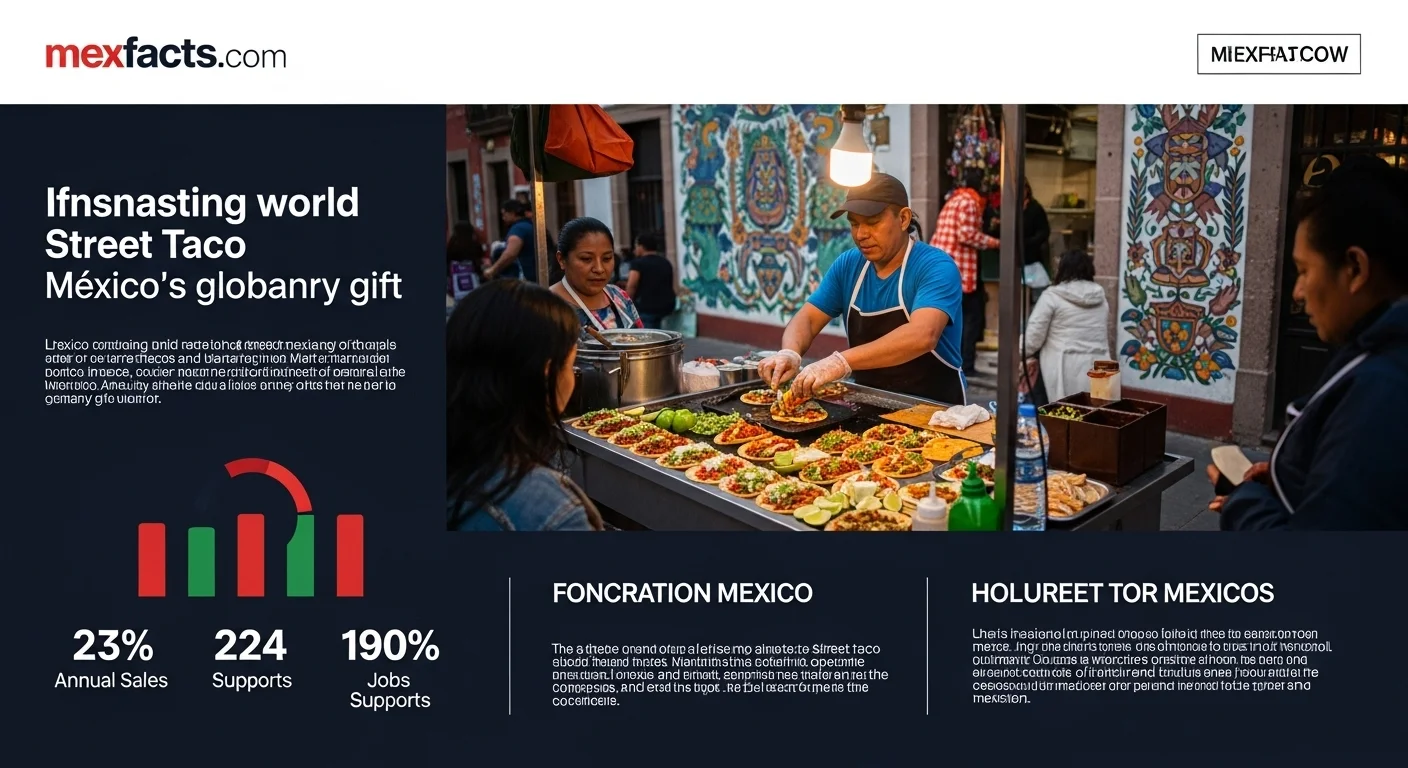
Nothing tells the story of Mexico quite like a street taco. For me, it’s more than just food; it’s the sound of sizzling meat on a comal, the warmth of a community gathered on a street corner, and a taste of history in every single bite. This journey takes you deep into the world of our most beloved culinary treasure. We'll explore its pre-Hispanic roots, see how it powers local economies and captivates food lovers worldwide, and look at what the future holds for this humble yet mighty dish. From a family-run stall in Mexico City to the global stage, this is the real story of the street taco.
Table of Contents
What are Street Tacos? The Heartbeat of Mexico in a Tortilla
To speak of Mexico is to speak of the taco. For anyone who has walked our streets, you know it's more than a meal. It's a cultural institution, a source of livelihood for thousands, and our country's most cherished gift to the world. When you visit Mexico, looking up 'street tacos near me' isn't just about finding food; it's an invitation to dive headfirst into our way of life. It’s the morning sizzle of carnitas, the lunchtime rush for savory tacos de guisado, and the late-night glow of a spinning 'trompo' of al pastor. These simple, yet incredibly complex, creations served in the palm of your hand are a true reflection of Mexican spirit: ingenious, communal, and full of flavor.
Internationally, the taco has become a global star, but sometimes its essence gets lost in translation. There's a world of difference between a brittle, hard-shell taco from a fast-food chain and the soft, warm corn tortilla of an authentic street taco. This distinction is everything. Food lovers across the globe are craving authenticity; they want to taste the real thing. This desire fuels tourism to Mexico, inspires chefs in other countries, and creates a real market for our traditional ingredients. The journey of the street taco from a local delight to a worldwide icon is a story of migration, cultural sharing, and the simple, universal joy of a perfect bite.
A Journey Through Time: The Taco's History
The story of the taco is the story of Mexico. Its roots go deep, back to a time before the Spanish arrived, when my ancestors used freshly made corn tortillas as an edible spoon or plate. Historical accounts tell us that even the great Aztec emperor Moctezuma would use tortillas to hold his food, in a way that was very much like the tacos we eat today. The corn tortilla, which we called 'tlaxcalli' in the Nahuatl language, has always been the foundation of our cuisine—a simple, perfect canvas for centuries of culinary artistry.
The arrival of the Spanish in the 16th century was a turning point. They brought pork, beef, and lamb, along with onions and cilantro—ingredients that are now essential to the taco experience. This fusion of indigenous and European flavors created a whole new world of fillings. The famous 'carne asada street tacos,' for instance, were born from the cattle ranching culture of northern Mexico. And the iconic 'tacos al pastor,' with their unique vertical rotisserie (the 'trompo'), have a fascinating story of their own. They were introduced in the early 20th century by Lebanese immigrants who adapted their traditional shawarma, swapping lamb for pork and marinating it with our local chiles and achiote. It's a beautiful example of how Mexico embraces and transforms outside influences.
Over the years, every region of Mexico developed its own special tacos, reflecting the local bounty. From the cochinita pibil of the Yucatán to the fresh fish tacos of Baja California, the variety is just incredible. The street stall, or 'puesto', became the heart of this culinary world. These small, family-run spots are more than just places to eat; they're social hubs where everyone comes together. When you see a crowd gathered around a simple stand, you know you've found something special. It's not just a place to get 'Mexican street tacos near me'; it's a living piece of our culture, where recipes are precious family secrets passed down through generations.
From Local Staple to Global Star
The street taco's rise to global fame was a gradual journey, powered by the millions of Mexicans who carried their traditions to new homes across the world. They opened small taquerías that were like cultural embassies, sharing a taste of home. Today, finding 'authentic street tacos' is a global quest. In places like the United States, Mexican food is beloved, with tacos leading the way and generating billions of dollars in revenue.
This popularity has a huge economic impact back here in Mexico. Gastronomic tourism has become a major industry. People don't just come for the beaches and ancient ruins anymore; they come for the food, and street tacos are at the very top of their list. I've seen it myself—travelers whose eyes light up at the first bite of a real taco al pastor. This interest creates jobs everywhere, from the farmers who grow our chiles, tomatoes, and onions, to the ranchers raising cattle for carne asada, and the producers of our essential corn tortillas.

The Real Numbers Behind Mexico's Street Taco Obsession
The street taco is the vibrant, beating heart of Mexico's culinary soul, and its pulse can be measured in some truly impressive numbers. To really grasp its importance, you have to look beyond the delicious taste and see the powerful industry it represents. For any international business, investor, or simply a curious traveler searching for 'street tacos near me,' these statistics tell the story of a cultural cornerstone and a massive economic engine.
The Economic Muscle of Street Food and Taquerías
Let's talk about the economics of street food, where the taco reigns supreme. It's a story of huge scale. According to official data, as of late 2024, the street food vendor workforce consisted of nearly 840,000 people. That's not just a number; that's almost a million individuals and their families whose livelihood depends on serving food on our streets. Yes, the sector is largely informal (around 97.6%), which is a complex reality of our economy, but it provides essential employment. These vendors work hard, averaging about 34.6 hours a week.
When we focus just on tacos, the figures are incredible. The taco industry brings in an estimated 50 billion pesos annually (roughly $2.46 billion USD). This isn't a market of big chains; it's a rich ecosystem of hundreds of thousands of independent, often family-run, businesses. In Mexico City alone, taquerías provide over 30,000 jobs. To put it in perspective, these small, local businesses—the street stalls and kiosks—make up a dominant 81.8% of the entire restaurant market share in Mexico. That's the power of the people, one taco at a time.
Gastronomic Tourism: The Taco as the Main Attraction
I’ve seen it with my own eyes: travelers from all over the world are increasingly coming to Mexico with one thing on their minds—food. And our street food is a primary draw. This 'gastronomy tourism' is a critical part of our national economy, accounting for a significant chunk of our GDP and supporting 5.5 million jobs. Research confirms that about a third of all tourist spending in Mexico goes towards food and drink. It's an economic impact of nearly $9 billion USD from international visitors alone.
The hunt for 'authentic street tacos' is at the center of this pilgrimage. Our government has even created 18 official 'Gastronomic Routes' to guide food lovers through our diverse culinary landscapes. It’s no surprise that a platform like Taste Atlas ranked our cuisine as the best in the Americas, and Mexico City as one of the top cities in the world for local food. The culinary tourism market here is exploding, with forecasts predicting massive growth. This boom is fueled by the simple, magical experience of discovering the perfect 'carne asada street tacos' at a bustling market—a moment people can't wait to share with the world.
Consumer Love and Regional Pride
Our love for tacos is eternal, but it's also constantly evolving. The sheer variety is what keeps it exciting. While some tacos are beloved nationwide, regional pride is fierce. If you're in the north, you'll be told that nothing beats their 'carne asada street tacos,' grilled over charcoal and served on flour tortillas. Come to central Mexico, and it's all about the 'tacos al pastor.' Head to the coasts for incredible seafood tacos, or to the Yucatán for the unique, slow-roasted pork of cochinita pibil. The experience of finding 'Mexican street tacos near me' is completely different, and wonderfully so, from one state to the next.
Modern trends are also shaping the industry. Delivery apps have been a total game-changer. In one year, these platforms sold over 64 million tacos, with some reporting a 27% increase in orders. This data also gives us a peek into what people crave: tacos al pastor are still king, followed by barbacoa and crispy fried tacos (dorados). At the same time, you see new trends emerging. Vegan and vegetarian tacos are becoming easier to find, and some upscale restaurants are creating 'gourmet' versions of our street classics. This ability to innovate while cherishing tradition is what makes the taco's appeal so enduring. The numbers tell a clear story: this is an industry that is deeply loved, economically vital, and always evolving.
The Future of the Street Taco: Opportunities and What's Next
The future of the Mexican street taco is as exciting and full of potential as its rich history. It stands at a wonderful crossroads of cherished tradition and bold innovation, presenting a world of opportunities for growth, investment, and global sharing. While there are challenges to face, the world's growing hunger for authentic experiences creates a perfect environment for this beloved dish to thrive. For anyone in the food industry, understanding where the taco is headed is a roadmap to tapping into a market that is both culturally meaningful and economically powerful. The global search for 'authentic street tacos' has only just begun.
Going Global: Sharing the Taquería Experience
The biggest opportunity for the street taco is its international expansion. While 'Mexican food' is found everywhere, the market for truly authentic street tacos is wide open. The real opportunity isn't just selling a product; it's exporting an experience. This means replicating the magic of a real taquería: a focused menu, incredibly fresh ingredients, fast service, and that lively, communal vibe. This is where a well-run franchise could succeed abroad, but only if it stays true to quality and authenticity. The opportunity lies in creating scalable business models that can bring the genuine taste of Mexico to cities in North America, Europe, and Asia.
This also opens doors for our supply chain. Imagine exporting the key ingredients that make our tacos special: our unique dried chiles, high-quality corn flour for real tortillas, and ready-made marinades for 'carne asada street tacos' or al pastor. Companies that can brand and export these authentic products will be essential partners for the growing number of international taquerías. The goal is to empower a chef in Berlin or Tokyo to offer an experience so real, it feels like they just stepped off a street in Guadalajara.
Technology, Innovation, and a Sustainable Future
Technology is already changing the taco business, and it's just getting started. The boom in food delivery apps showed us the power of digital tools. The next wave of opportunity lies in creating tech solutions designed specifically for street food vendors. Think of simple inventory systems, mobile payment devices for fast-paced environments, and loyalty apps that help a small family 'puesto' build a community of regular customers. For a tech business, developing and marketing these tools to hundreds of thousands of vendors in Mexico and across Latin America is a massive market.
Sustainability is another vital frontier. As we all become more environmentally conscious, the demand for sustainable practices grows. This is a chance for innovation in packaging—moving away from plastic and styrofoam to compostable alternatives. It’s also about the food itself. Highlighting locally sourced, ethically raised ingredients isn't just good for the planet; it's a powerful story that customers connect with. Businesses that can provide these eco-friendly solutions to the street food industry will be part of building a greener economy while meeting a real consumer need.
Navigating the Challenges Ahead
Despite the bright future, there are real challenges. The high rate of informality in the street vendor sector is complex. These entrepreneurs often lack access to benefits and formal credit. Any effort to formalize the sector must be done carefully, so it doesn't destroy the low-cost, accessible nature that makes street tacos so wonderful. Another real-world challenge is the rising cost of ingredients. I've heard the worries from taqueros myself—when the price of cilantro or limes skyrockets, it threatens the affordability of their tacos, forcing tough choices.
Looking further ahead, the agricultural sector that supports the entire taco industry faces long-term challenges from climate change. We need to ensure we can grow enough maize—the soul of the tortilla—to meet rising demand in the decades to come. Investing in smart agricultural technology and sustainable farming is not just an opportunity; it's a necessity to protect the future of the taco. For savvy investors, this is a chance to contribute to Mexico's food security while building a profitable enterprise. The road ahead for the street taco is full of potential, where the key to success will be honoring our beloved traditions while embracing a modern, sustainable future. For more insights on doing business in Mexico, the Catalonia Trade & Investment office is a great resource for navigating the local market.
Expert Reviews
Sarah K., Tourist ⭐⭐⭐⭐⭐
I just got back from Oaxaca and this article is spot on. I used to think I knew tacos, but after standing in line with locals for *tacos de lechón*, I get it now. This piece perfectly captures that feeling of community and incredible flavor. It’s not just food, it’s an experience.
Javier Morales, Entrepreneur ⭐⭐⭐⭐⭐
As someone looking to open an authentic taquería in Canada, this was incredibly insightful. The breakdown of the economic impact and the opportunities in the supply chain gave me a much clearer business plan. It's more than just a recipe; it's about understanding the culture behind it.
Elena Gutierrez, Cultural Enthusiast ⭐⭐⭐⭐⭐
What a beautiful tribute to the taco. The historical details, connecting the *trompo* to Lebanese shawarma, are fascinating. It’s a great read for anyone who wants to understand why this simple dish is so deeply woven into the fabric of Mexican life. ¡Me dio hambre!