
The 'Luna Mexican' Effect: How Authentic Cuisine is Powering Mexico's Global Rise
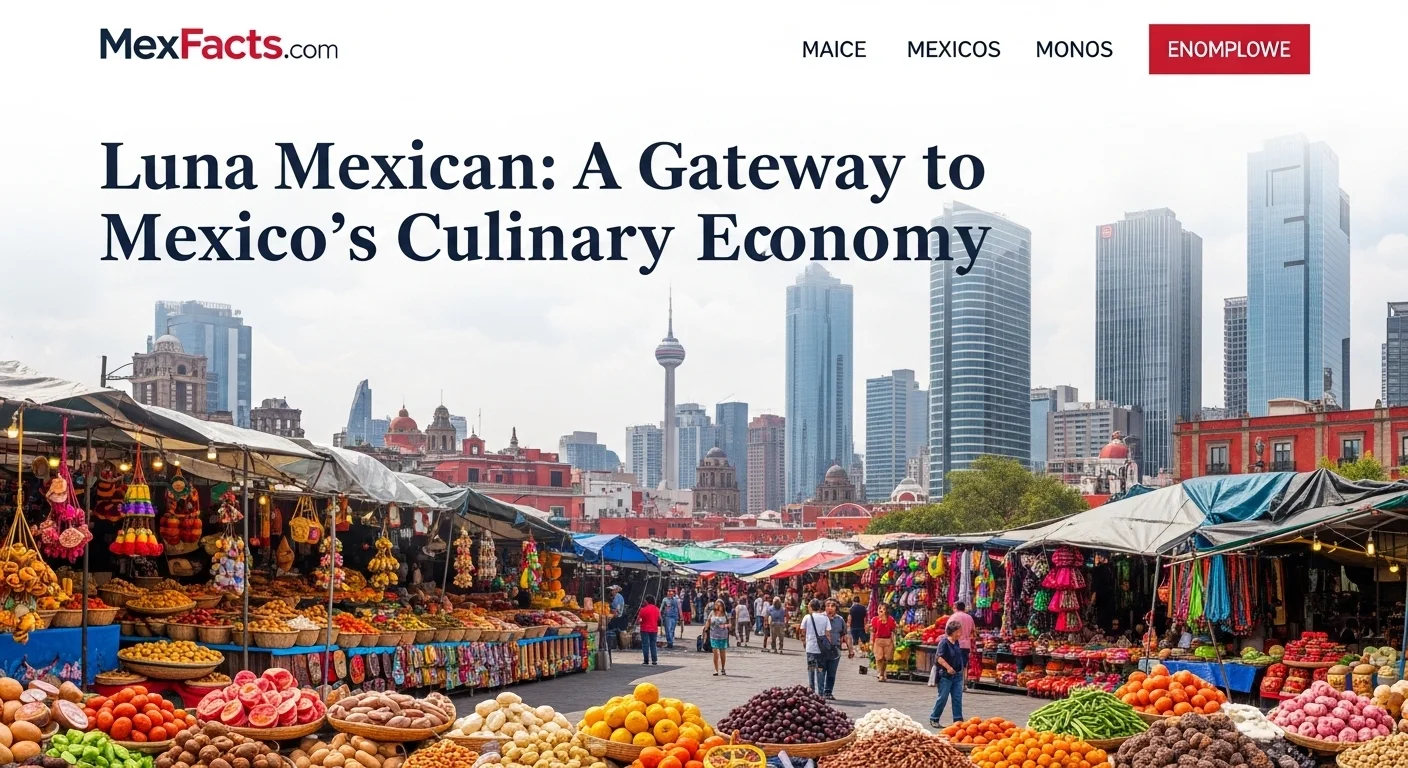
I’ve spent my life immersed in the flavors of Mexico, from the bustling markets of Oaxaca to my grandmother's kitchen in Michoacán. In recent years, I've witnessed a beautiful shift. The world is finally looking past the stereotypes and falling in love with the true soul of our food. I call this phenomenon the 'Luna Mexican' effect. It’s not about one single restaurant; it's a symbol for the global embrace of authentic, regional Mexican gastronomy. This article is my way of sharing this story with you. We'll explore how a simple plate of food can represent a cultural embassy, a powerful economic engine, and a source of immense national pride. This is for the traveler seeking a genuine taste of Mexico, the entrepreneur seeing an opportunity, and anyone curious about the vibrant heart of Mexican culture.
Table of Contents
What is the 'Luna Mexican' Movement?
Have you ever tasted a mole so complex it felt like a history lesson in a single bite? Or a ceviche so fresh it transported you to the shores of Baja California? This is the experience at the heart of what I call the 'Luna Mexican' movement. This isn't about a specific restaurant brand, though it's inspired by trailblazers like the Michelin-recognized Luna Mexican Kitchen in California, which champions Local, Unrefined, Natural, and Authentic cooking. Instead, 'Luna Mexican' is a concept representing the global awakening to the true depth and diversity of our cuisine. It’s a shift away from the heavy, cheese-laden Tex-Mex stereotypes and a journey toward the vibrant, regionally diverse, and historically rich flavors that define genuine Mexican food. For anyone outside Mexico, understanding this movement is the key to discovering a vital part of our cultural and economic identity.
Our gastronomy is more than just food; it’s a living piece of our heritage. In 2010, UNESCO recognized it as an Intangible Cultural Heritage of Humanity. This wasn't for a list of recipes, but for the entire cultural ecosystem: the ancient farming techniques, the community rituals, the time-honored skills passed down through generations. So, when a modern restaurant dedicated to these traditions opens its doors, whether in Mexico City or London, it becomes a participant in this legacy. It acts as a culinary ambassador, showcasing the sophistication of a Oaxacan mole, the subtle art of cochinita pibil from the Yucatán, or the bright, sharp flavors of a coastal aguachile. The success of these places is built on a story of authenticity—a story that people worldwide are increasingly hungry for.
The Economic Powerhouse on a Plate
This movement is a powerful economic engine for Mexico. The global craving for authentic Mexican food fuels our tourism industry in a major way. I’ve seen it myself—travelers who come not just for the pyramids, but for the markets and the food stalls. Studies confirm this, showing that up to a third of a tourist's budget is spent on food, pouring billions of dollars into our economy and touching over 80 different industries. It creates a beautiful cycle: the more people enjoy high-quality Mexican food abroad, the more they want to visit the source. We call this 'gastronomic diplomacy,' where our food becomes our best diplomat, building bridges and enhancing our nation's image on the world stage.
More Than a Meal: Cultural Ambassadors
For decades, Mexican food abroad was often a caricature. The 'Luna Mexican' ideal dismantles these old stereotypes. It educates the global palate, revealing that our cuisine isn't a monolith. The seafood-centric dishes of Veracruz are a world away from the hearty, grilled meats of the north, just as the complex moles of Puebla are distinct from the Mayan-influenced flavors of the Yucatán. A truly great Mexican restaurant is an educational experience. The menu is a map of our geography, and every dish is a lesson in history. This changes the conversation, elevating our food from a 'cheap eat' to a sophisticated culinary art, placing it rightfully alongside the great cuisines of the world like French, Italian, and Japanese.

The Real Story: Mexico's Culinary Statistics
To truly grasp the scale of Mexico’s culinary world, we need to look at the numbers. But don't think of them as cold data; think of them as stories. According to CANIRAC, our national restaurant chamber, Mexico is home to over 641,000 food establishments. That's over 12% of all businesses in the country! Imagine, for every ten businesses you see, at least one is dedicated to feeding people. These aren't just faceless corporations; an overwhelming 96% are micro-enterprises, many of them small, family-run operations. These are the corner fondas, the bustling market stalls, and the neighborhood cenadurías that are the backbone of our communities and our cuisine. Together, they create over two million direct jobs, with each job supporting about three more in related fields, from the farmer growing the chiles to the delivery driver bringing them to the kitchen.
The passion for our food is not just local; it's a powerful magnet for the world. Gastronomic tourism is booming, generating an estimated 183 billion pesos each year. This isn't slowing down. With the prestigious Michelin Guide finally arriving in Mexico, it’s like the world’s most respected food critic has given a standing ovation to our chefs and traditions. This recognition is expected to draw even more culinary travelers, eager to taste what the excitement is all about. This buzz is felt globally, too. The international market for Mexican restaurants is valued at over $72 billion and is projected to grow to more than $113 billion by 2033. It proves what we’ve always known: a well-made taco can be a brilliant business plan.
Of course, it’s not always a simple path. Our restaurant owners are resilient, navigating challenges like inflation and security concerns. But they are also innovators. You'll see the smallest taquería using Instagram to showcase their vibrant salsas, reaching a massive audience of food lovers online. This blend of tradition and modern savvy is what makes the industry so dynamic. The statistics don’t just show an industry; they show a culture that is alive, growing, and ready to share its flavor with the world.
The Future is Flavorful: Opportunities Ahead
The horizon for authentic Mexican cuisine is incredibly bright, filled with opportunities for anyone with a passion for flavor and a head for business. The 'Luna Mexican' movement is just getting started, and here’s where the exciting possibilities lie.
1. Sharing the Flavor with the World: The most thrilling opportunity is taking our local flavors global. Imagine a chef from Puebla seeing her family's mole recipe celebrated in a restaurant in Paris or Tokyo. This is already happening. Well-managed restaurant concepts with a true soul are perfect for international expansion. The key is to protect the authenticity—ensuring that the core ingredients and, more importantly, the philosophy behind the food, travel with the brand.
2. Journeys for the Palate: Culinary tourism in Mexico can go so much deeper. The future lies in creating immersive experiences. Think of 'Rutas Gastronómicas' (Gastronomic Routes) where travelers don't just eat the food, but meet the people behind it. Imagine a journey to the agave fields of Jalisco to learn how tequila is made from the jimador himself, or a trip to a coffee finca in Chiapas to roast your own beans. Restaurants can lead the way by offering cooking classes, market tours, and producer visits, turning a simple meal into an unforgettable memory.
3. Bringing a Piece of Mexico Home: A great restaurant can become more than just a place to eat. It can be a brand that people trust. I see a huge opportunity in 'bottling the magic'—creating retail lines of signature salsas, complex mole pastes, or artisanal marinades. This allows people to take the authentic taste of your kitchen into their own, creating a new revenue stream and turning happy diners into loyal brand ambassadors.
4. Connecting with the Modern Foodie: Technology is a powerful partner. For a modern Mexican kitchen, this means using social media to share the vibrant colors of a dish, making it easy for people to find and book a table online, and even using data to understand what your customers love most. Technology doesn’t replace tradition; it helps you share it with a wider, digitally-savvy audience.
5. Celebrating The Original Superfoods: The world is catching on to a secret we've known for centuries: our traditional diet is incredibly healthy. Based on the 'three sisters'—corn, beans, and squash—and packed with avocados, chiles, and tomatoes, it's naturally rich in plant-based goodness. By highlighting these fresh, unrefined ingredients, restaurants can appeal to a global audience focused on wellness and sustainability. This isn't about chasing a trend; it's about proudly sharing the ancient wisdom that has nourished our people for generations.
Expert Reviews
Michael Chen, Food Entrepreneur ⭐⭐⭐⭐⭐
I stumbled upon this article while planning a business venture into food importing. As an entrepreneur from Canada, the breakdown of the 'Luna Mexican' concept wasn't just data; it was a story. It gave me the cultural context I needed to approach my potential partners in Oaxaca with respect and genuine understanding. The part about 'culinary embassies' really stuck with me. Thank you for this invaluable perspective.
Sarah Jenkins, Traveler ⭐⭐⭐⭐⭐
My husband and I ate at an incredible, authentic Mexican restaurant in Chicago, and it made us want to visit Mexico immediately. This article put words to what we felt! Understanding that the food is a UNESCO heritage and learning about the different regional cuisines has completely changed how we're planning our trip. We're not just looking for beaches anymore; we're planning a 'Ruta Gastronómica' through Puebla. A truly inspiring read!
Elena Garcia, Cultural Advocate ⭐⭐⭐⭐⭐
As someone of Mexican descent living in the U.S., I often struggle to explain the depth of our cuisine beyond tacos and burritos. This piece is a masterpiece. It captures the economic power and the profound cultural pride we have in our food. I've shared it with so many non-Mexican friends to help them understand why a simple corn tortilla can be a sacred thing. ¡Mil gracias!