
The 'María' Tradition: How Women and Heritage Drive Mexico's Culinary Economy

Across Mexico and throughout international dining scenes, names like María, Doña María, and Casa María adorn thousands of fondas, taquerías, and fine-dining establishments. Far from being a mere branding cliché, the name evokes the foundational role women have played as custodians of Mexico's culinary heritage. Recognized by UNESCO as Intangible Cultural Heritage, traditional Mexican cuisine relies on ancestral techniques passed down across generations. This article examines the cultural symbolism of the matriarchal kitchen, the formal recognition of cocineras tradicionales, and the measurable economic impact of women entrepreneurs in Mexico's multi-billion-dollar food and beverage sector.
Table of Contents
The Cultural Symbolism of 'María' in Mexican Food
In Mexican culture, the name María carries profound symbolic weight. Historically the most common given female name in the country, it evokes maternal heritage, devotion, and the comforting warmth of home cooking (comida casera). Throughout Mexican towns and cities, small family-run eateries—known as fondas, cenadurías, and cocinas económicas—frequently adopt names such as Fonda Santa María, Doña María, or Casa María. This naming tradition is not an invented marketing trend; it reflects a deep cultural association between matriarchal leadership and gastronomic excellence.
For diners both in Mexico and abroad, an establishment bearing this namesake signals a promise of culinary integrity: handmade corn tortillas, slow-simmered guisados, and recipes preserved through oral tradition rather than commercial manuals. From neighborhood eateries to upscale dining rooms, evoking 'María' pays homage to the millions of grandmothers, mothers, and community cooks who have historically formed the backbone of Mexico's food culture.
Cocineras Tradicionales and the UNESCO Heritage Paradigm
The cultural authority of Mexican home cooks received global validation in November 2010, when UNESCO inscribed traditional Mexican cuisine onto the Representative List of the Intangible Cultural Heritage of Humanity, using the state of Michoacán as a founding paradigm. UNESCO recognized that Mexican gastronomy is not merely a collection of dishes, but a comprehensive cultural model spanning agriculture, ritual practices, ancient culinary techniques, and community customs.
Central to this heritage are the cocineras tradicionales (traditional female cooks). These women preserve foundational indigenous practices, including:
- The Milpa Agro-system: The ancestral polyculture of maize, beans, squash, and chili peppers that provides nutritional balance and ecological sustainability.
- Nixtamalization: The ancient Mesoamerican process of cooking dried maize kernels in an alkaline lime solution, which unlocks essential niacin (vitamin B3), enhances protein absorption, and yields pliable masa for tortillas and tamales.
- Ancestral Utensils: Mastery of the volcanic stone metate and molcajete for crushing spices, chiles, and cacao into complex moles and salsas.
State governments and cultural institutions in regions such as Michoacán, Oaxaca, Puebla, and Yucatán have formalized collective organizations for traditional cooks. These associations elevate community cooks to respected culinary authorities, drawing gastronomic tourism and ensuring regional recipes are documented and protected.
The Economic Footprint: Women in Mexico's Restaurant Sector
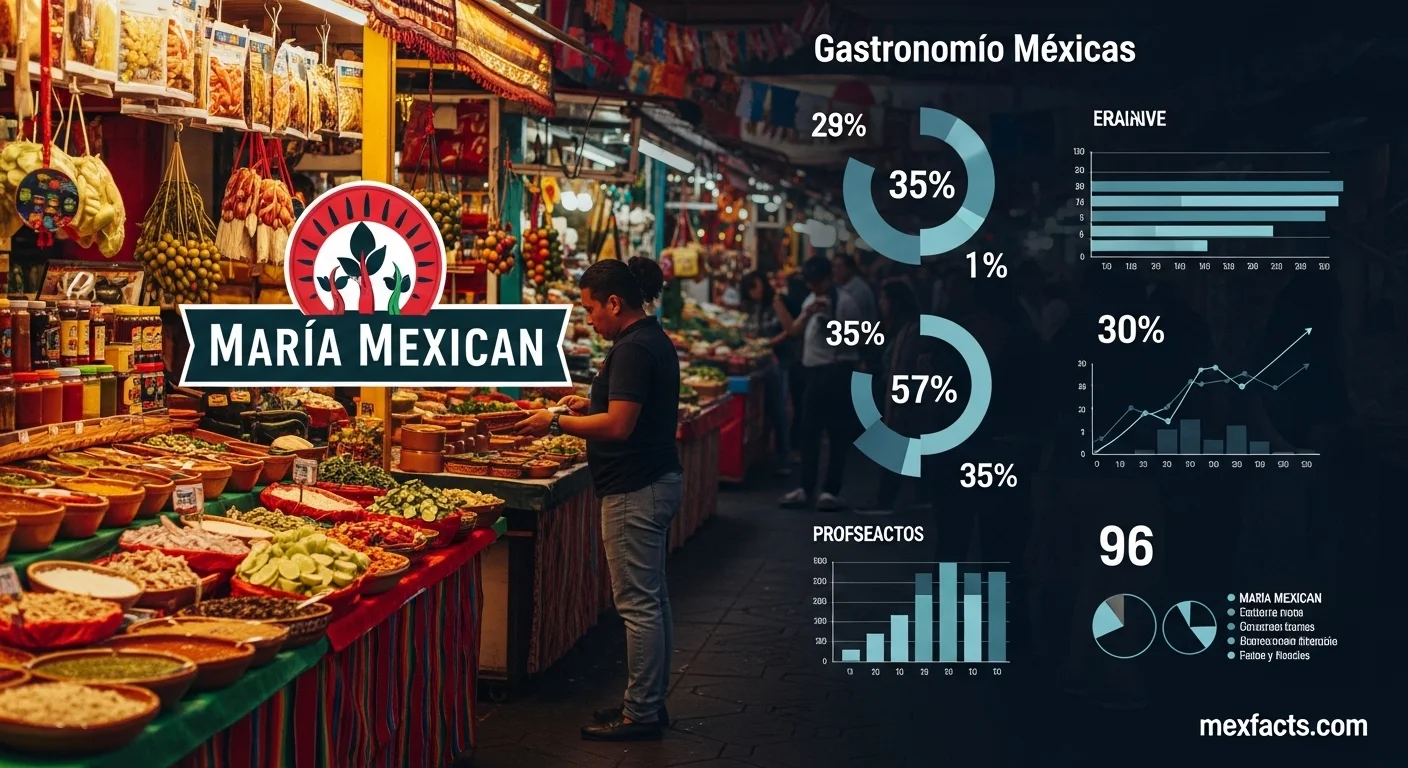
Beyond its cultural prestige, the culinary sector is a major engine of Mexico's national economy. Data from the National Institute of Statistics and Geography (INEGI) and the National Chamber of the Restaurant and Seasoned Food Industry (CANIRAC) demonstrate the sheer scale of the food service industry:
- Establishments: Mexico has over 650,000 registered economic units dedicated to food and beverage preparation, ranging from neighborhood taquerías to fine-dining venues.
- Employment: The industry generates more than 2.1 million direct jobs and supports an estimated 3.8 million livelihoods across agricultural, logistics, and wholesale supply chains.
- GDP Contribution: Food and beverage services account for roughly 12% to 13% of Mexico's Tourism Gross Domestic Product (PIB Turístico) and approximately 1.5% to 2.0% of the overall national GDP.
The demographic makeup of this sector underscores the economic leadership of women. According to INEGI labor data, women account for roughly 56% to 58% of the formal workforce in food preparation services. In the micro-business sector—which includes family fondas, catering collectives, and regional food stalls—women own and operate more than half of all enterprises.
While women have long dominated culinary production at the grassroots level, contemporary Mexican gastronomy has seen female culinary leaders expand into commercial ownership, corporate kitchen direction, and culinary innovation. Internationally acclaimed chefs like Elena Reygadas, Daniela Soto-Innes, and Celia Florián exemplify this transition, bridging ancestral indigenous techniques with modern restaurant management.
Global Impact and the Future of Traditional Mexican Cuisine
The global demand for authentic Mexican flavors has transformed international dining and stimulated international trade. Diners in North America, Europe, and Asia increasingly seek regional specificity—distinguishing Oaxacan mole negro, Yucatecan cochinita pibil, and Sinaloan aguachile from standardized commercial adaptations.
This worldwide appreciation has bolstered agricultural trade, with Mexico exporting billions of dollars worth of fresh produce annually, including avocados, tomatoes, limes, and specialty chiles, alongside origin-denominated spirits like tequila and mezcal. When travelers visit Mexico, culinary exploration is a primary motivator: tourism statistics consistently indicate that international visitors allocate between 25% and 30% of their total trip expenditures directly to food and beverages.
For travelers and food enthusiasts seeking out authentic Mexican restaurants, recognizing the role of women in the kitchen offers a deeper appreciation of the food on the table.
Frequently Asked Questions
- Why are so many Mexican restaurants named 'María' or 'Doña María'?
- 'María' has historically been the most common female name in Mexico. In culinary contexts, naming an establishment after a maternal figure or 'doña' signals authentic home-style cooking (comida casera), traditional hospitality, and recipes passed through familial generations.
- What is the official definition of a 'cocinera tradicional'?
- A cocinera tradicional is a recognized master cook within a Mexican community who preserves, prepares, and passes down ancestral culinary practices, native crop varieties, and traditional cooking techniques recognized under national cultural preservation frameworks.
- How much does the restaurant sector contribute to Mexico's economy?
- According to INEGI and CANIRAC data, the restaurant and food preparation industry encompasses more than 650,000 businesses, employs over 2.1 million direct workers, and contributes between 12% and 13% of Mexico's Tourism GDP.
Expert Reviews
Chloe, from Canada ⭐⭐⭐⭐⭐
I read this article before my trip to Oaxaca, and it completely changed how I saw the food scene. Understanding the 'Maria' concept made me appreciate every small fonda and market stall so much more. It's not just food; it's the lifeblood of the culture. A beautiful and insightful piece!
Santiago Gomez ⭐⭐⭐⭐⭐
As a Mexican-American looking to start a food business, this was invaluable. It put into words the spirit I wanted to capture. The statistics on female entrepreneurship were both sobering and inspiring. It’s a must-read for anyone who wants to understand the real soul of Mexican cuisine.
Dr. Eleanor Vance ⭐⭐⭐⭐⭐
Finally, an article that goes beyond recipes and dives into the socio-economic heart of Mexican gastronomy. The 'Maria' archetype is a perfect lens to view this phenomenon. I've studied Mexican history for years, and this piece connected the dots between tradition and modern commerce beautifully.