
The 'Los' Secret: What It Tells You About a Mexican Restaurant

Whenever I travel through Mexico, from the vibrant streets of the capital to the quiet pueblos of Jalisco, I always look for one thing: a restaurant sign starting with 'Los.' It’s more than just a name like 'Los Cuates' (The Buddies) or 'Los Portales' (The Archways); it’s a promise. A promise of tradition, family recipes, and the true soul of Mexican cooking—so rich it's recognized by UNESCO. These aren't just places to eat; they're the heart of the community, family legacies in action, and living museums of our incredible food heritage. This article will take you inside this phenomenon, exploring its history, its role in the economy, and why understanding it is the key to finding the most authentic meal of your life.
Table of Contents
What is 'Mexican Restaurant Los' and Why It's a Taste of True Mexico
The first time someone asked me why so many restaurants in Mexico start with 'Los,' I smiled. It's a question that gets to the very heart of our culture. 'Los' simply means 'The' in Spanish, but in the context of a restaurant name, it carries so much more weight. It’s a linguistic wink, a cultural marker that signals tradition, family, and community. When you see a sign for 'Los Cuates,' which means 'The Buddies,' it instantly makes you feel welcome, like you’re about to share a meal among friends. Or think of 'Los Portales'—it immediately brings to mind the beautiful colonial archways you see in town squares, places buzzing with life where families stroll on a Sunday afternoon. This naming tradition isn't a marketing gimmick; it's a deliberate cultural signpost, promising a connection to our heritage and an authentic dining experience rooted in recipes passed down through generations.
A Global Treasure Recognized by UNESCO
The importance of this concept is recognized on a global scale. In 2010, the world finally confirmed what we've always known: our cuisine is a masterpiece. UNESCO named it an Intangible Cultural Heritage of Humanity. This incredible honor wasn't just for the tacos and mole, but for the entire cultural system around the food—our ancient farming methods, the rituals in the kitchen, and the way we share meals as a community. The restaurants that begin with 'Los' are the keepers of this flame. They are the grassroots ambassadors of Mexican gastronomy, preserving regional diversity and time-honored techniques in a world that’s becoming more and more generic. While modern, high-end Mexican restaurants are earning Michelin stars, these traditional, family-run establishments are the true foundation of our cuisine. They offer a taste of what many of us call the 'real' Mexico.
Decoding the Names: From 'Los Altos' to 'Los Charros'
Each name tells a story. A sign for 'Los Altos Mexican Restaurant,' for example, is a postcard from the highlands of Jalisco. It's not just a name; it’s a promise of that region's specific flavors—its unique tequilas, creamy cheeses, and hearty country cooking. Seeing a name like 'Los Charros' is a nod to our iconic horsemen, a symbol of national pride as deep and complex as the flavors in their mole. It speaks to a living history, a tradition that you can feel in the atmosphere of the place. Even 'Los Pinos,' which can mean 'The Pines,' might hint at the pine forests of Michoacán or even playfully suggest a presidential standard of quality. For anyone wanting to truly understand Mexican food, learning to read these names is the first step. It helps you distinguish a family's legacy from just another commercial eatery.
The Heart of the Matter: The Family Connection
At its core, the 'Mexican Restaurant Los' concept is all about family. So many of these establishments are owned and run by the same family for generations. They brought their recipes and culinary secrets with them from their hometowns, and that 'Los' on the sign often refers to the family itself—'Los García,' 'Los Mendoza,' and so on. The menu isn't designed by a committee in an office; it's a collection of a grandmother's most cherished dishes, perfected over a lifetime. Each bite of a complex mole or a simple, perfect taco is a piece of their family's story. This isn't just a business model; it's a passion project built on love and authenticity. When you eat there, you feel it. You're not just a customer; you're a guest at their table.
Pillars of the Community and Economy
Beyond the kitchen, these restaurants are the economic and social pillars of their neighborhoods. They represent the countless small and medium-sized businesses that are the true engine of Mexico's economy. A local 'Los Cuates' or 'Los Portales' provides jobs, buys its vegetables and meats from nearby markets, and keeps money circulating within the community. They are hubs of daily life—the place you go for birthday celebrations, business lunches, or just a comforting weeknight dinner. They are where community bonds are strengthened, one meal at a time.
'Los' Goes Global: A Taste of Home Abroad
The fact that you see these restaurants all over the world speaks volumes about the Mexican diaspora and the global hunger for authentic food. A 'Los Altos' in Chicago or a 'Los Portales' in London becomes a cultural embassy. For Mexican immigrants, it’s a cherished taste of home. For everyone else, it’s a delicious journey of discovery. Of course, it’s not always easy to maintain that authenticity abroad. Finding the right kind of chiles or fresh tomatillos can be a real struggle, and the labor-intensive cooking methods are costly. But despite these hurdles, people are tired of the 'Tex-Mex' stereotype and are actively seeking the deep, diverse flavors of real Mexican food. The 'Los' brand, with its built-in promise of tradition, is perfectly positioned to answer that call, proving there’s a powerful market for food that tells a true story.
The Real Numbers Behind Mexico's Favorite Restaurants
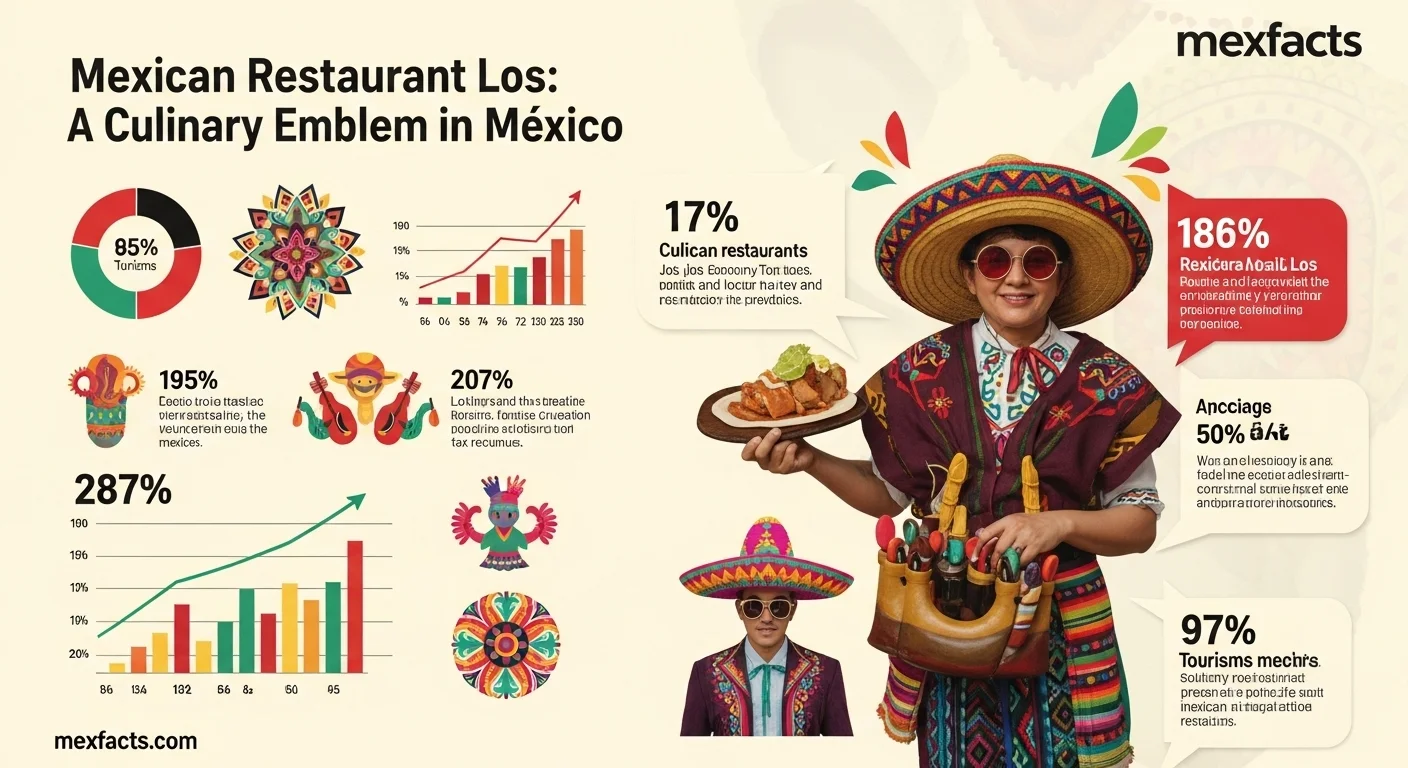
Let's talk numbers, but in a way that makes sense. When you look at the statistics of Mexico's restaurant industry, you start to see the incredible power of these traditional, family-run spots. The entire restaurant sector is a giant in our national economy, creating millions of jobs. While nobody tracks restaurants by their naming style, it's clear that the 'Mexican Restaurant Los' model dominates. Reports show that a staggering 95% of all food businesses in Mexico are small, independent establishments. This is the world of 'Los Portales' and 'Los Cuates,' the fixtures you see on almost every street corner.
Their economic contribution is massive. All together, the restaurant industry contributes about 1.5% to the national GDP and a huge 13.4% to the tourism GDP. That link to tourism is vital. I've seen it myself—travelers come to Mexico to eat! Studies suggest that food is a primary reason for visiting, and up to 30% of a tourist's budget is spent on dining. This translates into billions of dollars flowing directly into our economy each year. Restaurants like 'Los Charros,' which celebrate our horsemanship culture, or 'Los Altos,' which offer the unique flavors of the Jalisco highlands, are what these travelers are looking for. They turn our local culture into a real economic asset, offering the authentic experiences that people crave.
The industry is growing, too. Despite challenges like rising food costs, experts have been forecasting strong growth, especially in major cities like Mexico City and Guadalajara. This growth is powered by both locals and tourists. Mexican families spend a good portion of their income on eating out, and the rise of delivery apps has been a game-changer. A traditional 'Los Pinos' can now reach customers across the city, sharing their family recipes without losing the cozy, in-house atmosphere they're known for.
Of course, it's not always a smooth ride. Inflation is a real concern. For a small family running a 'Los Portales,' the rising price of avocados or corn isn't just a news headline; it's a direct hit to their livelihood and their ability to keep prices fair for their neighbors. And yes, there's competition from big international fast-food chains. Yet, these small, independent restaurants remain the heart of how Mexicans eat. Why? Because you can't franchise the love and history that's cooked into every dish. This resilience comes from a deep cultural loyalty. The challenge for these families is to stay true to their traditions while navigating today's economic realities.
We're also seeing some interesting consumer shifts. People are more health-conscious and want to know where their food comes from. This is a perfect opportunity for traditional restaurants, which have always used fresh, whole ingredients by default. A 'Los Pinos' that proudly talks about its fresh produce from local farms or how they grind their own corn for tortillas can really connect with this new generation of diners. And with social media, their stories can travel the world. The tale of a chef at 'Los Charros' sharing his family's passion for both cooking and horsemanship is the kind of powerful, authentic content that people love. By embracing these trends, the classic 'Mexican Restaurant Los' can do more than just survive—it can thrive, securing its place as the soul of Mexico's world-famous cuisine.
The Future is a Mix of Tradition and Technology
So, what's next for these beloved restaurants? The future is bright, but I believe it's all about artfully blending the old with the new. The global appetite for Mexican food is exploding, with forecasts predicting massive growth in the coming years. This is driven by our cuisine's incredible popularity and a worldwide demand for authentic, convenient food. For any 'Los Cuates' or 'Los Portales,' this is a golden era to welcome more people through their doors, both in person and online.
One of the most interesting opportunities is in smart expansion, like franchising. I know some people worry that franchising will water down the magic, but I see it differently. If done with care, a successful 'Los Charros' could develop a model that allows others to replicate its unique atmosphere and flavor. It would mean sharing not just recipes, but a piece of culture. This requires strict quality control to protect the brand's soul, but it's a powerful way to bring true regional Mexican food to new cities, both here and abroad.
Technology is another key partner for the future. Food delivery is here to stay, and even the most traditional spots are embracing it. A 'Los Altos' can now use an app to send its signature Jalisco dishes to homes across town, reaching people who might never have walked by. And social media is the most powerful, low-cost marketing tool imaginable. A simple Instagram page with photos of the abuela's hands preparing mole or a video telling the story behind the name 'Los Pinos' can build a loyal community of followers who crave that connection.
However, we must be realistic about the hurdles. The biggest challenge is protecting authenticity as things grow. There's always a temptation to cut corners or change recipes to appeal to a wider, global palate, but that risks losing the very thing that makes these places special. Rising costs for quality ingredients and fair wages are also a constant pressure on these small family businesses. For those operating internationally, finding the right chiles, herbs, and produce to recreate a truly regional dish remains a difficult, and expensive, task.
Looking further ahead, we face a serious threat from climate change. The shifts in weather patterns are already affecting the availability of our most cherished ingredients, from specific heirloom corn varieties to the wild herbs that define regional cooking. This isn't just an environmental problem; it's a cultural crisis. Protecting our biodiversity and supporting our farmers is the only way to safeguard the future of our cuisine. It requires everyone, from the chef at a local 'Los Pinos' to government agencies, to work together.
Ultimately, the future of the 'Mexican Restaurant Los' lies in its incredible ability to innovate while honoring its roots. The ones that will flourish will be those that adapt to new trends—like healthy eating and sustainability—and use technology wisely, all while staying true to who they are. They can create cooking classes or food tours, turning their restaurant into a destination for culinary tourism. By doing this, they not only build a secure future for their families but also ensure that the rich, authentic flavors of Mexico continue to shine on the world stage. For any investor or entrepreneur, the 'Los' brand is more than just a name; it’s an opportunity to invest in culture, community, and the timeless appeal of real Mexican food.
Expert Reviews
Gabriela R., San Diego ⭐⭐⭐⭐⭐
My husband and I were traveling through Oaxaca and kept seeing restaurants named 'Los...' this or 'Los...' that. This article finally explained it all! We sought out a 'Los Danzantes' after reading this and had the most authentic and memorable meal of our trip. It really does signal something special.
Thomas Clarke, Toronto ⭐⭐⭐⭐⭐
As someone looking to invest in the food industry in Mexico, this breakdown was invaluable. It goes beyond the numbers and explains the cultural heart of the business, which is exactly the insight I needed. Understanding the 'Los' phenomenon is key to understanding the market.
Elena Fernández, Mexico City ⭐⭐⭐⭐⭐
I grew up with these restaurants, my Tío had a 'Los Compadres' for 30 years. It's wonderful to see an article that honors their importance not just as businesses, but as pillars of our communities and keepers of our family recipes. ¡Qué viva la cocina mexicana!