
What a 'Mexican Restaurant' Truly Means in Mexico

Let me take you on a journey. When someone says 'Mexican restaurant,' what comes to mind? For many outside of Mexico, it's a specific set of flavors. But here, inside Mexico, it's a universe of culinary experiences. This article is your guide to that universe. We'll move past the stereotypes to explore the heart of our nation's gastronomic identity, an identity so rich UNESCO named it an Intangible Cultural Heritage of Humanity. I'll share what it’s like to eat in bustling street food stalls, cozy family-run 'fondas,' and sophisticated dining rooms. We'll also look at the powerful role these places play in our economy and culture, supported by real-world numbers. This is more than a food guide; it's an invitation to understand the soul of Mexico, one delicious plate at a time.
Table of Contents
- What is a Mexican Restaurant in Mexico and why is it important internationally?
- The Spectrum of the Mexican Restaurant Experience
- Street Food Stalls and Taquerías
- Fondas and Cocinas Económicas
- The Regional Specialty Restaurant
- Contemporary and Fine-Dining
- The International Relevance and Cultural Impact
What is a Mexican Restaurant in Mexico and why is it important internationally?
When an international traveler lands in Mexico and looks up the 'nearest Mexican restaurant,' they're about to discover something wonderful: the term means something entirely different here. A Mexican restaurant within our own borders is a world away from the simplified, and often cheesy, version found abroad. It's a living piece of our culture, a tradition so profound that in 2010, UNESCO recognized our cuisine as an Intangible Cultural Heritage of Humanity. This honor wasn't just for the tacos and mole; it was for the entire ecosystem—the ancient farming methods, the sacred relationship with corn, beans, and chili, the rituals, and the deep-seated custom of sharing a meal as a community. To me, understanding a true Mexican restaurant is about feeling this connection, from the earth to the table.
Internationally, our food has become a delicious ambassador, often the first taste of Mexican culture someone gets. The problem is, this global popularity has given rise to 'Tex-Mex' and other fusions that, while tasty, are not the food we eat here. An authentic Mexican restaurant in Mexico serves as a place of delicious education. It’s where you learn that nachos covered in yellow cheese sauce are a foreign invention and that the true flavor of Mexico lies in recipes that carry centuries of history. The search for 'good Mexican restaurants' becomes a real journey through our country's diverse regions and stories.
The Spectrum of the Mexican Restaurant Experience
To really get it, you have to see the whole picture. The experience is incredibly diverse, from a humble street cart to a world-renowned fine-dining temple. Each one is a vital part of our social and economic life.
1. The Street Food Stalls and Taquerías: The true heartbeat of Mexican cuisine is on the street. When we locals look for the 'closest Mexican restaurant,' we’re often heading to a corner taquería or a lively market stall. These aren't just fast-food spots; they are centers of culinary mastery, where masters, or 'taqueros,' have perfected their craft over generations. You can feel the energy—the sizzle of suadero, the scent of pineapple grilling alongside marinated pork for tacos al pastor, a tradition that carries whispers of its Lebanese immigrant past. Here, flavor, speed, and community collide in a democratic space where everyone, from construction workers to business executives, stands side-by-side. It’s a delicious cornerstone of daily life.
2. Fondas and Cocinas Económicas: The 'fonda' is our traditional, family-run eatery, the soul of our lunchtime. It’s where you find the 'comida corrida'—a set, multi-course meal of the day that feels like a hug from a Mexican grandmother. It typically starts with a soup ('sopa'), followed by rice or pasta, then a main course ('guisado') of your choice, all served with fresh tortillas and a refreshing 'agua fresca.' This is where most working Mexicans eat their main meal of the day. It's affordable, comforting, and preserves the everyday recipes that form the backbone of our gastronomy. A search for a 'Mexican restaurant close to me' in any neighborhood at 2 p.m. will lead you to one of these cherished spots.
3. The Regional Specialty Restaurant: Mexico isn't one flavor; it's a kaleidoscope of them. The best 'good Mexican restaurants' often specialize in the cuisine of a single state, offering a deep dive into its unique soul.
- Oaxaca: Known as the 'Land of the Seven Moles,' a trip here is an exploration of sauces so complex they can have over 30 ingredients. I’ll never forget my first taste of a true mole negro; it was smoky, spicy, sweet, and mysterious all at once. Beyond mole, you'll find crispy tlayudas, earthy chapulines (grasshoppers), and a profound respect for native corn.
- Yucatán Peninsula: The food here tells stories of Mayan and Caribbean heritage. The star is cochinita pibil—pork marinated in bright achiote and sour orange, then slow-roasted underground in a 'pib.' The flavor is tangy, earthy, and utterly unique. It’s served with pickled onions and a fiery dash of habanero salsa.
- Jalisco: This is the land that gave us birria, a rich and spicy meat stew that has now taken the world by storm, as well as the hearty hominy soup pozole, and our famous 'drowned sandwiches,' tortas ahogadas. Of course, it's also tequila country, so food and agave spirits are inseparable partners.
- Northern Mexico: With its vast ranches, this region is the master of grilled meats, or 'carne asada.' The smell of mesquite wood and searing beef is the scent of a weekend gathering. Here, flour tortillas are often preferred, and the dishes are robust and satisfying.
4. Contemporary and Fine-Dining Restaurants: In recent years, visionary chefs like Enrique Olvera and Elena Reygadas have shown the world that Mexican cuisine is not just rustic, but can be incredibly refined. They take traditional recipes and native ingredients and elevate them with modern techniques, creating unforgettable experiences. These places attract food lovers from all over the globe, reminding us that our culinary heritage is a living, evolving art form.
The International Relevance and Cultural Impact
The global love for the 'Mexican restaurant' makes it a powerful cultural ambassador. It makes people curious and inspires them to visit. A traveler who enjoys a good taco in their home country might come here seeking the real deal. This culinary tourism is a huge economic driver, with some estimates suggesting food accounts for nearly a third of a tourist's spending in Mexico. That money supports a vast network, from the farmers growing heirloom corn to the waiters in the city.
More importantly, the 'Mexican restaurant' is our living room. It’s where families gather for long Sunday lunches, where deals are made, and where friends celebrate life. The act of sharing food is woven into our social fabric. The warmth and hospitality you feel in a family-owned place offer a real window into our country's soul. It’s an experience that stays with you long after the meal is over, fostering a genuine connection to Mexico.
The Numbers Behind the Passion: Statistics of Mexico's Restaurant Industry
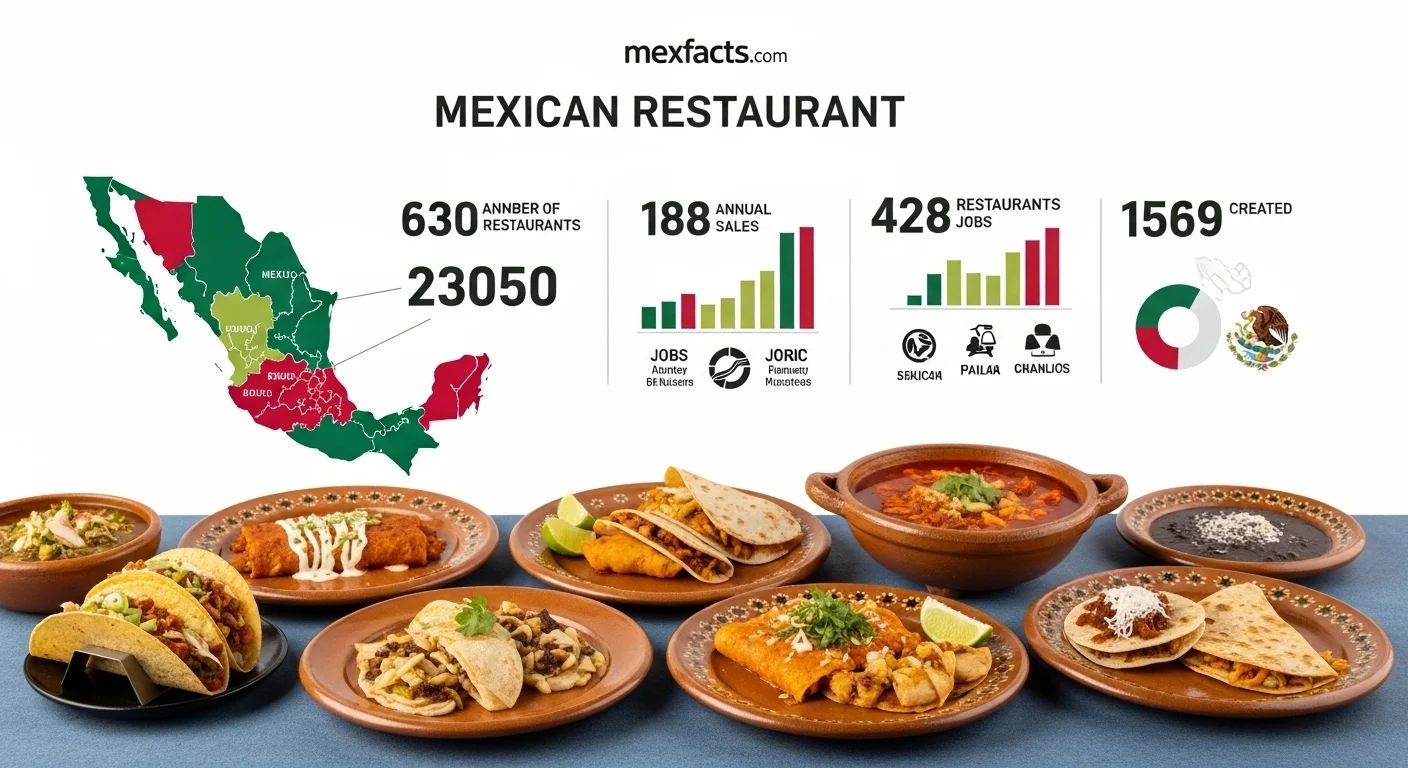
The 'Mexican restaurant' is more than just a place to eat; it's a powerful economic engine and a social cornerstone of our nation. To truly grasp its scale, we need to look at the numbers, which paint a picture of a vibrant and resilient industry. Data from institutions like Mexico's National Institute of Statistics and Geography (INEGI) and the National Chamber of the Restaurant and Seasoned Food Industry (CANIRAC) reveal just how deeply it's woven into our country's life.
Imagine this: for every 100 businesses you see in Mexico, more than 12 of them are dedicated to preparing food and drinks. That's 12.2% of all businesses in the country. This amazing figure shows you how central food is to our entrepreneurial spirit. Together, these establishments provide over two million direct jobs, making the industry a critical source of employment for a huge part of our population. But the story doesn't end there. For every person working in a restaurant, millions more are supported indirectly—the farmers in the fields, the delivery drivers on the roads, and the suppliers who keep things running.
Economic Weight and Who's Cooking
The restaurant sector's contribution to our national Gross Domestic Product (GDP) is immense, accounting for around 1.3% to 3.2% of the total economy. When you look specifically at tourism, its role is even clearer, making up about 15% of the tourism GDP. This highlights a beautiful partnership: as travelers explore Mexico, their search for the 'nearest Mexican restaurant' or the most 'good Mexican restaurants' directly fuels our economy. The spending by international food lovers alone brings in billions of dollars each year.
The heart of the 'Mexican restaurant' industry isn't in big corporate chains; it's in small, family-run businesses. A remarkable 96 out of every 100 restaurants are micro-businesses with ten or fewer employees. These are the local taquerías and fondas I mentioned, the very soul of the industry. They're not just charming spots; they are the bedrock, providing 70% of all jobs in the sector. This structure says so much about our culture—where the unique flavor of the 'closest Mexican restaurant' is a point of neighborhood pride and small-scale entrepreneurship is a way of life.
How We Eat and Who Works
We Mexicans love to eat out. It's part of our culture. In fact, many families spend nearly 20% of their budget on food consumed away from home. This habit of dining out, whether for a quick lunch, a family celebration, or a social gathering, is the constant pulse that keeps the industry alive. When we look for a 'Mexican restaurant close to me,' we're taking part in a daily ritual that supports millions of families.
The people working in our restaurants are also a unique group. It's an industry where women play a leading role, making up nearly 56% of the workforce—a higher share than in the overall economy. This makes the restaurant sector a vital space for female economic empowerment. However, the industry also faces the ongoing challenge of improving training, wages, and working conditions for its dedicated people.
Bouncing Back with Flavor and Tech
The COVID-19 pandemic hit our industry hard, causing a severe downturn. It was a heartbreaking time, with many beloved places closing their doors. But it also revealed our incredible resilience. The crisis pushed us to adapt, sparking a massive shift towards technology. Food delivery apps like Rappi and Uber Eats became lifelines, allowing even the smallest 'Mexican restaurant' to keep serving the food we love. It fundamentally changed how thousands of businesses operate.
Since then, the industry has been on a strong path to recovery. People are eager to go out again, to share a meal, to connect. This comeback is crucial for the whole country, because when a restaurant thrives, so do the farmers who supply its chiles, the artisans who craft its plates, and the beverage companies that stock its bar.
Global Acclaim and Its Impact
The growing number of 'good Mexican restaurants' appearing on prestigious lists like 'The World's 50 Best Restaurants' has a real economic impact. It attracts culinary travelers who are willing to spend more for unique, high-quality dining. This global spotlight supports the high end of our market and encourages everyone to focus on quality, innovation, and preserving the authentic techniques that make our food so special. The search for 'good Mexican restaurants' is no longer just a local affair; it's a global pursuit, with food lovers planning entire trips around a single reservation. In short, the statistics confirm what we feel in our hearts: from the humblest street corner to the most acclaimed dining room, every 'Mexican restaurant' is a vital piece of our economic and social identity.
The Future on the Table: Opportunities in Mexico's Restaurant Scene
The future for the 'Mexican restaurant' in Mexico is buzzing with exciting change. It's a landscape being reshaped by new trends, technology, and a deeper appreciation for our roots. For anyone looking to invest or build a career here—be it an entrepreneur, an investor, or a chef—the opportunities are incredible. The path forward is one that blends sophistication, sustainability, and digital savvy, all while honoring the authentic traditions that are our greatest strength.
The Rise of the Culinary Quest
One of the biggest opportunities is what I call the culinary quest, or gastronomic tourism. Today's travelers want more than just a beach; they want to taste, feel, and connect. They come to Oaxaca to grind their own mole, visit Puebla for the seasonal magic of chiles en nogada, and book flights to Mexico City just for a restaurant reservation. This isn't a niche market; it's a booming trend expected to grow dramatically. The real opportunity is for businesses that offer more than just a meal. Think hands-on cooking classes, mezcal tastings at a palenque, farm-to-table tours in the countryside, and curated food trails. A 'Mexican restaurant' that can wrap its food in a memorable experience will thrive. If you're looking to back 'good Mexican restaurants,' find the ones that are part of this rich, cultural ecosystem.
Sustainability: Returning to Our Roots
Around the world, people are caring more about where their food comes from, and this is a powerful force in our industry. The future-forward 'Mexican restaurant' will embrace sustainability. For us, this isn't just a trend; it's a return to our heritage. It means buying from small, local farmers, celebrating the biodiversity of our native corn varieties, cutting down on waste, and saying no to plastics. There's a growing desire for restaurants that tell a story of conscious consumption, connecting the diner to the land. Concepts like 'farm-to-table' resonate deeply here because they reflect ancient agricultural wisdom. This focus not only attracts a modern customer but also protects the very heritage that makes our cuisine so special.
Connecting Tradition with Technology
Technology is changing the game for everyone. The pandemic accelerated the shift to digital, and there's no going back. Online ordering, QR code menus, and digital reservation systems are now the norm. The next step is using data to understand what customers love, creating personalized experiences through loyalty apps, and exploring 'ghost kitchens' to reach more people without the cost of a full dining room. The person searching for the 'nearest Mexican restaurant' is doing it on their phone, and their entire journey can be digital. This opens up huge opportunities for tech solutions tailored to our market, from simple inventory systems for a family fonda to AI-driven marketing for bigger restaurant groups. Any new 'Mexican restaurant' needs a smart digital plan to succeed.
Healthy, Authentic, and Delicious
The global wellness movement is also making its way to our tables. People want healthier options, including more plant-based and vegetarian dishes. The wonderful thing is, traditional Mexican cuisine is naturally healthy! It’s built on a foundation of corn, beans, squash, avocado, and an incredible variety of vegetables and fruits. The opportunity is to shine a light on this. Chefs are getting creative, making incredible plant-based versions of classics like tacos al pastor using mushrooms. 'Good Mexican restaurants' of the future will prove that you don't have to sacrifice flavor to be healthy. This means offering fresh aguas frescas with less sugar, using better cooking oils, and being transparent about what's in the food.
Investment and Taking Mexico to the World
The worldwide love for our food means there are fantastic opportunities for franchising, both here and abroad. A successful local spot, whether it's a gourmet torta shop or a regional Oaxacan kitchen, has the potential to grow. For foreign investors, our high-end dining scene, especially in places like Tulum, Los Cabos, and Mexico City, is ripe with potential. This could mean investing in a restaurant group or providing capital to a promising young chef. The key is finding a concept that feels authentic, has a unique soul, and speaks to modern diners. For those wanting to open a 'Mexican restaurant' abroad, my advice is simple: honor the authenticity. Success depends on faithfully sharing the complex flavors and cultural heart of our food.
The Path Ahead
Of course, there are challenges. Economic shifts and inflation can affect costs and how much people can spend. But the outlook for the 'Mexican restaurant' in Mexico is incredibly bright. Growth will be fueled by culinary tourism, sustainability, technology, and health-conscious innovation. For those who are passionate about our food and willing to innovate with respect for tradition, the future is full of flavor and opportunity. The journey from a traveler looking for a 'Mexican restaurant close to me' to an investor shaping the future of our cuisine is powered by the timeless, universal appeal of Mexico's rich heritage. For more official insights, resources from organizations like the Mexican Secretariat of Tourism (SECTUR) are invaluable.
Expert Reviews
Sarah K., Traveler from Canada ⭐⭐⭐⭐⭐
I thought I knew Mexican food until I read this article and then visited Oaxaca. This guide pushed me beyond the usual tourist traps. Finding a small family 'fonda' for a real 'comida corrida' was the highlight of my trip. It truly felt like being welcomed into a Mexican home. Thank you for this perspective!
Carlos Gutiérrez, Chef & Owner ⭐⭐⭐⭐⭐
As a Mexican chef, I deeply appreciate the respect and accuracy of this article. It perfectly captures the diversity of our cuisine, from the street corner to fine dining. The section on future trends and sustainability is spot-on and inspiring for those of us in the industry. ¡Excelente trabajo!
Michael Chen, Investor ⭐⭐⭐⭐
A very insightful and well-written piece. The blend of cultural context with solid economic data gave me a much clearer picture of the investment landscape in Mexico's restaurant sector. The human touch made the statistics much more meaningful. Highly recommended.