
Paradisus Cancun Resort Guide: All-Inclusive Amenities, The Reserve, and Key Facts

Rising between the Caribbean Sea and the Nichupté Lagoon, Paradisus Cancun is one of the most recognizable landmarks in Quintana Roo. Built with five interconnected glass-topped pyramids inspired by classic Maya architecture, this Meliá Hotels International property operates as a full-service, upscale all-inclusive resort. It accommodates both multi-generational family vacations and adults-only escapes through distinct zoned environments, most notably its signature VIP tier, The Reserve. For international travelers evaluating luxury stays in the Cancun hotel zone, the property represents an established benchmark in Mexican coastal hospitality, combining expansive culinary portfolios, convention facilities, and comprehensive resort programming under a single, unified pricing model.
Overview and Architectural Layout
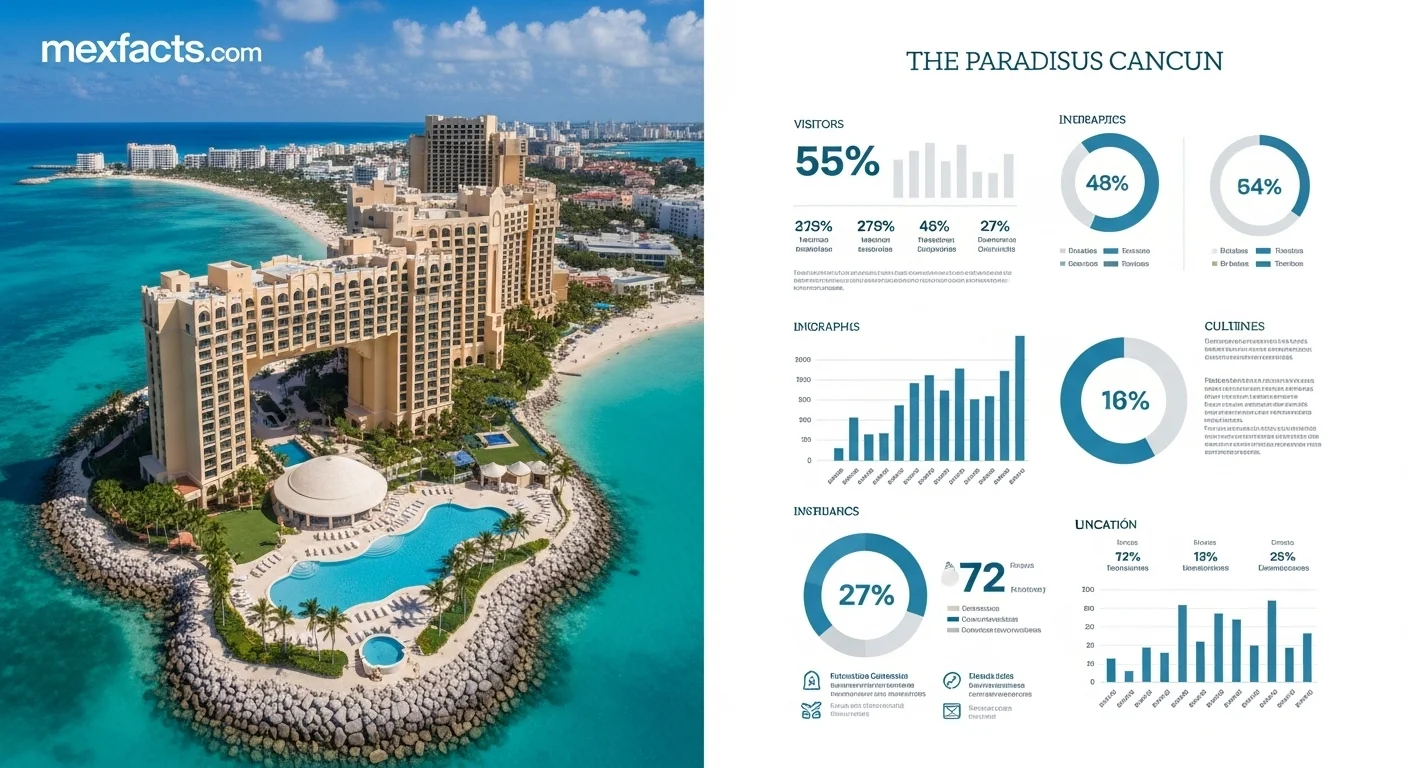
Paradisus Cancun occupies a prime stretch of beachfront at Kilometer 16.5 of Boulevard Kukulcán in Cancun's Hotel Zone. Managed by Spain-based Meliá Hotels International, the resort stands out visually due to its dramatic physical footprint: five nine-story pyramid towers capped with expansive glass atriums. The interior of each pyramid houses multi-tiered indoor gardens, cascading tropical foliage, and natural sunlight corridors that distinguish it from conventional high-rise resort blocks.
The property is designed around a dual-concept layout. Rather than operating as strictly family-oriented or strictly adults-only, the resort balances both demographics through zoning. Family-friendly suites, splash areas, and general entertainment spaces operate alongside secluded adult enclaves. This structure allows the resort to cater simultaneously to leisure couples, wedding parties, family travelers, and large-scale corporate groups utilizing its 30,000-square-foot convention center.
Accommodations: Standard Rooms vs. The Reserve
Paradisus Cancun features over 650 suites, each configured with private terraces offering panoramic views of either the open Caribbean Sea or the tranquil Nichupté Lagoon. Guest accommodations are split across two core operational service tiers:
- Standard Luxury Suites: Spacious rooms and junior suites with marble flooring, modern rainfall showers, daily restocked minibars, flat-screen televisions, and private balconies. These rooms have access to the main resort pools, public beach zones, and standard all-inclusive dining venues.
- The Reserve (Adults-Only VIP Tier): An upgraded enclave specifically restricted to adult guests aged 18 and older. Booking The Reserve unlocks premium perks, including a dedicated private check-in lounge, personalized concierge service, priority restaurant reservations, an exclusive private pool with upscale daybeds, a reserved beach section with dedicated bar service, and access to private venues such as the beachfront restaurant La Palapa.
- Family Concierge / Nikté Configurations: Tailored family suites featuring child-friendly amenities, priority booking for family activities, and enhanced room configurations suitable for multi-child parties.
For visitors weighing booking options, The Reserve functions essentially as a boutique hotel within the larger mega-resort, insulating adult travelers from high-traffic family zones while preserving full access to the broader resort's amenities.
All-Inclusive Inclusions and Dining Experience
The operational engine of Paradisus Cancun is its comprehensive all-inclusive package. Standard room reservations cover room accommodations, unlimited dining at included à la carte and buffet restaurants, non-premium domestic and international alcoholic beverages, daily wellness programming, fitness center access, non-motorized water sports, and structured activities at the kids' club.
Culinary Portfolio and Signature Restaurants
Dining variety is one of the resort's primary competitive advantages, featuring ten distinct restaurants and several lounges:
- Malva Food Bazaar: The primary international buffet featuring live cooking stations, fresh tropical fruits, pastries, and rotating global themes for breakfast, lunch, and dinner.
- Blue Agave: A casual open-air venue dedicated to authentic Mexican street food, artisanal tacos, and local tequila pairings.
- Bana: An upscale Asian fusion concept offering teppanyaki tables, sushi bars, and contemporary Pan-Asian specialties.
- Fuego: A Latin-inspired restaurant showcasing ceviches, grilled cuts, and coastal South American flavors.
- Sal Steak Cave: An upscale steakhouse specializing in aged beef cuts and extensive wine selections (certain cuts and cellar reserves carry an additional surcharge or require specific tier reservations).
- La Palapa: An open-air fine-dining venue overlooking the Caribbean, reserved exclusively for guests staying in The Reserve.
Beyond dining, guests have access to the signature YHI Spa—a 12,000-square-foot wellness facility featuring a hydrotherapy circuit, thermal chambers, and Mayan-inspired botanical treatments (spa therapies, massages, and private salon services are billed separately).
Tourism Footprint and Key Statistics
Understanding the scale of Paradisus Cancun requires examining its position within Quintana Roo's broader tourism economy. The resort is a critical asset within Mexico's most productive hospitality corridor:
- Statewide Tourism Inflow: Quintana Roo consistently welcomes more than 20 million international and domestic tourists annually, generating upwards of $20 billion in total economic impact across lodging, transportation, and dining.
- Airport Throughput: Cancun International Airport (CUN) serves as the primary gateway, processing more than 30 million passengers annually and ranking as Mexico's busiest hub for international arrivals.
- Hotel Zone Density: The Cancun Hotel Zone features over 35,000 hotel rooms, maintaining high annual average occupancies between 72% and 82%, with peaks during winter and spring break periods.
- Key Feeder Markets: Visitors from the United States and Canada make up over 60% of Cancun's international tourist arrivals, driven by direct air connections from more than 40 North American hubs.
For additional details on regional connectivity and travel across the state, explore our guide to Cancun & Tulum: The Heartbeat of the Mexican Caribbean.
Location, Beach Conditions, and Travel Logistics
Paradisus Cancun sits on the eastern strip of the Hotel Zone barrier island. The beach in this area faces the open Caribbean, featuring wide stretches of white coral sand. Because the resort is located along the middle section of the island rather than the protected northern bay, ocean waves and undertows can vary significantly depending on daily wind conditions. Swimmers should always observe the resort's safety flags (green, yellow, or red) before entering the water.
Managing Seasonal Beach Factors and Sargassum
Like all beach resorts across the Riviera Maya, Paradisus Cancun experiences seasonal deposits of pelagic sargassum seaweed, typically between April and September. The resort maintains dedicated maintenance teams and barrier systems that clear the shoreline daily at sunrise to ensure clean beach access for guests. Winter months (November through February) generally see the clearest water conditions and lower humidity levels.
Regional Infrastructure: Airport Access and Tren Maya
Logistically, the resort is located approximately 15 to 20 minutes north of Cancun International Airport, making transfers quick and convenient compared to resorts situated further south in Riviera Maya. Ground transport options include pre-booked private shuttles, licensed airport vans, and authorized taxis. For international visitors entering Mexico, review current regulations in our guide to travel and entry requirements for Mexico.
Regional connectivity has expanded significantly with infrastructure developments such as the Tren Maya (Mayan Train) network and the Felipe Carrillo Puerto International Airport in Tulum. Guests staying at Paradisus Cancun can use the resort as a base for day excursions to Chichén Itzá, Valladolid, or the colonial center of Mérida via rail and highway connections.
Frequently Asked Questions
It is a hybrid property. The main resort towers and pools are fully family-friendly, offering a kids' club and family suites. However, 'The Reserve' is a dedicated, upscale adults-only (+18) section with its own private pool, beach club, concierge, and exclusive restaurants.
The resort is approximately 16 kilometers (10 miles) from Cancun International Airport (CUN), which typically translates to a 15- to 25-minute drive depending on traffic.
Standard gratuities and taxes are covered within the all-inclusive room rate. However, tipping staff members (such as bartenders, housekeeping, and concierges) in Mexican Pesos or US Dollars for exceptional service is customary and widely appreciated.
Buffet dining does not require reservations, but specialty à la carte restaurants (such as Bana, Fuego, and Sal Steak Cave) recommend evening reservations through the concierge or resort app. Most evening venues observe an elegant casual dress code (collared shirts or dress tees, tailored shorts or trousers, and closed-toe footwear for dinner).
Expert Reviews
Laura Chen, Traveler ⭐⭐⭐⭐⭐
My family and I just got back from Paradisus Cancun, and this article was such a fantastic read! It put into words everything we felt but couldn't explain—the blend of luxury with real Mexican culture. Reading about its economic importance makes me appreciate our vacation even more. It’s so much more than just a pretty resort.
Robert Miller, Investor ⭐⭐⭐⭐⭐
As someone exploring investment opportunities in Mexico's tourism sector, this analysis was invaluable. It goes beyond the surface-level data, offering a nuanced perspective that connects the numbers to cultural trends and on-the-ground realities. The insights on future challenges and opportunities are particularly sharp. Excellent work.
Sofia Garcia, Local Tour Guide ⭐⭐⭐⭐
As someone who was born and raised in Quintana Roo, I appreciate that this article captures the complexity of places like Paradisus. It’s a huge source of jobs for my community, but it also presents challenges. The author understands this balance. It’s a fair and human look at the engine that drives my home state.