
Mexican Street Food: The Ultimate 2026 Authentic Guide

In Mexico, we have a saying: 'barriga llena, corazón contento'—a full belly means a happy heart. Nothing fills the belly and heart quite like antojitos, our beloved 'little cravings.' This isn't just about tacos and tamales; it's a journey into the soul of our street food culture. We'll take you from the bustling local 'puestos' (street stalls) that are the lifeblood of our communities to the global stage, where the humble antojito has become a culinary superstar. We'll explore the rich history, the surprising economic power, and the exciting future of these dishes that have truly captured the world's taste buds.
Table of Contents
What is an Antojito in Mexico and why is it important internationally?
When you hear the word antojitos, I want you to imagine more than just a snack. Think of the warm, comforting smell of corn masa hitting a hot comal, the lively chatter around a street cart on a cool evening, the feeling of satisfying a sudden, intense craving. Translating to 'little cravings,' antojitos are the very soul of Mexico's street food. These are the dishes we eat in the morning to start our day or late at night after a gathering with friends. They aren't part of a formal sit-down meal but are a cultural ritual in themselves. From the world-famous taco to regional treasures that tell a story of their hometown, understanding antojitos is to understand the rhythm of Mexican life, the ingenuity of our people, and the flavors that have taken the world by storm.
The Essence and Diversity of Antojitos
At the heart of nearly every antojito is the magic of maize, or corn. The foundation is masa, a dough made from corn treated with an ancient process called nixtamalization. This simple dough is then transformed into an incredible array of shapes and forms. A simple, thin disc becomes a tortilla for a taco. A thicker, pinched-edge disc, fried to perfection and loaded with toppings, is a sope. An oval-shaped cake stuffed with beans or cheese before cooking is a tlacoyo, a pre-Hispanic delicacy I remember eating in the markets as a child. The list goes on and on: chalupas, gorditas, pambazos, quesadillas, tostadas... each is a beloved member of the antojito family. The beauty lies in the regional diversity. The fresh fish tacos from a stand in Ensenada, Baja California, taste of the sea, a world away from the savory, marinated pork of tacos al pastor, a signature of my beloved Mexico City. This variety isn't just creative; it’s a living map of Mexico's culinary landscape.
This tradition is alive and breathing on every street corner. The vendors, or 'taqueros' and 'garnacheros,' are more than cooks; they are artisans and the keepers of community hubs. A simple street cart, or 'puesto,' is where people from all walks of life—students, office workers, families—come together. This accessibility is what makes it so special. It’s no surprise that in some parts of Mexico City, these stalls make up more than half of all places to buy food, providing affordable, traditional, and incredibly satisfying meals. They are woven into our celebrations, our daily commutes, and our social lives, making them a non-negotiable part of our national identity.
The Leap to the Global Stage: From Street Cart to Restaurant
The journey of the antojito from a local Mexican street to a bustling international city is a beautiful story of migration and cultural pride. It began with Mexican families who brought their treasured recipes with them to new lands, opening small taquerias that served as delicious embassies for our culture. At first, they were a taste of home for the diaspora community, but soon, everyone wanted in. Today, you don't have to look far to see the result. The global market for Mexican food is enormous, expected to be worth over $113 billion by 2033. This has changed everything. The humble street food is now served everywhere, from fast-food chains to elegant restaurants. The idea of an 'antojitos restaurant' is now a staple in cities from Tokyo to London, offering menus that showcase the incredible diversity of our 'little cravings.' These places face the wonderful challenge of adapting to local tastes while keeping the spirit of authenticity alive—a balance that is the secret to their success.
The Broader Context of 'Antojitos Latinos'
While antojitos are a hallmark of Mexico, they belong to a larger family of Latin American street foods. You could use the term 'antojitos latinos' to describe this shared tradition of savory snacks, which includes everything from Colombian empanadas and Salvadoran pupusas to Peruvian ceviche. Each is a world of flavor in its own right. However, thanks to their global popularity, Mexican antojitos often lead the charge. When you see a restaurant advertising 'antojitos latinos,' you can bet that a good portion of the menu will feature our tacos, quesadillas, and sopes. In many ways, the global success of Mexican food has opened doors for other Latin American cuisines, acting as a gateway for food lovers to explore the rich tapestry of flavors from our sister countries.
Case Study in Commercialization: Antojitos CityWalk
Nothing shows the global branding of Mexican street food quite like Antojitos Authentic Mexican Food at Universal CityWalk. This isn't just a restaurant; it's a full-blown experience. Walking in, you're greeted by vibrant colors, dazzling murals, and the sound of live Mariachi music. It's designed to feel like a festive plaza in Mexico. The menu is a highlight reel of our most famous antojitos: tableside guacamole, esquites (street corn), and a dazzling array of tacos and enchiladas. This is the peak of commercialization, taking the rustic charm of a street cart and packaging it into a polished, high-energy attraction for a global audience. While some might argue it can't compare to the grit and flavor of a true neighborhood 'puesto' in Mexico City—and I might be one of them!—its success is undeniable. It proves how powerful the 'antojito' brand has become, promising fun, flavor, and an accessible taste of Mexican culture to people from all over the world.
Current statistics and data about Antojitos in Mexico
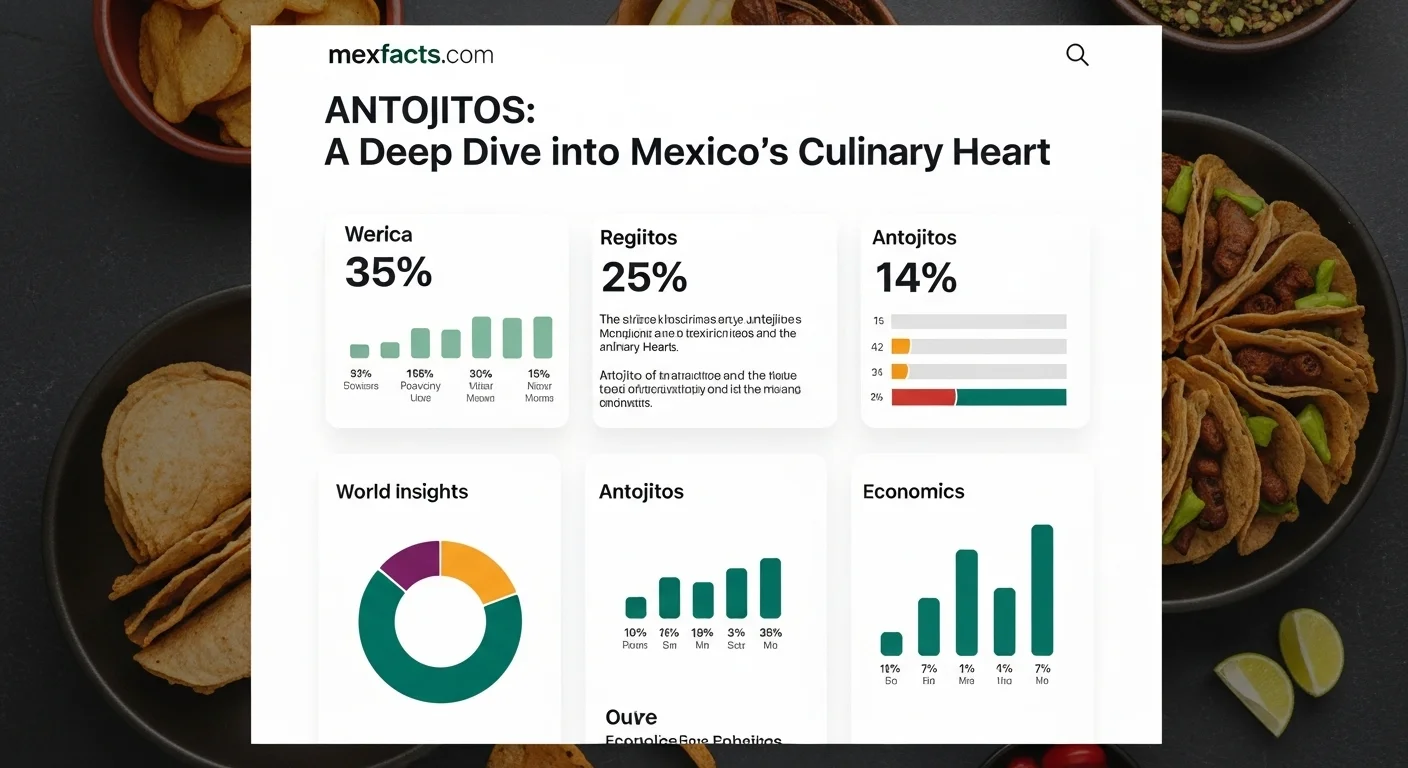
It’s easy to see antojitos as just simple, comforting street food, but behind every taco and tamale is a powerful economic engine that fuels communities across Mexico. The numbers tell a fascinating story of a resilient, massive industry that supports millions of families and is constantly evolving with global trends and technology. Let's look at the data behind our beloved 'little cravings'.
The Economic Backbone: Antojitos in the Mexican Economy
In Mexico, the antojitos world is a blend of formal restaurants and countless informal street stalls, and together, they are a force to be reckoned with. Imagine this: as of late 2023, there were nearly 874,000 people preparing and selling street food across the country. This isn't just a job; it's a livelihood, especially for women, who make up almost 57% of these hardworking vendors. The restaurant industry as a whole, with antojitos at its heart, provides nearly 4 million direct jobs, making it one of the most important sectors of our national economy. The financial impact is staggering. Street food sales alone generated over $11.5 billion in 2023 and are on track to surpass $15.5 billion by 2028. This growth continues even with challenges like inflation, which shows just how essential these foods are to our daily lives.
This impact goes deep into Mexico’s food industry. The production of tortillas and baked goods, the very foundation of most antojitos, is the single largest contributor to our food industry's GDP. This creates a vital economic chain that connects the farmer who grows the corn, the mill that grinds the masa, and the 'taqueria' that serves the final, delicious product to a hungry customer. It’s a beautiful cycle that sustains us in more ways than one.
The Global Market Explosion: An International Perspective
The world's love affair with Mexican food, led by antojitos, has created a booming global market. In 2024, the Mexican restaurant market worldwide is valued at around $72.5 billion, and it's projected to grow to a massive $113.6 billion by 2033. To put it simply, people can't get enough. North America is the epicenter of this boom. In the United States, Mexican food is a top-three favorite cuisine, with a market worth over $80 billion in 2023 alone.
What’s fueling this incredible growth? The rise of fast-casual dining has been a perfect match for Mexican concepts. An 'antojitos restaurant' offers fresh, customizable, and affordable meals, which is exactly what today's diner wants. This trend has benefited big chains and small independent shops alike. The branding is so strong that even broader 'antojitos latinos' menus often lean on the popularity of Mexican dishes to draw customers in. For investors, the numbers are compelling: a Mexican food franchise in the U.S. can bring in average annual revenues of around $1.2 million.
Consumer Trends and Digital Transformation
The antojitos market is not stuck in the past; it's evolving. A major trend is health and wellness. More and more people are looking for plant-based, gluten-free, and lighter options. This has sparked wonderful innovation, from vegan chorizo tacos at a local 'puesto' to creative vegetarian enchiladas at high-end restaurants like 'Antojitos CityWalk'. Our cuisine, with its foundation of corn, beans, and vegetables, is naturally adaptable to these modern tastes.
Technology is also changing the game. The convenience of ordering food online is a huge driver of growth. Since 2014, digital orders and delivery have grown 300% faster than dining in. In Mexico, digital platforms have empowered even the smallest vendors to reach a bigger audience. This digital shift has also been embraced by large venues, which use online reservations and menus to streamline the customer experience. This mix of tradition and tech keeps the antojito relevant and accessible for everyone.
Finally, let's not forget the power of culinary tourism. So many travelers come to Mexico specifically to eat, and antojitos are at the top of their list. I've had countless conversations with visitors whose faces light up when they talk about their first street taco experience. This creates a wonderful cycle: a memorable food trip to Mexico fuels the global demand for authentic antojitos back home, driving the entire market forward.
Future outlook and opportunities regarding Antojitos in Mexico
So, where do our beloved 'little cravings' go from here? The future of antojitos is an exciting blend of deep-rooted tradition and modern innovation. For international investors and entrepreneurs, this isn't just a food trend; it's a dynamic, expanding market full of opportunity. But to succeed, one must navigate this world with a respect for its culture and an eye on the challenges ahead.
Investment and Growth Opportunities
The potential within the antojitos world is immense. One of the clearest paths is franchising. The fast-casual 'antojitos restaurant' is a proven model that's ready to be scaled. This could mean investing in an existing brand or creating a new concept—perhaps a high-end 'taqueria' that focuses on artisanal mezcal pairings or a health-conscious spot specializing in creative, plant-based Mexican food. With the global market projected to grow by over $114 billion by 2029, there is plenty of room for new players.
Another incredible opportunity is investing directly in Mexico's food processing industry. Mexico is a global powerhouse in food production. There's a huge demand for high-quality, authentic products for export. Think of small-batch artisanal salsas made with unique regional chilies, organic, non-GMO corn flour for perfect tortillas, or even gourmet ready-to-eat antojitos for international supermarkets. Investing in modern, sustainable processing plants in Mexico is a smart move for anyone looking to supply the world with the true taste of our country.
Food technology is the third frontier. Digital ordering and delivery will remain essential, but the innovation goes deeper. Imagine 3D-printed plant-based 'al pastor' meat that is both sustainable and delicious, or subscription boxes that deliver all the ingredients and knowledge for a family in Germany to make authentic Oaxacan mole at home. Technology can help us share our culinary traditions in new and exciting ways.
The Rise of Experiential and Niche Concepts
The future isn't just about selling more tacos; it's about selling an experience. The popularity of places like Antojitos CityWalk shows that people crave more than just a meal; they want to feel transported. This opens the door for immersive culinary tours through Mexico's markets, cooking schools focused on the art of masa, or pop-up restaurants that combine our food with Mexican art and music. The goal is to share the culture that surrounds the food.
The market is also making room for highly specialized, niche concepts. The health and wellness movement is here to stay. An 'antojitos restaurant' that is 100% plant-based, sources all its ingredients from organic local farms, or revives ancient pre-Hispanic recipes could build a fiercely loyal following. Fusion cuisine also continues to be a playground for creativity, blending Mexican flavors with Asian, Middle Eastern, or other global cuisines to create something entirely new and exciting.
Challenges and Strategic Considerations
Of course, this bright future comes with challenges. Competition is fierce. To stand out, a new business needs a clear identity. Is it the absolute best ingredients? A unique dining concept? Unbeatable hospitality? You have to find your special angle.
The most important challenge is maintaining authenticity while adapting to global tastes. This is a delicate dance. The brands that succeed will be those that honor our culinary heritage while innovating with respect. It’s about educating customers on the richness of our food, not just creating a caricature of it. This is the tightrope that places like 'Antojitos CityWalk' must walk every day.
Finally, sustainability and ethical sourcing are more important than ever. From using eco-friendly packaging to ensuring fair prices for farmers, consumers are rewarding businesses that do the right thing. These aren't just buzzwords; they are becoming fundamental to building a successful, long-lasting brand.
In the end, the world of antojitos is a perfect reflection of modern Mexico itself: deeply traditional yet incredibly dynamic and forward-looking. The global love for our flavors has created immense opportunities. By embracing innovation, focusing on quality and authenticity, and navigating the challenges with care, businesses can find incredible success in sharing Mexico's 'little cravings' with the world. For more insights into Mexico's dynamic business environment, a valuable resource is the Mexico Business News platform.
Expert Reviews
Daniel Carter, Entrepreneur ⭐⭐⭐⭐⭐
As an entrepreneur exploring the food industry, this article was a goldmine. I knew Mexican food was popular, but I never understood the deep cultural roots and the sheer economic scale of antojitos. This piece connected the dots between the history and the business potential, giving me a much clearer vision. Thank you!
Sofia Garcia, Culinary Blogger ⭐⭐⭐⭐⭐
I grew up watching my grandmother make sopes and tamales from scratch. Reading this felt like coming home. It beautifully explains that a street food stall is more than a place to eat—it's the heart of the neighborhood. I felt so proud to see our culinary heritage described with such care and depth.
Liam Murphy, World Traveler ⭐⭐⭐⭐⭐
My wife and I traveled through Puebla and Oaxaca last year and were blown away by the food. This article is the perfect guide for anyone who wants to understand what they're eating. It breaks down the differences between tlacoyos, chalupas, and gorditas in a way that's easy to grasp. A must-read for any food-loving traveler!