
Emerald in Mexico: Resort History, Disambiguation, and Tourism Economics

The term "Emerald" in Mexico connects hospitality branding, geographical allure, and high-stakes resort investment rather than gemstone mining. While Colombia and Brazil dominate world emerald production, Mexico's Caribbean coast created its own emerald identity around turquoise waters, dense jungle, and luxury beachfront real estate. In the hospitality sector, the name is most famously tied to the former Now Emerald Cancun, a landmark Hotel Zone property that underwent a multi-million-dollar reconstruction and reopened in late 2025 as the adults-only Secrets Mirabel Cancun Resort & Spa under Hyatt's Inclusive Collection. Examining this property's history, alongside regional alternatives and Quintana Roo's multibillion-dollar tourism engine, provides vital insights into Mexico's evolving luxury travel economy.
Table of Contents
- What Does 'Emerald' Mean in Mexico? Gemstones vs. Tourism
- From Now Emerald to Secrets Mirabel: The Cancun Property Evolution
- The Economics of Mexican Caribbean Tourism: Data and Revenue
- The All-Inclusive Hospitality Model: Operational Scale and Debate
- Infrastructure, Investment, and Sustainable Growth
- Frequently Asked Questions
What Does 'Emerald' Mean in Mexico? Gemstones vs. Tourism
Travelers and researchers searching for "Emerald Mexico" frequently encounter two distinct subjects: commercial gemstone production and high-profile coastal hospitality. Factually, Mexico is not an emerald producer. The geological deposits that produce gem-quality beryl emeralds are concentrated primarily in Colombia, Zambia, and Brazil. Mexico's historic and modern mineral extraction focuses instead on precious metals—holding the global number-one ranking in silver production—as well as copper, zinc, fluorite, and indigenous ornamental stones like fire opals and obsidian.
Instead, the "Emerald" descriptor in Mexico has earned prominence as a geographic metaphor and a commercial hospitality identity. In Mexican travel marketing, it evokes the deep green tones of the Mayan jungle meeting the turquoise Caribbean shallows along the Yucatan Peninsula. Commercially, the name identifies specific landmark developments across the region:
- Now Emerald Cancun (Secrets Mirabel Cancun Resort & Spa): The prominent beachfront resort situated at Kilometer 16.5 of Cancun's Hotel Zone, which underwent an extensive reconstruction to become an adults-only luxury escape.
- BlueBay Grand Esmeralda: A sprawling 979-room all-inclusive family resort located further south along the Riviera Maya coast in Playa del Carmen.
- Emerald Residential Tower & Spa: A high-profile luxury condominium complex overlooking Cancun's shoreline, catering to private residential investors seeking stunning oceanfront properties.
Understanding these distinctions eliminates common travel planning confusion and clarifies how an international hospitality brand turned a gemstone metaphor into one of Cancun's most recognized coastal addresses.
From Now Emerald to Secrets Mirabel: The Cancun Property Evolution
The story of Cancun's "Emerald" resort mirrors the broader evolution of the Mexican Caribbean from mid-tier family vacations toward high-yield, luxury hospitality. Situated on Boulevard Kukulcán between the open Caribbean Sea and Nichupté Lagoon, the resort site has served international travelers for decades. Originally operating as Grand Oasis Caribe and later Oasis Emerald, the resort underwent comprehensive rebranding in 2019 to join AMResorts' AMR Collection as Now Emerald Cancun.
Under the Now brand, the property operated as a 427-room family-friendly resort centered on the company's proprietary "Unlimited-Luxury" service standard. This operational concept eliminated traditional wristbands, removed dining reservation restrictions, and bundled premium spirits, twenty-four-hour room service, and supervised youth programs into a single upfront booking tariff.
A transformative corporate milestone occurred in 2021 when Hyatt Hotels Corporation acquired Apple Leisure Group (the parent company of AMResorts) in a $2.7 billion transaction. The deal placed Now Emerald Cancun into Hyatt's global Inclusive Collection portfolio, exposing the asset to World of Hyatt loyalty members and international institutional capital.
Recognizing the soaring demand for premium adult-oriented escapes across the Cancun resort landscape, Hyatt announced the temporary closure of Now Emerald in late 2023 for a complete redevelopment. Rather than executing a standard room renovation, operators embarked on a multi-million-dollar reconstruction. The initiative preserved the property's primary structural footprint while adding an entirely new 17-story oceanfront Preferred Club tower, redesigning dining facilities, and elevating wellness infrastructure.
In November 2025, the reimagined property officially reopened its doors as Secrets Mirabel Cancun Resort & Spa. By transitioning the asset from the family-centric "Now" brand to the adults-only "Secrets" flag, Hyatt successfully repositioned the former Emerald Cancun to capture higher average daily rates (ADR) and affluent international travelers seeking elevated privacy and luxury.
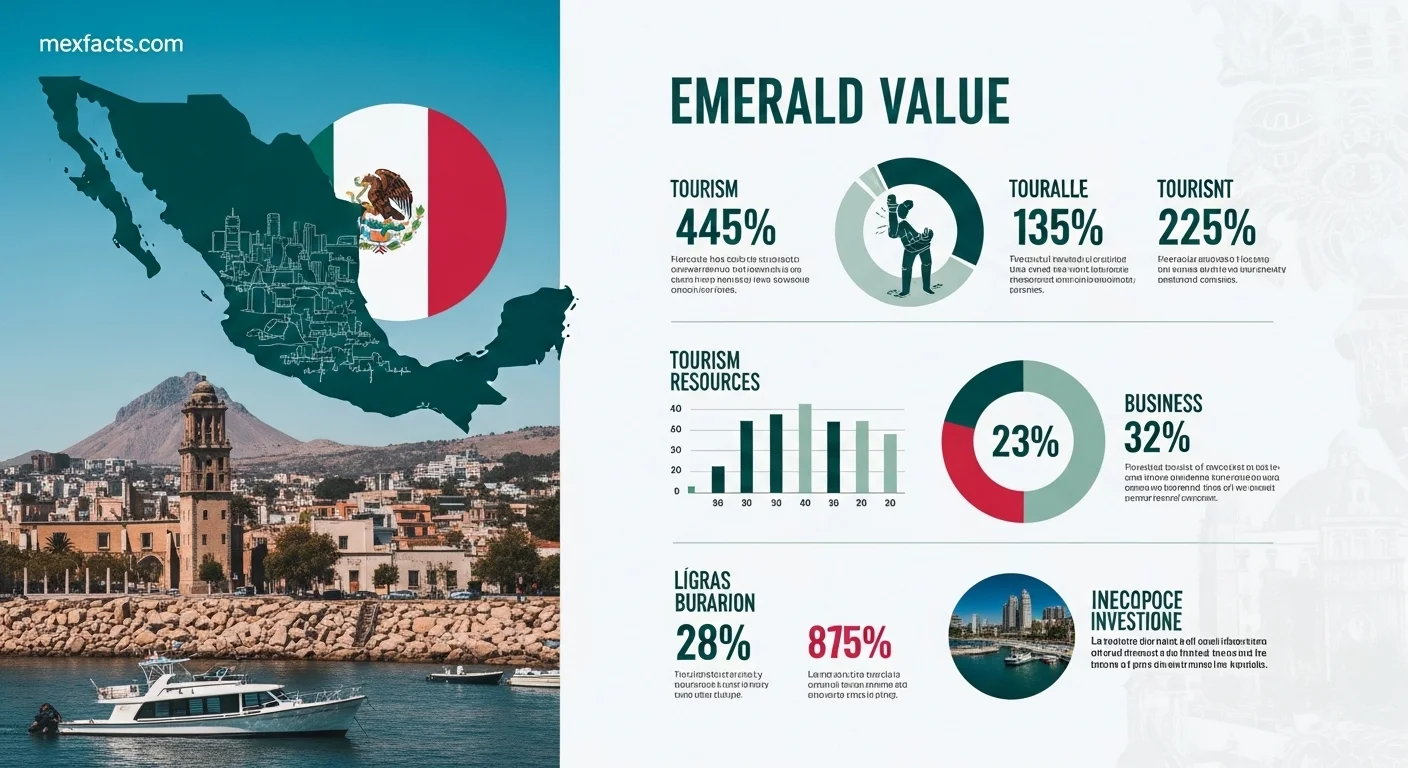
The Economics of Mexican Caribbean Tourism: Data and Revenue
The strategic capital deployed into properties like the former Now Emerald is justified by the unmatched scale of Quintana Roo's tourism economy. The state stands as Mexico's primary generator of foreign tourism currency, anchored by world-class aviation connectivity and an inventory exceeding 130,000 hotel rooms.
Official records from the State Secretariat of Tourism (SEDETUR) demonstrate the sector's economic significance:
- Annual Tourist Volume: Quintana Roo registered over 21 million tourist arrivals in 2023, surpassing previous historic milestones.
- Direct Economic Spillover: Tourism expenditure (derrama económica) generated more than $21 billion USD across state destinations, representing a double-digit percentage increase over prior cycles.
- Aviation Throughput: Cancun International Airport (ASUR) processed over 32.7 million arriving and departing passengers, maintaining its status as Mexico's leading international airport.
- Market Share: Quintana Roo commands between 40% and 44% of all international tourists arriving in Mexico by air, underscoring its pivotal role in national fiscal health.
During peak winter and spring travel quarters, hotel occupancy rates across Cancun regularly exceed 85% to 92%. Solid demand from key source markets—principally the United States, Canada, and Western Europe—provides the high passenger density required to sustain multi-hundred-room luxury properties year-round.
The All-Inclusive Hospitality Model: Operational Scale and Debate
The operational engine powering Cancun's hotel corridor is the all-inclusive model. Pioneered at scale across the Mexican Caribbean during the 2000s, this approach transformed regional travel economics by providing visitors with predictable expenditure and simplified vacation logistics.
From an operator's perspective, the all-inclusive structure provides substantial financial efficiencies. Properties secure the guest's complete accommodation and dining budget prior to arrival. In turn, high-volume centralized purchasing allows resort operators to optimize supply chains, minimize food waste, and stabilize operating margins against inflationary pressures. Travelers evaluating the northern Caribbean coast routinely weigh these integrated amenities at properties like Riu Palace Las Americas alongside wider Quintana Roo lodging formats such as all-inclusive resort models.
However, the model remains the focus of constructive economic debate within Mexico. Regional business chambers point out that when visitors remain entirely within a resort compound, external commerce can experience limited secondary spending. Local independent restaurants, municipal taxi cooperatives, and neighborhood artisans often capture only a small fraction of overall visitor expenditure. In response, modern developments and municipal programs increasingly emphasize culinary tours, off-property excursions, and partnerships with local producers to ensure broader community economic participation.
Infrastructure, Investment, and Sustainable Growth
The long-term viability of Mexico's Caribbean tourism depends on maintaining modern connectivity and safeguarding fragile coastal ecosystems. Massive public and private capital outlays are currently reshaping the corridor detailed in Cancun & Tulum: The Heartbeat of the Mexican Caribbean.
On the infrastructure front, the Tren Maya (Maya Train) connects Cancun International Airport with inland archaeological centers and southern coastal towns, facilitating broader regional tourist dispersal. Complementing this network, the opening of Tulum's Felipe Carrillo Puerto International Airport provides direct international access to the southern Riviera Maya, reducing transit congestion along Federal Highway 307.
Simultaneously, environmental resilience has become a paramount priority for hotel operators and municipal leaders. The coastal environment that creates Mexico's "emerald" appeal faces ongoing ecological pressures, including beach erosion, pressure on the Mesoamerican Barrier Reef, and periodic pelagic sargassum seaweed influxes. In Quintana Roo, municipal environmental sanitation taxes (Derecho de Saneamiento Ambiental) paid by hotel guests directly fund offshore barrier containment, specialized barrier skimmers, beach grooming equipment, and reef restoration initiatives.
The institutional confidence demonstrated by corporate redevelopments like Secrets Mirabel illustrates that Mexico remains an attractive destination for foreign direct investment. Beyond hospitality, Mexico's comprehensive trade treaties and stable macroeconomic framework support deep cross-border commercial ties, monitored officially by Mexico's Secretariat of Economy.
Frequently Asked Questions
- Does Mexico produce commercial emerald gemstones?
- No. Mexico does not mine or produce commercial emerald gemstones. Natural emeralds originate primarily in Colombia, Zambia, and Brazil. Mexico's primary mining strengths center on silver, gold, copper, fluorite, and fire opals.
- What happened to the Now Emerald Cancun resort?
- Now Emerald Cancun closed in late 2023 for a multi-million-dollar reconstruction and rebranding. The property officially reopened in November 2025 as Secrets Mirabel Cancun Resort & Spa, operating as an adults-only all-inclusive resort under Hyatt's Inclusive Collection.
- Where is the former Now Emerald (Secrets Mirabel) located?
- The resort is located at Boulevard Kukulcán Kilometer 16.5 in Cancun's Hotel Zone, situated between the open Caribbean beachfront and the Nichupté Lagoon.
- What is BlueBay Grand Esmeralda?
- BlueBay Grand Esmeralda is a separate 979-room all-inclusive family resort located south of Cancun in the Riviera Maya near Playa del Carmen, often searched by travelers looking for "Emerald" or "Esmeralda" resorts in Mexico.
Expert Reviews
Laura P., from Chicago ⭐⭐⭐⭐⭐
My family and I stayed at a resort in Cancun a few years back, and this article really captured the 'emerald' feeling I remember—that incredible green of the water and jungle. It's so interesting to read about the business side of it all and understand why our vacation experience was designed the way it was. Makes me appreciate our trip even more!
Mark T., from Toronto ⭐⭐⭐⭐
As someone who's been visiting the Riviera Maya for over a decade, I've seen the evolution firsthand. The article's focus on the shift from family resorts to more specialized luxury is spot on. It explains the changes I've noticed on the ground. Great insight into the future of my favorite vacation spot.
Sofia V., Investment Analyst ⭐⭐⭐⭐⭐
This was a fantastic analysis. It goes beyond the typical travel fluff and connects the dots between the on-the-ground tourist experience and the international investment climate. The 'Emerald' metaphor is a powerful way to frame Mexico's value proposition. Very useful for my research.