
Molcajete: The Soul of the Mexican Kitchen and a Global Icon
The molcajete, carved from rugged volcanic stone, is so much more than a simple mortar and pestle. For me, and for millions in Mexico, it's the heart of our kitchen, a direct link to our pre-Hispanic roots. This three-legged bowl and its stout pestle, the 'tejolote,' are the secret to the incredible textures and deep flavors of real salsas and guacamoles. I can still smell the aroma of toasted chiles and garlic being ground in my grandmother's molcajete. Beyond the home, this tool is the lifeblood for entire artisan communities in places like Jalisco and Guanajuato, and it has become one of our most important cultural exports. The famous 'molcajete dish,' a sizzling feast served in the hot stone bowl, is now a star attraction in restaurants everywhere, from a neighborhood spot to a fancy grill. This article explores the molcajete's rich history, its importance to our economy, and the vibrant future it holds for Mexican culture.
- What is a Molcajete and Why is it a Global Icon?
- The Molcajete's Economic Impact: A Look at the Numbers
- The Future of the Molcajete: Opportunities and Challenges
What is a Molcajete and Why is it a Global Icon?
The molcajete is one of Mexico's most treasured cultural artifacts, a symbol of our culinary soul that has journeyed from ancient kitchens to the center stage of global gastronomy. To hold one is to feel the weight of history. This isn't just a kitchen tool; it's a vessel of tradition and a creator of authentic flavor. To truly understand the molcajete (from the Nahuatl word 'molcaxitl') and its pestle, the 'tejolote' (from 'texolotl'), is to grasp a piece of Mexican identity. Each one is traditionally hand-carved from a single piece of volcanic basalt. Its tripod shape and porous surface, perfected over thousands of years by our ancestors like the Aztecs and Mayas, are pure genius. The unique texture of the stone is what makes it magical; it doesn't just crush ingredients—it tears and macerates them, releasing essential oils and creating complex, layered flavors that a blender could only dream of. This is why it remains a cherished heirloom in so many Mexican families, passed down through generations, holding the memories of countless shared meals.
The cultural importance of the molcajete is woven into the fabric of our cuisine, which is recognized by UNESCO as an Intangible Cultural Heritage of Humanity. It represents a deep commitment to traditional methods and a connection to the very earth that gives us both the ingredients and the tool itself. The act of grinding chiles, tomatoes, and spices in a molcajete is a ritual. It’s a rhythmic, aromatic process that is as much a form of cultural expression as it is a cooking technique. This authenticity is incredibly appealing to a global audience. As people around the world search for genuine, story-rich food experiences, the molcajete has become a prized possession for both professional chefs and home cooks. Its presence on a restaurant table or in a kitchen is a clear signal: here, we value real Mexican cooking. This global appreciation has turned the molcajete from a humble domestic tool into an international ambassador for the spirit of Mexico.
How did this volcanic stone bowl become an international star? The Mexican diaspora played a huge role, setting up communities and, of course, amazing restaurants all over the world. These were the first introductions for many. Then came the boom in culinary tourism. Millions of travelers come to Mexico every year, and a huge part of their experience is our food. When tourists see a salsa being freshly made for them tableside in a Cancún restaurant, or when they buy one directly from an artisan in a small town like Comonfort, Guanajuato, they want to bring that magic home. This has created a worldwide demand for authentic molcajetes. The name itself is now a brand. When a restaurant abroad calls itself El Molcajete Mexican Restaurant, it’s making a powerful promise of authenticity. Any place calling itself a molcajete restaurant or molcajete restaurante is banking on the power of this single object to convey a world of culinary tradition.
This brings us to the incredible molcajete dish. It’s an experience. The stone bowl is heated until it's scorching hot and then filled with a sizzling mix of grilled steak, chicken, chorizo, shrimp, tender nopales (cactus paddles), fresh cheese, and a bubbling, spicy salsa. This communal feast, often called a 'Molcajete Mixto,' is the showstopper on menus in Mexican restaurants everywhere. For an establishment like El Molcajete Mexican Grill, this dish is often its main attraction—a highly shareable, profitable plate that delivers an explosion of sounds, smells, and flavors. It perfectly captures the molcajete's dual role as both a functional tool and a powerful cultural symbol. The molcajete is a bridge between our past and present, an engine for local economies, and a way for us to share a piece of our heart with the world.
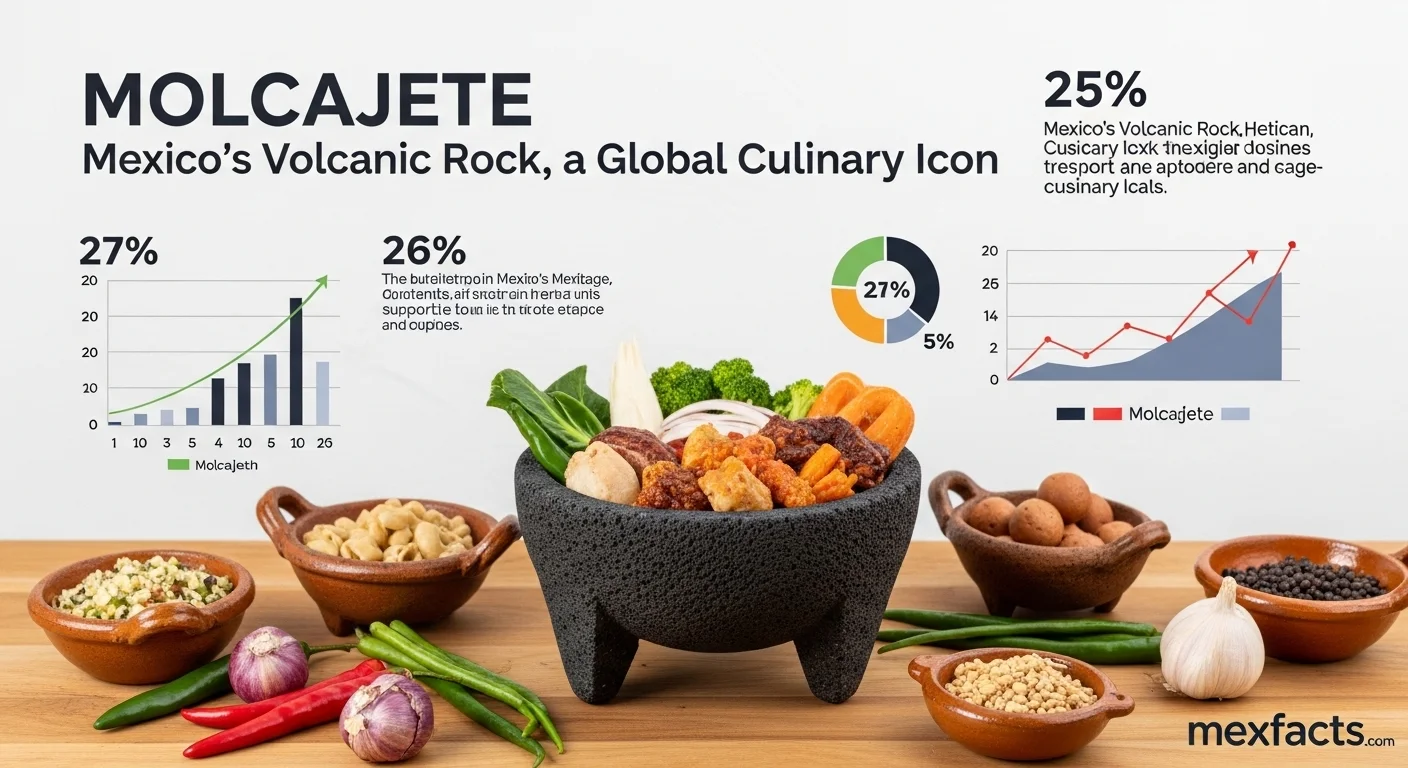
The Molcajete's Economic Impact: A Look at the Numbers
When we look at the molcajete through the lens of economics, we see a vibrant industry built on ancient tradition. Imagine, across Mexico, nearly 8 million artisans keep our traditions alive, and for many in towns like Comonfort in Guanajuato and San Lucas Evangelista in Jalisco, carving molcajetes is the very heartbeat of their local economy. These communities are the foundation of the molcajete's value. A master artisan can spend five to six hours carving a single, high-quality molcajete from a rough block of basalt—a painstaking process that justifies its value. This generational knowledge is priceless, and it's what makes each piece unique. Organizations like FONART (National Fund for the Promotion of Handicrafts) are vital, offering support through training and financing to help these artisans thrive and bring their work to a larger market.
In terms of exports, Mexican handicrafts are a significant cultural and economic force. Recent data shows that Mexico is a major global exporter of handicrafts, with the United States being the largest market by far, followed by Canada and parts of Europe. The molcajete is a star product in this category, desired for its authenticity and usefulness. However, this success comes with a serious challenge: cheap imitations. Authentic, hand-carved molcajetes face fierce competition from fakes, often mass-produced from cement mixed with volcanic dust. These not only undercut the livelihood of our artisans but can be dangerous, as cement particles can chip off into your food. This is why it’s so important to educate people on how to spot a real one. An authentic molcajete is a lifelong kitchen companion; a fake is a worthless and potentially harmful object.
The branding power of the molcajete is clearest in the restaurant world. The popularity of Mexican food has exploded globally. In the U.S. alone, it's a multi-billion dollar industry. The name 'molcajete' has become a strategic brand. A quick search reveals countless businesses named El Molcajete Mexican Restaurant, Molcajete Restaurant, or Molcajete Restaurante. This isn't a coincidence. It’s a deliberate choice to signal authenticity and a commitment to fresh, traditional food. These places leverage the cultural weight of the molcajete to attract customers who want a genuine experience. The signature molcajete dish, often priced as a premium, shareable entrée, is a huge money-maker. At a typical El Molcajete Mexican Grill, this dish combines high-value ingredients like steak and shrimp, presented with theatrical flair in the sizzling stone bowl, easily justifying a higher price point. It’s a perfect example of the economic benefit derived directly from this ancient tool.
Finally, the molcajete is a key player in Mexico's booming culinary tourism sector. Gastronomy is a massive economic driver for us, supporting millions of jobs. People travel here specifically for our food. Mexico has even established official 'Gastronomic Routes' to guide tourists through regions known for their unique culinary traditions. A trip to an artisan's workshop in Comonfort to see a molcajete being carved from raw stone is an unforgettable, high-demand experience. The market for culinary tourism in Mexico is projected to grow significantly in the coming years, fueled by travelers seeking exactly the kind of authentic connection the molcajete represents. From cooking classes where you learn to make salsa the right way, to food festivals celebrating our regional cuisines, the molcajete is often at the center of it all. The numbers tell a clear story: the molcajete is not a relic, but a dynamic economic asset, driving commerce from the artisan's hands to the international dinner table.
The Future of the Molcajete: Opportunities and Challenges
The future for the molcajete is incredibly bright, full of opportunities that can be unlocked with the right vision. The biggest opportunity lies in protecting and elevating the craft for the benefit of the artisan communities who are its guardians. Imagine a future where every authentic molcajete has a 'Denominación de Origen' (Appellation of Origin), a seal of approval just like real Tequila or Talavera pottery. This legal designation, recognizing molcajetes from specific regions like Comonfort, would be a game-changer. It would certify their authenticity and craftsmanship, providing a powerful weapon against fakes. This would instantly elevate the molcajete's status on the world stage, allowing it to command a fair price and ensuring more profit goes directly to the families who carve them. This isn't just about preserving culture; it's a brilliant business strategy.
Another huge opportunity is embracing the digital world. E-commerce platforms give our artisans a direct line to a global audience, allowing them to bypass middlemen and tell their own stories. I love seeing this happen. When an artisan can share a video of the carving process or the history of their family's craft, it builds a powerful connection with customers who are hungry for authentic, ethically made products. A home cook in Europe or Asia would much rather buy directly from the family that made their molcajete. Providing training in digital marketing and online sales to artisan cooperatives is crucial for turning this local craft into a global, sustainable enterprise for generations to come.
In the culinary world, we've only scratched the surface of the molcajete's potential. While the sizzling molcajete dish is a beloved classic, innovative restaurants are finding new ways to use this iconic tool. Picture a high-end el molcajete mexican restaurant offering a tableside guacamole service, where a server grinds the fresh ingredients right in front of you, creating a moment of culinary theater. Mixologists at a trendy molcajete restaurante could use smaller molcajetes to muddle herbs and spices for incredible craft cocktails, infusing them with unique textures and aromas. An ambitious el molcajete mexican grill could even build its whole concept around live-fire cooking and molcajete preparations, offering a modern twist on our ancestral techniques. These ideas keep the tradition exciting and relevant for new generations of diners.
However, we must face the challenges head-on. The threat from cheap, mass-produced fakes is the biggest hurdle. These fakes not only cheat consumers and devalue the real craft but also threaten the livelihoods of our artisans. We need a combination of stronger legal protections like the D.O., public awareness campaigns, and partnerships with retailers who commit to sourcing ethically. Another challenge is passing the torch. Carving stone is hard work, and we need to ensure younger generations see it as a viable and dignified career. Programs that celebrate the work of artisans, guarantee fair wages, and integrate modern business tools are essential. By protecting its authenticity and embracing innovation, Mexico can ensure that this humble stone bowl continues its remarkable journey as a global engine of culture, cuisine, and commerce.
Expert Reviews
Elena V., from San Diego ⭐⭐⭐⭐⭐
This article brought back so many memories of my abuela's kitchen! It perfectly explains why the molcajete is so special. The first time my husband tried a 'molcajete mixto' dish at a restaurant after I showed him this, he finally understood what I'd been talking about for years. It’s more than just a bowl!
Mark Thompson, Culinary Tourist ⭐⭐⭐⭐⭐
I was planning a trip to Mexico and wanted to understand the culture beyond the resorts. This article was fantastic. It made me seek out an artisan market in Jalisco where I bought my own authentic molcajete. The information about fakes was super helpful. Now I make the best guacamole on my block, and it feels like I have a real piece of Mexico in my home.
Sofia Chen, Food Blogger ⭐⭐⭐⭐
As a food writer, I appreciated the depth of this piece. It connects the history, the craft, and the modern business aspect beautifully. It inspired me to write a feature on my blog about the importance of using traditional tools in ethnic cooking. It's a must-read for anyone who truly loves authentic food.