
Eating in Mexico: A Food Lover's Guide to Staying Safe & Healthy in 2025

For as long as I can remember, two topics dominate any conversation about visiting Mexico: the stunning beauty of its culture and the persistent question, 'Is it safe to eat there?' The country's incredible cuisine is a global treasure, but the fear of 'Montezuma's Revenge' still worries many travelers. Let me take you beyond the old myths. This guide is for the modern explorer who wants to savor every bite without worry. We'll tackle those specific concerns you have, like whether you can enjoy the fresh fruit or a crisp salad. We'll even look at popular spots like Cozumel. I want to show you the real picture of food safety in Mexico today, from the government's rigorous standards to the simple, everyday habits that keep people healthy. With this knowledge, you can dive into one of the world's most exciting food scenes with pure enjoyment and confidence.
Table of Contents
- Why Food Safety in Mexico Matters
- Answering Your Top Food Questions
- Case Study: Eating Safely in Cozumel
- The Bigger Picture: Business and International Trust
What is Safe To Eat in Mexico and Why Is It Important?
The magic of Mexico is something you feel deep in your soul. It’s in the ancient stories whispered by Mayan ruins, the gentle rhythm of waves on a Caribbean beach, and the vibrant explosion of color and music in every town square. But for all this beauty, that one question often holds travelers back: 'Is the food safe?' It’s a question that has echoed through travel guides for decades, and it’s deeply connected to Mexico's image on the world stage. For the country's massive tourism industry, and for those of us who travel for business, the reality of food safety is a huge deal. To truly understand what's safe to eat, you have to look past the scary stories and learn about the smart systems Mexico has in place to protect everyone.
The root of the concern, of course, is the water. That infamous 'Montezuma's Revenge' is usually caused by bacteria our bodies aren't used to, often from contaminated water. It’s true, you shouldn't drink the tap water in most of Mexico. But this reality has created a culture of caution that is key to food safety. Any hotel, resort, or decent restaurant you visit won’t be using tap water for anything that goes in your mouth. They rely on giant, commercially supplied jugs of purified water—we call them garrafones—for drinking, making ice, and washing food. This is so important to understand. That ice cube in your margarita at a resort in Cancún? It's made from purified water. The old advice to 'avoid ice' is mostly a thing of the past in established tourist areas.
Addressing Specific Food Concerns: Fruits, Salads, and Salsas
Naturally, if the water is a concern, so are uncooked foods. This leads to some very common questions that I hear all the time. Let's break them down.
Is it safe to eat fruit in Mexico?
Absolutely, yes! And you'd be missing out on a heavenly experience if you didn't. Mexico is a fruit lover's paradise. The secret is simple, common sense. You might have heard the traveler's mantra: 'Boil it, cook it, peel it, or forget it.' When it comes to fruit, this is golden. Anything you peel yourself—like bananas, oranges, juicy mangoes, papayas, and creamy avocados—is perfectly safe. The peel is nature's own protective wrapper. For fruits where you eat the skin, like grapes or strawberries, it all comes back to how they're washed. In your hotel or a good restaurant, they are using purified water. Many places, and most Mexican homes, go a step further. We use special antimicrobial drops, like Microdyn or Bacdyn, to disinfect our fruits and vegetables. If you're buying beautiful fruit from a local market, just pick up a small bottle of these drops at any corner store. It’s a simple, local trick that guarantees you can enjoy everything safely.
Is it safe to eat salad in Mexico? And what about lettuce?
Ah, the salad dilemma. A crisp, fresh salad on a hot day sounds perfect, but the fear of unwashed greens is real. Just like with fruit, the safety of a salad depends entirely on the kitchen's hygiene. In major tourist hubs like Cancún, Puerto Vallarta, or Los Cabos, restaurants and hotels know their reputation is on the line. They overwhelmingly use purified water and disinfectant washes for their produce. So, ordering a salad at your resort or a well-reviewed restaurant is generally a safe bet. The risk changes when you venture off the beaten path. A small street stall in a tiny village might not have the same resources. In those cases, cooked vegetables are your friend. So, is lettuce safe? It depends on where you are. In a tourist-focused eatery, enjoy it. If you're exploring more remote areas, it might be a risk you skip.
Is it safe to eat salsa in Mexico?
Avoiding salsa in Mexico would be like visiting Paris and skipping the bread—it's the heart of the cuisine! The good news is, you don't have to. Salsas generally fall into two camps: cooked and fresh. Cooked salsas, which have been boiled or roasted, are very safe because the heat kills any nasty bacteria. Fresh salsas, like the wonderful pico de gallo (a mix of raw tomato, onion, cilantro, and chili), carry the same risk as a salad. Their safety depends on the kitchen's cleanliness. Thankfully, key ingredients like lime juice and chili have natural antimicrobial properties, which helps a lot. My personal rule of thumb is to observe the setting. At a busy restaurant where they're constantly refilling the salsa bowl, you're likely fine. If you see a bowl that looks like it's been sitting out for hours, maybe pass on that one. Trust your eyes and your gut.
A Case Study in Tourism and Safety: Is it safe to eat in Cozumel?
To see how this all works in the real world, let's look at Cozumel. The island's entire economy runs on tourism, from cruise ships to scuba divers. Food safety isn't just a health concern there; it's an economic necessity. A single outbreak could be devastating. Because of this, the hygiene standards in Cozumel's restaurants, hotels, and beach clubs are incredibly high. They use purified water for absolutely everything. The local government and business owners work hard to protect their reputation as a safe haven for travelers. While you should always be mindful, the economic reality of a place like Cozumel means you can dine with a very high level of confidence. This same model applies to other major tourist centers across Mexico, where safe food and water infrastructure is a top priority.
International Importance and Business Implications
This question of food safety goes way beyond a single vacation. It’s a core part of Mexico's national economic strategy. Tourism brings in billions of dollars, and the country's culinary fame is a huge draw. Mexico knows that any negative press about food safety can hurt business. That's why they've invested so much in programs to guarantee it. The best example is the 'Distintivo H' program. This is a special certification from the government given to establishments that meet strict hygiene standards based on World Health Organization guidelines. Seeing that 'H' seal is a trusted sign of safety and quality, for tourists and business travelers alike. It shows a place is serious about protecting its customers. Furthermore, Mexico is a major food exporter, especially to the U.S. This means farms and processing plants are under intense international scrutiny, often working directly with agencies like the FDA. This dual focus—protecting tourists at home and meeting strict export rules—creates a powerful system that lifts food safety standards for everyone.
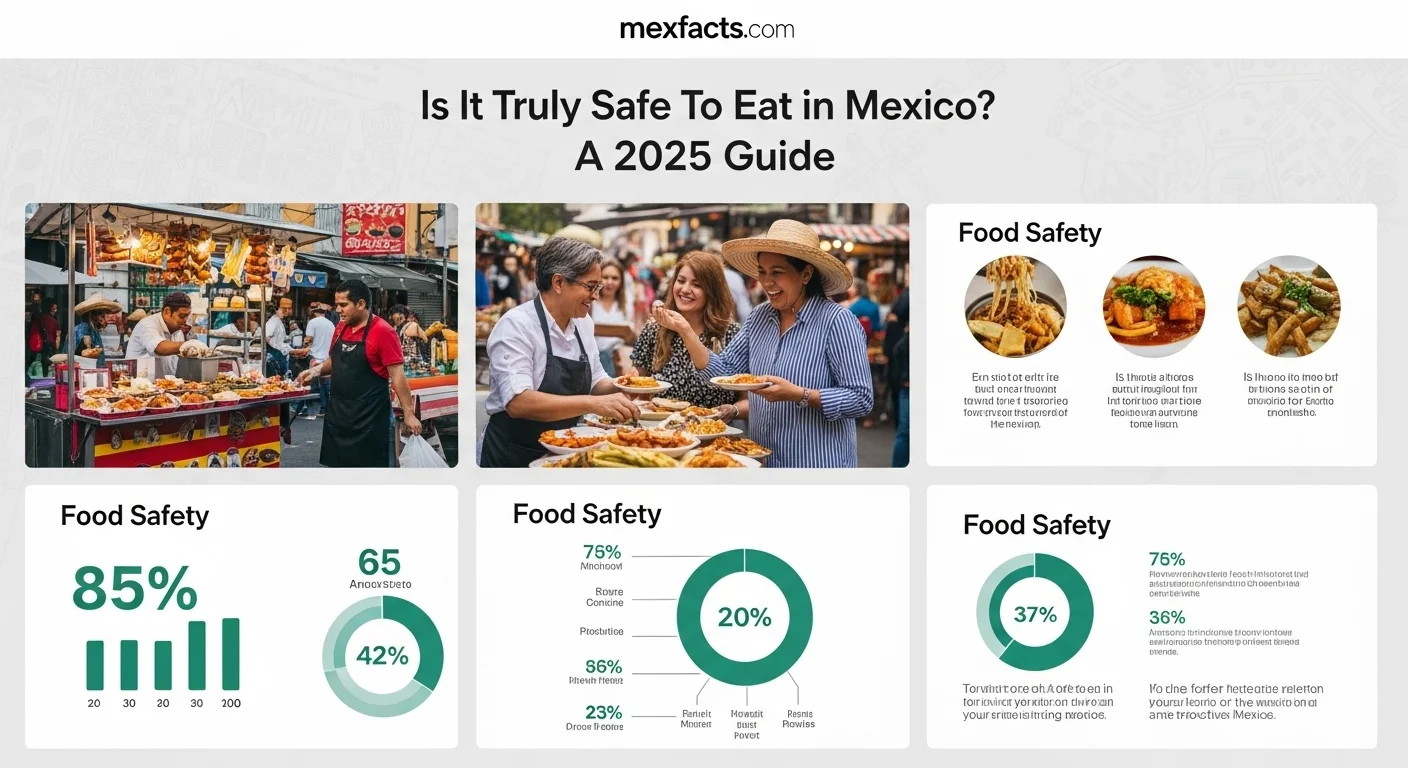
The Real Story: A Look at Food Safety Data in Mexico
Personal stories and general advice are great, but for many, seeing the actual numbers provides the ultimate peace of mind. When we look at the data on traveler health and government certifications, a clearer, more reassuring picture of Mexico emerges. It reveals a nation that is serious about public health, especially when it comes to welcoming its international guests. Let's move beyond fear and look at the facts.
Traveler's Diarrhea: Putting the Risk in Perspective
Let's talk about the elephant in the room: Montezuma's Revenge. Yes, traveler's diarrhea (TD) is the most common ailment for visitors to developing countries, and the risk rate can be anywhere from 30% to 70%, depending on where and when you travel. But it's vital to know this isn't just a 'Mexico problem'—it's a global travel reality. Studies show the risk in Latin America is comparable to other beloved destinations like Southeast Asia. The main culprit is often a strain of E. coli (ETEC) that our immune systems simply haven't met before. The vast majority of cases are mild and resolve on their own with rest and fluids in a few days; less than 3% of people ever need to see a doctor. While statistics about outbreaks from the CDC might seem scary, they represent a tiny fraction of the tens of millions of trips Americans take to Mexico each year. The statistical risk for any single traveler remains very low.
The Power of Certification: The 'Distintivo H' Program
For me, the most compelling proof of Mexico's dedication to food safety is the 'Distintivo H' program. This isn't just a fancy sticker for a restaurant's window. It's a hard-earned seal of approval from the Ministry of Tourism and the Ministry of Health. To get it, a kitchen has to pass a rigorous inspection with over 100 checkpoints, covering everything from water quality and food storage to staff hygiene and cooking temperatures. Thousands of establishments across Mexico, from five-star resorts to company cafeterias, have earned this certification. In a place like Puerto Vallarta, you'll see nearly 100 hotels and restaurants proudly displaying the award. Seeing that 'Distintivo H' logo on a door gives me, and should give you, instant confidence. It's a data-backed way to choose places that are committed to keeping you healthy.
Strong Rules and Global Teamwork
Mexico's food safety standards are backed by powerful government agencies like COFEPRIS (Federal Commission for the Protection against Sanitary Risks) and SENASICA (National Service of Agro-Alimentary Health, Safety and Quality). Their work is crucial because Mexico is a global food giant. Consider this: about a third of all food imported into the United States from abroad comes from Mexico, including 60% of all fresh produce. This has led to an amazing level of cooperation. In 2020, the U.S. FDA and its Mexican counterparts formalized a Food Safety Partnership. They share data and work together to prevent outbreaks and respond quickly if one occurs. This means that the avocados and tomatoes grown in Mexico for export are often held to some of the highest safety standards in the world, a benefit that trickles down to the domestic market as well.
A Closer Look at Your Favorite Foods
While broad data is useful, what about the specific items on your plate?
- Is it safe to eat salsa in Mexico? Studies have shown that temperature is key. Pathogens struggle to survive in salsa left at room temperature (like on a busy restaurant table that's constantly refreshed) compared to salsa stored improperly. My takeaway from the data and experience: favor the cooked red salsas over fresh ones if you're concerned, and eat at busy, reputable places.
- Is it safe to eat fruit and salad in Mexico? The risk here is all about the wash water. While specific data on salad contamination is hard to find, the widespread, verified use of purified water and antimicrobial washes in tourist establishments (a core part of 'Distintivo H' training) is the most important statistic. In a certified kitchen, the risk has been systematically reduced.
- Is it safe to eat in Cozumel? The island's commitment is its own data point. Local programs where citizens help monitor water quality show a deep community investment in safety. This proactive approach, driven by the absolute necessity of tourism, means the entire system is designed to protect visitors.
In the end, the data paints a clear picture. The risk of getting sick in Mexico is real, as it is anywhere you travel, but it's being managed effectively. Strong national programs, strict regulations, and international teamwork create a solid foundation of safety. For any traveler, this data should turn anxiety into confidence, allowing you to fully and safely enjoy one of the world's greatest culinary adventures.
The Future is Delicious: What's Next for Food Safety in Mexico
As Mexico continues to shine as a world-class destination for tourism and food, the way we think about food safety is undergoing an exciting evolution. Fueled by new technology, smarter travelers, and proactive policies, the future promises even more transparency and quality. This isn't just about a safer meal for tourists; it's opening up incredible opportunities for business, investment, and innovation that will benefit everyone.
The Tech Revolution on Your Plate
The next few years in Mexican food safety will be shaped by technology, creating a level of trust we've never seen before.
- Blockchain for Ultimate Traceability: Imagine scanning a QR code on a mango in the supermarket and seeing its entire life story—the farm it came from, the day it was picked, and every step of its journey to you. That's the power of blockchain. It creates a secure, unchangeable record that is already being used to track Mexican produce sold in the U.S. This technology is a game-changer for guaranteeing safety and quality.
- Smarter Farming: The future of farming in Mexico is high-tech. Using AI, drones, and sensors, 'precision agriculture' is helping farmers grow safer, healthier crops with fewer resources. This focus on sustainable, tech-driven farming means the ingredients that form the base of your meal are better and safer from the very start.
- AI for Prevention: Government agencies are starting to use AI to predict food safety risks before they happen. By analyzing data from inspections, weather patterns, and even social media, they can spot potential problems and act proactively.
New Demands, New Opportunities
Today's travelers are more informed and health-conscious than ever, and this is creating exciting new possibilities in Mexico.
- The Rise of 'Safe Gastronomy' Tourism: Mexico has a huge opportunity to market itself not just as a delicious destination, but as a *verifiably safe* one. Imagine a travel app that helps you find 'Distintivo H' certified restaurants in your area. This focus on 'wellness tourism,' with food safety at its core, is a massive growth area.
- Demand for Organic and Sustainable Food: People everywhere want to know where their food comes from and that it was grown responsibly. Mexico, with its incredible biodiversity and growing tech infrastructure, is perfectly positioned to meet this demand. This is a golden opportunity for investment in organic farming and brands that can prove their commitment to safety and sustainability.
Tackling the Final Frontiers
Of course, challenges remain, but these are also areas ripe for innovation.
- The Heart of the Culture: Street Food: For me, street food is the soul of Mexico. While these small, independent vendors often operate outside formal systems like 'Distintivo H', this is where some of the most creative solutions are emerging. Imagine public-private partnerships offering hygiene training and a simple 'safe vendor' certification that travelers could easily spot.
- Water is Life: Improving municipal water systems across the country is a long-term goal. Continued investment in water treatment is a national priority and a huge opportunity for international engineering and technology firms.
A Confident Look Ahead
With all this progress, the answers to those burning questions are becoming clearer and more reassuring every day.
- Is it safe to eat fruit in Mexico? Yes, and it's only getting safer. Soon, technology will let you trace that fruit right back to a certified, sustainable farm.
- Is it safe to eat salad or lettuce in Mexico? Yes, especially in certified restaurants. The future points to farm-to-table restaurants that can show you digital proof of where their greens came from.
- Is it safe to eat salsa in Mexico? Yes, and technology will offer even more peace of mind, perhaps by showing you exactly when that fresh pico de gallo was made and how it's been stored.
- Is it safe to eat in Cozumel? Without a doubt. Places like Cozumel will be the blueprint for 'safe gastronomy,' using their commitment to health as a major selling point to attract travelers who value safety.
The future of food in Mexico is incredibly bright. It's a story of a country blending ancient culinary traditions with cutting-edge technology to create an experience that is not only unforgettable but also increasingly, and verifiably, safe. For travelers, investors, and innovators, Mexico is serving up a world of opportunity.
Learn more about business and investment opportunities in Mexico.Expert Reviews
Sarah K., First-Time Traveler ⭐⭐⭐⭐⭐
As a first-timer to Mexico, I was so worried about getting sick. This article was a lifesaver! The tip about looking for cooked salsas and peeling my own fruit at the market gave me the confidence to try everything. I ate my way through Oaxaca and never had a single problem. Thank you!
Carlos Ramirez, Seasoned Traveler ⭐⭐⭐⭐
I've been traveling to Mexico for years and thought I knew all the tricks. I was wrong! I had no idea about the 'Distintivo H' certification. On my last trip to Puerto Vallarta, I started looking for it and felt so much better about choosing restaurants. It's a game-changer.
Emily Chen, Business Professional ⭐⭐⭐⭐⭐
This guide was fantastic. The sections on the 'Distintivo H' program and the FDA partnership were exactly what I needed to reassure my team before our corporate retreat in Cancún. It's practical advice backed by real data, which is a rare find.