
Your Canadian Guide to Mexico: Travel, Safety & Investing in Paradise 2025

There's a special warmth in the relationship between Canada and Mexico, something that goes far beyond just trade agreements and tourism statistics. It's a connection you can feel—in the friendships between people, the shared love for vibrant culture, and the growing communities of Canadians who've found a second home under the Mexican sun. Every year, millions of my fellow Canadians flock here for a dose of sunshine, but many, like the 'snowbirds' I meet in Lake Chapala, decide to stay. This has created a beautiful blend of cultures and opened up fantastic opportunities, especially in real estate. This guide is my way of sharing what I've learned, answering the big questions every Canadian has. We'll talk about whether you need a visa, get real about safety in beloved spots like Mexico City and Cancun, and walk you through the dream of buying a little piece of paradise here. My goal is to give you the confidence and knowledge to explore, invest, or even move to Mexico, safely and happily.
- The Special Bond Between Canada and Mexico
- Travel and Tourism: An Unbreakable Friendship
- Real Talk on Safety: What Canadians Need to Know
- How Safe is Mexico City for Canadian Tourists?
- Is Cancun Safe for Canadians?
- Expat Life and Community: Your Home Away From Home
- Buying Property in Mexico as a Canadian: The Dream and the Details
- Why It Matters: The CUSMA Connection
The Special Bond Between Canada and Mexico
When you talk about the connection between Canada and Mexico, you're talking about a story that's woven into the fabric of North America. It's not just about politics or trade; it’s about people. For years, Canadians have seen Mexico as a place of warmth, vibrant culture, and endless opportunity. I've seen it firsthand in the bustling markets of Oaxaca and the tranquil beaches of the Riviera Maya—Canadians aren't just visitors; they're part of the community. This relationship is a big deal internationally, especially with the Canada-United States-Mexico Agreement (CUSMA) strengthening our ties. But for most of us, it’s the personal side that matters: How do I visit? Is it safe? Could I ever live here? Let's dive into these questions, because understanding them is key to appreciating this incredible bond.
Travel and Tourism: An Unbreakable Friendship
Tourism is where our connection shines brightest. Mexico is, without a doubt, one of Canada's favorite international getaways. In 2023, an incredible 4.2 million Canadians landed in Mexico, a number that, for the first time, was more than all visitors from Europe combined! [18] This says so much about our love for Mexico's heritage, food, and people. So, the first big question is, does a Canadian need a visa to Mexico?
For a vacation or short business trip, the answer is a simple and wonderful no. If you're a Canadian citizen, you can enjoy Mexico for up to 180 days without a visa. [6, 8, 14, 35] When you fly in, you'll need your valid passport and will fill out a Multiple Immigration Form, or FMM. [8] Many airlines hand these out on the plane, making it super easy. Mexico is also moving this online with the FMME Aérea, so you can fill it out before you even leave home. [6] A little tip from experience: make sure your passport is valid for your whole trip. While Mexico doesn't require extra validity time, some airlines do, so it’s always smart to double-check. [8] If you're dreaming of a longer stay, maybe for retirement or work, you'll need a visa. The Temporary Resident Visa is great for stays up to four years, while the Permanent Resident Visa is for those ready to make Mexico their forever home. You just need to apply at a Mexican consulate in Canada and show you can support yourself financially. [14]
Real Talk on Safety: What Canadians Need to Know
Millions of Canadians have incredible, incident-free trips to Mexico every year, but it's natural to have safety on your mind. The Canadian government advises you to “exercise a high degree of caution,” which sounds serious, but it's important to understand the context. [5, 15, 29] This is a general advisory for the whole country, and some states do have issues with organized crime. [26] However, these areas are often far from the places you’re likely to visit. The key is knowing the difference between a regional warning and the reality on the ground in popular tourist spots, which are generally very well-protected.
How safe is Mexico City for Canadian tourists?
Mexico City is one of my favorite places on earth—a massive, energetic city bursting with art, history, and unbelievable food. For tourists, it's generally safe, but like any giant city, you need to be smart. The U.S. State Department gives it a Level 2 advisory, which means “exercise increased caution.” [27] This mostly refers to petty crimes like pickpocketing in crowded places like the metro or the Zócalo. [5, 37] My advice? Stick to the amazing neighborhoods like Roma, Condesa, Polanco, and the historic center, especially at night. [27] I always use ride-sharing apps like Uber or Didi instead of hailing street taxis—it's just safer and easier. While serious crime exists, it rarely affects tourists in these areas. Just use common sense: don't flash expensive jewelry, keep your valuables secure, and soak in the incredible atmosphere. You'll be just fine.
Is Cancun safe for Canadians?
Cancun and the Riviera Maya are the top spots for Canadian sun-seekers, and for good reason! [13] The area is generally very safe for tourists, especially inside the heavily policed Hotel Zone. [16, 36] The travel advisory for this state, Quintana Roo, is also typically Level 2. [29] You might read headlines about crime, but these incidents are almost always related to disputes between criminal groups and don't target tourists. [27] That said, it's smart to be cautious if you venture off the beaten path, especially late at night. [16] A common tip I share with friends is to always keep an eye on your drink, as drink spiking can happen anywhere. [24] Use official taxis or pre-booked transport to avoid scams. [27] The fact that over 2.6 million Canadians are expected here in 2024 speaks volumes—with normal precautions, you’re set for an amazing vacation. [4, 44]
Expat Life and Community: Your Home Away From Home
Beyond the vacationers, there's a huge and growing community of Canadians who call Mexico home, either as 'snowbirds' in the winter or full-time residents. We're talking about over a million North Americans, with a very strong Canadian presence. [41, 52] You'll find these vibrant communities in places like Lake Chapala (Mexico's largest expat hub), the artistic hills of San Miguel de Allende, sunny Puerto Vallarta, and all along the Riviera Maya. [39, 41, 51] San Miguel alone is home to about 5,000 Canadians! [31] These communities are the heart of the Canada-Mexico relationship, creating deep cultural bonds and supporting local economies. For anyone new, they're an invaluable support system for everything from learning Spanish to navigating paperwork.
Buying Property in Mexico as a Canadian: The Dream and the Details
The dream of owning a place in Mexico is becoming a reality for more and more Canadians, drawn by the amazing lifestyle and lower cost of living. But the big question is always: is a Canadian buying property in Mexico a risky process? The short answer is no, it’s a well-regulated system that is very safe when you have the right team helping you. [7]
The most important thing to understand is the 'Restricted Zone.' The Mexican Constitution says foreigners can't directly own land within 100 km of a border or 50 km of a coastline. [21, 23] Since that's where all the beautiful beaches are, Mexico created a brilliant solution: the *fideicomiso*. Think of it as a bank trust. A Mexican bank holds the legal title for you, and you are named the beneficiary of the trust. [7, 11, 20] This gives you all the rights of an owner: you can sell the property, rent it out, remodel it, and pass it down to your heirs. [23] The trust lasts for 50 years and is renewable forever, so it’s just like owning it outright. [20] For serious investors, another option is to form a Mexican corporation, which can own land directly anywhere. [23]
Why It Matters: The CUSMA Connection
The relationship between our countries gets a huge boost from the CUSMA trade agreement. [25] This pact cements North America as a global economic powerhouse, making it easier for goods, services, and investments to flow between us. [25] Canadian companies are big players here, investing heavily in mining, aerospace, and the auto industry. [19, 28] This deep economic partnership, combined with the millions of personal connections made through travel and expat life, creates a strong, resilient alliance that is more important than ever in our connected world.
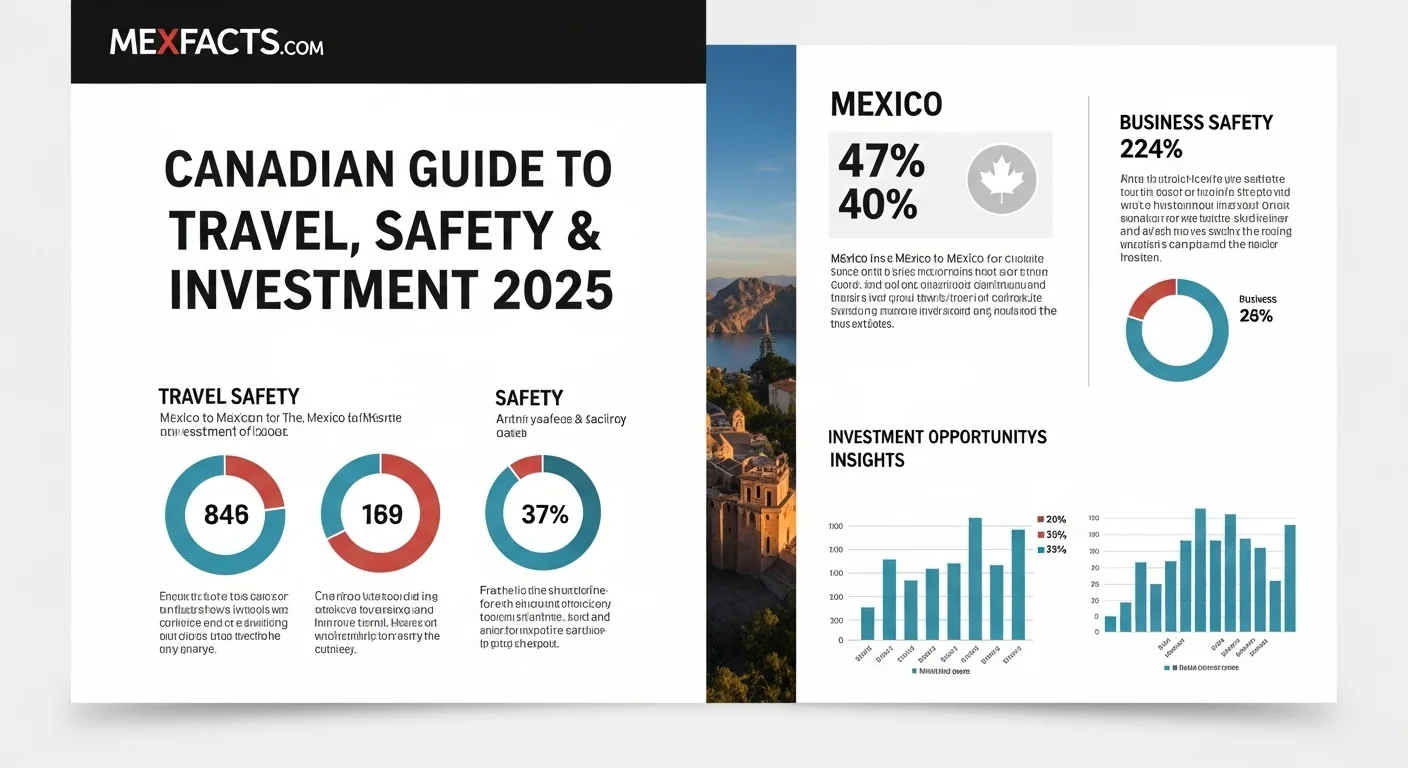
The Story the Numbers Tell: Canadians in Mexico by the Data
To truly appreciate the deep connection between Canada and Mexico, it helps to look at the numbers. They paint a vivid picture of a relationship that's not just thriving but growing stronger every year. This data is incredibly useful whether you're planning a trip, thinking about moving, or considering an investment like buying property in Mexico as a Canadian. Let’s explore the statistics that show just how intertwined our two nations have become.
Tourism: A Historic Friendship in Full Swing
Canadian tourism to Mexico isn't just popular; it's record-breaking. In 2023, Mexico’s Tourism Ministry reported that 2.4 million Canadians arrived by air, a 14.5% jump from before the pandemic. [13] And the trend is only getting stronger, with some reports suggesting a new record of over 2.6 million Canadians visiting in 2024. [4, 44] In the first three months of 2024 alone, Mexico was the top overseas destination for Canadians, with 456,000 visits. [10]
This love affair has a huge economic impact. Canadian tourists spent an incredible US$2.77 billion in Mexico in 2023. [13] This isn't just a number; it represents jobs and livelihoods in countless communities that depend on tourism. The top destinations are no surprise to anyone who's planned a winter escape:
- Cancún
- The Riviera Maya
- Puerto Vallarta
- Mexico City
- Los Cabos
Most of these visitors come from Toronto, Vancouver, Montreal, Calgary, and Edmonton, creating a well-worn path south serviced by airlines like WestJet, Sunwing, Air Transat, and Air Canada. [13]
Expats and Residents: A Growing Community
It's tricky to get an exact count, but estimates suggest over a million North Americans live in Mexico, and Canadians are a huge part of that. [41, 52] You have the 'snowbirds' who wisely trade Canadian winters for Mexican sunshine, and a growing number of permanent residents. The biggest and most famous expat haven is around Lake Chapala in Jalisco, where you'll hear as much English as Spanish. You'll also find thriving Canadian communities in San Miguel de Allende, Puerto Vallarta, and up and down the Riviera Maya. [39, 41]
But it's not just retirees anymore. I'm seeing more and more young Canadians—digital nomads, entrepreneurs, and families—drawn to the incredible lifestyle here. [52] This trend answers the question, does a Canadian need a visa to Mexico for long-term stays? Yes, and the demand for Temporary and Permanent Resident Visas is on the rise. [14]
Real Estate: The Canadian Impact
The growing number of Canadians has made a real mark on the Mexican real estate market. If you're looking into buying property in Mexico as a Canadian, you're part of a major trend. The process of a Canadian buying property in Mexico is now so common that there's a whole industry of fantastic real estate agents, lawyers, and notaries who specialize in helping foreigners. [7, 11]
In hotspots like Playa del Carmen, Tulum, and Puerto Vallarta, Canadian buyers are a driving force behind new condo projects and luxury homes. In these markets, Canadians are consistently one of the top two groups of foreign buyers. The key to all this is the *fideicomiso* (bank trust). The setup cost is usually around $500 to $1,000 USD, with a similar annual fee—a small price for the legal security that gives so many Canadians the confidence to invest in their dream. [20]
A Realistic Look at Safety Statistics
Numbers can help us get a clearer, more objective view on safety. When people ask, how safe is Mexico City for Canadian tourists or is Cancun safe for Canadians, statistics offer valuable context. Government travel advisories are based on national data, which is why Mexico has a general “Exercise a high degree of caution” warning. [5, 15, 29]
But the real story is in the details. Most of the country's violent crime is concentrated in specific regions, often far from tourist areas, and is usually related to organized crime. [16, 24] In places like Cancun, the government has invested heavily in security, creating a special Tourist Security Battalion. As a result, crime rates in the tourist zones are significantly lower than elsewhere. [36] The same is true for Mexico City. In a city of 22 million, the overall numbers can look daunting, but in the neighborhoods where tourists spend their time, like Roma and Condesa, there's a heavy police presence and a strong focus on safety.
Trade and Investment: Our Economic Powerhouse
Our economic ties, solidified by the CUSMA agreement, are incredibly strong. In 2023, trade between Canada, the U.S., and Mexico was nearly $2 trillion. [25] Canadian investment in Mexico is massive and growing, especially in these key areas:
- Mining: Canadian companies are the biggest foreign investors in Mexico's mining sector, responsible for 70% of foreign mining investment. [28, 34]
- Energy: Canadian firms have poured over $13 billion into Mexico's clean energy projects. [34]
- Automotive: Our auto industries are deeply connected. Over 60 Canadian auto part companies run more than 130 plants in Mexico. [28]
- Aerospace: This is another high-tech area where Canadian investment is crucial.
This isn't a one-way street. Mexico is one of Canada’s most important suppliers, sending cars, electronics, and delicious produce north. [19, 30] Our economies are so intertwined that our success depends on each other, making this partnership one of the most important in the world.
The Future is Bright: What's Next for Canadians in Mexico
Looking ahead, the beautiful relationship between Canada and Mexico is only set to deepen. The strong foundation we've built through tourism, friendship, and trade is now paving the way for exciting new opportunities. For Canadians, this means new ways to travel, invest, and live, but it also means being smart and adaptable. When I think about the future, I see incredible potential in real estate, business, and how we experience this amazing country, always keeping important questions like buying property in Mexico as a Canadian and personal safety in mind.
The Future of Tourism: More Than Just a Beach
While we'll always love Mexico's sun and sand, the future of Canadian travel here is becoming much more diverse. Here are a few trends I'm seeing:
- The Rise of the Digital Nomad: Mexico is a global capital for remote workers, and young Canadians are flocking here to live and work. This is creating a boom in demand for long-term rentals and coworking spaces in cities like Mexico City, Oaxaca, and Playa del Carmen. This makes the question does a Canadian need a visa to Mexico for more than 180 days even more relevant, with many opting for Temporary Resident Visas. [14]
- Eco and Adventure Travel: People want more meaningful travel, and Mexico's stunning biodiversity is the perfect answer. From the jungles of Chiapas to the rich marine life of Baja California, Canadians are looking beyond the resorts for authentic, sustainable adventures.
- Wellness and Medical Travel: Mexico is becoming a top destination for wellness retreats, as well as high-quality, affordable medical and dental care. For Canadians facing long wait times at home, this is an increasingly attractive option, with world-class facilities in cities like Guadalajara and Monterrey.
- New Connections: Huge projects like the Tren Maya will soon connect the entire Yucatán Peninsula, opening up incredible new areas to explore. This will change the tourist map and create new hotspots for visitors and investors alike.
The Future of Real Estate: New Frontiers and Smart Investments
The outlook for buying property in Mexico as a Canadian is incredibly positive. Here’s what I see on the horizon:
- Discovering New Gems: While places like Cancun and Puerto Vallarta are timeless, smart investors are looking at emerging markets. Think of the pristine beaches of the Costa Mujeres, the laid-back vibe of Puerto Escondido in Oaxaca, or untouched parts of Baja California Sur. These areas offer great value and huge potential. The process for a Canadian buying property in Mexico is the same secure, regulated process everywhere.
- Sustainable Living: The future of development here is green. Buyers now want eco-friendly homes with solar panels and water conservation systems. Properties that embrace sustainability are becoming the new standard for luxury.
- The Evolving Rental Market: With more people working remotely and traveling for longer, the demand for long-term rentals is soaring. For Canadian property owners, this means the potential for a stable, year-round income, making an investment property even more appealing.
Of course, it's important to be prepared. Buying property anywhere requires patience and a great team of professionals. Currency fluctuations are also a factor to consider in your planning. For legal guidance, a resource I often recommend to fellow Canadians is the law firm MexLaw, as they specialize in helping Canadians navigate real estate transactions here.
Business Opportunities in the Nearshoring Boom
The CUSMA agreement continues to fuel economic growth, but the biggest buzzword right now is 'nearshoring.' As companies move manufacturing closer to North America, Mexico is perfectly positioned to benefit, creating huge opportunities for Canadian businesses in:
- Advanced Manufacturing: Especially with the shift to electric vehicles (EVs), there's a massive need for investment in EV production, batteries, and supply chains.
- Clean Energy: Mexico's potential for solar and wind power is off the charts. Canadian companies are already major players and will find even more opportunities as the country moves toward its climate goals.
- Technology: Mexico's tech scene is exploding. There's a huge demand for software, fintech, and digital services, making it a perfect place for Canadian tech companies to expand.
The Future of Safety: Staying Smart and Informed
Security will always be a top priority for Mexico, as it's directly tied to the health of its tourism and economy. For travelers, questions like how safe is Mexico City for Canadian tourists and is Cancun safe for Canadians will always be relevant. The future of security will focus on:
- Targeted Security: Expect even more visible security in tourist zones, using technology like cameras and drones to keep people safe.
- Smarter Policing: Focusing on dismantling the criminal groups that cause the most problems, rather than just reacting to incidents.
- Better Tourist Support: Expanding services like bilingual help centers for tourists who need assistance.
For Canadians, the best strategy will always be to stay informed through official sources like the Government of Canada's travel advisories. [26, 44] While headlines can be scary, it's important to remember that the reality in a Tulum resort is a world away from a remote area with a travel warning. Understanding that difference is the key to traveling safely and confidently in this wonderful country.
Expert Reviews
Robert Miller, Retiree from Calgary ⭐⭐⭐⭐⭐
My wife and I used this guide to plan our first 'snowbird' winter in Puerto Vallarta. The advice on safety and the fideicomiso process was incredibly clear and reassuring. It gave us the confidence to not just visit, but to start looking for a small condo of our own. Thank you for speaking our language and understanding our concerns!
Chloé Tremblay, Digital Nomad ⭐⭐⭐⭐⭐
As a young Canadian working remotely, this article was a goldmine. The section on long-term stays and visas answered all my questions. I've been living in Mexico City for six months now, and the description of the neighborhoods was spot on. It felt like it was written by someone who actually lives here and gets it. Highly recommend!
David Chen, Investor ⭐⭐⭐⭐
Very thorough and well-researched article. The data on Canadian investment and the future outlook under CUSMA was particularly useful for my firm. It’s a great starting point for anyone looking at the economic landscape of Mexico. It presented a balanced view of both the opportunities and the need for due diligence.