
Best Places to Visit in Mexico: Destinations, Seasons, and Travel Guide

Mexico ranks among the world's most sought-after travel destinations, offering an extraordinary breadth of experiences that span turquoise Caribbean coastlines, dramatic Pacific cliffs, vibrant colonial cities, and 35 UNESCO World Heritage sites. Whether you are drawn to the effortless relaxation of luxury all-inclusive resorts in Cancún and Los Cabos or eager to explore the culinary depth and historic architecture of Mexico City and Oaxaca, this guide outlines the best places to visit, seasonal weather patterns, and essential planning insights for an unforgettable journey.
Table of Contents
- What Makes Mexico a Premier Travel Destination?
- Choosing Between All-Inclusive Resorts and Boutique Travel
- Top Travel Spots: Caribbean, Pacific, and Central Highlands
- Seasonal Travel Guide: When to Visit Mexico
- Official Tourism Data and Infrastructure Insights
- Sustainable Tourism and Cultural Preservation
- Frequently Asked Questions About Visiting Mexico
What Makes Mexico a Premier Travel Destination?
Mexico's standing as a world-class travel destination rests on its remarkable geographical diversity, rich cultural history, and renowned hospitality. Welcoming tens of millions of international travelers each year, the country provides distinct environments within easy reach of major transport hubs. From the soft white-sand shores of Quintana Roo to the rugged desert coastlines of Baja California Sur and the cobblestone streets of the central highlands, visitors encounter distinct regional traditions, ecosystems, and architectural styles across every state.
A major advantage for North American and international travelers is straightforward accessibility. Direct flight corridors connect dozens of gateway cities across the United States, Canada, Europe, and South America to major Mexican destinations. Before departure, travelers should review current passport and entry regulations to ensure smooth processing upon arrival. For a broader look at the country's diverse landscape, consult our guide to top destinations across Mexico to align your route with your preferred travel pace and interests.
Choosing Between All-Inclusive Resorts and Boutique Travel
Mexico revolutionized modern resort hospitality, particularly along prime coastal stretches such as Cancún, the Riviera Maya, Los Cabos, and Puerto Vallarta. The modern all-inclusive concept has evolved substantially beyond standard poolside buffets. Today's leading properties emphasize culinary distinction, featuring tasting menus curated by acclaimed Mexican chefs, comprehensive wellness spas, and curated cultural excursions that connect guests with regional arts and ecosystems.
All-inclusive resorts provide an ideal framework for families, couples, and group travelers seeking seamless budgeting, on-site childcare, and private beachfront access without daily logistical coordination. However, independent boutique hotels, historic haciendas, and private vacation rentals often offer superior immersion for travelers prioritizing neighborhood exploration, local culinary scenes, and historic centers like Oaxaca, San Miguel de Allende, or Mexico City. Many travelers strike a rewarding balance by pairing several days of relaxed resort luxury with cultural day trips or regional excursions, such as planned Cancun day trips to nearby ruins and cenotes.
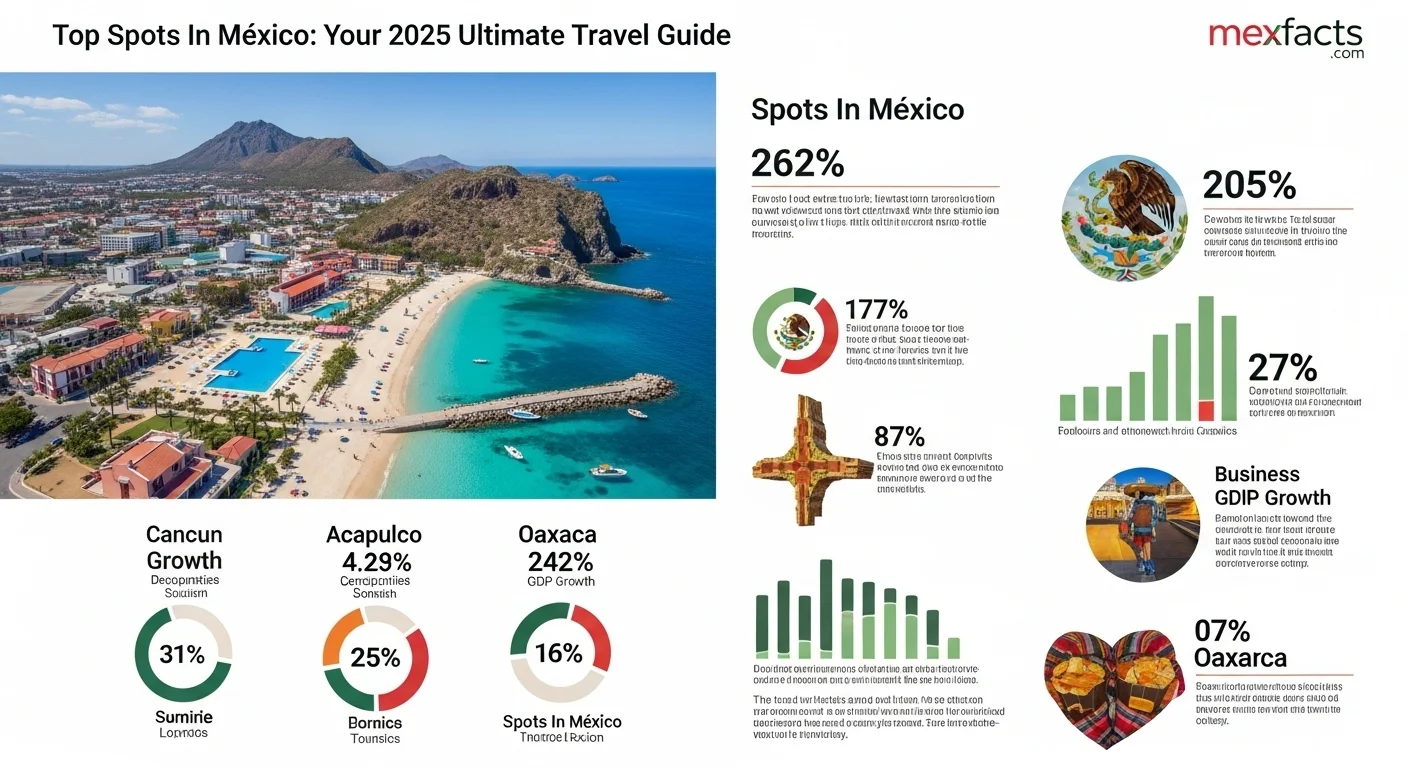
Top Travel Spots: Caribbean, Pacific, and Central Highlands
Choosing the ideal spot in Mexico depends on your desired balance of outdoor adventure, beach relaxation, and cultural exploration. The country's primary tourism regions offer distinct highlights:
The Mexican Caribbean and Yucatán Peninsula: Centered around Quintana Roo and Yucatán state, this region combines calm turquoise waters with extensive coral reefs, sacred freshwater cenotes, and ancient Mayan cities like Tulum, Cobá, and Chichén Itzá. Cancún and the Riviera Maya anchor the resort sector, while islands like Cozumel, Isla Mujeres, and Holbox provide laid-back island atmospheres and exceptional scuba diving.
The Pacific Coast and Baja California: The Pacific coastline features dramatic landscapes where mountains and desert meet the ocean. Puerto Vallarta and the Riviera Nayarit offer lush tropical jungles, traditional coastal villages, and vibrant cultural dining. At the southern tip of the Baja Peninsula, Los Cabos is celebrated for its championship golf courses, striking rock formations at Land's End, and sportfishing. Further north along the peninsula, La Paz serves as a tranquil base for exploring the marine biodiversity of the Sea of Cortez, often referred to as the aquarium of the world.
The Central Highlands: Travelers seeking world-class art, culinary depth, and colonial architecture gravitate toward Mexico's interior. Mexico City stands as one of the world's great cultural capitals, boasting over 150 museums, historic neighborhoods such as Coyoacán and Roma-Condesa, and culinary offerings ranging from street tacos to Michelin-starred dining. Nearby colonial gems like San Miguel de Allende, Guanajuato, and Puebla highlight Baroque architecture and artisan craftsmanship, while Oaxaca captivates visitors with indigenous weaving, mezcal distilleries, and world-renowned regional gastronomy.
Seasonal Travel Guide: When to Visit Mexico
Understanding Mexico's distinct climate patterns ensures you select the right destination for your travel dates. For comprehensive weather patterns throughout the year, review our detailed guide to Mexico's weather and travel seasons.
Dry Season (November through April): This period brings sunny skies, minimal precipitation, and comfortable temperatures across most of the country, making it the peak travel season. February represents a particularly popular travel window. Coastal temperatures in Cancún and Puerto Vallarta average a comfortable 77°F to 84°F (25°C to 29°C), with low humidity and optimal sea conditions. The Pacific coast and Baja California welcome migrating humpback and gray whales during these months. In the central highlands, days are pleasantly sunny and dry, though evenings in Mexico City and San Miguel de Allende can drop to crisp temperatures around 45°F to 50°F (7°C to 10°C). Because February aligns with peak international travel, booking accommodations and flights well in advance is essential.
Summer and Rainy Season (May through October): July and August bring warmer tropical conditions and regular afternoon showers, especially along coastal corridors where daytime highs frequently reach 88°F to 93°F (31°C to 34°C). However, the rainy season follows a predictable rhythm: mornings and early afternoons are typically sunny and clear, followed by brief, heavy downpours in late afternoon that quickly refresh the air. Summer offers distinct advantages for travelers, including lush green landscapes, refreshing cenote swimming in the Yucatán, world-class Pacific surf swells, and prime sea turtle nesting viewing. It also coincides with summer holidays for domestic travelers, creating an authentic, festive local atmosphere alongside attractive off-peak lodging rates.
Official Tourism Data and Infrastructure Insights
Mexico's tourism sector is an essential driver of the national economy and one of the most resilient travel markets globally. Official reports from the Secretaría de Turismo (SECTUR) and the Instituto Nacional de Estadística y Geografía (INEGI) demonstrate the scale of this activity:
- International Arrivals: Mexico consistently welcomes between 42 and 45 million international tourists annually, ranking firmly among the world's top ten most visited destinations according to UN Tourism data.
- Economic Impact: International visitor expenditure generates over $30 billion annually in foreign exchange earnings, supporting millions of direct and indirect jobs across hospitality, transportation, and artisan industries.
- Key Gateways: Cancún International Airport (CUN) functions as the premier hub for international leisure travel, processing over 10 million international arrivals annually, followed closely by Mexico City International Airport (AICM) and Los Cabos International Airport (SJD).
- Hotel Occupancy: DataTur monitoring indicates that prime resort corridors, including Los Cabos and the Riviera Maya, sustain average annual hotel occupancy rates between 60% and 75%, with high-season peaks in winter routinely exceeding 80%.
- Cultural Heritage: Mexico is home to 35 UNESCO World Heritage sites, including 27 cultural, 6 natural, and 2 mixed sites, representing one of the highest concentrations of globally recognized heritage worldwide.
Sustainable Tourism and Cultural Preservation
To ensure tourism growth supports local communities and protects fragile habitats, Mexico has prioritized sustainable and community-centered travel initiatives. A key milestone is the Kuxatur project ("living tourism" in the Maya language), implemented by the Mexican government in partnership with the United Nations Development Programme (UNDP) and the Global Environment Facility (GEF). Kuxatur focuses on integrating biodiversity conservation criteria directly into coastal tourism development across designated priority corridors, including Maya Ka'an in Quintana Roo, Huatulco in Oaxaca, and La Paz in Baja California Sur.
Complementing these environmental efforts is the federal Pueblos Mágicos (Magical Towns) program, which recognizes more than 170 towns that have preserved their indigenous roots, architectural integrity, and cultural traditions. By directing traveler interest to inland communities and nature reserves, these initiatives encourage responsible exploration that respects local cultures and preserves natural treasures. For official travel advisories, statistics, and development programs, visit the official portal of the Secretaría de Turismo de México.
Frequently Asked Questions About Visiting Mexico
- What is the best month to visit Mexico for pleasant beach weather?
- The dry winter and spring months from December through April offer the most reliable weather for coastal getaways, featuring warm daily temperatures between 77°F and 85°F (25°C to 29°C), low rainfall, and comfortable humidity across both the Caribbean and Pacific coasts.
- Should travelers choose an all-inclusive resort or independent hotels?
- All-inclusive resorts are ideal for travelers seeking effortless budgeting, family amenities, and beachfront relaxation in hubs like Cancún or Los Cabos. Independent hotels, historic haciendas, or boutique rentals are recommended for travelers prioritizing cultural immersion, historic architecture, and local culinary exploration in cities like Oaxaca, Guanajuato, or Mexico City.
- Is traveling to Mexico during the summer rainy season worthwhile?
- Yes. While July and August bring higher temperatures and frequent late-afternoon showers, mornings are generally sunny. Summer travelers benefit from lower lodging prices, fewer international crowds, vibrant local festivities, lush landscapes, and prime conditions for cenote diving, Pacific surfing, and marine wildlife observation.
- How many UNESCO World Heritage sites are located in Mexico?
- Mexico is home to 35 UNESCO World Heritage sites, comprising 27 cultural sites, 6 natural sites, and 2 mixed heritage sites, making it the country with the greatest number of UNESCO-listed properties in the Americas.
Expert Reviews
The Miller Family, Houston, TX ⭐⭐⭐⭐⭐
We used this guide to plan our February trip to an all-inclusive in the Riviera Maya, and it was spot on! The advice about booking early was a lifesaver. The resort was everything we dreamed of, and the weather was perfect for our two little ones. It was the hassle-free, beautiful vacation our family needed. Thank you!
Sophie Dubois, Montreal, Canada ⭐⭐⭐⭐⭐
I was a little nervous about traveling to Mexico in July because of the 'rainy season,' but this article gave me the confidence to try it. I visited Oaxaca and Mexico City, and it was magical! The brief afternoon showers just made the landscapes greener and the cities felt so alive. The insights here were far more helpful than generic travel sites. I had the cultural adventure of a lifetime.
Carlos Ramirez, San Diego, CA ⭐⭐⭐⭐
As someone who has traveled to Mexico many times, I was impressed by the depth of this article. It goes beyond the usual tourist traps. The section on the future of tourism and sustainability was particularly insightful. It makes me proud to see the focus on preserving the culture and environment that I love so much. A great read for any traveler.