
How Mexico's Open-Door Pandemic Policy Reshaped Its Future

I remember it like it was yesterday. While the rest of the world was putting up walls, Mexico chose to keep its doors open. This isn't just a technical article about travel policies; it's the deeply human story of a decision that defined a unique chapter in our history. We'll explore the fascinating reality of that time: how you could fly into places like Cancún or Los Cabos without a COVID test, but then found yourself scrambling for one to fly back home, especially to the US. I'll walk you through how this bold move became a lifeline for our tourism-driven economy, and what it tells us about Mexico's resilience and its path forward. This is a look at a pivotal moment that continues to shape our nation's identity on the world stage.
- A Different Path: Mexico's Open-Door Policy
- The Return-Trip Dilemma: The US Testing Requirement
- An Economy on the Brink: Why Mexico Stayed Open
- The Global Impact: Mexico as a Pandemic-Era Hub
A Different Path: Mexico's Open-Door Policy
During the most uncertain days of the recent global pandemic, the term 'Test Entry' became part of every traveler's vocabulary. It meant you needed proof of a negative COVID test just to enter another country. But here in Mexico, we took a different path. It was a decision that made us stand out, and honestly, it felt like a gamble. While other nations were bolting their doors, Mexico made a conscious choice not to require a COVID test for anyone arriving by air. This wasn't a small thing; it had huge consequences for our people, our massive tourism industry, and how the world saw us.
Think back to early 2020. The world was gripped by fear. International travel froze. A trip wasn't about finding a good flight deal anymore; it was about navigating a maze of rules, finding a specific type of test in a tight time frame, and dealing with a mountain of stress. It felt like the world had closed for business.
In the midst of this global shutdown, Mexico's federal government decided against demanding a mandatory test for travelers. I saw it with my own eyes in the airports. Tourists from the U.S., Canada, and Europe could land in our beautiful beach towns or vibrant cities without that piece of paper. Of course, it wasn't a total free-for-all. We had health screenings, like temperature checks, and for a while, everyone had to fill out a digital health form called Vuela Seguro. But there was no mandatory quarantine, no test needed to get in. For a country where tourism is the lifeblood for millions of families—making up nearly 9% of our economy—this policy was a lifeline.
The Return-Trip Dilemma: The US Testing Requirement
This decision made Mexico one of the few places on Earth where people could escape the lockdowns. Our resorts, which could have easily become ghost towns, stayed open. But this created a peculiar situation, especially for our neighbors from the United States. Here's where the story gets interesting. You could fly from Houston to Puerto Vallarta without a test, but getting back home was a different story.
In January 2021, the U.S. government mandated that everyone flying into the States, including their own citizens, had to show a negative COVID test. This single rule from another country instantly changed the entire tourist experience in Mexico. Suddenly, a massive, brand-new industry popped up overnight. Hotels, resorts, and even small pharmacies in places like Tulum and Cabo San Lucas started offering COVID tests. They had to! Their business depended on American tourists being able to return home without a hitch. A whole micro-economy was born, focused entirely on providing the paperwork needed not to enter Mexico, but to leave it. It was a perfect, if slightly surreal, example of how connected our two countries are.
An Economy on the Brink: Why Mexico Stayed Open
From a Mexican perspective, the logic behind staying open was rooted in a difficult balancing act. Our government argued that closing borders and testing everyone wouldn't stop the virus but would absolutely devastate the economy. The strategy was to manage the pandemic from within, using a 'traffic light' system (the semáforo epidemiológico). Each state was given a color—red, orange, yellow, or green—based on local infection rates, which dictated what businesses could open and at what capacity. This allowed a state like Quintana Roo, home to Cancún, to manage its own risks without shutting down the entire country to international flights. It was a pragmatic approach aimed at economic survival, a tightrope walk that earned us both praise for keeping people employed and criticism for the health risks involved.
The Global Impact: Mexico as a Pandemic-Era Hub
The policy's impact went far beyond tourism. Mexico became a haven. It was a place for families from different countries to reunite, for business deals to be made face-to-face, and for a new generation of 'digital nomads' to find a beautiful, affordable place to work remotely. The absence of a strict entry test was a powerful magnet. It reinforced our country's long tradition of being open and welcoming. This period turned Mexico into a real-world case study on the effects of keeping borders open during a global crisis. The story of that time is still unfolding, influencing how people invest in our country and cementing our reputation as a resilient and dominant force in global travel. For a while, the most crucial document for a trip to Mexico wasn't for getting in, but for ensuring you could get out.
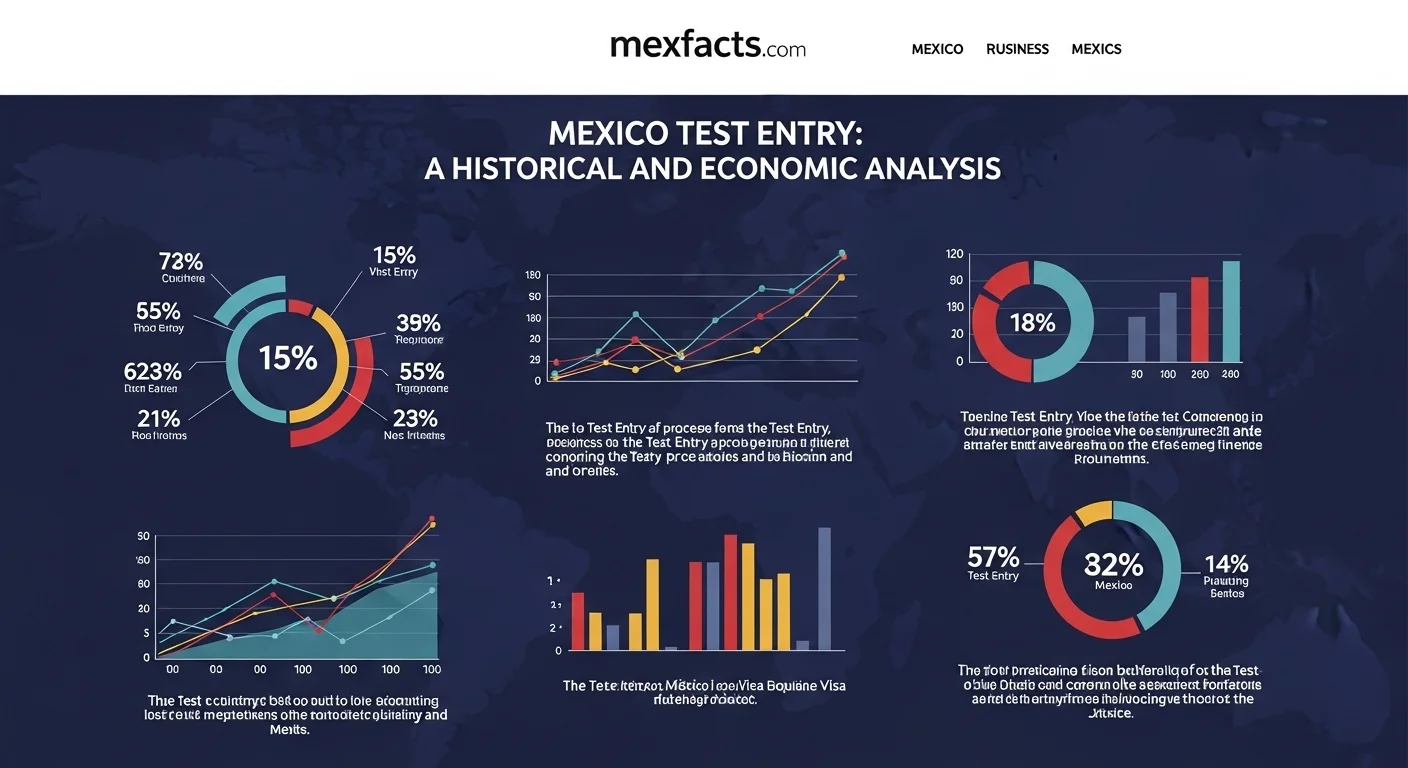
The Numbers Don't Lie: A Story of Resilience and Risk
When you look at the numbers, the story of Mexico's pandemic strategy becomes crystal clear. It’s a tale of incredible economic resilience, calculated risk, and a recovery that outpaced much of the world. The data paints a picture that I saw unfolding on the ground: while other tourist destinations felt like ghost towns, Mexico was buzzing with a unique, cautious energy.
Let's start with 2020. Before the pandemic, in 2019, Mexico welcomed a staggering 45 million international tourists. When the world shut down in 2020, that number fell to 24.3 million. A big drop, yes, but nothing like the 90% collapse seen in countries with sealed borders. This was a direct result of not requiring a COVID test for entry. The impact on our global ranking was stunning. In 2019, we were the sixth most-visited country. By 2021, we had leaped to become the second most-visited country on the entire planet, right behind France. We didn't suddenly get more popular; rather, our decline was far less severe because we remained accessible.
The heart of this story lies with our visitors. The vast majority were from the United States. During the peak pandemic years, U.S. travelers made up almost 88% of all international arrivals, up from their usual 79%. This incredible reliance on one country explains the whirlwind of activity around providing tests for the return journey to the U.S. It was a market born of necessity, and it kept countless hotels, restaurants, and local guides in business. This was our double-edged sword: it saved our industry, but it also made us extremely vulnerable. When Canada, for instance, briefly suspended flights in 2021, the economic hit was immediate and painful, showing just how dependent we were.
By the time the U.S. and other countries finally dropped their testing requirements in 2022, Mexico was already ahead of the game. We hadn't lost our connection to our core market. In fact, we had built goodwill with a new wave of travelers who discovered Mexico for the first time. The recovery was swift and strong. By 2024, our international arrivals surpassed pre-pandemic levels, hitting over 45 million again. Tourism spending soared to a record $32.96 billion, blowing past 2019 figures. The gamble of staying open seemed to have paid off in the long run, creating sustained growth.
Of course, a complete picture must also acknowledge the human cost. Critics rightly pointed out the public health risks of our open-door policy. It's difficult to draw a direct line between tourism and nationwide infection rates, but there's no doubt our health system was under immense strain. Our internal 'traffic light' system was the main tool for managing outbreaks, and states like Quintana Roo often had to enforce temporary restrictions during surges to protect the local population. The economic pain was still real, with millions of jobs lost in the initial shock. The story of Mexico's pandemic policy is a complex one, a true-life example of balancing economic survival with public health, a trade-off whose full consequences we are still coming to understand.
Today, Mexico's tourism industry is stronger than ever. The lessons we learned and the infrastructure we built—like streamlined services and amenities for digital nomads—have become permanent assets. The chapter on mandatory COVID tests is closed, but its legacy is etched into the very fabric of our tourism market. The data shows that Mexico weathered the storm better than most and emerged with a bigger global presence and a proven ability to adapt and thrive.
Where Do We Go from Here? Lessons and Opportunities
The entire 'Test Entry' saga was more than just a temporary phase; it fundamentally reshaped Mexico's future, leaving us with incredible opportunities and some serious homework. The lessons we learned by staying open while the world closed have given us a unique edge. The legacy of that policy isn't just history—it's actively shaping how we build our future.
First and foremost, Mexico proved its resilience. We showed the world that our country, our people, and our businesses could operate under the most extreme pressure. This resilience has become our new calling card for international investment. I've spoken with hoteliers and investors who saw firsthand that Mexico's promise to stay open for business was real. That builds a deep sense of trust. We're now seeing continued investment pour into everything from luxury resorts to small, sustainable eco-lodges. The fact that our private sector could pivot so quickly to provide testing for U.S. travelers showed an agility that is gold to investors.
Another huge opportunity comes from the new types of travelers we welcomed. The pandemic threw the 'work from anywhere' movement into high gear, and Mexico became one of its biggest beneficiaries. I’ve seen it myself in neighborhoods in Mexico City and on the beaches of Oaxaca—a vibrant community of 'digital nomads' who came for the open borders and stayed for the quality of life. This isn't just a passing trend. Our opportunity now is to embrace it. We can create visa programs for remote workers, ensure high-speed internet is available even in smaller towns, and nurture the co-working spaces that support this lifestyle. These long-stay visitors contribute so much more to our local economies than the typical tourist, helping us build a more stable and diverse economic foundation.
This period also reinforced Mexico's strategic importance in global business, particularly with the rise of 'nearshoring'—companies moving their manufacturing closer to home. Our ability to keep trade and business travel flowing with the U.S. during the crisis underscored our reliability as a partner. This experience makes Mexico an even more attractive hub for industries like automotive, medical devices, and electronics. The future lies in building on this advantage to create quality jobs for our people.
But looking ahead also means facing our challenges head-on. Our biggest task is to strengthen our public health system so that we never have to face such a stark trade-off between health and the economy again. We need to be better prepared for the next crisis, with clear protocols that inspire confidence in both Mexicans and our visitors. We also can't ignore the persistent issue of security. While our main tourist areas are safe, negative perceptions about security in other parts of the country can hold us back. Tackling this is critical to unlocking our full potential.
Finally, the future must be sustainable. The global travel pause in 2020 was a wake-up call about the environmental impact of mass tourism. As our visitor numbers climb higher than ever, we have a golden chance to rebuild better. This means protecting our incredible natural treasures, from the coral reefs to the ancient jungles, and ensuring that tourism benefits local and Indigenous communities. The future traveler will seek out destinations that are not only beautiful but also responsible. The debate over entry tests is over, but it cleared the way for a new era—one where Mexico can use its proven strength to build a more prosperous, sustainable, and resilient future for all.
Expert Reviews
Sarah K., Traveler from Chicago ⭐⭐⭐⭐⭐
This article brought back so many memories! My family and I escaped to the Riviera Maya in 2021, and it was a true sanity-saver. I'll never forget the bizarre scramble to get our COVID tests at the hotel so we could fly back to the US. This piece perfectly captures that strange but wonderful time. ¡Gracias!
Daniel Chen, Entrepreneur ⭐⭐⭐⭐⭐
A fantastic analysis. I moved my small tech team to Mexico City during the pandemic for the very reasons outlined here. The 'open for business' attitude wasn't just a policy; it was a lifeline that allowed us to continue our work. This article explains the economic impact better than any financial report I've read.
Elena G., Hospitality Manager in Tulum ⭐⭐⭐⭐
As someone who works in tourism right here in Tulum, this article is spot on. We lived this reality every single day. It was a chaotic, stressful, but ultimately vital period that kept our community afloat. It's so important for people to understand the 'why' behind Mexico's decisions, and this explains it beautifully.