
The Two Worlds of the Maya Family: Ancient Heritage and Modern Tourism

When you hear the phrase 'Maya Family,' what comes to mind? Is it the ancient communities whose traditions have shaped southeastern Mexico for centuries, or the all-inclusive resorts promising the perfect family vacation in the Riviera Maya? The truth is, it's both. I've spent years traveling through the Yucatán Peninsula, and I can tell you that these two worlds are deeply connected. This article explores that connection, showing how a rich, ancient heritage has become the backdrop for a modern economic powerhouse in tourism. We'll look at the real Maya family, the foundation of their society, and then see how that concept has been transformed into a brand that draws families from all over the world, shaping not just the economy, but the very future of the region.
1. The Two Faces of the 'Maya Family'
2. The Traditional Maya Family: The Heart of a Civilization
3. The 'Maya Family' Vacation: A Global Brand in Tourism
What is the 'Maya Family' in Mexico?
In my travels across the Yucatán Peninsula, I've come to understand that the term 'Maya Family' has two very different, yet intertwined, meanings. It’s a concept that captures the soul of southeastern Mexico. On one hand, you have the traditional Maya family, the true bedrock of a civilization that has gracefully endured for centuries. This is the family unit that has passed down language, customs, and a profound connection to the land. On the other hand, 'Maya Family' has become a powerful brand in global tourism, representing the ultimate family vacation experience set against the stunning backdrop of the Maya world. To truly grasp the essence of modern Mexico, you have to understand both. This isn't just a topic for anthropologists; it's vital for anyone interested in business, culture, or the future of sustainable travel.
The Traditional Maya Family: The Heart of a Civilization
The traditional Maya family is the institution upon which their entire society was built. I've had the privilege of sharing meals in Maya homes, and the sense of community is something you feel instantly. Historically, the family was an extended unit, often with several generations living together, sharing the work and supporting one another. The structure was generally patriarchal, with men handling the demanding work of farming the 'milpa'—a brilliant agricultural system of growing corn, beans, and squash together—and building homes. They were the leaders in the community.
Women, however, were the anchors of the home. Their role was incredibly important; they managed the household, raised the children, cooked, and were masters of incredible crafts like weaving. The textiles they create are not just clothes; they are stories woven with thread, a skill passed from mother to daughter. Children weren't just observers; they were part of the family's daily life and work from a young age, learning respect for their elders and the value of contributing. Boys learned their father's trade, and girls learned the ways of the household. It’s a system built on mutual dependence and deep respect that has ensured the survival of their culture.
Today, millions of Maya people live in Mexico, and while modern life has brought changes, these core values remain strong. In many villages across Yucatán and Quintana Roo, the extended family is still the most important safety net. Of course, things are different now. Many people migrate for work, and formal education is changing traditional roles. But even with these pressures, the deep sense of community and family obligation is still central to what it means to be Maya.
The 'Maya Family' Vacation: A Global Brand in Tourism
Now, let's look at the other 'Maya Family.' This one was crafted by Mexico's tourism industry, especially in places like Cancun and the Riviera Maya. This region, the heartland of the Maya, has become one of the world's top destinations for family travel. The marketing is brilliant: it uses the mystique of the ancient Maya civilization as a backdrop for a luxurious, modern vacation experience. And it works. Millions of families from the U.S., Canada, and Europe come here every year looking for sun, fun, and a touch of culture.
This has led to a boom in riviera maya mexico all inclusive family resorts. These aren't just hotels; they are self-contained worlds designed for families. The appeal of all inclusive resorts riviera maya for families is simple: one price covers lodging, food, drinks, and activities, making it easy for families to budget. These resorts are in a constant race to offer the best amenities—sprawling water parks, supervised kids' clubs, teen lounges, and even special services for babies. They make vacationing with children completely seamless.
Searching for the best all inclusive resorts in riviera maya for families has become a major focus for travelers and travel agents. You have places like Hotel Xcaret Mexico, which offers an 'All-Fun Inclusive' concept, bundling access to their incredible nature and adventure parks right into your stay. It’s an amazing value proposition for adventurous families. This strategy cleverly links the modern comfort of a resort with the timeless allure of the surrounding Maya world—its jungles, its sacred cenotes, and its awe-inspiring ruins.
The growth of these massive all inclusive family resorts cancun riviera maya has transformed the region into an economic engine for Mexico. Tourism provides countless jobs and brings in vital foreign currency. It has spurred huge infrastructure projects and turned quiet fishing villages into global destinations. The 'Maya Family' vacation isn't just a clever slogan; it’s a critical part of Mexico’s economy with a global reach, all happening on the ancestral lands of the Maya people themselves.
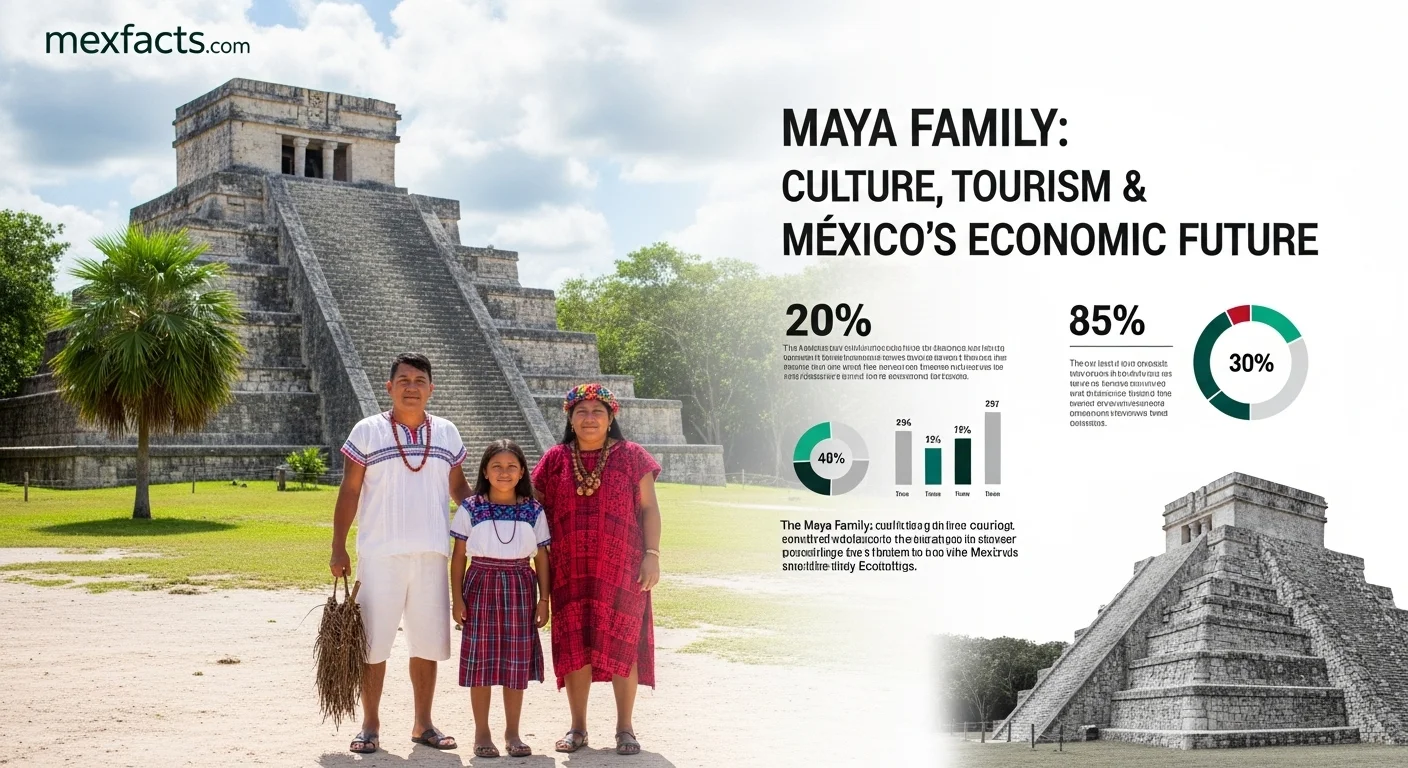
A Tale of Two Realities: The Data Behind the Maya Family
To understand the full picture of the 'Maya Family,' we need to look at the numbers, and they tell a fascinating story of two coexisting worlds. First, there's the data on the Maya people today—their communities, their economic realities, and their incredible resilience. Second, there are the powerful economic statistics of the family tourism industry in the Riviera Maya. Putting these two sets of data side-by-side reveals a story of massive change, filled with both opportunity and deep inequality. For anyone looking to invest or simply understand the region, these numbers are essential.
The Maya People Today: Demographics and Realities
The Maya are one of Mexico's largest Indigenous groups. In Mexico, they are concentrated in the Yucatán Peninsula—the states of Yucatán, Campeche, and Quintana Roo—and Chiapas. When you walk through the markets of Mérida, the capital of Yucatán state, you can still hear the beautiful Mayan language being spoken all around you. In Yucatán, nearly a third of the population speaks Mayan. While the number of speakers across the peninsula is estimated to be around a million, it's believed that many more are of Maya descent, showing how cultural identity can remain strong even as language use shifts.
However, this vibrant culture exists within a tough socio-economic reality. Many of the areas with the largest Maya populations are also among the poorest. This creates real-world challenges. For instance, while school is technically free, the cost of uniforms, supplies, and transportation can be a huge burden for families, often leading kids to drop out and start working low-wage jobs. I've spoken with young people who dream of higher education but face enormous barriers, from economic hardship to needing to move far from their families to study. These are the structural problems that modern Maya families face every day.
The tourism boom brought a seismic shift. The rise of Cancun and the Riviera Maya created a huge demand for workers. Many Maya men found jobs in construction and, later, as gardeners, cleaners, and waiters in the very resorts that line the coast. While this offered an alternative to farming, it also created a new kind of dependency on the often-unpredictable tourism industry. It has brought money into communities, but the benefits are not always shared fairly. Too often, the Maya people have been incorporated into this massive industry as low-wage labor, rather than as partners or owners.
The Economic Engine: Family Tourism in the Riviera Maya
On the other side of the story is the colossal tourism industry. Quintana Roo, home to Cancun and the Riviera Maya, is a giant of Mexican tourism. In 2023, the state welcomed over 20 million tourists. The economic impact is simply staggering. This growth shows just how vital this industry is to the entire region.
The family travel segment is a huge piece of this success. The demand for multi-generational trips to Mexico is incredibly strong, and the Riviera Maya is a top choice because it offers a perfect mix of beaches, culture, adventure parks, and family-friendly hotels. This has fueled the explosive growth of riviera maya all inclusive family resorts. The market is fierce, with new resorts constantly opening. These all inclusive resorts riviera maya for families are a prime area for international investment, commanding high nightly rates for their luxury and convenience.
The scale of these places is immense. A single large resort can have its own water park, a dozen restaurants, and extensive programs to keep kids entertained. The best all inclusive resorts in riviera maya for families are those that provide a complete, high-quality experience for everyone, from toddlers to grandparents. But the market for all inclusive family resorts cancun riviera maya isn't just about luxury; it’s also diverse. There are more affordable options that still offer great amenities like water parks and kids' clubs, making the destination accessible to a wider range of families.
Ultimately, the statistics paint a clear picture of two connected worlds. One is a world of ancient communities working to preserve their identity and improve their lives against significant challenges. The other is a hyper-modern, global tourism machine generating billions of dollars, built on the promise of the perfect family vacation set against the backdrop of that very culture. The numbers confirm that the riviera maya mexico all inclusive family resorts are a massive economic success, but they also highlight the ongoing challenge of making sure this prosperity is shared more equitably with the people whose land this has always been.
The Path Forward: Opportunities for the Maya Family
Looking to the future, the concept of the 'Maya Family'—both the people and the brand—is at a crossroads. The path ahead is full of incredible opportunities for sustainable growth and cultural celebration, but it's also filled with challenges like environmental strain, economic disparity, and the risk of culture becoming a caricature. For Mexico to truly thrive, it needs a thoughtful approach that empowers Maya communities while guiding the tourism industry toward a more authentic and sustainable future. This presents a powerful case for international partners and investors who see the value in a more equitable and conscious model.
The Future for Maya Communities: Empowerment and Preservation
For modern Maya families, the future is a mix of risk and empowerment. A major challenge is keeping their cultural identity alive. As younger generations move to tourist areas for work, there's a real concern about losing the Mayan language and traditions. The key challenge is ensuring that economic progress doesn't erase cultural heritage. Furthermore, the massive tourism industry puts a strain on the region's delicate environment, from its fresh water sources in the cenotes to the Mesoamerican Reef, which can hit rural and Indigenous communities the hardest.
But within these challenges lie great opportunities. I've been inspired by the rise of community-based tourism, where Maya communities design and manage their own tourism projects. This model allows them to share their culture on their own terms, moving from being employees to being storytellers and entrepreneurs. It offers travelers a much more authentic experience—imagine learning to cook a traditional meal in a village home or walking through a farm with the person who works the land. This approach ensures that tourism money stays directly in the community, and it's a model that aligns with a growing global demand for responsible travel.
There are also growing opportunities to support Maya youth through education. By providing scholarships and training, we can help the next generation become leaders who can build a prosperous future without having to leave their culture behind. The future well-being of Maya families depends on creating pathways for them to lead, not just participate in, the region's development.
The Evolution of Family Tourism in the Riviera Maya
The family vacation in the Riviera Maya is also evolving. While the beautiful beaches will always be a draw, modern families are looking for more. They want 'edu-tainment', sustainable options, and meaningful experiences. They want to know their vacation isn't causing harm. This is a huge opportunity for the best all inclusive resorts in riviera maya for families to stand out.
The tourism leaders of tomorrow will be those who masterfully blend sustainability and authenticity into their experience. This means sourcing food from local farmers, protecting the environment with better water and energy use, and offering guests genuine cultural experiences that are respectful. The riviera maya mexico all inclusive family resorts that will truly succeed are those that form real partnerships with local Maya communities. Imagine a resort that offers tours to a community-run eco-park, features authentic Maya recipes in its restaurants, and sells beautiful, handcrafted goods from local artists in its shops. This not only makes the vacation better for the guest but also supports the local economy in a profound way.
The market for all inclusive resorts riviera maya for families will also continue to diversify. We'll see more eco-lodges for nature-loving families and retreats focused on wellness and disconnecting to reconnect. The 'workation' trend also means that all inclusive family resorts cancun riviera maya will need to adapt, offering spaces for parents to work remotely while kids are engaged in fun, cultural activities.
In the end, the future is about convergence. The long-term success of the Riviera Maya depends on bringing its two 'Maya Family' identities together. The vibrant, resilient culture of the Maya people is the region's most precious asset. By investing in the empowerment of Maya communities and guiding the powerful tourism industry toward a model that is more sustainable, equitable, and respectful, Mexico can build a truly prosperous future. This is the path that offers the greatest returns—both financially and for the soul of the nation—by honoring the deep connection between the people, the land, and the rich family heritage of the Maya world.
Expert Reviews
Laura Chen, Traveler ⭐⭐⭐⭐⭐
We stayed at an all-inclusive in the Riviera Maya, which was fantastic for the kids, but the real highlight was a day trip we took to a small Maya village. This article perfectly explains the two sides of that experience. It gave me a much deeper appreciation for the culture behind the beautiful scenery. A must-read before you go!
Michael Byrne, Cultural Analyst ⭐⭐⭐⭐
As someone studying sustainable development, this piece was invaluable. It cuts through the marketing fluff and presents the economic and social realities of the region with clarity and respect. The connection it draws between the traditional family structure and the modern tourism economy is a crucial point, and it's very well-made here.