
An Open Invitation: What 'Inclusive Mexico' Really Means for Travelers

When you hear 'inclusive Mexico,' your mind might jump to an all-inclusive resort package. But it's so much more than that. It’s the story of a nation striving for equality, from championing LGBTQ+ rights to empowering its rich indigenous communities. In this article, I want to take you on a journey to understand both sides of this beautiful coin. We'll explore how Mexico is becoming a more welcoming place for everyone and how its world-famous tourism is evolving to offer more authentic, meaningful experiences that go far beyond the resort walls. It's a look into the real heart of Mexico.
- What is an Inclusive Mexico and Why Does It Matter?
- Economic Inclusion: Beyond the Resort Walls
- Cultural Inclusion: Sharing Authentic Stories
- A Tale of Two Models: From Cancún to Loreto
- Progress for All: Rights and Accessibility
What is an Inclusive Mexico and Why Does It Matter?
The phrase 'Inclusive Mexico' is more than just a headline; it's a feeling, a movement that you can sense in the streets, in new laws, and in the evolving conversations around the country. I've spent years traveling through every corner of this nation, and I've seen this vision take root. At its core, it's about building a Mexico where everyone has a seat at the table, no matter their gender, who they love, their physical abilities, ethnicity, or where they come from. It’s about tearing down old barriers to ensure everyone can be a part of the country's story. This isn't just an internal goal; it shapes how the world sees Mexico. For travelers, it’s the promise of a destination that is not only beautiful but also genuinely welcoming, safe, and rich with authentic experiences.
A great way to see this change in action is by looking at Mexico's powerful tourism industry. It's a giant, welcoming millions of us from around the globe each year. When you type 'all inclusive hotels mexico' into a search bar, you're greeted with a paradise of options. This model, especially in places like Cancún and the Riviera Maya, has been a massive success. But for a long time, I felt, as did many others, that these resorts were beautiful but isolated bubbles. An 'inclusive' mindset challenges this, pushing these spaces to become part of the larger community, not separate from it.
Economic Inclusion: Beyond the Resort Walls
A truly inclusive tourism means the money spent by visitors flows out into the local community. I've seen this firsthand when a hotel chooses to buy its fresh produce from the farmer down the road instead of a big distributor. It’s about hiring local talent for management roles, not just service positions, and featuring the work of local artisans in their shops. The goal is to create a partnership, where the prosperity is shared. It’s a move away from a system where locals are just serving drinks, towards one where they are co-creators of the experience.
Cultural Inclusion: Sharing Authentic Stories
For me, the soul of Mexico lies in its staggering diversity. With 68 official national languages, this country is a vibrant tapestry of cultures. For too long, tourism has sometimes offered a simplified, folkloric caricature. I remember my first time in Oaxaca, straying from the main square and finding a tiny, family-run kitchen. The taste of that mole wasn't just food; it was a generations-old story told on a plate. That's the kind of inclusion we’re talking about. It’s about giving indigenous and local communities the platform to tell their own stories, on their own terms. It lets travelers have more profound experiences, like learning about ancient Mayan astronomy from a local guide in the Yucatán instead of just seeing a show.
A Tale of Two Models: From Cancún to Loreto
Many visitors, especially from Canada, are a huge part of this story. When a family books a 'yyz to mexico all inclusive' package through an agency like 'redtag all inclusive mexico' or 'itravel2000 all inclusive mexico,' their choices matter. As we travelers become more conscious, these agencies have the power to highlight resorts that value sustainability and community. A perfect example of a place getting it right is Loreto, in Baja California Sur. When you look for 'all inclusive loreto mexico' options, you find something different. Tucked away by the Sea of Cortez, tourism here is built around respecting the stunning Loreto Bay National Park. The community is woven into the conservation efforts, and the experiences—kayaking, whale watching, diving—are about connecting with nature. Loreto shows us what's possible: a tourism that honors its environment, uplifts its community, and offers something truly special to visitors.
Progress for All: Rights and Accessibility
Beyond tourism, the broader idea of an 'Inclusive Mexico' is making real waves. The nationwide legalization of same-sex marriage by 2022 was a monumental step forward for LGBTQ+ rights. But this progress also highlights the work still needed to fight social prejudice. At the same time, there's a growing push for accessibility. While Mexico can still be tough for travelers with mobility issues, I'm seeing positive changes. Newer hotels and airports are being built with accessibility in mind, and specialized tour operators are popping up, offering services like wheelchair-accessible vans. This is fundamental. An inclusive Mexico has to be an accessible Mexico, a place where everyone feels not just welcome, but truly able to experience its magic.
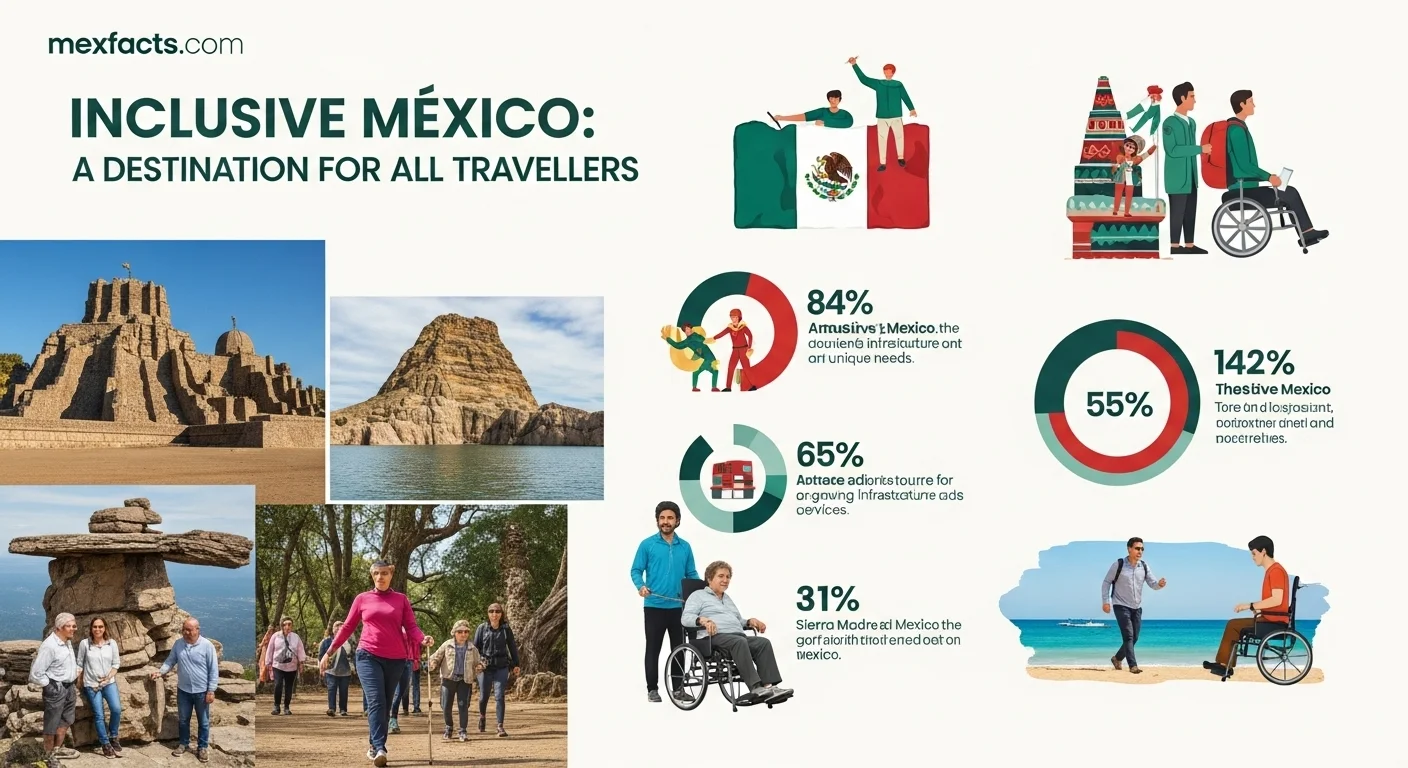
The Story in Numbers: A Snapshot of Inclusive Mexico
To truly appreciate the journey Mexico is on, it helps to look at the numbers. They tell a story of incredible progress, stubborn challenges, and the powerful connection between social change and the travel experiences we all seek. This data paints a picture of a nation in motion.
Social Inclusion: A Tale of Pride and Perseverance
Mexico's progress on LGBTQ+ rights has been remarkable to witness. By late 2022, same-sex marriage became the law of the land in all 32 states. This legal victory is a beacon in Latin America. However, the story doesn't end there. I’ve spoken with many in the community who will tell you that laws on paper and lived experiences can be two different things. Sadly, discrimination and violence persist, reminding us that the fight for true acceptance continues every day. For travelers, this means that while destinations like Puerto Vallarta and Mexico City are celebrated LGBTQ+ havens, the goal is to ensure that feeling of safety and welcome extends to every corner of the country, including within the walls of every 'all inclusive hotels mexico'.
Accessibility: Bridging the Gaps
When it comes to accessibility for people with disabilities, Mexico is a work in progress. It's a landscape of contrasts. I've seen gleaming new airports with fantastic accessible features, but then the cobblestone streets of a historic town center can present a real challenge. For a traveler, this means planning is key. You can book a 'yyz to mexico all inclusive' trip, but ensuring your room is truly accessible or that you can get around easily requires extra research. This is where specialized agencies are making a huge difference, but they're still more the exception than the rule. I see this not as a failing, but as a massive opportunity. For travel companies like 'redtag all inclusive mexico' or 'itravel2000 all inclusive mexico,' offering certified accessible vacation packages isn't just good ethics; it's smart business for a huge and growing market of travelers.
Indigenous Voices in Tourism: A Path to Partnership
The indigenous peoples of Mexico are the keepers of its ancient soul. Their inclusion in tourism is a matter of both cultural respect and economic justice. So many artisans, over a million in fact, make their living from crafts sold to visitors like us. More and more, communities are creating their own tourism experiences, from guided jungle treks to cooking classes, sharing their heritage while building a sustainable future. But it’s a delicate balance. In the past, massive tourism projects have sometimes steamrolled local communities. The goal now is to forge true partnerships. I've always been inspired by the model in places like Loreto, where 'all inclusive loreto mexico' can mean supporting local conservation. The aim is to shift from a model where indigenous culture is simply on display to one where communities are equal partners and direct beneficiaries of the tourism they help create.
The Economic Powerhouse of Tourism
Let's not forget the sheer scale of it all. Tourism is a central pillar of the Mexican economy. In recent years, the country welcomed back tens of millions of international visitors, generating billions of dollars and supporting over 2 million jobs. The United States and Canada are the biggest sources of these visitors. This is why making tourism more inclusive is not just a 'nice to have'—it's a strategic imperative. When the industry is more socially, economically, and physically inclusive, it becomes more resilient, more authentic, and more successful for everyone in the long run.
The Road Ahead: Opportunities for a More Inclusive Mexico
Looking to the future, I see a landscape ripe with opportunity for Mexico. The path forward is about weaving together social progress, smart economic choices, and a more thoughtful approach to tourism. It’s about building on the incredible momentum of recent years to create a Mexico that is even more welcoming and equitable for everyone.
The New All-Inclusive: From Sunbather to Story-Seeker
The very idea of a vacation is changing. More and more, travelers like us are looking for more than just a beautiful beach; we want connection, authenticity, and experiences that stay with us. This is a golden opportunity for Mexico. The future of 'all inclusive hotels mexico' isn't just about bigger swimming pools, but about deeper connections to the place itself. I imagine hotels becoming hubs of culture, offering guests culinary tours that support local farmers, eco-adventures led by local conservationists, or pottery workshops with master artisans. A resort becomes more than a place to sleep; it becomes a gateway to the real Mexico.
Destinations like Loreto are already showing us the way. The success of 'all inclusive loreto mexico' is tied directly to its promise of eco-conscious luxury and its deep respect for the local community and environment. This is a model that can be adapted across the country. I get excited thinking about the possibilities for travel providers like 'redtag all inclusive mexico' and 'itravel2000 all inclusive mexico'. They can be pioneers, creating new kinds of packages—imagine a 'Heart of Oaxaca' trip that includes stays in charming boutique hotels and guided visits to family-run mezcal distilleries. This is the kind of travel that enriches both the visitor and the host.
Opening Doors: The Promise of Accessible Travel
One of the biggest untapped opportunities I see is in accessible tourism. As our global community becomes more aware of disability rights, the demand for travel that accommodates everyone is skyrocketing. Imagine a future where a family booking a 'yyz to mexico all inclusive' package can do so with full confidence that their family member who uses a wheelchair will have a seamless, dignified, and joyful experience from the moment they land. This means hotels with guaranteed accessible rooms, tour vans with lifts, and ancient sites with accessible pathways. Making this a reality isn't just the right thing to do; it's a massive business opportunity that will open Mexico's wonders to so many more people.
The Challenges We Must Face
Of course, the road isn't without its bumps. A key challenge is ensuring the economic benefits of tourism truly reach the local communities. We must be vigilant against 'social washing'—where projects are marketed as sustainable or community-focused but don't deliver on the promise. Another critical challenge is protecting the very nature that draws us to Mexico. The fragile beauty of the coral reefs and lush jungles is under pressure. Sustainable practices must be at the core of all future development, not an afterthought.
A Shared Journey
Ultimately, building a truly inclusive Mexico is a team effort. It requires the government to continue creating and enforcing fair laws. It needs businesses, big and small, to invest in responsible models. And it requires us, as travelers, to make conscious choices—to seek out experiences that are respectful of local cultures and the environment. Mexico stands at a thrilling crossroads. It has all the ingredients—the rich culture, the stunning landscapes, and the incredible warmth of its people—to lead the world in what it means to be a truly inclusive and sustainable destination. For those wanting a deeper dive into Mexico's economic landscape, the insights from the Oxford Business Group offer excellent further reading.
Expert Reviews
Sarah Chen, Canadian Traveller ⭐⭐⭐⭐⭐
My family and I were planning our usual all-inclusive trip from Toronto, but this article really opened my eyes. It made me think about what our choices support. We ended up booking a resort in Loreto mentioned here and looked for tours run by local guides. It was our most meaningful trip to Mexico yet. Thank you!
Mark Davis, Wheelchair User & Blogger ⭐⭐⭐⭐
As someone who travels with a mobility aid, finding reliable information is tough. I deeply appreciated the honest look at the accessibility challenges and opportunities in Mexico. It gave me a realistic picture and helped me ask the right questions when planning my trip to the Riviera Maya. More of this kind of content is needed!
Javier Morales, University Student ⭐⭐⭐⭐⭐
I’m studying Latin American social policy, and this piece was fantastic. It connects the dots between legal frameworks, like marriage equality, and the real-world impact on industries like tourism. It’s well-researched but written with a personal, human touch that makes it so much more impactful than a textbook. A really great read.