
León, Guanajuato, Mexico: Business Hub, Living Costs, and Visitor Guide
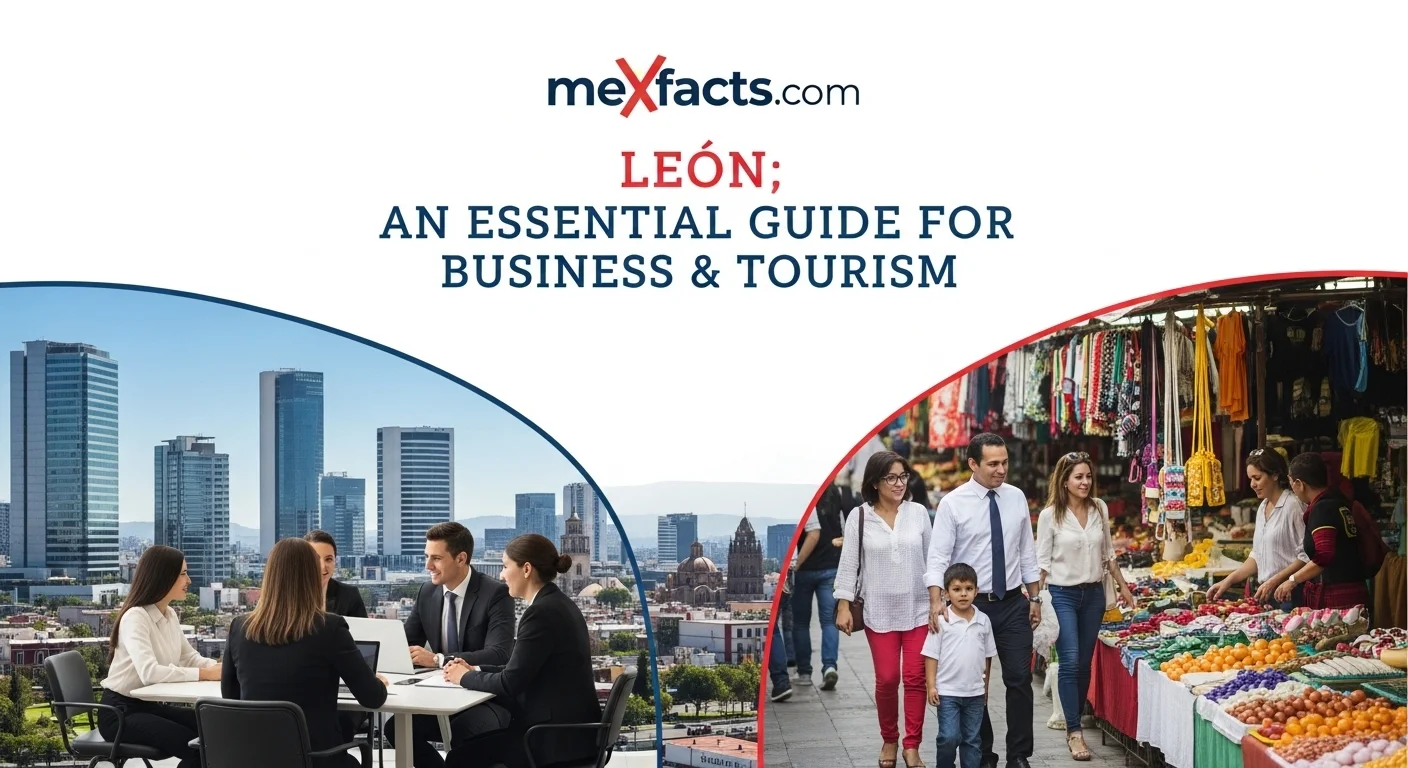
León is the largest metropolis in the state of Guanajuato and a primary economic engine of Mexico's Bajío region. Celebrated worldwide as the capital of leather goods and footwear, the city has evolved into a powerhouse for automotive manufacturing, international trade, and major conventions. Distinct from the colonial state capital of Guanajuato City, León combines extensive commercial infrastructure, pioneering public transit, and major cultural festivals with accessible living expenses and strategic North American logistics connectivity.
Table of Contents
Overview and Strategic Importance
Situated in west-central Mexico within the fertile Bajío corridor, León de los Aldama—commonly known as León—is Guanajuato's most populous municipality. While travelers frequently conflate it with Guanajuato City, the two centers play entirely different roles. Guanajuato City is the historic state capital renowned for hillside silver mines and baroque university architecture, whereas León is the commercial, financial, and manufacturing capital of the state.
Founded in 1576, León developed around agriculture and livestock before specializing in leather tanneries during the nineteenth and twentieth centuries. Today, the city anchors an urbanized corridor linking central Mexico with northern trade arteries leading directly to the United States border. It serves as a regional corporate anchor, healthcare hub, and logistics center for south-central Bajío commerce.
Industrial Engine: From Historic Tannery Craft to Automotive Powerhouse
León is historically recognized as the "Shoe Capital of the World" (Capital Mundial del Calzado). It forms the operational core of the Mexican leather industry, producing approximately 70% of all footwear made in Mexico. The city's famous Zona Piel encompasses hundreds of retail and wholesale storefronts around the central bus station, offering leather shoes, boots, jackets, and accessories produced across local tanneries and artisan workshops. Local residents earned the historical moniker Panzas Verdes ("Green Bellies") due to the stains left on tanners' aprons by vegetable dyes and hide-curing agents.
Over recent decades, León leveraged this manufacturing expertise to become a vital supplier base for Mexico's automotive industry. Neighboring industrial facilities and assembly plants—such as General Motors in Silao, alongside regional facilities for Toyota, Honda, and Mazda across the Bajío—have attracted tier-one and tier-two automotive parts suppliers to León's modern business parks. Adjacent to the municipal boundary lies the Guanajuato Puerto Interior (GPI), Latin America's largest dry port and logistics center, complete with specialized rail freight connections, an international customs terminal, and aerospace facilities supporting global nearshoring supply lines.
Culture, Architecture, and Landmark Events
Beyond industry, León offers distinct cultural landmarks and major international events that draw millions of visitors each year:
- Templo Expiatorio del Sagrado Corazón de Jesús: A landmark neo-Gothic cathedral commissioned in 1921 and completed in 2012. It features intricate stained glass windows, soaring spires, and extensive subterranean crypts open for guided visits.
- Arco de la Calzada de los Héroes: Built in 1893 and crowned with a majestic bronze lion in 1958, this triumphal arch marks the entrance to the historic pedestrian corridor connecting the downtown core to the Poliforum zone.
- Poliforum León: One of Mexico's largest convention and exhibition complexes, hosting major trade fairs including SAPICA (Latin America's leading footwear and leather goods expo) and Industrial Transformation Mexico (Hannover Messe's Latin American affiliate).
- Feria Estatal de León: Held annually throughout January and early February, this massive cultural fair commemorates the city's founding with agricultural showcases, open-air concerts, culinary pavilions, and artisan exhibits.
- Festival Internacional del Globo (FIG): Hosted every November at Parque Metropolitano de León, this internationally renowned event fills the morning skies with over 200 hot air balloons operated by pilots from dozens of nations.

Demographics and Economic Indicators
Official data confirms León's stature as one of Mexico's fastest-growing metropolitan hubs. According to the 2020 National Population and Housing Census conducted by Mexico's National Institute of Statistics and Geography (INEGI), the municipality of León had a population of 1,721,215 residents. The broader León Metropolitan Area—which incorporates Silao and neighboring municipalities—exceeds 2.14 million residents, positioning it among the top ten largest urban agglomerations in the country.
Economically, León generates nearly 60% of Guanajuato's gross manufacturing product. Supported by foreign direct investment from the United States, Japan, and Germany, the municipal economy has diversified into plastics, chemical processing, medical device production, and software development, backed by more than 30 regional university campuses and technical institutes.
Cost of Living Breakdown
For expatriates, digital professionals, and corporate transferees, León provides modern infrastructure at a fraction of the cost found in Mexico City, Monterrey, or Guadalajara. As one of the most affordable places to live in Mexico, typical monthly expenditures remain highly competitive:
- Rental Housing: A modern one-bedroom apartment in central neighborhoods ranges from $250 to $450 USD (5,000 to 9,000 MXN) per month. Spacious three-bedroom homes in upscale gated communities (fraccionamientos) such as Campestre, Gran Jardín, or El Molino generally range from $650 to $1,200 USD per month.
- Utilities and Connectivity: Monthly household utilities (electricity, municipal water, and gas) average $40 to $70 USD. High-speed fiber-optic internet packages (100 to 300 Mbps) cost between $25 and $40 USD monthly.
- Food and Groceries: Local markets and supermarkets offer fresh produce and meats at affordable rates, with weekly grocery budgets for an individual averaging $35 to $60 USD. A traditional lunch (comida corrida) costs approximately $4 to $7 USD, while mid-range dinners for two at established restaurants average $25 to $45 USD.
- Healthcare: León functions as the premier medical destination in Guanajuato, home to regional specialized hospitals including Hospital Médica Campestre and Hospital Ángeles León. Out-of-pocket specialist consultations typically cost between $35 and $60 USD.
Safety in León: Crime Statistics, Context, and Precautions
Security conditions in the state of Guanajuato have garnered significant international attention due to rivalries between criminal organizations competing over illicit fuel trafficking and regional narcotics corridors. Understanding the statistical reality on the ground requires distinguishing between statewide figures and municipal geography.
While homicide statistics in Guanajuato remain elevated, violent incidents are overwhelmingly concentrated in specific peripheral settlements and targeted operations between illicit actors. Business districts, major thoroughfares, educational campuses, and tourist centers—including Zona Centro, Poliforum, Plaza Mayor, and Parque Metropolitano—maintain substantial policing and regular security patrols.
For international visitors and corporate travelers, adhering to foundational Mexico travel safety tips minimizes risk:
- Use licensed airport taxis or regulated app-based transportation (such as Uber or Didi) rather than flagging unverified street taxis at night.
- Avoid traveling secondary rural roads after dark; use toll highways (autopistas de cuota) when driving between Bajío cities.
- Keep expensive jewelry, watches, and conspicuous electronics tucked away in crowded retail markets such as Zona Piel.
- Remain informed about official advisories issued by national travel departments before transiting isolated regional boundaries.
Infrastructure, Transport, and Regional Mobility
Urban mobility in León is anchored by the Optibús (popularly known as La Oruga or "The Caterpillar"), launched in September 2003 as the first Bus Rapid Transit (BRT) network in Mexico. Featuring dedicated bus lanes, integrated transfer terminals, and low-emission vehicles, the Optibús system provides cost-effective connectivity across primary north-south and east-west arteries for under $0.70 USD (13 MXN) per trip.
Air connectivity is managed by the Guanajuato International Airport (BJX, officially Aeropuerto Internacional del Bajío), located approximately 25 kilometers southeast of downtown León in Silao. BJX provides direct daily commercial flights to major Mexican hubs (Mexico City, Monterrey, Tijuana) as well as continuous non-stop flights to major United States transit gateways, including Dallas/Fort Worth, Houston, Atlanta, Chicago, and Los Angeles.
By highway, León occupies a pivotal position on Federal Highway 45, connecting southward toward Querétaro and Mexico City, and northward toward industrial hubs like Aguascalientes and San Luis Potosí. This strategic geography makes the city a primary operational headquarters for logistics firms operating throughout central Mexico.
Frequently Asked Questions About León, Guanajuato
- What is León, Guanajuato famous for?
- León is globally renowned as Mexico's capital of leather and footwear manufacturing, producing approximately 70% of the nation's shoes. It is also famous for hosting the annual Festival Internacional del Globo (International Balloon Festival) and holding a central role in the Bajío automotive corridor.
- How is León different from Guanajuato City?
- While Guanajuato City is the historic state capital known for steep colonial alleys, subterranean tunnels, and UNESCO World Heritage preservation, León is the state's modern commercial metropolis, home to over 1.7 million residents, major manufacturing plants, convention centers, and integrated transit networks.
- Is León safe for international travelers and business visitors?
- Yes, provided standard urban safety practices are followed. Most regional crime is tied to organized crime disputes in peripheral areas. Core commercial areas, convention centers around Poliforum, business hotels, and tourist zones maintain steady police presence and welcome millions of visitors annually without major incident.
- What is the cost of living in León compared to Mexico City?
- León offers a significantly lower cost of living, with residential rent, private dining, and everyday transport costing approximately 30% to 50% less than equivalent lifestyle options in Mexico City or Monterrey.
- How do visitors get around León?
- Visitors can utilize the Optibús BRT system for point-to-point transit along major avenues, or rely on app-based rideshare services like Uber and Didi, which operate widely, safely, and affordably throughout the city.
Summary: Strategic Outlook and Quality of Life
León represents a dynamic model of industrial adaptation in contemporary Mexico. By combining its historic craftsmanship in leather and footwear with advanced manufacturing, international convention facilities, and high-quality private healthcare, the city provides compelling commercial advantages and a high standard of living. For entrepreneurs, professionals, and travelers seeking to experience Mexico's economic heartland, León delivers vital opportunities anchored by deep cultural pride.
Expert Reviews
Sarah Jenkins, Automotive Engineer ⭐⭐⭐⭐⭐
My company transferred me to León to work in the automotive sector. I was nervous about safety, but this article really clarifies the reality on the ground versus the headlines. Living here has been amazing; the cost of living is a huge plus, and the city has so much character. The 'Panzas Verdes' nickname makes sense once you visit the leather markets!
Carlos Mendoza, Small Business Owner ⭐⭐⭐⭐⭐
I've been sourcing leather goods from León for my boutique for years. This guide perfectly captures the city's dual identity – the deep-rooted artisan tradition and the modern industrial powerhouse. It’s an essential read for anyone looking to do business here.
Emily and Tom Richardson, Travellers ⭐⭐⭐⭐⭐
We visited for the Festival del Globo and fell in love with León! This guide would have been so helpful. It answers the practical questions about safety and costs but also dives into the culture, like the story behind the Templo Expiatorio. Highly recommend a visit!