
Cancun on a Budget: How to Travel the Mexican Caribbean Affordably

While Cancun is globally recognized for five-star luxury resorts and upscale nightlife along Boulevard Kukulcán, it remains one of Latin America's most accessible beach destinations for travelers on a budget. Achieving an affordable Cancun vacation is not about cutting corners or enduring sub-par experiences; it is about understanding the urban layout, strategically choosing between downtown accommodations and bundled all-inclusive resorts, and avoiding common tourist markups on transportation and dining. By using public transit, eating at local neighborhood spots, and traveling during the shoulder season, visitors can enjoy the identical turquoise Caribbean waters, world-class Mayan ruins, and public white-sand beaches at a fraction of standard package prices.
Table of Contents
- Cancun on a Budget: Realistic Daily Costs
- El Centro vs. Hotel Zone: The Strategic Trade-Off
- Public Transit and Airport Transfers
- All-Inclusive Deals vs. Independent Stays
- Eating Well on a Budget: Local Dining Guide
- Free Public Beaches and Inexpensive Excursions
- Regional Transit: Tren Maya and Day Trips
- Essential Rules for Currency and Spending
- Frequently Asked Questions
Cancun on a Budget: Realistic Daily Costs
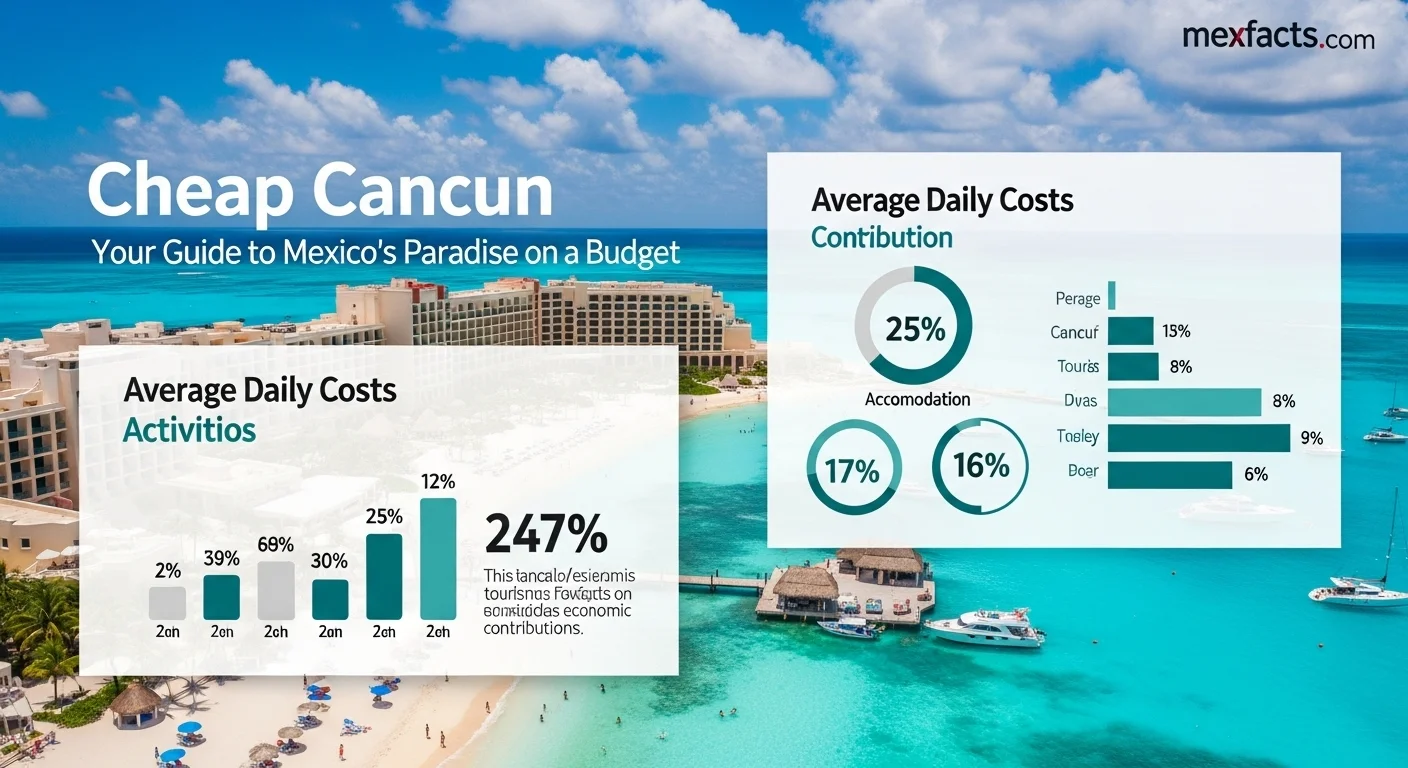
Planning an affordable trip to Cancun requires separating realistic pricing tiers from promotional marketing. Daily expenses vary significantly depending on whether you choose independent downtown lodging or an entry-tier all-inclusive beachfront property.
- Budget Backpacker / Solo Traveler ($35–$55 USD per day): Staying in a downtown hostel dorm or basic private room ($18–$30/night), using city buses ($1.50/day), eating street tacos and market meals ($12–$18/day), and visiting free public beaches.
- Mid-Range Independent Traveler ($70–$110 USD per day for solo, $100–$150 per day for couples): Staying in a 3-star Downtown hotel or Airbnb ($45–$75/night), combining local fondas with mid-tier restaurants ($25–$35/day), taking public transit and occasional ADO regional buses, and paying admission for self-guided cenotes or archaeological sites.
- Value All-Inclusive Vacationer ($120–$190 USD per person per day): Booking an economy or mid-tier all-inclusive resort during off-peak windows, which includes lodging, all meals, domestic beverages, and beachfront access in a single fixed cost.
For travelers interested in comparing all-inclusive package dynamics directly against independent bookings, our dedicated guide to Cancun budget all-inclusive options breaks down which resort tiers deliver genuine value without surprise hidden fees.
El Centro vs. Hotel Zone: The Strategic Trade-Off
Cancun was established in 1970 under a master development plan by Mexico's National Fund for Tourism Promotion (FONATUR). The master plan intentionally created two distinct urban areas:
- Zona Hotelera (Hotel Zone): A 22-kilometer barrier island shaped like a numeral '7', bordered by the Caribbean Sea on the east and the Nichupté Lagoon on the west. This strip contains major resort chains, upscale commercial malls (such as La Isla and Luxury Avenue), and nightlife complexes like Punta Cancun. Room rates here typically range from $180 to upwards of $600 per night, with dining priced in line with international tourism centers.
- El Centro (Downtown Cancun): The commercial and residential mainland hub centered around Avenida Tulum, Avenida Yaxchilán, and Parque de las Palapas. Accommodations here consist of boutique hotels, independent guesthouses, and serviced apartments, generally priced between $35 and $85 per night—often 50% to 70% cheaper than comparable beachfront rooms.
Choosing El Centro as a home base does not prevent you from enjoying the Caribbean coastline. Because all Mexican beaches are public by federal law, staying downtown allows you to pay local mainland prices for lodging and dining while spending your days on the exact same shoreline as luxury resort guests.
Public Transit and Airport Transfers
Transportation is one of the highest expenses for unprepared visitors. Airport taxis and unmetered private transfers frequently charge $45 to $70 USD for a one-way ride into the city. Applying basic transit strategies eliminates this unnecessary premium.
Airport to Downtown via ADO Bus
Cancun International Airport (CUN) has dedicated ADO (Autobuses de Oriente) bus stops at Terminals 2, 3, and 4. The direct ADO coach to the downtown Central de Autobuses on Avenida Uxmal runs every 20 to 30 minutes, takes approximately 30 minutes, and costs around 130 to 150 Mexican Pesos (MXN) per passenger (approximately $7 to $8 USD). It is comfortable, air-conditioned, and equipped with luggage storage.
City Transit via R-1 and R-2 Buses
Connecting El Centro to the beaches of the Hotel Zone is remarkably straightforward. City bus routes R-1 and R-2 run continuous circuits down Avenida Tulum and navigate the entire length of Boulevard Kukulcán:
- Fare: 12 MXN per person per ride (roughly $0.65–$0.70 USD). Have exact change in Mexican pesos ready when boarding.
- Frequency: Buses run every few minutes from early morning until late at night.
- Destinations: These routes pass directly by all public beach accesses (Playa Las Perlas, Playa Langosta, Playa Tortugas, Playa Chac Mool, and Playa Delfines) as well as the Hotel Zone ferry terminal for Isla Mujeres at Playa Tortugas.
All-Inclusive Deals vs. Independent Stays
One of the primary debates when visiting Cancun on a budget is whether an all-inclusive package saves money compared to an independent hotel-and-restaurant plan. The answer depends on travel habits and party size.
When an All-Inclusive Makes Financial Sense
An entry-tier all-inclusive resort is often the most economical choice for families, travelers who prefer lounging on the beach over day-long touring, and those who consume multiple cocktails and meals daily on property. Because large resort operations purchase supplies at scale, bundled promotions can provide tremendous value. To secure the lowest rates:
- Target shoulder seasons: Book during May, June, September, or October. Rates drop up to 40% compared to peak winter months (December through April).
- Monitor bundled airfare and hotel packages: Major OTAs frequently package chartered airline inventory with established hotel chains at discounts unattainable when booking components separately. Explore broader options across the country via our guide to budget Mexico holidays and packages.
- Evaluate domestic drink and dining policies: Confirm that restaurant buffets, à la carte dining, and standard gratuities are included in the base rate without mandatory premium club upgrades.
When Independent Booking Wins
If your itinerary focuses on exploring Mayan archaeological sites, taking day trips to cenotes, visiting Cozumel or Isla Mujeres, or sampling regional Yucatecan cuisine, an all-inclusive package is an inefficient expense. Paying for three resort meals while spending your days away from the property results in paying twice for daily food costs. In this scenario, booking an El Centro hotel and eating locally is substantially more cost-effective.
Eating Well on a Budget: Local Dining Guide
Food prices in the Hotel Zone are benchmarked against US and European resort standards, where casual lunches easily run $25 to $40 USD per person. Downtown Cancun offers exceptional Yucatecan and Mexican cuisine at genuine local prices.
- Parque de las Palapas: Located in El Centro, this central pedestrian plaza comes alive each evening with food stalls serving authentic regional street foods: marquesitas (crispy rolled crepes filled with Edam cheese and Nutella), panuchos, salbutes, and tacos al pastor. A satisfying dinner here rarely exceeds 100 to 150 MXN ($5–$8 USD).
- Mercado 23: Unlike Mercado 28 (which caters heavily to souvenir shoppers), Mercado 23 is a functioning neighborhood market. Inside, modest fondas (small family kitchens) serve daily fixed-price lunch menus (comida corrida) featuring a starter soup, main dish like cochinita pibil or grilled chicken, rice, beans, fresh tortillas, and agua fresca for 80 to 120 MXN ($4–$6 USD).
- Neighborhood Taquerías: Along Avenida Yaxchilán and Avenida Cobá, authentic taquerías sell tacos for 20 to 35 MXN ($1–$1.80 USD) each. Look for establishments busy with local residents and taxi drivers.
Free Public Beaches and Inexpensive Excursions
According to Mexico's Federal Maritime Land Zone (ZOFEMAT) regulations, all coastal land up to 20 meters inland from the highest tide line is federal public property. Private resorts cannot legally deny public access to the water. The key is knowing which entry points offer the best amenities.
- Playa Delfines (Km 19.5, Boulevard Kukulcán): The most iconic public beach in Cancun, famous for its expansive turquoise views, free public palapas (thatched sun shelters), and the colorful Cancun photo sign. There are no private hotels directly behind the sand, making it spacious and uncrowded. Note that wave action and undertows can be strong here; pay close attention to lifeguard flag warnings.
- Playa Langosta (Km 5): Ideal for swimming and families. The water is calm and shallow, resembling a natural lagoon. It features public restrooms, showers, and children's play areas.
- Playa Tortugas (Km 6.5): Known for calm water, casual local beachside restaurants, and an active community atmosphere. It also hosts a ferry pier for boats crossing to Isla Mujeres.
- Day Trip to Isla Mujeres on a Budget: Instead of purchasing expensive $80–$120 USD catamaran tour packages, take public bus R-1 to Puerto Juárez or Playa Tortugas and board a passenger ferry (such as Ultramar or Jetway) for around 450 to 550 MXN round trip (~$24–$29 USD). Once on the island, walk directly to Playa Norte—frequently rated among the finest public beaches in the world—without paying any admission fees.
Regional Transit: Tren Maya and Day Trips
Cancun is the premier springboard for exploring the wider Yucatán Peninsula. You do not need to book high-priced guided bus tours to visit historic colonial towns, cenotes, and archaeological ruins.
Exploring with the Tren Maya
The Tren Maya (Mayan Train) network connects Cancón Aeropuerto station directly to key cultural destinations across Quintana Roo, Yucatán, and Campeche. Independent travelers can board standard passenger services to visit:
- Valladolid & Chichén Itzá: A UNESCO World Heritage site and vibrant colonial hub renowned for cenotes like Cenote Zaci, accessible without renting a vehicle.
- Playa del Carmen & Tulum: Connecting the coastal hubs along the Riviera Maya, allowing travelers to build multi-city regional itineraries at fixed public fares.
Point-to-Point ADO Coaches
For destinations not directly adjacent to train terminals, ADO first-class coaches operate round-the-clock from the Downtown Cancun terminal. Regular routes run directly to Puerto Morelos (a quiet fishing village with exceptional offshore reef snorkeling), Playa del Carmen, and the ruins of Tulum. Booking bus tickets a few days in advance via the ADO website or terminal ticket counters often yields early-purchase discounts.
Essential Rules for Currency and Spending
Simple financial oversights can quietly erode your travel budget. Protect your savings by observing these four ground rules:
- Always Transact in Mexican Pesos (MXN): While businesses in the Hotel Zone accept US dollars, they establish their own in-house exchange rates, often setting rates 10% to 20% below the interbank rate. Pay with Mexican pesos for all dining, local transport, and market purchases.
- Avoid Airport Exchange Desks: Currency exchange booths inside Cancun Airport terminals carry some of the most unfavorable margins in the country. Instead, withdraw pesos directly from bank-affiliated ATMs (such as BBVA, Santander, Banorte, or Citibanamex) located inside the airport or downtown banks, and decline the ATM's automatic currency conversion rate to ensure you get your home bank's interbank rate.
- Avoid the Hotel Zone Pharmacy Trap: Small convenience stores and pharmacies located inside the resort corridor mark up sunscreen, toiletries, snacks, and medications by up to 300%. Purchase these essentials at large downtown supermarkets (such as Chedraui or Walmart on Avenida Cobá) before heading to the beach.
- Verify Official Regulations: For current entry regulations, safety guidelines, and national tourism initiatives, consult official resources published by the Mexican Ministry of Tourism (SECTUR).
Frequently Asked Questions
- How much money do I realistically need per day in Cancun on a budget?
- An independent traveler staying in a clean downtown guesthouse or hostel can comfortably budget $40 to $70 USD per day, including lodging, three daily meals at local fondas and taquerías, public bus transport, and occasional beach club or cenote entrance fees.
- Is Downtown Cancun safe for budget travelers?
- Yes. The central areas of Downtown Cancun (El Centro), particularly around Avenida Tulum, Avenida Yaxchilán, and Parque de las Palapas, are populated with families, students, and tourists. Exercise normal travel caution: avoid unlit outer neighborhoods late at night, secure your valuables, and take registered radio taxis or app-based rides after midnight.
- What is the cheapest month to visit Cancun?
- September and October consistently offer the lowest room rates and travel package deals of the year. This corresponds with the height of the tropical rainy season and the Atlantic hurricane season. May and June also feature low rates and fewer crowds before summer family vacations begin.
- Are public beaches in Cancun free to enter?
- Yes. By Mexican federal law, all beaches are open to the general public. While private beach clubs charge fees for lounge chairs and umbrella rentals, access to the sand and water at Blue Flag public beaches like Playa Delfines and Playa Langosta is completely free.
Expert Reviews
Mark and Susan, Ohio ⭐⭐⭐⭐⭐
My wife and I always thought Cancun was out of our price range. This guide completely changed our perspective! We stayed downtown, took the R-1 bus to the beach every day, and ate the most amazing tacos for next to nothing. We felt like we got a much more authentic experience. Thank you!
Chloe P., Vancouver ⭐⭐⭐⭐⭐
As a solo traveler, finding reliable info on budget-friendly options is gold. The breakdown of downtown vs. the Hotel Zone was spot on. I used the tips here to plan my whole trip and saved a ton. Mercado 28 was a highlight!
David Chen, London ⭐⭐⭐⭐
I was skeptical about 'cheap' and 'all-inclusive' in the same sentence, fearing it meant low quality. This article explained the economics of it so well. We found a fantastic deal on a resort and it was incredible value. It's true, you don't have to spend a fortune to enjoy paradise.