
What Does Tapatío Mean? Demonym, Jalisco Culture, and the Brand

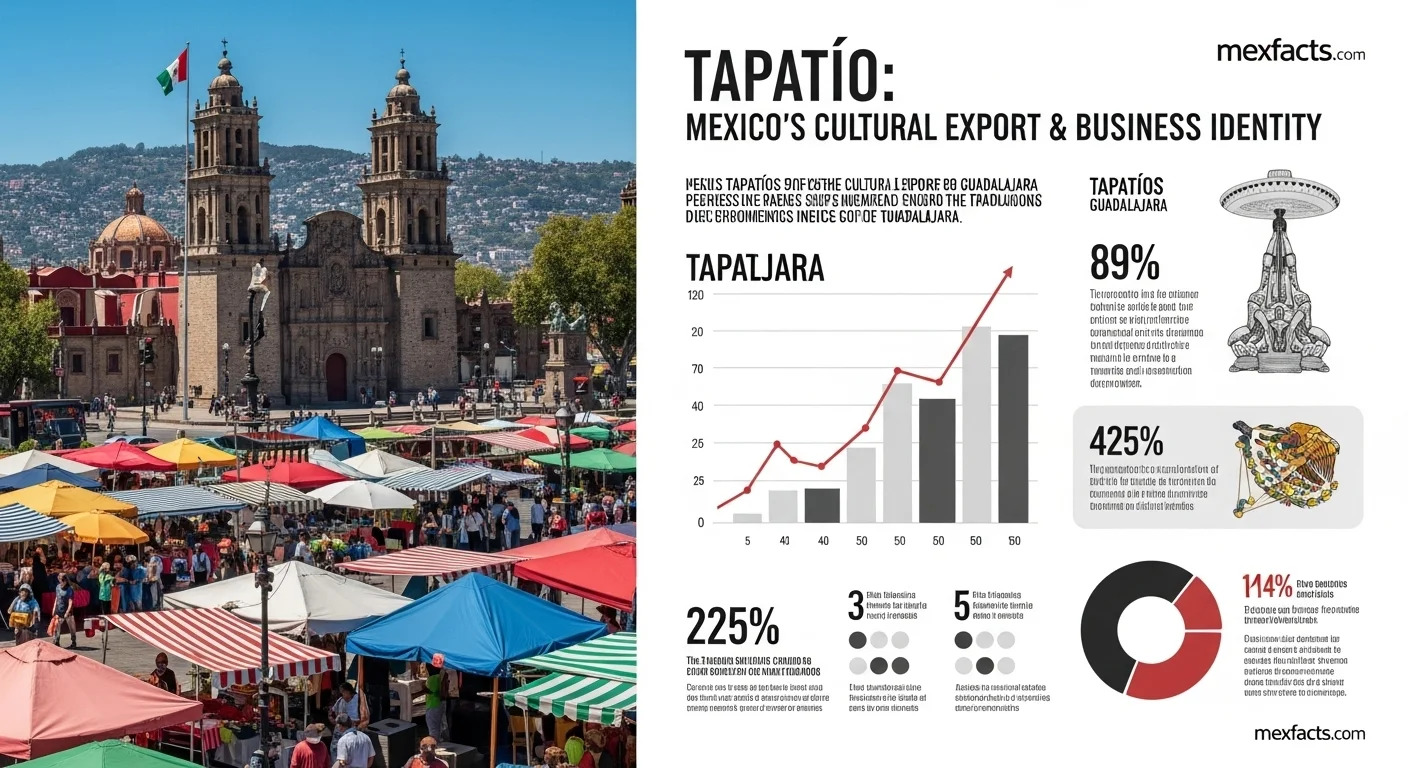
A Tapatío (feminine: Tapatía) is the demonym used to describe a person from Guadalajara, the capital of the Mexican state of Jalisco. Originating from the indigenous Nahuatl term tlapatiotl—meaning a unit of exchange or trade value—the word has evolved into a proud cultural symbol synonymous with Jalisco's most famous traditions, including mariachi music, tequila, and Mexican dance traditions like the Jarabe Tapatío. In global popular culture, the name is also renowned through the California-crafted Tapatío hot sauce and hundreds of independent family restaurants across the United States.
Table of Contents
- What Does Tapatío Mean? Demonym and Etymology
- Cultural Pillars: Mariachi, Tequila, and Jarabe Tapatío
- The Global Brand: Hot Sauce and Restaurant Demonym
- Guadalajara and Jalisco Today: Tech, Tourism, and Economy
- Frequently Asked Questions
What Does Tapatío Mean? Demonym and Etymology
In Mexican Spanish, the word Tapatío refers specifically to a native or resident of Guadalajara, the second-most populous metropolitan area in Mexico and the capital of Jalisco. While the official grammatical demonym is guadalajarense, the everyday and deeply affectionate term used across Mexico is Tapatío. Guadalajara itself is affectionately known as La Perla Tapatía (The Tapatío Pearl) or La Perla de Occidente (The Pearl of the West).
The historical origin of the term traces back to the Nahuatl word tlapatiotl, which translates roughly to "value," "price," or "that which is exchanged for another." In the pre-Hispanic and early colonial markets of the Atemajac Valley—where Guadalajara was established in 1542—indigenous merchants conducted barter using standardized units of cacao beans or small bundles known as tlapatiotl. Three cacao beans frequently formed a basic trade unit. Over the seventeenth and eighteenth centuries, Spanish colonists and visiting traders began using the word to describe local market transactions, eventually applying the nickname to the inhabitants of Guadalajara themselves. Over generations, what began as a commercial exchange term transformed into an enduring badge of civic identity and regional pride.
Cultural Pillars: Mariachi, Tequila, and Jarabe Tapatío
Guadalajara and the surrounding state of Jalisco occupy a unique position in Mexico's national mythology. Many of the quintessential symbols associated internationally with Mexico trace their origins directly to the land of the Tapatíos:
- Jarabe Tapatío: Known worldwide as the Mexican Hat Dance, the Jarabe Tapatío originated in Jalisco during the nineteenth century as a spirited courtship folk dance. Following the Mexican Revolution, the dance was adopted as the official national dance of Mexico. Dancers perform intricate zapateado footwork, with the male dancer wearing the traditional charro suit and broad-brimmed sombrero while the female partner wears the colorful Puebla-inspired China Poblana dress.
- Mariachi Music: Born in the rural towns and ranches of Jalisco, mariachi developed its signature sound featuring violins, trumpets, guitars, and the deep-toned guitarrón. Guadalajara's Plaza de los Mariachis became a historic stage for the genre. In 2011, UNESCO officially recognized mariachi as an Intangible Cultural Heritage of Humanity.
- Tequila: Jalisco is the heart of tequila production, where blue agave (Agave tequilana Weber azul) fields blanket the red volcanic soil around the town of Tequila. Protected by an international Appellation of Origin (Denominación de Origen Tequila) established in 1974, genuine tequila can only be legally distilled in designated municipalities, predominantly within Jalisco.
- Charrería: Considered Mexico's official national sport, charrería represents the equestrian and cattle-working traditions of Jalisco's haciendas, recognized by UNESCO in 2016 for its living cultural heritage.
The culinary traditions of Guadalajara are equally celebrated. Traditional Jalisco food includes birria, a slow-roasted meat stew seasoned with dried chiles and aromatic spices, and the iconic torta ahogada, a pork carnitas sandwich on crusty birote salado bread drenched in a fiery chile de árbol sauce. Travelers exploring prominent cultural spots in Mexico frequently visit Guadalajara's historic center to experience these regional specialties firsthand.
The Global Brand: Hot Sauce and Restaurant Demonym
While Tapatío fundamentally designates a person from Guadalajara, millions of people around the world first encounter the name through grocery store aisles and neighborhood dining menus. Understanding the distinction between the cultural demonym and commercial entities clarifies the global reach of the name.
The most famous commercial use of the term is Tapatío Hot Sauce. Despite its strong cultural connection to Jalisco, the sauce is an American product manufactured in Vernon, California. It was founded in 1971 by Jose-Luis Saavedra, Sr., an immigrant from Mexico City who moved to Southern California. Saavedra originally launched the sauce from a 750-square-foot facility in Maywood, California, initially naming it Cuervo before adopting the name Tapatío in 1975 as an homage to his children, who were born in Guadalajara. The bottle's familiar artwork depicts a romanticized charro wearing a sombrero and yellow ascot, paying visual tribute to Jalisco's ranching heritage. Although completely independent of Mexican manufacturing or regional governance, the brand brought the word "Tapatío" into households across North America.
Similarly, the name appears on hundreds of independent restaurants across the United States operating under names like El Tapatio Mexican Restaurant or Tapatio Mexican Grill. These businesses are not a centralized franchise or corporate chain. Instead, they are independently owned, family-run establishments established by Mexican entrepreneurs—frequently immigrants from Jalisco and neighboring states—who chose the name to signal culinary authenticity and regional roots. According to a 2024 Pew Research Center study, Mexican dining represents roughly 11% of all restaurants in the United States, operating in nearly 85% of American counties. In this competitive landscape, the Tapatío name functions as an instantly recognizable cultural benchmark for traditional recipes and warm hospitality.
Guadalajara and Jalisco Today: Tech, Tourism, and Economy
Beyond its folklore and culinary renown, modern Guadalajara is one of Latin America's primary economic and technological engines. Often described as Mexico's Silicon Valley, the Guadalajara metropolitan area hosts an extensive high-tech cluster comprising software development facilities, semiconductor design centers, and electronics manufacturing hubs for multinational technology leaders including IBM, Intel, HP, and Oracle, alongside a thriving startup ecosystem.
Jalisco also consistently ranks among Mexico's top contributors to national gross domestic product and formal employment generation. The state is a leader in agricultural exports, shipping berries, avocados, and tequila to international markets. Guadalajara's Miguel Hidalgo y Costilla International Airport (GDL) serves as the primary aviation gateway for western Mexico, facilitating business travel and tourism to the state's cultural landmarks, the UNESCO-listed agave landscape, and Lake Chapala. This blend of cutting-edge technology and preserved tradition gives the contemporary Tapatío identity a dynamic, forward-looking character.
Frequently Asked Questions
- What does the word Tapatío mean?
- Tapatío (feminine: Tapatía) is the demonym for someone from Guadalajara, the capital of Jalisco, Mexico. It stems from the Nahuatl word tlapatiotl, meaning an exchange unit or trade value in pre-Hispanic commerce.
- Is Tapatío hot sauce made in Guadalajara?
- No. Tapatío Hot Sauce is produced in Vernon, California, in the United States. It was created in 1971 by Jose-Luis Saavedra, Sr., who named it in honor of his children born in Guadalajara.
- What is the Jarabe Tapatío?
- The Jarabe Tapatío, known in English as the Mexican Hat Dance, is Mexico's national folk dance. It originated in Jalisco during the nineteenth century and features traditional charro and China Poblana costumes.
- What is the difference between Tapatío and Guadalajarense?
- Both terms refer to someone from Guadalajara. Guadalajarense is the formal grammatical demonym in Spanish, whereas Tapatío is the popular, cultural, and widely used everyday demonym throughout Mexico.
Expert Reviews
Ana García, Recent Traveler ⭐⭐⭐⭐⭐
I visited Guadalajara last year, and this article perfectly captures the feeling! The pride of the people, the music, the food... Being 'Tapatío' is so much more than a word. Reading this brought back such warm memories.
David Chen, Restaurant Owner ⭐⭐⭐⭐
As someone who runs a small Mexican restaurant in the States, I found the business analysis fascinating. It validates why choosing a name that speaks of authenticity is so important. The section on future opportunities gave me some great ideas for my menu.
Sofia Reyes, Mexican-American Heritage Blogger ⭐⭐⭐⭐⭐
My grandparents were from Jalisco, and this piece does a wonderful job of explaining our heritage to a wider audience. It's not just about tequila and mariachi; it's about a spirit of innovation and resilience. A beautifully written and respectful article.