
Cancun & Tulum: The Heartbeat of the Mexican Caribbean

Imagine a coastline where two worlds don't just coexist—they thrive together. That's the magic of the Cancún-Tulum corridor in the Riviera Maya. I've walked these beaches for decades, watching them transform. On one end, you have Cancún, a vibrant city that was literally dreamed up to be a paradise of sun-soaked luxury and non-stop energy. Travel south, and the vibe shifts. You feel it in the air. Tulum emerges, a soulful, bohemian retreat where ancient Mayan ruins watch over eco-chic hotels and wellness is a way of life. This strip of paradise is more than just Mexico's top tourist spot; it's a powerful economic engine and a hotspot for global investors drawn by its undeniable allure. For travelers, it offers everything from sprawling all-inclusive resorts to intimate jungle cabanas. This article is my personal guide to understanding it all: the real numbers, the safety on the ground, the best seasons to visit, and what the future holds for this incredible piece of Mexico.
- A Tale of Two Worlds: The Soul of Cancún and Tulum
- A Global Powerhouse: Why the World Watches the Riviera Maya
- Your Perfect Trip: Navigating Packages, Safety, and Seasons
What Makes the Cancún-Tulum Corridor So Special?
When people talk about the Mexican Caribbean, they're often picturing the sun-drenched coast that runs between Cancún and Tulum. This stretch, the heart of the Riviera Maya in Quintana Roo, is one of the most powerful tourism magnets on Earth. But to truly get it, you have to understand that it’s a story of two very different, yet perfectly connected, destinations. This corridor isn't just a place; it's a masterfully built economic force, a cultural icon, and a lesson in the explosive growth of travel. Its importance goes far beyond vacations; it's a vital pillar of the Mexican economy and a major hub for international business.
At the northern tip lies Cancún. I remember when it was just an idea. It wasn't discovered; it was designed. In the late 1960s, Mexico's tourism fund, FONATUR, picked this deserted strip of sand to build a world-class resort from the ground up. The mission was clear: bring in foreign currency, create jobs, and lift up the region. The result was nothing short of spectacular. Cancún quickly became a global brand, known for its grand hotels, electric nightlife, and easy access. Its Hotel Zone, a 23-kilometer island, is a showcase of the world's most famous hospitality names, offering endless options for tulum cancun all inclusive resorts that cater to a steady flow of travelers, especially from North America. By the 90s, the blueprint was a proven success, and Cancún was cemented as the gateway to this turquoise paradise.
But travel about 130 kilometers south, and the feeling changes completely. You arrive in Tulum. Its rise was more organic, whispered among backpackers and adventurers drawn to its breathtaking cliffside Mayan ruins and a more relaxed, bohemian spirit. For years, it was the anti-Cancún. Instead of high-rises, you found rustic cabanas on the beach. Instead of mega-clubs, there were full-moon gatherings and yoga retreats. That original soul has since blossomed into a world-famous 'boho-chic' luxury brand. Today, Tulum is a powerhouse in its own right, attracting a sophisticated, high-end crowd. Its hotel zone is a beautifully curated collection of boutique hotels, wellness sanctuaries, and world-class restaurants that champion sustainability and design. While you can find all-inclusive deals, Tulum's market is about unique experiences that blend luxury with nature.
A Global Powerhouse of Tourism and Economy
You can't overstate how important the Cancún-Tulum corridor is internationally. Quintana Roo, powered almost entirely by this coast, is the number one destination for international tourists in Mexico, welcoming over 44% of all foreign visitors. In 2024, the state generated a historic $20 billion in tourism revenue, a figure built on its more than 135,000 hotel rooms. This is a huge slice of Mexico's national tourism income, which hit nearly $33 billion that same year. When you hear that tourism contributes 8.6% to Mexico's national GDP, remember that Quintana Roo is doing much of the heavy lifting. This region is a massive job creator, not just in hotels and restaurants, but in everything from construction to transportation, shaping the lives of millions.
This success is fueled by a constant river of visitors. In 2024, Mexico welcomed about 45 million international tourists, making it the 7th most visited country in the world. A massive number of these travelers fly into Cancún International Airport, which has long been one of the busiest in Latin America. The appeal is global, drawing huge crowds from the United States and Canada, along with a growing number of visitors from Europe and South America.
Your Perfect Trip: Navigating Packages, Safety, and Seasons
For many travelers, getting to this paradise is wonderfully simple thanks to cancun tulum packages. These bundles, offered by airlines, travel agents, and the resorts themselves, often include flights, lodging, and sometimes tours and meals. They come in all shapes and sizes, from family-friendly all-inclusive stays in Cancún to luxurious wellness retreats in Tulum. They take the stress out of planning and often save you money, making the region accessible to everyone.
A question I hear all the time is, is cancun or tulum safer? It's a fair and important question. Both are major tourist destinations with dedicated security, including tourist police and the National Guard in key areas. The truth is, the vast majority of visitors have perfectly safe and wonderful vacations. But it's smart to know the differences. Cancún is a bigger city, so its overall crime index can be higher than Tulum's (some 2025 data shows 55.43 vs. 41.67). In Cancún, you might need to be aware of scams or muggings, especially if you wander far from the heavily patrolled Hotel Zone. Tulum, while having a lower general crime index, has faced challenges with its explosive growth, including cartel-related violence. It's crucial to know that these incidents are almost never targeted at tourists, but they can happen in public spaces. Both UK and US travel advisories recommend using caution, especially at night in the downtown areas of both cities, but they don't advise against visiting the tourist zones. Ultimately, the answer to is tulum or cancun safer comes down to your own actions. Stick to well-lit, populated tourist areas, be aware of your surroundings, and avoid risky situations, and you will dramatically increase your safety in either place. For some, the self-contained nature of Cancún's large resorts provides a stronger feeling of security.
Finally, choosing the best time to visit cancun and tulum is the secret to crafting the perfect trip. The peak season, and for good reason, is from December to April. The weather is simply glorious—endless sun, low humidity, and pleasant temperatures perfect for beach days or exploring Mayan ruins. It's also the busiest and priciest time. A heads-up: the 'Spring Break' rush from mid-March to early April brings a massive wave of students, especially to Cancún. The shoulder seasons, May and November, are my personal favorites. You get a great mix of beautiful weather, fewer crowds, and better prices. The summer months, June to August, are hotter and more humid, kicking off the rainy season. Rain usually comes in short, powerful afternoon bursts, leaving the rest of the day sunny. This is the 'low season,' so you'll find the best deals on flights and hotels. However, this period is also the Atlantic hurricane season (June to November), with the highest storm risk in September and October. A direct hit is rare, but it’s something to keep in mind. This is also when sargassum seaweed can be at its peak, an environmental challenge the region is actively managing.
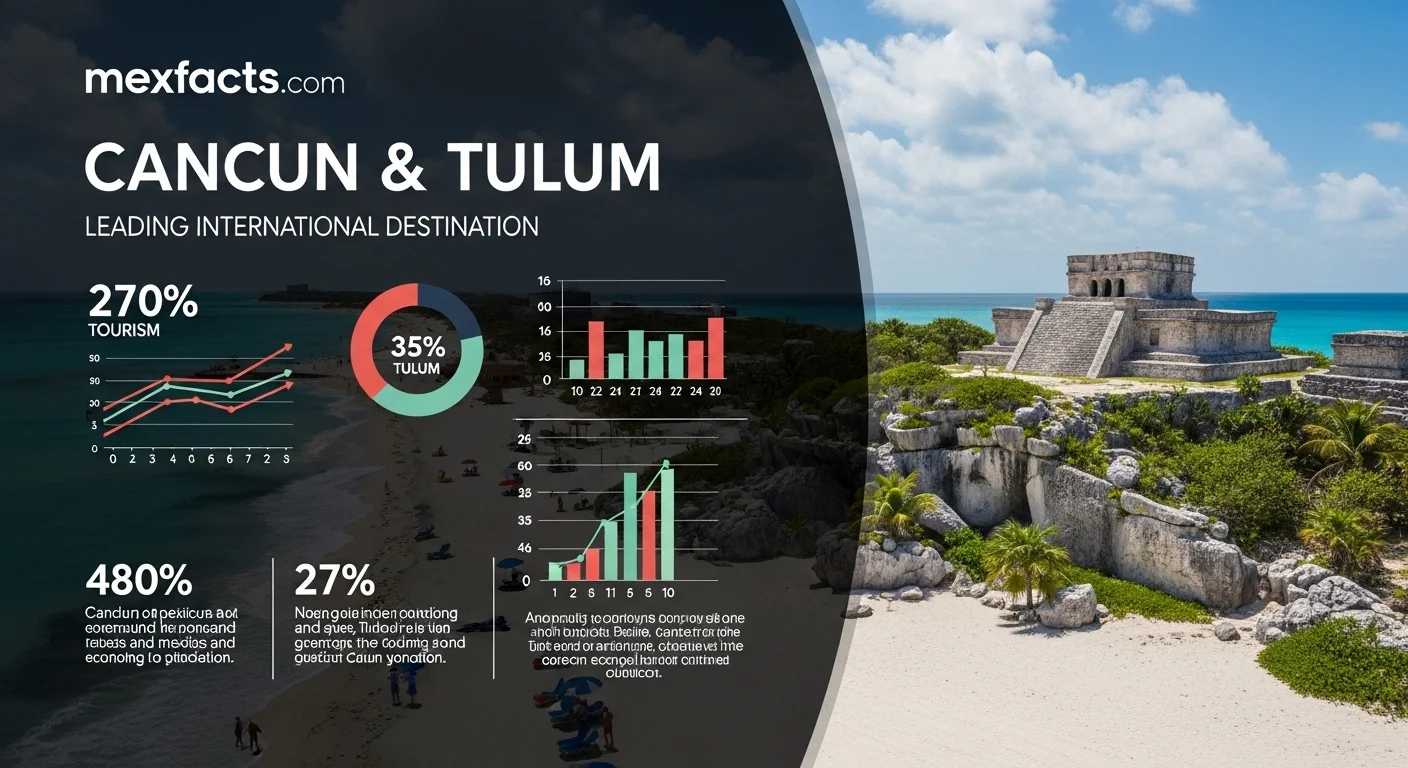
The Numbers Behind the Magic: A Look at the Data
When you dig into the numbers, the story of the Cancún-Tulum corridor becomes even more impressive. The data reveals a region of powerful growth and immense economic contribution, but also one facing modern challenges. Understanding these stats helps everyone, from investors to vacationers, see the full picture of this dynamic coast.
Visitor Arrivals and Economic Impact: The Core Numbers
Quintana Roo is the undisputed king of Mexican tourism. In 2024, the state welcomed an incredible 21 million tourists, with over 32 million passengers passing through its airports. That wave of visitors brought in over $20 billion in tourism revenue. To put that into context, Mexico as a country earned about $32.96 billion from international tourism in 2024. This means Quintana Roo, on its own, was responsible for a huge portion of the nation's entire foreign tourism income. The country's total international arrivals hit 45.04 million in 2024, finally surpassing pre-pandemic levels and showing a healthy 7.4% increase from the year before.
The main gateways, of course, are the airports. Cancún International Airport (CUN) has always been the workhorse, handling most of the 44% of international tourists who choose Quintana Roo. But the game is changing. The opening of the new Tulum International Airport (TQO), also known as Felipe Carrillo Puerto International Airport, on December 1, 2023, is a massive development. I was there shortly after it opened, and the sense of possibility was palpable. Built to handle 5.5 million passengers a year, it’s already beating expectations, welcoming its one-millionth passenger in under a year. This new hub drastically cuts down travel time to Tulum, Akumal, and even further south to places like Bacalar, making the entire region feel more accessible.
So, who is visiting? The crowd is overwhelmingly from North America. In the first part of 2025, visitors from the United States made up 4.9 million air arrivals, with Canada following at 1.4 million. While these are national numbers, they perfectly reflect what you see on the beaches of Cancún and Tulum. There's a big push to attract more visitors from Europe and Latin America, but a recent trend to watch is a slight dip in how much each tourist spends, even as arrival numbers go up. This could point to a shift toward more budget-conscious travel, which will surely influence the market for both tulum cancun all inclusive resorts and other types of stays.
Hospitality and Real Estate: A Booming Infrastructure
The backbone of this coast is its vast hotel infrastructure. Quintana Roo has over 135,000 hotel rooms, and that number is always climbing. In Cancún, the big all-inclusive resort is still king, lining the famous Hotel Zone and offering that secure, self-contained vacation experience that so many families and first-timers love.
In Tulum, the market is more textured. You’ll find some all-inclusive resorts, but the area is famous for its boutique hotels, luxury villas, and eco-chic condos. The real estate scene in Tulum has been on fire, driven by its global brand. This has led to some growing pains. By late 2024, some were saying the short-term rental market was getting flooded with generic condos, which squeezed rental income for some owners. The properties that are still doing exceptionally well are the unique, high-end luxury villas that offer something special. Despite this, the long-term outlook is bright, with property values in Tulum appreciating up to 15% annually and vacation rental occupancy often hitting 80%. Key areas like Aldea Zamá and La Veleta continue to draw major foreign investment.
Across the entire corridor, real estate is a hot topic. In Cancún, property values were expected to rise by 14% from 2024 to 2025, driven by hotspots like the Hotel Zone and Puerto Cancun. For foreigners, buying property is safe and straightforward through a legal structure called a *fideicomiso* (a bank trust), which ensures secure ownership.
The Safety Debate: A Statistical Perspective on 'Is Cancun or Tulum Safer?'
The question of is cancun or tulum safer (or the other way around, is tulum or cancun safer) is always on travelers' minds. The best way to answer it is to look at the data in context. As I mentioned, crime indexes often show Tulum as having a lower overall crime rate than the much larger city of Cancún. For example, one 2024 report showed a crime index of 55.43 for Cancún vs. 36.48 for Tulum. But data can be complex; another report noted Tulum was leading Quintana Roo in crime rates per 100,000 people in 2023.
What matters more is the *type* of crime. In Cancún, a tourist is statistically more likely to worry about common city issues like muggings or scams, especially away from the heavily secured Hotel Zone. In Tulum, while petty crime exists, the headlines have been about sporadic bursts of violence related to drug trafficking rivalries. Authorities have responded with more patrols and checkpoints in the tourist zones of both cities. The consensus from safety experts is that for the average tourist who sticks to the main areas, avoids illegal activities, and stays aware, both places are relatively safe. The perception of safety is often higher in Cancún's large, contained resorts, which some travelers prefer.
Seasonal Trends and Environmental Data: The Best Time to Visit and the Sargassum Challenge
Choosing the best time to visit cancun and tulum means balancing weather, crowds, price, and nature. The dry season from December to April is consistently called the best, with perfect weather—think average temperatures of 24°C-30°C (75°F-86°F) and low humidity. March is often the driest month of all.
The wet season runs from about May to November. It gets hotter and more humid, with temperatures hitting the mid-30s Celsius (90s Fahrenheit). Afternoon showers are common but usually pass quickly. The main things to consider during this time are the hurricane season (peaking August-October) and the sargassum seaweed. Sargassum is that brown, floating algae that, while good for the ocean, can be a nuisance when it washes up on beaches in huge amounts, covering the sand and creating a strong smell as it decomposes.
The sargassum season usually aligns with the warmer months, starting around March or April and peaking between May and September. Forecasts for 2025 suggested another intense season. I've seen the local response firsthand, and it's impressive. The government and hotels work tirelessly, using floating sea barriers, special collection boats, and daily beach-cleaning crews. Their effectiveness can vary day by day, so I always tell people to check real-time sargassum reports online before and during their trip. This ongoing challenge is a powerful reminder of the delicate balance between mass tourism and protecting the natural beauty that brings us all here in the first place.
The Future is Now: What's Next for the Riviera Maya?
The future of the Cancún-Tulum corridor is unfolding right now, shaped by huge infrastructure projects, changing travel tastes, and critical environmental questions. The region is at a fascinating tipping point, ready for a new wave of growth while also having to manage the pressures of its own success. For investors, businesses, and curious travelers, understanding this path forward is the key to finding opportunities.
The Game Changers: Tren Maya and Tulum Airport
Two massive projects are set to completely redefine the experience of visiting the Yucatán Peninsula: the Tren Maya and the new Tulum Airport. The Tulum Airport (TQO), which opened in December 2023, is already making a huge difference. By giving the southern Riviera Maya its own direct gateway, it cuts out the old 2-3 hour drive from Cancún, opening up Tulum and beyond to a whole new world of travelers. This easy access is set to boost tourism, create thousands of jobs, and spark economic growth in everything from hotels to local shops. The airport is projected to handle 5.5 million passengers annually, cementing Tulum's place as a standalone global destination.
Working hand-in-hand with the airport is the Tren Maya, one of Mexico's most ambitious projects in decades. I see it as more than a railway; it's a ribbon of steel connecting ancient worlds with modern ambitions. This 1,554-kilometer loop links major tourist hubs like Cancún, Playa del Carmen, and Tulum with incredible archaeological sites like Chichén Itzá and Palenque. For travelers, it offers a new level of freedom, making it easy to create amazing cancun tulum packages that encourage longer stays and deeper exploration of the region. Economically, the train is expected to generate billions, move goods more efficiently, create jobs, and fuel development all along its 19 stations. This synergy between the new airport and the train is already sparking a real estate boom, increasing property values in areas near the new infrastructure. There’s even serious talk of extending the train network into Belize, which would further solidify the region as an international travel hub.
Investment and Business Opportunities on the Horizon
This perfect storm of new infrastructure and high demand for travel is creating fertile ground for investment. The opportunities are rich and go far beyond just building another hotel.
- Real Estate Development: The hunger for property here is still strong. In Tulum, while the standard condo market might be getting crowded, there's a growing appetite for luxury villas, unique high-end homes, and residences in thoughtfully planned, sustainable communities. In Cancún, premium areas like Puerto Cancun remain a great bet. The Tren Maya is also opening up new investment frontiers in towns along its route that were once off the beaten path.
- Boutique and Experiential Hospitality: While tulum cancun all inclusive resorts will always be a popular and profitable choice, especially in Cancún, today's traveler often craves something more. They want unique, authentic experiences. This opens the door for boutique hotels, wellness and yoga retreats, luxury glamping sites, and sustainable eco-lodges that cater to specific passions. The demand for top-tier vacation rental management is also set to explode.
- Sustainable and Eco-Tourism: People are more conscious than ever about their travel footprint. This creates a huge market for businesses focused on sustainable tourism. Think eco-friendly tours, conservation projects, farm-to-table experiences, bird-watching trips, and tours centered on the rich local Mayan culture. Businesses that can genuinely offer a low-impact, high-value experience will find a very receptive audience.
- Technology and Services: A growing population of residents and tourists needs a strong support system. This means opportunities for tech startups focused on travel—like better booking platforms or visitor experience apps—as well as essential services like high-end transportation, gourmet food supply chains, and specialized equipment rentals.
Future Challenges: Sustainability and Safety
The bright future of the Cancún-Tulum corridor comes with serious responsibilities. The biggest challenge is finding a healthy balance between explosive growth and environmental protection. The region's fragile ecosystem—home to the world's second-largest barrier reef, countless cenotes, and vital mangrove forests—is under incredible pressure. Water pollution, coastal erosion, and habitat loss are real concerns. The sargassum problem, likely worsened by warming oceans, is a constant environmental and economic test that needs creative, long-term solutions, like turning the seaweed into biofuel or fertilizer. The future of this paradise depends on a serious commitment to sustainable development.
Security, wrapped up in that common question of is cancun or tulum safer, will also be an ongoing challenge. As the region's economy grows, it can attract criminal elements. Keeping both residents and tourists safe will require continuous investment in security and clear, honest communication from authorities. Here, perception is just as important as reality.
Long-Term Outlook
Even with these challenges, the outlook for the Cancún-Tulum corridor is overwhelmingly positive. Mexico's tourism sector is projected to keep growing, with visitor numbers climbing steadily through 2025 and 2026. The new infrastructure is unlocking a new era of growth, changing how people travel here. I expect we'll see an even wider range of visitors, from backpackers using the train to the ultra-wealthy flying into Tulum's new airport. The definition of the best time to visit cancun and tulum might also change as the region develops more year-round attractions. The key to lasting success will be managing this growth with wisdom and care, ensuring the natural and cultural treasures that made this coast famous are protected for generations to come. For anyone looking to invest their time or money, the Cancún-Tulum corridor remains one of the most exciting and opportunity-rich places on Earth. For more great analysis, resources like Mexico Business News are invaluable.
Expert Reviews
Amelia Clarke, First-time Visitor ⭐⭐⭐⭐⭐
This guide was a lifesaver! We were debating between Cancún and Tulum for our family vacation. The breakdown of the 'vibe' of each place was spot on and helped us choose a fantastic all-inclusive in Cancún that was perfect for the kids. The safety advice also gave us peace of mind. Thank you!
David Chen, Real Estate Investor ⭐⭐⭐⭐⭐
As someone looking at investment opportunities, this article provided the clear, data-driven perspective I needed. The insights on the new Tulum airport and the Tren Maya's impact were particularly valuable. It’s rare to find content that is both well-researched and easy to understand. Highly recommend.
Sofia Rossi, European Traveler ⭐⭐⭐⭐
I used this article to plan my multi-week trip through the Yucatán. The advice on the best time to visit was perfect—I went in late April and it was beautiful! The discussion on sargassum was also very honest and helped me set my expectations. It would be great to see even more on transportation between the smaller towns.