
Mexico's 'Cruz' Destinations: Guide to Veracruz, Salina Cruz, Huatulco & La Cruz

In Mexican geography, the designation Cruz ("Cross") appears across several economically vital and culturally distinct coastal hubs. While sharing a colonial naming origin rooted in Spanish religious foundations, these destinations serve completely different roles within Mexico's maritime, industrial, and tourism landscapes. This comprehensive guide analyzes the four primary "Cruz" coastal centers: Heroica Veracruz, Mexico's premier historic Gulf Coast commercial port; Salina Cruz, the Pacific industrial terminus of the Interoceanic Corridor of the Isthmus of Tehuantepec; Santa Cruz Huatulco, a master-planned eco-tourism haven in southern Oaxaca; and La Cruz de Huanacaxtle, an upscale nautical enclave on Nayarit's Banderas Bay. Review their distinct safety profiles, real estate dynamics, logistical infrastructure, and strategic economic importance.
Table of Contents
- What Does 'Cruz' Signify in Mexican Geography?
- Heroica Veracruz: Gulf Coast Commercial Anchor and Cultural Hub
- Salina Cruz: Pacific Industrial Terminal of the Interoceanic Corridor
- Santa Cruz Huatulco: Master-Planned Eco-Tourism and Marina Bay
- La Cruz de Huanacaxtle: Nautical Living in Riviera Nayarit
- Side-by-Side Comparison: Safety, Economy, and Travel Profile
- Real Estate and Economic Dynamics Across the 'Cruz' Markets
- Transportation and Connectivity
- Frequently Asked Questions
What Does 'Cruz' Signify in Mexican Geography?
The frequent occurrence of the word Cruz (Cross) across Mexican municipalities reflects centuries of colonial maritime and municipal history. Spanish expeditions and colonial authorities routinely christened natural harbors, settlements, and river mouths after religious feasts or symbols, most notably the Holy Cross (Santa Cruz or Vera Cruz). To understand how these names took root across coastal and interior territories, examining the broader tapestry of Mexican history and culture reveals how colonial administrative centers evolved into the modern trade and tourism anchors functioning today.
Far from sharing identical lifestyles or economic functions, Mexico's major "Cruz" locations occupy distinct geographic zones across three separate states (Veracruz, Oaxaca, and Nayarit) and two oceans. While travelers or prospective real estate investors often encounter these names in travel planning or logistics news, each locality requires individual evaluation regarding municipal infrastructure, security conditions, and commercial viability.
Heroica Veracruz: Gulf Coast Commercial Anchor and Cultural Hub
Located on the central coast of the Gulf of Mexico, the city and municipality of Heroica Veracruz is the oldest European-founded city on the continental Americas, established by Hernán Cortés in 1519 as Villa Rica de la Vera Cruz. Designated "Heroica" four times over for its defense during foreign military interventions, the modern Veracruz metropolitan area (encompassing the adjacent municipality of Boca del Río) serves as the primary maritime gateway for central Mexico and Mexico City.
Economically, the Port of Veracruz represents a commercial powerhouse managed by the state port administration (ASIPONA Veracruz). Its multi-billion-peso modern expansion into the Bahía Norte has significantly enlarged container handling, automotive export facilities, and petrochemical bulk terminals. Cultural life centers around the historic Zócalo, where open-air performances of danzón and son jarocho thrive alongside historic institutions like the Gran Café de La Parroquia and the 16th-century fortress of San Juan de Ulúa.
From a security perspective, visitors and commercial travelers frequently evaluate the safety climate of the city. While rural and interior districts of Veracruz State have experienced security operations, the Veracruz-Boca del Río metropolitan zone maintains dedicated municipal, state, and naval police patrols across its waterfront (Malecón), hotel districts, and business zones. Standard urban safety precautions apply: utilizing licensed taxi services or ridesharing apps, staying within established commercial and tourist corridors, and avoiding unlit peripheral neighborhoods after dark.
Salina Cruz: Pacific Industrial Terminal of the Interoceanic Corridor
Situated on the Gulf of Tehuantepec along Oaxaca's southern Pacific coast, Salina Cruz is fundamentally an industrial port city. Historically recognized for the Antonio Dovalí Jaime oil refinery operated by state petroleum company PEMEX, the city is experiencing a major economic transformation as the Pacific anchor of the Corredor Interoceánico del Istmo de Tehuantepec (CIIT).
The Interoceanic Corridor functions as an intermodal logistics land-bridge linking Salina Cruz to the Gulf of Mexico port of Coatzacoalcos across Mexico's narrowest continental waist. Through modernized freight and passenger rail lines (Línea Z), upgraded highway arteries, and designated industrial development poles (Polos de Desarrollo para el Bienestar, or PODEBI), Salina Cruz is engineered to offer global logistics operators an alternative cargo route to the Panama Canal for trade between Pacific manufacturing hubs and the Atlantic basin. Unlike leisure-oriented destinations, commercial and industrial activity drives municipal life here, although dedicated surf travelers frequent nearby outer breaks such as Punta Conejo and Playa Brasil.
Regarding safety and operational risk, the Isthmus of Tehuantepec region has historically experienced local agrarian disputes, occasional transport blockades, and localized crime. To protect commercial traffic and strategic infrastructure, the federal government placed the corridor and port under the direct command of the Mexican Navy (SEMAR), ensuring constant military patrolling along key transit routes and port facilities. Investors and logistics firms operating in Salina Cruz typically integrate regional route planning and supply-chain security protocols into their commercial workflows.
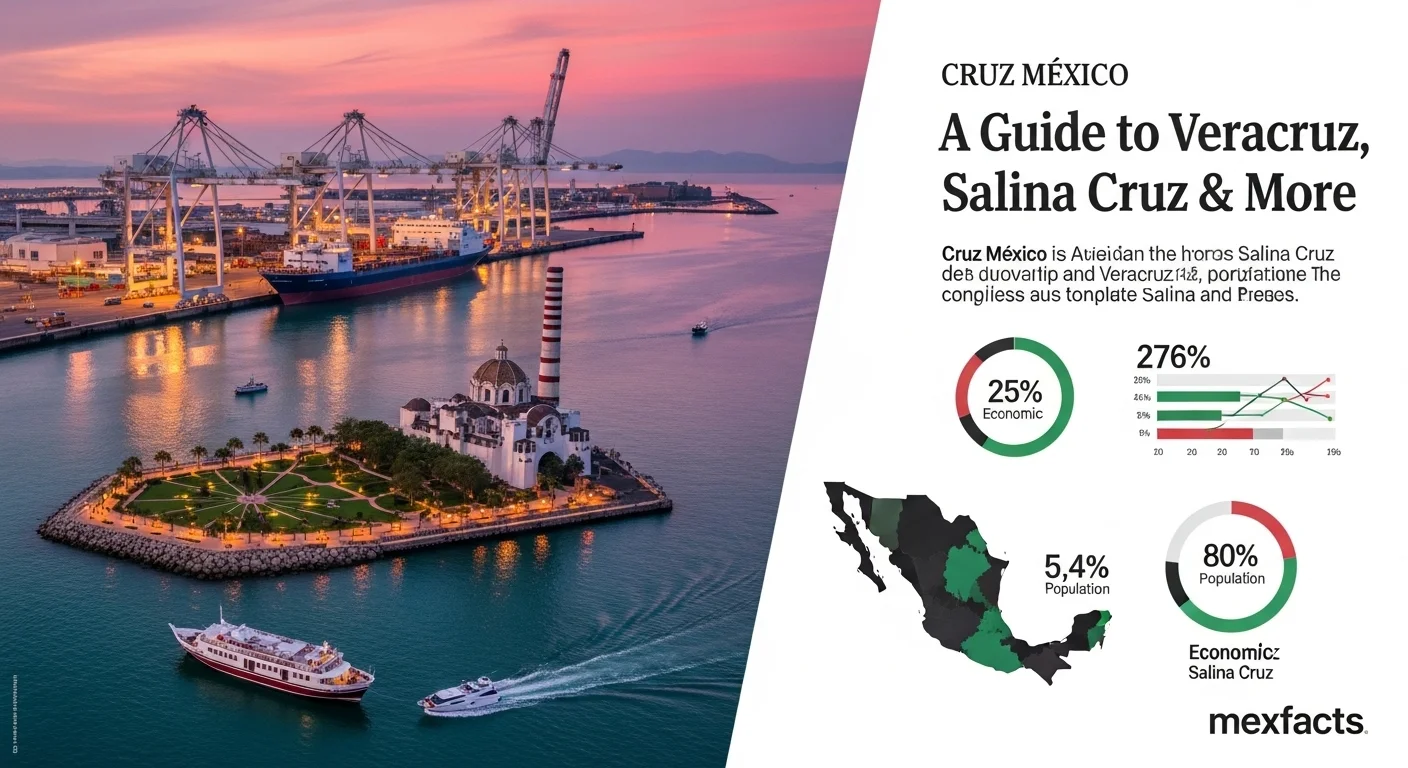
Santa Cruz Huatulco: Master-Planned Eco-Tourism and Marina Bay
Located approximately 140 kilometers west of Salina Cruz along the Oaxacan Pacific coastline, Santa Cruz Huatulco presents a complete contrast in environment, urban design, and daily pace. Santa Cruz is the primary urban bay and marina center of the nine bays comprising the Bahías de Huatulco, a master-planned tourist resort developed by Mexico's National Fund for Tourism Promotion (FONATUR) beginning in the mid-1980s.
Designed intentionally as an ecologically sensitive alternative to high-density Caribbean mega-resorts like Cancún, Huatulco incorporates strict zoning regulations that mandate low-rise architectural heights, expansive green belts, and state-of-the-art municipal wastewater treatment. Santa Cruz Bay serves as the nautical heart of the community, featuring a cruise ship pier (Muelle de Cruceros), a modern marina accommodating pleasure craft and sportfishing charters, and direct access to protected marine zones in Huatulco National Park (Parque Nacional Huatulco). The destination holds international environmental certifications, including EarthCheck and Green Globe distinctions, reflecting its municipal waste management and renewable energy initiatives.
In terms of security, Santa Cruz Huatulco consistently ranks among the safest coastal municipalities in Mexico. Violent crime rates are minimal, and the U.S. Department of State Travel Advisory places no employee travel restrictions on the Huatulco tourist district. The community is widely recognized as a secure, tranquil environment popular with international retirees, winter residents (snowbirds), and eco-conscious travelers seeking uncrowded Pacific beaches.
La Cruz de Huanacaxtle: Nautical Living in Riviera Nayarit
Positioned along the northern shore of Banderas Bay in the state of Nayarit, La Cruz de Huanacaxtle—commonly referred to simply as "La Cruz"—has transformed from an unassuming fishing village into an upscale nautical lifestyle community. Located roughly 30 minutes northwest of Puerto Vallarta's international airport, the town balances traditional coastal culture with luxury maritime infrastructure.
The centerpiece of the community is the Marina Riviera Nayarit, a full-service marina offering more than 350 slips capable of servicing recreational boats, catamarans, and mega-yachts up to 400 feet. The development of the marina spurred a wave of boutique dining, art galleries, and modern residential complexes, while the traditional town center retains its cobblestone streets, local seafood cooperatives (Mercado del Mar), and a vibrant Sunday artisan market. Unlike high-energy resort zones, La Cruz maintains a relaxed, boater-friendly ambiance favored by international cruisers and long-term expatriates.
Safety in La Cruz de Huanacaxtle is exceptionally stable. The municipal police force, supplemented by tourist police throughout the Banderas Bay corridor, maintains active security in residential areas and the marina perimeter. Expatriate residents and international visitors experience a secure, tightly knit community with very low instances of petty or violent crime.
Side-by-Side Comparison: Safety, Economy, and Travel Profile
The following comparative overview clarifies the core operational, security, and travel characteristics distinguishing Mexico's four primary "Cruz" hubs:
| Destination | State & Coast | Primary Economic Engine | Safety & Advisory Context | Primary Visitor Profile |
|---|---|---|---|---|
| Heroica Veracruz | Veracruz (Gulf of Mexico) | Commercial maritime shipping, industrial logistics, domestic tourism | Urban caution; safe within Boca del Río & Malecón commercial zones | Business travelers, maritime professionals, cultural & culinary tourists |
| Salina Cruz | Oaxaca (Pacific Ocean) | Refining (PEMEX), Interoceanic Corridor rail logistics, trade | Industrial port security; direct naval protection (SEMAR) along corridor | Logistics investors, engineers, trade personnel, dedicated surfers |
| Santa Cruz Huatulco | Oaxaca (Pacific Ocean) | Sustainable tourism, marine charters, cruise arrivals, retirement services | Very safe; low municipal crime, unrestricted travel advisory zone | Eco-tourists, retirees, sportfishing enthusiasts, families |
| La Cruz de Huanacaxtle | Nayarit (Pacific Ocean / Banderas Bay) | Marina services, luxury residential real estate, seasonal tourism | Very safe; upscale residential corridor with active tourist policing | Yacht owners, long-term expats, sailing community, luxury vacationers |
Real Estate and Economic Dynamics Across the 'Cruz' Markets
Prospective investors and homebuyers will find four entirely separate real estate ecosystems across these destinations, each governed by distinct economic drivers and zoning frameworks.
La Cruz de Huanacaxtle represents a mature, premium residential property market closely tied to the Banderas Bay luxury corridor and adjacent master-planned enclaves like Punta de Mita. Housing stock includes hillside ocean-view villas, contemporary mid-rise condominium developments overlooking the marina, and gated residential communities. Buyers in La Cruz are primarily North American expatriates and seasonal residents seeking yacht slips, turn-key rental properties, and upscale coastal amenities comparable to Mexico's most exclusive resort destinations.
In contrast, Salina Cruz is an emerging industrial and commercial land market. Residential inventory suitable for international lifestyle buyers is practically nonexistent; instead, transaction activity concentrates on commercial lots, logistics parcels, industrial warehousing, and workforce accommodation near the CIIT development poles. Unlike mature manufacturing zones in Northern Mexico, property acquisition in the Isthmus requires rigorous legal vetting of land tenure, ensuring parcels hold private title (pequeña propiedad) rather than communal agrarian or ejidal status.
Santa Cruz Huatulco provides a stable, master-planned residential market regulated by FONATUR zoning. Real estate inventory spans low-density hillside villas, residential lots in Chahué and Santa Cruz, and low-rise condominium projects oriented toward winter residents and retirees. While historically more affordable than beachfront properties in Puerto Vallarta or Los Cabos, property values in Huatulco have appreciated steadily due to strict supply controls and sustained demand from retirees seeking tranquil environments similar to residential communities in Playa del Carmen or relaxed Pacific towns in Colima.
Heroica Veracruz functions as a conventional metropolitan property market. Residential investment focuses heavily on the modern coastal corridor of Boca del Río, featuring oceanfront high-rises and master-planned residential subdivisions catering to port executives and local professionals. In the historic center, opportunities center on adaptive reuse and the restoration of colonial-era buildings for boutique commercial, retail, or cultural hospitality use.
Transportation and Connectivity
Each destination presents distinct transportation logistics depending on whether travelers arrive by commercial air, sea, or overland transit:
- Veracruz: General Heriberto Jara International Airport (VER) offers frequent commercial flights to Mexico City, Monterrey, Guadalajara, and Houston, Texas. Excellent multi-lane toll highways connect the city directly to Puebla and Mexico City within four to five hours.
- Salina Cruz: Accessible via the newly remodeled Ixtepec Airport (IZT) located 40 kilometers north, with regional flights connecting to Mexico City. The modern Supercarretera Barranca Larga–Ventanilla now connects Oaxaca City to the coast, reducing overland travel times across Oaxaca State. Maritime logistics compare functionally to major Pacific freight terminals like Guaymas San Carlos Sonora, though Salina Cruz focuses primarily on trans-isthmus intermodal rail transit.
- Santa Cruz Huatulco: Served directly by Bahías de Huatulco International Airport (HUX), situated just 20 minutes from Santa Cruz Bay. The airport operates year-round domestic flights to Mexico City and seasonal non-stop international charters to Canada and the United States.
- La Cruz de Huanacaxtle: Conveniently accessed through Licenciado Gustavo Díaz Ordaz International Airport (PVR) in Puerto Vallarta, approximately 25 kilometers to the south, featuring extensive non-stop commercial routes throughout the United States, Canada, and Europe. Highway 200 connects La Cruz smoothly to Bucerías, Punta de Mita, and Sayulita.
Frequently Asked Questions
- Is Veracruz safe for international tourists?
- Yes, provided travelers exercise standard urban precautions. The waterfront (Malecón), historic center, and the modern hotel district of Boca del Río are heavily patrolled by municipal and tourist police. Visitors should avoid poorly illuminated peripheral areas at night and use authorized radio taxis or ridesharing services.
- What is the difference between Salina Cruz and Santa Cruz Huatulco?
- Although both are coastal municipalities in Oaxaca, their purposes are entirely different. Salina Cruz is an industrial port and logistics hub centered on the Interoceanic Corridor and petroleum refining. Santa Cruz Huatulco is a master-planned, eco-certified tourist and residential destination centered on beaches, sailing, and nature conservation.
- Can foreign nationals purchase real estate in La Cruz de Huanacaxtle?
- Yes. Because La Cruz de Huanacaxtle lies within Mexico's restricted coastal zone (within 50 kilometers of the ocean), foreign buyers acquire residential property legally via a fideicomiso (bank trust) or through a Mexican corporation for commercial ventures.
- Is the Interoceanic Corridor operating in Salina Cruz?
- Yes. The modernized railway Line Z linking Salina Cruz on the Pacific to Coatzacoalcos on the Gulf of Mexico has commenced freight and passenger operations, alongside ongoing terminal expansions and the development of surrounding industrial parks.
Expert Reviews
Robert Miller, Real Estate Investor ⭐⭐⭐⭐⭐
As an investor, I was looking at Mexico but felt overwhelmed. This article was a godsend. The clear distinction between the industrial potential of Salina Cruz and the lifestyle market in La Cruz was exactly what I needed. It helped me focus my strategy. Thank you!
Susan Chen, Frequent Traveler ⭐⭐⭐⭐
I've always been curious about Oaxaca beyond the main city. The write-up on Huatulco was so reassuring. The author’s personal take on safety made me feel much more confident about planning a family trip there. It’s great to get an honest, on-the-ground perspective.
Frank Davis, Prospective Expat ⭐⭐⭐⭐⭐
Fantastic and comprehensive guide! My wife and I are considering retiring in Mexico, and the detailed breakdown of safety and real estate in La Cruz de Huanacaxtle felt like it was written just for us. The human touch and cultural insights make all the difference. We feel much more informed now.