
Isla Mujeres and Holbox Resorts: Mexican Island Vacation Guide

Isla Mujeres and Isla Holbox represent two distinct island resort experiences off Mexico's Yucatán Peninsula in the state of Quintana Roo. Isla Mujeres offers established all-inclusive beachfront resorts, calm turquoise waters at Playa Norte, and quick ferry access from Cancún. In contrast, Isla Holbox emphasizes low-impact eco-boutique retreats, car-free sandy streets, and direct immersion in the Yum Balam Flora and Fauna Protection Area. This comprehensive guide compares resort accommodations, transportation logistics, seasonal factors, and environmental considerations to help travelers select the ideal Mexican island escape.
Table of Contents
- Comparing Isla Mujeres and Isla Holbox Resorts
- Isla Mujeres: Full-Service and All-Inclusive Resorts
- Family-Friendly and Luxury Accommodations on Isla Mujeres
- Isla Holbox: Boutique Eco-Resorts and Barefoot Luxury
- The Boutique Lodging Model on Isla Holbox
- Transportation and Island Logistics
- Tourism Statistics and Market Dynamics in Quintana Roo
- Evolution of the Island Hospitality Market
- Environmental Conservation and Infrastructure Challenges
- Hospitality Investment and Sustainable Development
- Frequently Asked Questions
Comparing Isla Mujeres and Isla Holbox Resorts
Travelers seeking an island getaway in the Mexican Caribbean typically weigh two primary destinations: Isla Mujeres and Isla Holbox. While both islands sit off the coast of Quintana Roo, their hospitality landscapes, geographical settings, and visitor profiles differ substantially.
Isla Mujeres lies just eight miles off the coast of Cancún in the Bahía de Mujeres. Its proximity to mainland international transit hubs makes it accessible via a 20-minute passenger ferry ride. The island has developed a sophisticated hospitality infrastructure, ranging from compact luxury boutique hotels to expansive all-inclusive beachfront resorts. With paved roads, golf cart rentals, and the calm, world-renowned shallows of Playa Norte, Isla Mujeres caters efficiently to travelers seeking full-service amenities, vibrant dining, and reliable water sports.
Isla Holbox, situated at the northern tip of the Yucatán Peninsula within the Yum Balam Flora and Fauna Protection Area, offers a stark contrast. Reaching Holbox requires a two-hour road transfer from Cancún to the port of Chiquilá, followed by a 20-minute ferry crossing across the Yalahau Lagoon. On the island, unpaved sand roads replace asphalt, passenger cars are prohibited, and transportation is limited to golf carts, bicycles, and walking. Instead of high-rise mega-resorts, Holbox features low-density, palapa-roofed eco-lodges and design-forward boutique hotels built around conservation and tranquility.
Isla Mujeres: Full-Service and All-Inclusive Resorts
The resort sector on Isla Mujeres caters to high-demand leisure tourism with a diverse portfolio of lodging styles. While mainland Cancún all-inclusive resorts are known for massive multi-building complexes, properties on Isla Mujeres operate on a more intimate scale due to the island's narrow geography (approximately five miles long and less than half a mile wide).
All-inclusive resorts on Isla Mujeres center around two key areas: the lively northern tip near Playa Norte and El Centro, and the quieter southern coast approaching Punta Sur.
- Secrets Impression Isla Mujeres: Situated on the tranquil southern cliffs, this ultra-luxury, adults-only resort features dedicated butler service, multiple elevated à la carte dining venues, and private catamaran transfers directly from the mainland marina in Puerto Juárez.
- Almare, a Luxury Collection Adult All-Inclusive Resort: Located along the sheltered western coastline, this property offers oceanfront suites, personalized wellness programs, and upscale culinary concepts under Marriott's Luxury Collection flag.
- Privilege Aluxes: Positioned within walking distance of Playa Norte and the shops of Avenida Hidalgo, this adults-oriented property offers both European plan and comprehensive all-inclusive packages with direct beach club access.
Family-Friendly and Luxury Accommodations on Isla Mujeres
Isla Mujeres is widely regarded as one of the most family-friendly island destinations in the Mexican Caribbean, largely due to the exceptionally shallow, wave-free waters of Playa Norte.
A flagship destination for families is Mia Reef Isla Mujeres, located on the private islet of El Islote and connected to Playa Norte via a scenic footbridge. Because the resort occupies its own islet surrounded by calm coral reefs and the natural tidal pool known as the Piscina del Rey, it provides a safe swimming environment for young children alongside comprehensive kids' club amenities, casual dining, and all-inclusive meal plans. Outside of dedicated all-inclusive properties, multi-room suites and residential-style villas across the mid-island and south-island sectors accommodate multi-generational family groups seeking independent stays.
Isla Holbox: Boutique Eco-Resorts and Barefoot Luxury
Isla Holbox approaches hospitality through the lens of barefoot luxury and ecological preservation. Because the entire island is legally protected within the Yum Balam reserve, municipal regulations strictly limit building heights, footprint percentages, and construction materials to safeguard mangrove forests, coastal dunes, and bird nesting grounds.
Accommodations on Holbox are characterized by natural architecture, utilizing regional zapote wood, palapa thatch, and polished chukum limestone. Notable properties include:
- Las Nubes de Holbox: Located at the secluded northeastern boundary of the hotel zone where the beach meets the protected reserve, this eco-boutique hotel operates its own wastewater treatment facilities and solar energy systems while offering oceanfront suites overlooking shallow sandbars.
- Nomade Holbox: A design-centric retreat emphasizing holistic wellness, organic dining, and open-air pavilion suites designed to minimize environmental disruption.
- Ser Casasandra: An artistic boutique hotel established by artist Sandra Pérez, celebrated for its curated interiors, personalized concierge service, and peaceful atmosphere free of motorized noise.
The Boutique Lodging Model on Isla Holbox
A critical distinction for travelers is that Isla Holbox does not host large-scale traditional all-inclusive mega-resorts. Environmental laws strictly prevent high-capacity commercial complexes. Instead, properties offering bundled dining and lodging operate as boutique all-inclusive or modified European-plan establishments.
For example, Margaritaville St. Somewhere by Karisma Punta Coco provides a curated 39-suite boutique setting on the tranquil western end of the island. Guests can select comprehensive food-and-beverage packages while experiencing an intimate, low-impact property rather than a crowded banquet-hall environment. The vast majority of Holbox hotels operate on room-only or bed-and-breakfast plans, encouraging guests to patronize independent local restaurants, cevicherías, and beach clubs in the central village.
Transportation and Island Logistics
Understanding transportation logistics is critical when planning an itinerary between Isla Mujeres and Isla Holbox:
- Isla Mujeres Accessibility
- High-speed passenger ferries run every 30 minutes from Puerto Juárez in Cancún from early morning until late evening, operated by Ultramar and Jetway. The crossing takes approximately 20 minutes. Ground transportation on the island relies primarily on four-passenger and six-passenger gas-powered or electric golf carts, licensed municipal taxis, and rental bicycles.
- Isla Holbox Accessibility
- Travelers must arrange private shuttles, rental cars, or ADO express buses from Cancún or the Riviera Maya to the port town of Chiquilá (a drive of roughly two hours via Highway 180D). From Chiquilá, scheduled ferries operated by 9 de Octubre and Holbox Express depart every 30 minutes for a 20-minute crossing. Upon arrival, transportation is restricted to rugged golf-cart taxis capable of navigating unpaved sand tracks, which can flood during heavy tropical rain.
Tourism Statistics and Market Dynamics in Quintana Roo
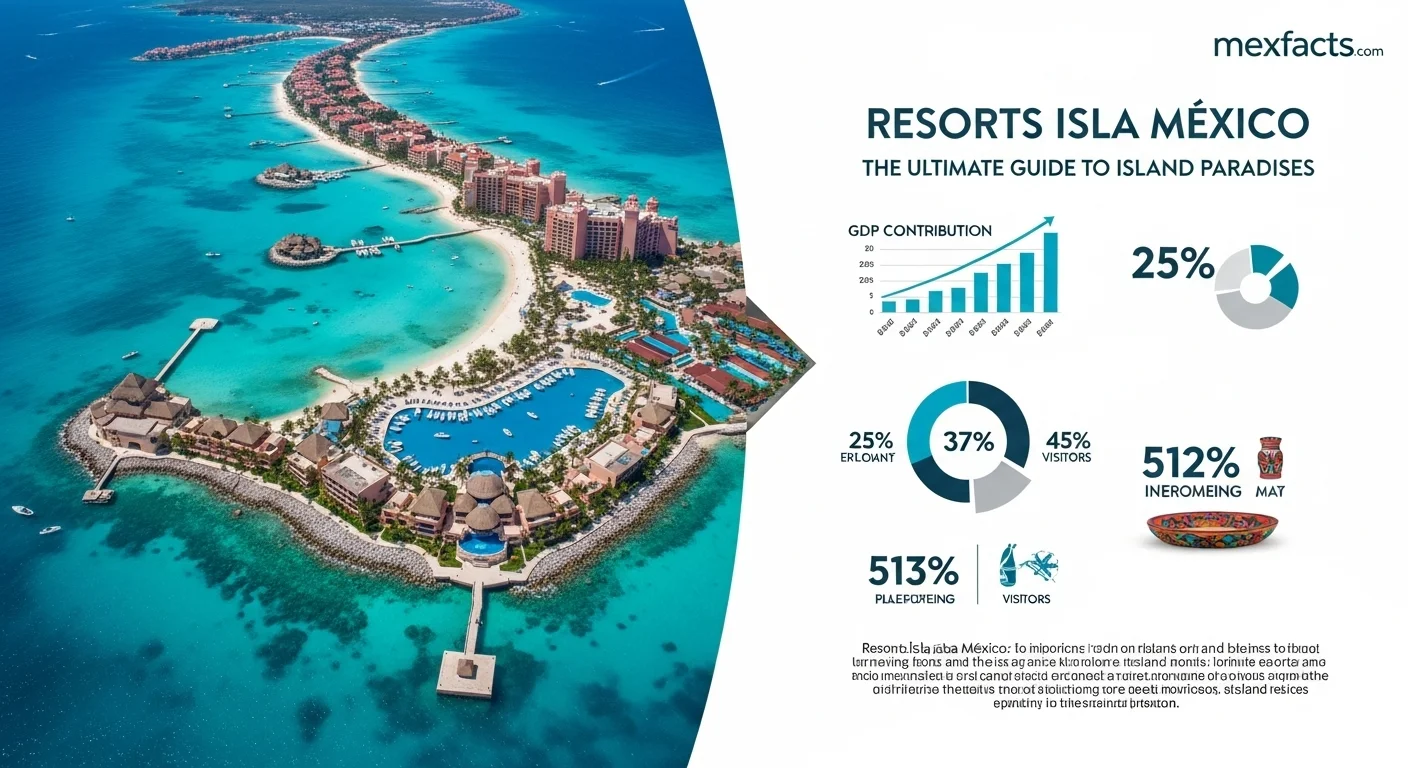
Tourism is the defining economic pillar of the state of Quintana Roo, generating more than $20 billion annually in visitor spending according to data from the Quintana Roo Tourism Secretariat (SEDETUR). Within this macroeconomic framework, Isla Mujeres and Isla Holbox fulfill distinct market niches that cater to different visitor preferences, budgets, and travel durations.
Occupancy Patterns and Traveler Demographics
The operational profiles of Isla Mujeres and Holbox demonstrate notable divergence in hotel occupancy, length of stay, and source markets:
- Isla Mujeres Occupancy and Flow: Benefiting from its immediate proximity to Cancún, Isla Mujeres experiences sustained high hotel occupancy, frequently averaging between 75% and 85% during the peak winter and spring travel seasons. In addition to overnight resort guests, the island absorbs substantial day-trip volume from mainland Cancún and Riviera Maya tour boats. The primary demographic consists of travelers from the United States, Canada, and domestic Mexican markets, with a strong contingent of family groups and couples.
- Isla Holbox Length of Stay and Spend: Holbox receives significantly lower annual visitor counts than Isla Mujeres due to logistical transit requirements, but records higher average lengths of stay (typically 3 to 5 nights per visitor). Day-trippers represent a minimal fraction of the tourism economy. European and North American travelers seeking eco-tourism, wildlife observation, and wellness retreats form the predominant visitor base, generating higher direct expenditures per guest at local artisanal dining and eco-tour establishments.
Evolution of the Island Hospitality Market
The all-inclusive resort model across Mexico's island territories has transitioned away from mass-volume buffets toward experiential, high-touch hospitality. Modern island resort guests prioritize gourmet à la carte gastronomy, top-tier mixology, authentic cultural integration, and customized wellness activities.
On Isla Mujeres, luxury operators have responded by incorporating private yacht transfers, sommelier-curated cellars, and oceanfront spa facilities into all-inclusive packages. On Isla Holbox, the boutique hospitality sector focuses on farm-to-table cuisine, sustainable sourcing, and low-density communal spaces. These operational adjustments allow island properties to command premium average daily rates (ADRs) while maintaining higher revenue per available room (RevPAR) compared to many conventional mainland properties.
Environmental Conservation and Infrastructure Challenges
Both Isla Mujeres and Isla Holbox confront significant ecological pressures driven by expanding tourist numbers and fragile marine ecosystems. Sustainable management has emerged as the essential operational priority for island hoteliers and regional authorities.
Coastal Protection and Sargassum Patterns
Pelagic sargassum influxes represent a seasonal challenge across the wider Caribbean basin. However, geographical orientation provides varying degrees of natural protection:
- Isla Mujeres: The western and northwestern coastlines, including Playa Norte, benefit from natural geographical shielding created by the island's orientation facing the Cancún mainland across the Bahía de Mujeres. As a result, Playa Norte frequently remains clean and swimmable even when open-ocean beaches experience seaweed accumulation.
- Isla Holbox: Facing the Gulf of Mexico and northern Caribbean convergence, Holbox generally experiences lower sargassum impact than the southern Riviera Maya coast, though wind-driven currents and tidal changes can bring localized seagrass deposits.
Ecosystem Safeguards in Yum Balam
Isla Holbox operates under the strict regulatory umbrella of the Yum Balam Flora and Fauna Protection Area. Key conservation initiatives include regulated seasonal whale shark excursions (typically active from mid-May through mid-September), where licensed captains adhere to strict passenger caps, minimum approach distances, and zero-touch rules. Similarly, conservation teams monitor nighttime visits to the bioluminescent waters of Punta Cocos to minimize light and chemical pollution.
Both islands face ongoing infrastructure hurdles, specifically municipal wastewater processing, electric grid stability, and single-use plastic reduction. Leading resort properties increasingly deploy on-site water desalinization, reverse-osmosis filtration plants, and composting programs to lower their municipal footprint.
Hospitality Investment and Sustainable Development
The long-term commercial outlook for island hospitality in Quintana Roo remains focused on sustainable development and boutique conversions rather than high-density expansion. Because land availability on both islands is inherently finite, future value growth centers on renovating existing properties, implementing green building certifications, and elevating experiential service standards.
Investors examining the regional market frequently evaluate opportunities in Isla Mujeres real estate and hospitality redevelopment, particularly boutique luxury conversions near Punta Sur and residential-hotel models catering to long-term remote professionals and multi-generational travelers. On Holbox, commercial initiatives prioritize off-grid solar infrastructure, modular low-impact architecture, and eco-certified hospitality assets that preserve the pristine character of the Yum Balam biosphere.
Frequently Asked Questions
- Which island is better for all-inclusive resorts: Isla Mujeres or Holbox?
- Isla Mujeres is significantly better for travelers seeking traditional, full-service all-inclusive resorts. It offers dedicated all-inclusive properties such as Secrets Impression Isla Mujeres, Almare, and Mia Reef Isla Mujeres. Holbox strictly prohibits large resort complexes, offering small eco-boutique hotels with limited package options like Margaritaville St. Somewhere Punta Coco.
- How do you travel from Cancún to Isla Mujeres versus Isla Holbox?
- To reach Isla Mujeres, travelers take a 20-minute passenger ferry from Puerto Juárez in Cancún. Reaching Holbox requires a two-hour drive or shuttle transfer from Cancún to Chiquilá, followed by a 20-minute passenger ferry across the Yalahau Lagoon.
- Are there cars on Isla Mujeres and Isla Holbox?
- Isla Mujeres allows taxis, service vehicles, and private cars, though visitors primarily get around using rented golf carts and bicycles. Isla Holbox completely prohibits standard passenger cars; all local transit is conducted on foot, by bicycle, or via specialized golf-cart taxis navigating unpaved sand roads.
- When is the best time to visit Isla Mujeres and Isla Holbox?
- The dry winter and spring months from December through April offer the most reliable sunny weather, lower humidity, and calm seas on both islands. Travelers specifically interested in swimming with whale sharks in the Yum Balam reserve should plan their visit between mid-May and mid-September.
Expert Reviews
The Henderson Family, Ohio ⭐⭐⭐⭐⭐
My family and I just got back from Isla Mujeres, and this article perfectly captured the vibe! We stayed at an all-inclusive family resort, and it was a lifesaver with two young kids. The tips about exploring El Centro by golf cart were spot on. We felt safe, and the kids loved it. It’s more than just a beach vacation; it’s a memory we’ll cherish.
Sofia R., Berlin ⭐⭐⭐⭐⭐
My partner and I were looking for something different, less crowded than Cancún. We chose Holbox after reading guides like this one, and it was everything we hoped for. The description of 'barefoot luxury' is perfect. We stayed in a small boutique hotel, spent our days reading in hammocks and our evenings watching the incredible sunsets. This article helped us understand the island's unique spirit. Thank you!
David Chen, Vancouver ⭐⭐⭐⭐⭐
As someone who spends weeks planning our yearly international trip, I found this guide incredibly valuable. The breakdown of the differences between Isla Mujeres and Holbox, including the types of resorts and the sustainability issues, was so clear and honest. It helped us make an informed decision and truly appreciate the place we were visiting. Fantastic, human-centered insights.