
Isla Mujeres Real Estate: Areas, Costs, and Buyer Due Diligence

Isla Mujeres offers a distinct Caribbean property market defined by finite island land, strong visitor appeal, and established legal mechanisms for international buyers. Located eight miles off the coast of Cancún in Quintana Roo, the island attracts buyers seeking vacation homes, boutique rental investments, and retirement residences. Because Isla Mujeres sits within Mexico's constitutional restricted zone, foreign nationals purchase residential property through a 50-year renewable bank trust (fideicomiso) or via a Mexican corporation for commercial operations. This guide examines property micro-markets from Centro to Punta Sur, details realistic acquisition and closing costs, analyzes rental market considerations, and provides essential due diligence steps for navigating titles, zoning, and island infrastructure.
Table of Contents
- Island Overview and Market Profile
- Foreign Ownership and the Fideicomiso Trust
- Isla Mujeres Neighborhood Profiles
- Isla Mujeres vs. Mainland Playa Mujeres
Island Overview and Market Profile
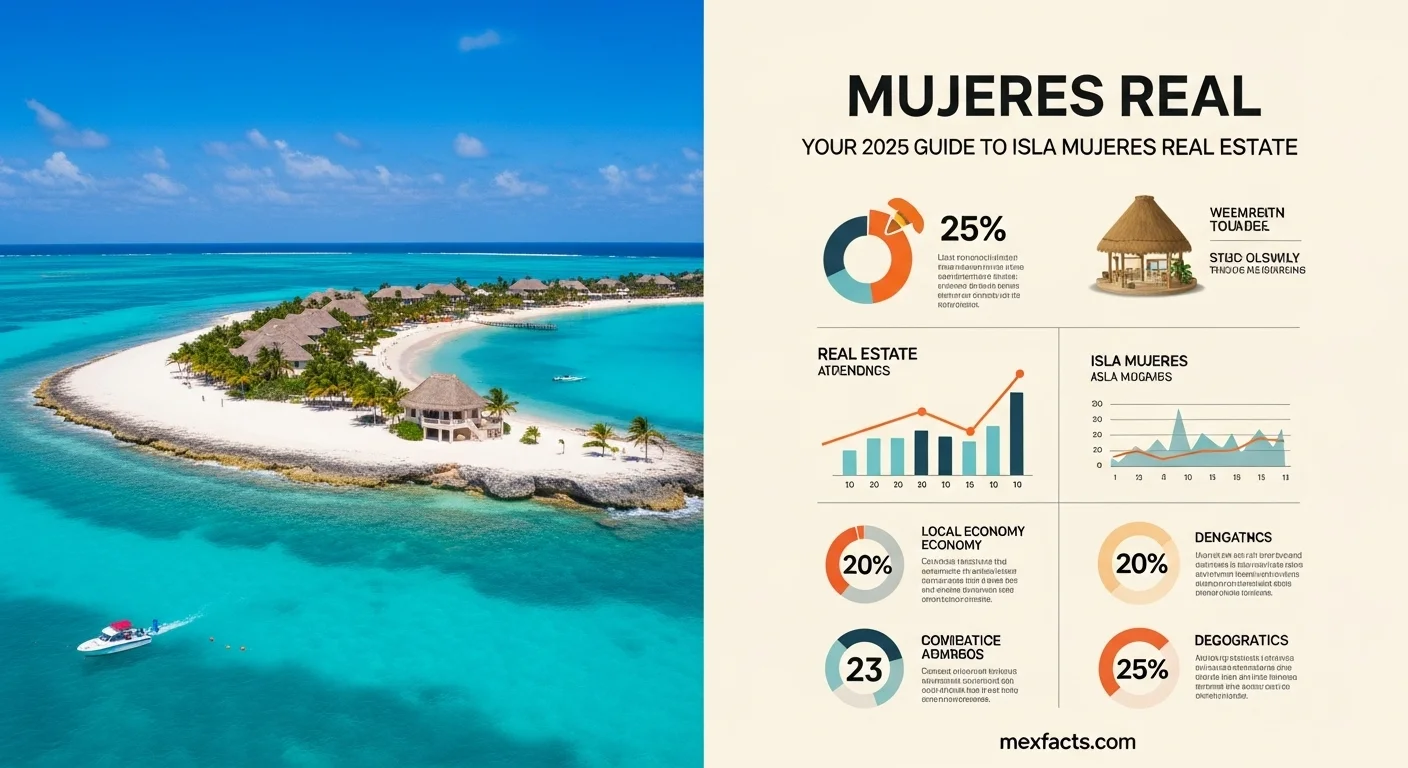
Isla Mujeres is a narrow barrier island approximately 4.3 miles (7 kilometers) long and 650 meters wide, situated roughly 8 miles off the northeast coast of Cancún in the Mexican state of Quintana Roo. Historically a quiet fishing community, the island has grown into an internationally renowned destination while maintaining a compact, golf-cart-oriented scale distinct from high-density mainland resort strips. The island's geography creates a finite real estate footprint: with limited buildable land and strict coastal protections, property values are driven by natural scarcity and enduring tourism appeal.
Demand in the Isla Mujeres property market spans boutique condominiums, traditional residential homes in established neighborhoods, and cliffside oceanfront villas. While popular leisure destinations such as Playa Norte attract significant visitor traffic, purchasing real estate on the island requires evaluating structural, legal, and environmental conditions unique to an insular Caribbean environment.
Foreign Ownership and the Fideicomiso Trust
Under Article 27 of the Mexican Constitution, foreign nationals purchasing residential real estate within the "Restricted Zone"—defined as land within 50 kilometers (31 miles) of the coast or 100 kilometers of an international border—must hold title through a specialized mechanism. Because all of Isla Mujeres lies within this coastal boundary, international buyers utilize a bank trust known as a fideicomiso.
In a fideicomiso, an authorized Mexican bank acts as the trustee (fiduciario) holding legal title, while the foreign purchaser is named the primary beneficiary (fideicomisario). The beneficiary holds complete beneficial ownership rights: you may occupy, lease, remodel, bequeath, or sell the property and retain all net proceeds. Key aspects of the fideicomiso include:
- Duration: Trusts are granted for a term of 50 years and are renewable indefinitely by law.
- Beneficiary Designation: Owners can designate substitute beneficiaries directly in the trust deed, simplifying estate planning and bypassing probate proceedings in Mexican courts.
- Commercial Alternative: Foreign investors acquiring property exclusively for non-residential commercial activities—such as development or hotel operations—may establish a Mexican corporation, which can hold direct title in the restricted zone without a fideicomiso, subject to specific corporate tax and reporting rules.
For detailed legal mechanics on establishing trust agreements, review our guide to coastal property bank trusts in Mexico.
Isla Mujeres Neighborhood Profiles
The island is divided into distinct geographic zones, each offering varying property profiles, price tiers, and rental characteristics:
- El Centro & Playa Norte: The pedestrian-friendly northern end is the commercial and social heart of the island. Properties here consist primarily of condominium developments, small commercial parcels, and boutique townhomes. This area commands the highest foot traffic and short-term vacation rental occupancy, but offers less privacy and higher noise levels.
- Mid-Island (Colonias such as La Gloria and Salina Chica): Located south of the downtown hub, the mid-island colonias are primary residential communities. Here, buyers find freestanding homes, local markets, and longer-term community life. Property prices per square meter are typically lower than in Centro or Punta Sur, though buyers must conduct thorough title checks on older residential parcels.
- Punta Sur: The southern tip features dramatic limestone cliffs rising above the Caribbean Sea. This area is characterized by luxury private villas, lower building density, and expansive ocean views. Punta Sur experiences stronger offshore winds and wave action, requiring durable construction materials resistant to marine corrosion.
- Sac Bajo: A sheltered residential peninsula extending along Makax Lagoon on the western side of the island. Sac Bajo features luxury waterfront homes, private boat docks, and calm lagoon waters, appealing to yacht owners and buyers prioritizing tranquility.
Isla Mujeres vs. Mainland Playa Mujeres
A frequent point of confusion for property shoppers is the distinction between Isla Mujeres and mainland developments bearing similar names. When comparing real estate opportunities, it is essential to distinguish between Isla Mujeres vs Playa Mujeres. While Isla Mujeres is an autonomous island accessible only by ferry, Playa Mujeres (and Costa Mujeres) is a gated luxury resort corridor on the continental mainland north of Cancún. Mainland developments offer modern master-planned golf communities and direct highway access, whereas Isla Mujeres offers a walkable island town atmosphere, historic charm, and natural land scarcity.
Property Types, Pricing, and Market Realities
The property inventory on Isla Mujeres includes condominiums, standalone homes, luxury coastal villas, and occasional undeveloped parcels. Because the island is fully developed along its primary spines, vacant land is rare and carries strict municipal building restrictions.
- Condominiums: The most common entry point for foreign buyers. Entry-level studio and one-bedroom units in mid-island developments generally start in the low-to-mid six figures (USD), while beachfront or ocean-view luxury condos in Centro and Punta Sur regularly command higher price brackets. Condominiums simplify remote ownership through on-site administration and shared maintenance.
- Detached Villas and Homes: Standalone properties range from traditional Mexican houses in the colonias to expansive multi-bedroom estates in Punta Sur and Sac Bajo. Private homes offer autonomy but require independent management of grounds, pools, and coastal wear.
- Undeveloped Lots: Highly limited in availability. Land purchases require strict environmental verification to ensure the plot is legally titled, buildable, and free from protected mangrove or maritime zone restrictions.
Rental Performance and Operating Economics
Many buyers evaluate Isla Mujeres properties for potential short-term vacation rental income. While the island benefits from consistent year-round international tourism, projected yields must account for seasonal variations and operational costs:
- Seasonality: Tourist volume peaks between December and April, corresponding with winter travel and favorable Caribbean weather. Occupancy and daily rates decline during the warmer late summer and autumn months (particularly September and October), which align with the Atlantic hurricane season.
- Rental Expenses: Gross revenues are offset by local operational costs. Full-service property management agencies typically charge between 20% and 30% of gross rental revenue. Additional recurring expenses include high utility costs (notably electricity under commercial or high-consumption DAC domestic tariffs), municipal water, high-speed internet, and regular air conditioning maintenance.
- Salt-Air Wear: The island's maritime climate accelerates corrosion of metals, air conditioning units, appliances, and exterior paint. Property owners must budget higher annual reserves for structural maintenance than required for inland properties.
Closing Costs and Transaction Mechanics
Closing costs in Quintana Roo generally add between 5% and 8.5% to the purchase price, depending on transaction value and property type. Key expenditure items include:
- Property Transfer Tax (ISAI):
- The municipal property acquisition tax (Impuesto Sobre Adquisición de Inmuebles) in Quintana Roo is typically assessed at 2% of the determined property transaction value.
- Public Notary Fees:
- In Mexico, a Public Notary (Notario Público) is a state-appointed legal official who conducts the formal closing, audits title history, verifies tax clearances, and formalizes the public deed. Notary fees typically range from 1% to 2%.
- Bank Trust (Fideicomiso) Setup and First-Year Fees:
- Establishing a bank trust involves a Ministry of Foreign Affairs (SRE) permit fee, trust drafting charges, and the trustee bank's initial setup fee (commonly $1,500 to $2,500 USD), plus an annual maintenance fee (typically $500 to $800 USD).
- Public Registry and Certificate Fees:
- Fees for registration in the Public Registry of Property (Registro Público de la Propiedad), certificates of non-encumbrance (Certificado de Libertad de Gravamen), and preventative notices.
Most residential real estate purchases on Isla Mujeres are executed in cash via international escrow services. While domestic Mexican mortgage financing is available in limited instances, interest rates are significantly higher than standard North American rates, and cross-border lending mechanisms remain restricted. In transactions priced in U.S. dollars, deeds and municipal taxes are legally settled in Mexican Pesos (MXN) at the official exchange rate on the closing date.
Due Diligence: Title, Legal, and Environmental Checks
Conducting rigorous legal due diligence prior to depositing non-refundable earnest money is critical when acquiring property on an island in Quintana Roo:
- Verifying Escritura Pública: Ensure the seller holds a clean, registered public deed (Escritura Pública) recorded at the Public Registry of Property. Foreign buyers must never attempt to purchase unregularized agrarian land (ejido) or land lacking registered title deeds, as these parcels cannot legally enter a fideicomiso trust.
- ZOFEMAT and Beachfront Concessions: Under Mexican law, the initial 20 meters of maritime land above the high-tide line is federal property (Zona Federal Marítimo Terrestre or ZOFEMAT). Oceanfront villas do not own this strip; instead, owners may hold a revocable federal concession to use it. A buyer's legal counsel must verify that concession payments and environmental filings are fully up to date.
- Environmental and Building Permits: Isla Mujeres operates under strict urban and environmental protection plans administered by the municipality and the Ministry of the Environment and Natural Resources (SEMARNAT). Before purchasing land or initiating structural renovations, confirm zoning limits (density, maximum height, and lot coverage) and obtain valid building permits.
- Clear Tax and Utility Status: Require documented proof that municipal property taxes (predial), water utility fees (CAPA), and electric bills (CFE) are paid in full without outstanding municipal liens.
Infrastructure and Island Logistics
Living or managing rental properties on Isla Mujeres entails logistical considerations distinct from mainland Quintana Roo:
- Access and Transit: Passenger ferries operate frequently from Puerto Juárez and the Cancún hotel zone, with transit times of 20 to 30 minutes. Vehicle cargo ferries operate from Punta Sam on the mainland. However, island road networks are narrow, and golf carts, scooters, and compact utility vehicles serve as the primary modes of transport.
- Utilities and Telecommunications: Electricity and water are supplied from the mainland via undersea cables and pipelines managed by CFE and CAPA. While reliable, storms can cause temporary service disruptions. High-speed fiber-optic internet is widely available in Centro and established colonias, which is essential for remote work and digital rental management.
- Hurricane Preparedness and Insurance: Located in the western Caribbean, Isla Mujeres is vulnerable to tropical cyclones. Property owners should install certified hurricane shutters, secure backup power or water cisterns, and carry comprehensive property hazard and storm insurance policies.
- Step-by-Step Buyer Checklist: Retain independent bilingual legal counsel, execute a formal promissory contract (Contrato de Promesa de Compraventa) with clear title contingencies, deposit funds exclusively in bonded escrow, obtain Ministry of Foreign Affairs (SRE) permit, complete Notario closing, and register title with the Public Registry.
Frequently Asked Questions
Can foreigners own 100% of coastal land on Isla Mujeres?
Yes. Foreigners hold 100% beneficial ownership rights through a Mexican bank trust (fideicomiso). The beneficiary retains all authority to sell, lease, remodel, and will the property, with all proceeds belonging exclusively to the owner.
How much does it cost to maintain a fideicomiso bank trust?
In addition to the initial setup fee of approximately $1,500 to $2,500 USD, trustee banks charge an annual administration fee typically ranging between $500 and $800 USD, depending on the financial institution.
Can I bring a standard passenger car to Isla Mujeres?
While cargo ferries from Punta Sam accommodate passenger cars, private vehicles are generally impractical due to narrow streets, limited parking, and traffic regulations in Centro. Most homeowners and residents navigate the island using golf carts, bicycles, or scooters.
For broader economic insights and regional investment context across Quintana Roo, refer to independent updates from Mexico Business News.
Expert Reviews
Laura Chen, Recent Investor ⭐⭐⭐⭐⭐
My husband and I just closed on our condo, and this guide was our bible! The explanation of the 'fideicomiso' was so clear and reassuring. It made us feel confident moving forward. Thank you for breaking down a complex process into something we could actually understand!
Mark Stephenson, Prospective Buyer ⭐⭐⭐⭐⭐
After vacationing on Isla Mujeres last winter, I fell in love with the place. I knew I wanted to invest, but I didn't know where to start. This article confirmed everything I felt about the island's potential and gave me a practical roadmap. The insights on the different neighborhoods were incredibly helpful.
Elena Garcia, Expat Resident ⭐⭐⭐⭐
As someone who has lived on Isla for almost a decade, I can tell you this guide really gets it right. It captures the unique spirit of the island while providing solid, practical advice for newcomers. It truly shows why our little piece of paradise is such a special and smart place to be.