
Mexico's Open Doors: Your 2025 Guide to Entry, Health & Travel

If you're wondering about traveling to Mexico, I can tell you from years of experience: the country's spirit of hospitality is legendary. During the recent global pandemic, Mexico stood out by keeping its arms open to the world, never requiring proof of vaccination or tests for air travel. This wasn't just a policy; it was a lifeline for its vibrant tourism economy and a beacon for travelers everywhere. As of 2025, that warm welcome continues. There are still no COVID-19 related entry mandates. This guide is your trusted companion to understanding not just the 'what' but the 'why' behind Mexico's approach. We'll walk through the current entry requirements, share some common-sense health advice for any traveler, and explore how this open-door policy has led to an incredible tourism and business boom. For anyone planning a trip, knowing these details will help you have a smooth, informed, and unforgettable experience in this incredible country.
Table of Contents
- What is Mexico's Open-Door Policy and Why Does it Matter?
- A Look Back: Why Mexico Stayed Open
- 'Unvaccinated' vs. Recommended Health Tips
- The Global Impact of Mexico's Welcome
What is Mexico's Open-Door Policy and Why Does it Matter?
In the world of travel, especially after the turbulence of recent years, one question often comes up: 'What do I need to get into Mexico?' I've heard this from friends, family, and fellow travelers countless times. The answer, as of 2025, is refreshingly simple: you just need your passport and a desire for adventure. Mexico has no COVID-19 vaccination, testing, or quarantine requirements for international visitors arriving by air. This decision has been fundamental to Mexico's identity on the world stage, making it a symbol of freedom and accessibility. It's a policy rooted deep in the country's economic soul and its inherent warmth, drawing in tourists, digital nomads, and business leaders from every corner of the globe.
A Look Back: Why Mexico Stayed Open
To truly appreciate the current situation, you have to remember what the world was like in 2020. Borders were slamming shut, and travel became a complicated maze of rules. I remember the uncertainty vividly. Yet, Mexico chose a different path. While many countries locked down, Mexico’s federal government made a calculated decision to keep its airports open without demanding proof of vaccination or negative tests. This wasn't a lack of concern; it was a strategic choice to protect the livelihoods of millions. I've spent countless days in towns where tourism isn't just an industry—it's the lifeblood that supports families, from the artisan in Oaxaca to the hotel worker in Cancún. A total shutdown would have been devastating. This open-door policy immediately set Mexico apart. While land border crossings with the U.S. had some restrictions (mostly from the American side), flying into Mexico remained a viable option for everyone. For a time, there was a health form called 'Vuela Seguro,' but it was more of a checkpoint than a barrier and was eventually phased out. This consistent and clear message made Mexico a sanctuary for those seeking to travel.
'Unvaccinated' vs. Recommended Health Tips
When people ask about traveling to Mexico 'unvaccinated,' they are almost always referring to the COVID-19 vaccine. And on that front, the answer is clear: it is not required for entry. However, as someone who cares about travelers having a safe and healthy trip, it's important to distinguish between government mandates and smart travel health. Mexico doesn't *require* any vaccines to let you in, but it's always wise to be up-to-date on routine immunizations like MMR and Tetanus. Organizations like the CDC also suggest considering vaccines for things like Hepatitis A and Typhoid, which can be risks in many parts of the world, not just Mexico. Think of it this way: the government won't check your vaccine card at the border, but taking basic health precautions is just part of being a savvy traveler. It's always a good idea to chat with your doctor before any international trip to make sure you're protected and can focus on enjoying the incredible food, culture, and scenery.
The Global Impact of Mexico's Welcome
Mexico’s decision to stay open had a ripple effect across the world. As other iconic destinations became inaccessible, Mexico became the go-to place for millions. I saw it firsthand—the beaches of the Riviera Maya and the streets of Mexico City were alive with international visitors when other capitals felt like ghost towns. This policy was a lifeline that resulted in a surprisingly resilient tourism sector. The country didn't just attract vacationers; it drew in a wave of digital nomads and people looking for a place with a sense of normalcy. This influx of people and money helped cushion the economy from the worst of the pandemic's blow. Mexico became more than a vacation spot; it became a case study in balancing economic needs with public health. This reputation for being accessible and welcoming has stuck. Even now that the world has reopened, many travelers remember the country that welcomed them when others wouldn't. That goodwill is powerful and continues to make Mexico a top choice for a hassle-free and enriching travel experience.
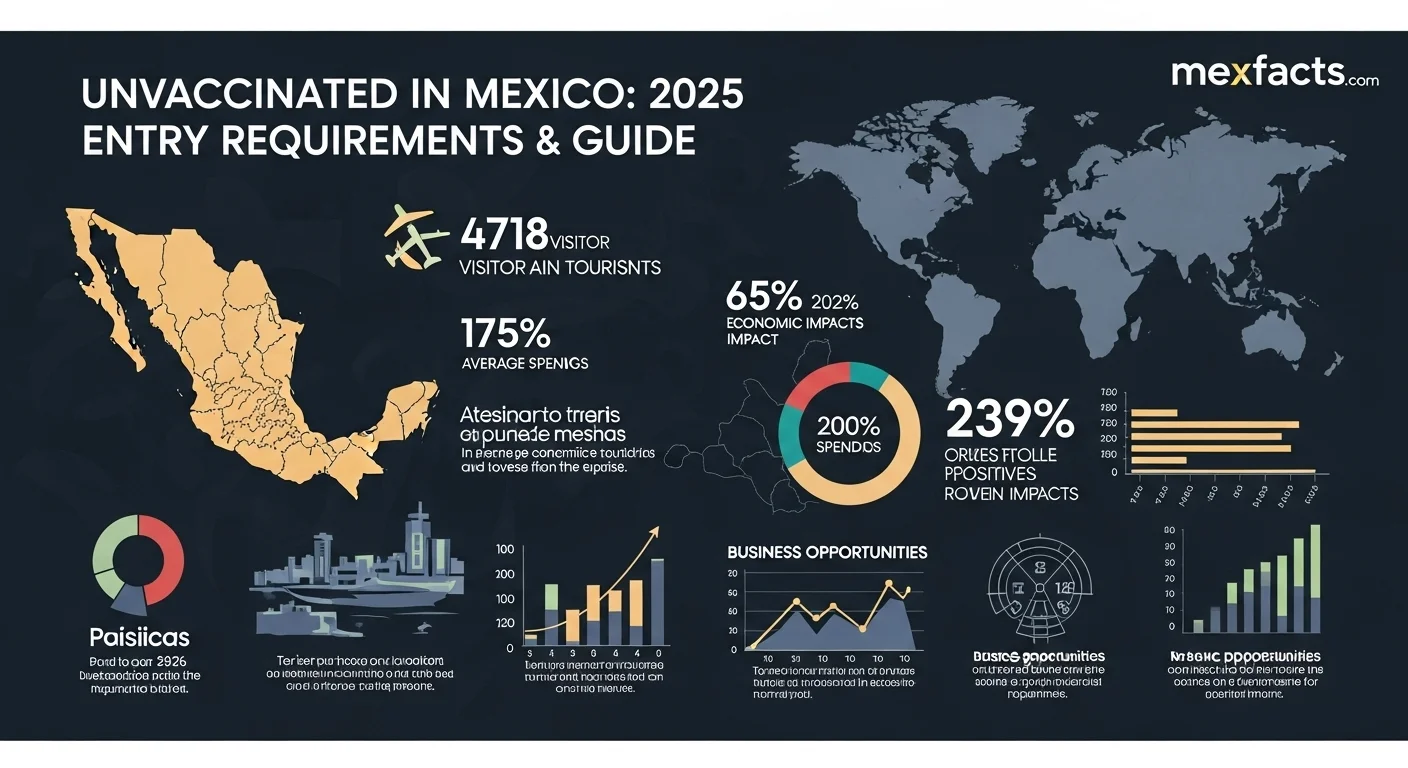
A Look at the Numbers: Mexico's Tourism and Economy Today
Today, any lingering concerns about entry have given way to a simple reality: Mexico is thriving. The data tells a powerful story of recovery and growth, a direct result of its decision to remain open and accessible to all travelers. Let's look at the statistics that show just how impactful this strategy has been.
The Post-Pandemic Tourism Boom: More Than Just a Recovery
Mexico’s tourism industry hasn't just bounced back; it has soared to unprecedented heights. It's one thing to read the numbers, but it's another to feel it on the ground—the energy in the air is palpable. Official figures from Mexico's statistics institute, INEGI, show that in 2024, the country welcomed over 45 million international tourists. This isn't just a recovery; it’s a new record, surpassing the pre-pandemic peak of 2019. This incredible achievement is a direct reward for the country's reliable and welcoming entry policy. The economic impact is just as stunning, with tourism generating nearly $33 billion in 2024. That's money that supports communities all across the country. The momentum is carrying into 2025, proving that tourism is a solid pillar of the Mexican economy, making up nearly 9% of the national GDP. The primary visitors continue to be from the United States and Canada, many of whom found Mexico to be their most attractive and dependable option during a time of global uncertainty. This consistent growth has cemented Mexico’s place as one of the most visited countries in the world, a reputation earned by keeping the welcome mat out for everyone.
The Inside Story: Mexico's Domestic Health Strategy
While Mexico welcomed international visitors without asking about their vaccination status, it simultaneously rolled out a massive vaccination campaign for its own citizens. It’s important to understand this piece of the puzzle. The government prioritized protecting its people, starting with frontline healthcare workers and the most vulnerable populations before extending it to everyone else. A very high percentage of Mexicans are vaccinated. This two-pronged approach was brilliant: manage public health risks at home while keeping the economic engine of tourism running. So, when a traveler arrived, their personal health status wasn't a barrier at the border, but they were entering a nation that was proactively managing the pandemic for its own population. It was a pragmatic strategy of protecting its people while also protecting their livelihoods.
The Bigger Picture: A Magnet for Business and Investment
The open-door policy had benefits that reached far beyond tourism. It sent a powerful message to the global business community: Mexico is stable, reliable, and open for business. This perception helped accelerate the 'nearshoring' trend, where companies move their manufacturing closer to the North American market. I've traveled through the northern states and have seen the boom with my own eyes—new factories and industrial parks are popping up everywhere. The ease of travel was a huge factor. Executives, engineers, and investors could fly in for meetings and site visits without the logistical nightmares they faced elsewhere. Foreign Direct Investment (FDI) has been incredibly strong, particularly in the automotive and manufacturing sectors. This has created a virtuous cycle: open travel supports business, and a thriving business environment attracts more travel and investment. The stability and predictability of Mexico’s entry rules were just as valuable to a CEO planning a major investment as they were to a family planning a vacation. The result is a dynamic, post-pandemic economy that is strengthening its role in the global supply chain, a success story significantly boosted by its accessibility during a critical time.
The Road Ahead: Opportunities and the Future for Mexico
Looking to the future, Mexico's unique path during the pandemic has fundamentally shaped its place in the world. The country has built a powerful brand around accessibility and warmth, creating a foundation for incredible opportunities in tourism, business, and beyond. The future is bright, but it also comes with the responsibility of managing this success wisely.
The Future of Travel: A Policy Built to Last
The big question on many minds is whether Mexico's easy entry policy is here to stay. All signs point to yes. Having navigated a global crisis successfully with this approach, it's now a core part of the national strategy. The economic proof is in the pudding, creating a strong incentive to maintain this welcoming stance. So, for anyone planning future travel, you can expect Mexico's entry to remain straightforward and free of complex health mandates. This predictability is a huge advantage. It takes the stress out of planning, whether it's a spontaneous getaway or a long-term relocation. For the travel industry, this stability allows for confident investment. Mexico's reputation for a hassle-free welcome has become a key part of its appeal, allowing the country's vibrant culture, breathtaking landscapes, and incredible hospitality to shine through.
A New Era for Business, Investment, and Growth
The economic opportunities catalyzed by Mexico's open stance are just beginning to blossom. The 'nearshoring' phenomenon is a game-changer, with Mexico positioned as a premier hub for companies re-thinking their supply chains. The ease of travel remains a key ingredient for this growth, allowing business to happen efficiently. But the opportunities go far beyond manufacturing. Mexico is becoming a top destination for international conferences, corporate events, and company retreats. Why? Because organizers don't have to worry about complex entry rules for their attendees. Furthermore, the digital nomad scene, which exploded during the pandemic, is now a permanent fixture in cities like Mexico City, Guadalajara, and coastal gems like Puerto Escondido. These long-stay visitors, initially drawn by the freedom of movement, are now deeply integrated into local economies. This is creating new markets for co-working spaces, real estate, and countless local services. For investors, the smart money is looking at hospitality, infrastructure, and technology—all sectors needed to support this vision of Mexico as a global hub.
Challenges and the Path Forward: Sustainable Success
Of course, this incredible success brings challenges. The surge in tourism puts a strain on natural resources and local infrastructure, especially in popular spots. As someone who deeply loves Mexico's natural wonders, I know that sustainable development is critical. We must protect the very beauty that draws people here. Issues like water management, waste disposal, and protecting fragile ecosystems like the coral reefs in the Riviera Maya require smart, forward-thinking solutions. Public security is another area that requires constant attention. While the vast majority of tourist experiences are perfectly safe, the country's reputation is sensitive to high-profile incidents. The path forward is one of balance. Mexico must continue to champion its accessibility while investing heavily in sustainability and security. A great strategy is to promote tourism diversification, encouraging travelers to discover the magic of lesser-known states. This helps spread the economic benefits and relieve pressure on the most famous destinations. By embracing these challenges, Mexico can solidify its position not just as an open country, but as a world-class, safe, and sustainable leader. Its journey has sent a clear message: Mexico is a bridge to the world, open for culture, business, and connection.
Expert Reviews
Sarah K., Traveler ⭐⭐⭐⭐⭐
After so much confusion about travel rules everywhere else, this guide was a breath of fresh air. It confirmed what my friends who've been to Mexico City told me: entry is straightforward and the country is as welcoming as ever. We just got back from Oaxaca and had the most incredible time, no stress at the airport at all. This article gave us the confidence to book.
Michael B., Digital Nomad ⭐⭐⭐⭐⭐
I used this information when I was considering a long-term stay in Playa del Carmen. The article perfectly explains *why* Mexico became such a hub. It’s not just about the lack of restrictions, but the whole vibe that came with it. The economic insights on nearshoring are spot on, too. You can feel that energy and investment happening right now.
Elena V., Business Consultant ⭐⭐⭐⭐
As someone who travels to Monterrey for business, the clarity here is invaluable. The section on the business perspective and FDI aligns with everything I've seen on the ground. Mexico's reliability during a chaotic time has not been forgotten by the international business community. A great, well-rounded summary.