
Thinking of Moving to Mexico? An Expat's Honest Guide for 2025

Mexico has a way of calling to you. For years, it’s been a magnet for people from all over the world, drawn in by the vibrant culture, the stunningly diverse landscapes, and a cost of living that feels like a breath of fresh air compared to the US and Europe. This guide is for anyone hearing that call. It’s a real, boots-on-the-ground look at what it takes to make the move to Mexico. We’ll talk openly about safety in Mexico, answering the questions I hear all the time, like 'Is Mexico City really safe?' and 'Where can I feel truly secure?'. We’ll break down the actual cost of living, sharing what your day-to-day expenses might look like in different cities. We'll also cover the growing communities of remote workers and retirees, how to navigate visas, what to expect from healthcare, and the incredible quality of life that awaits. After all, there's a reason almost 90% of expats here say they're happy with their life. Let me show you why.
Table of Contents
- What Does It Mean to Be an Expat in Mexico Today?
- The Real Reasons People Move to Mexico
- Let's Talk About Safety: An Honest Look
- Is Mexico City a Safe Place for Expats?
- Where Are the Safest Havens for Expats?
What Does It Mean to Be an Expat in Mexico Today?
The image of an 'expat' in Mexico has changed so much over the years. It used to be mainly American and Canadian retirees looking for a sunny spot to relax by the coast. Now, that picture is so much bigger and more colorful. I see digital nomads with laptops in bustling cafes, young families seeking a richer cultural upbringing for their kids, entrepreneurs launching new businesses, and professionals on assignment for major companies. Mexico’s incredible proximity to the U.S., combined with a culture that pulls you in and growing economic opportunities, has made it a top spot for people looking for a new chapter. It's estimated that Mexico is home to over 1.6 million U.S. citizens, the largest group of American expats anywhere in the world. This isn't just a number; it's a living, breathing part of the fabric of modern Mexico.
The Real Reasons People Move to Mexico
So, why are so many people making this move? Honestly, it's a mix of things, but a big one is the cost of living. I’ve met countless people who find their money goes so much further here, allowing for a quality of life they could only dream of back home. Imagine cutting your monthly expenses by 50-70%—that's a reality for many. That extra breathing room means more travel, more incredible meals out, maybe even hiring help around the house. It all adds up to a less stressful, more joyful way of life. But it's not just about the money. People fall in love with the richness of the culture here—the food that's recognized by UNESCO, the ancient ruins that whisper stories of the past, the lively markets, and the incredible warmth of a society built around family. Plus, whatever climate you love, you can find it here. From the dry heat of the north to the perfect temperate weather in the central highlands and the tropical embrace of the jungles and beaches. There’s a corner of Mexico that feels like it was made just for you.
Let's Talk About Safety: An Honest Look
Okay, let's address the elephant in the room. The first question everyone asks me, without fail, is: 'But is Mexico safe?' The news paints a scary picture, and I get why people are worried. Yes, Mexico has real security challenges, especially with organized crime in certain, specific areas. But the reality for the vast majority of us expats is a world away from those headlines. The secret is knowing where to be and how to be. Most of us live peaceful, happy lives by understanding the local environment, staying away from known hot spots, and just using common sense. It's so important to distinguish between cartel-related violence, which almost never targets foreign residents, and petty crime like pickpocketing, which can happen in any touristy area worldwide and is easy to avoid with a little awareness.
Is Mexico City a Safe Place for Expats?
As one of the world's most exciting and massive cities, the question of whether Mexico City is safe for expats is a big one. This place is a whirlwind of art, business, and incredible food, and it's drawing in more expats every year. Like any megacity, there's crime, but it's very concentrated in specific neighborhoods. Expats naturally gravitate to areas like Condesa, Roma Norte, Polanco, and Escandón. I’ve spent countless hours walking these streets, and they are known for their beautiful parks, amazing cafe culture, and a strong sense of safety. Here, the biggest worry isn't violent crime; it's being mindful of your belongings. You quickly learn to use trusted ride-sharing apps, keep your phone in your pocket on the metro, and not flash expensive jewelry. Honestly, many expats I know feel just as safe, if not safer, than they did in major cities back in the States or Europe. Plus, the city’s excellent and affordable private healthcare adds another layer of security and peace of mind.
Where Are the Safest Havens for Expats?
For those who put safety at the very top of their list, you'll want to know: 'Where is the safest place in Mexico for expats?'. I have good news—several cities are famous for their security and are beloved by the expat community. Topping almost every list is Mérida, in the Yucatán. I've been there many times, and the peace is tangible. It's often called the safest city in Mexico, with crime rates like you'd find in quiet European towns. Mérida is this wonderful mix of stunning colonial architecture, deep Mayan culture, and all the modern comforts you could want, including top-notch hospitals.
Other wonderful, safe spots include:
- San Miguel de Allende, Guanajuato: A beautiful UNESCO World Heritage site with a huge, welcoming community of American and Canadian expats. It has a magical, artistic vibe and is very safe.
- Puerto Vallarta, Jalisco: One of the friendliest and safest beach towns I know. It's got a fantastic infrastructure and a large, vibrant LGBTQ+ expat community.
- The Lake Chapala Area (Ajijic), Jalisco: Home to one of the biggest retiree expat communities on earth. People come for the 'eternal spring' climate, the tranquility, and the easy-to-navigate English-speaking social scene.
- Querétaro, Querétaro: A clean, modern, and booming city in central Mexico. It has a strong economy, a gorgeous historic center, and low crime rates, making it a favorite for professionals and families.
- Huatulco, Oaxaca: An eco-friendly and beautifully planned resort area known for being exceptionally safe, clean, and pristine.
These places prove that you don't have to choose between safety and a high quality of life in Mexico. They've become magnets for expats because they offer peace of mind, strong communities, and everything you need for a comfortable and exciting life.
Current Statistics and Data About the Mexico Expat in Mexico
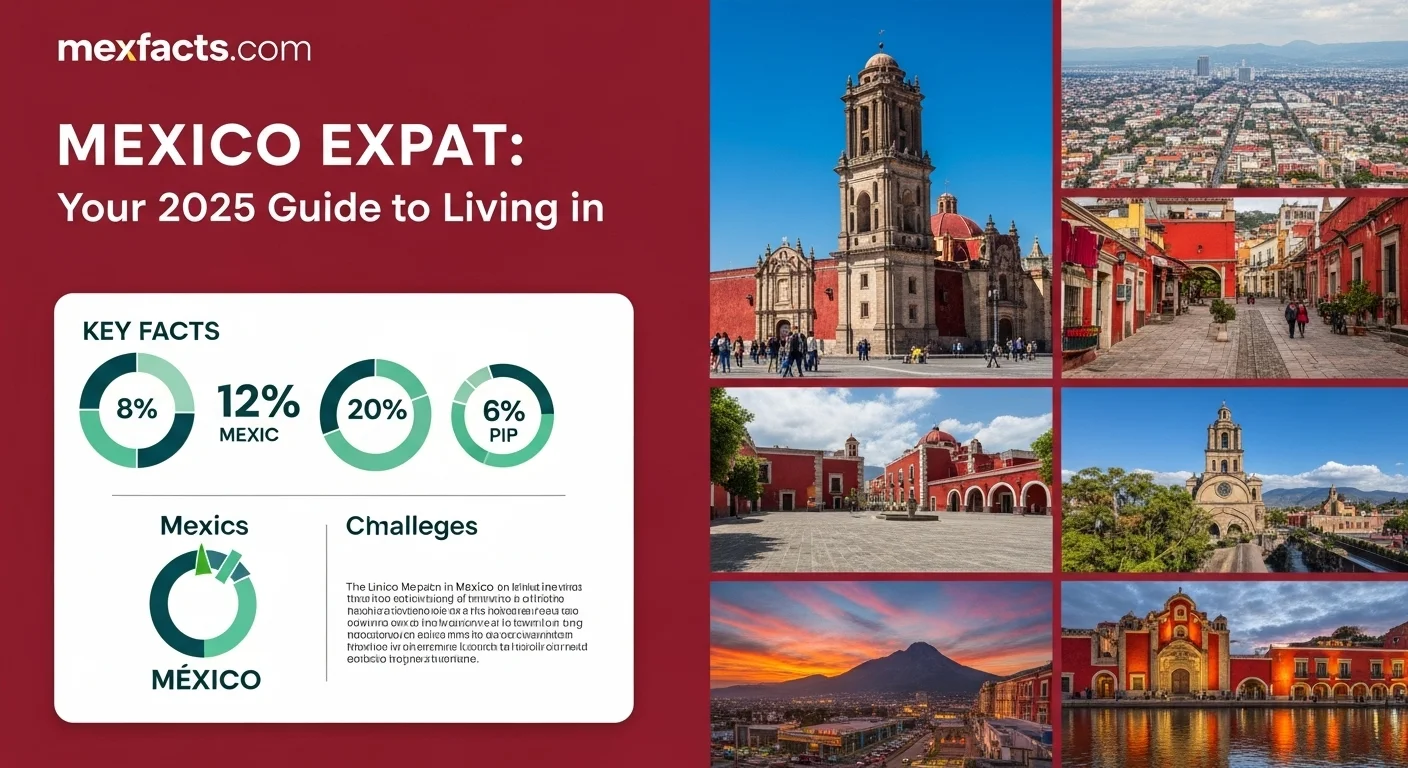
Looking at the numbers helps paint a clearer picture of the expat scene. While it's tough to get an exact count because many people stay on long-term tourist visas, the data we have points to a large and growing community. The Mexican government officially recognizes about 1.2 million foreign residents, with the biggest group by far being from the United States—some estimates say over 1.6 million Americans live here, full or part-time. That makes the U.S.-to-Mexico connection one of the most significant expat movements in the world. You'll also meet many people from Canada, Spain, Germany, and a growing number from Latin America and Asia.
A Deep Dive into the Mexico Expat Cost of Living
The cost of living in Mexico is a huge draw, but it really depends on where you live and your lifestyle. Sure, you could live on less than $1,000 a month in a small town, but for a comfortable life in a popular expat city, a budget of $1,500 to $3,000 a month is more realistic. Let's break down what that means in 2024-2025:
- Housing: This will be your biggest expense. A one-bedroom apartment in a nice part of Mexico City might run you about $790 USD per month. What does that get you? Often a beautiful, modern space in a neighborhood humming with cafes and parks, something that could easily cost triple that in a comparable U.S. city. In lovely Mérida, you might pay $500-$700, and in a smaller colonial city like Valladolid, it could be as low as $160. For beach life in Puerto Vallarta or Playa del Carmen, plan on around $600-$800.
- Utilities: Basics like electricity, water, and garbage service are quite affordable, usually around $70-$100 a month. Be mindful that running the A/C a lot in hotter climates can raise your electricity bill, though government subsidies help keep it reasonable. Fast internet is available almost everywhere and is a bargain at about $25-$30 a month.
- Food: This is where you can save a lot. Shopping at the local mercados for fresh produce is an experience in itself and so much cheaper. A single person can eat incredibly well for $200-$300 a month. A simple, delicious meal at a local restaurant can be just $5-$7, and a nice three-course dinner for two might be around $40.
- Transportation: Public transport is a steal. A ride on the Mexico City metro is about 25 cents. Ride-sharing apps are also very affordable. Many of my friends in walkable cities like San Miguel de Allende or Mérida barely spend anything on daily transport.
- Healthcare: This is a game-changer. A visit to a great private doctor can cost just $30-$50. Expats usually choose one of three paths: pay out-of-pocket for small things, enroll in the public IMSS system for a small annual fee (around $500), or buy comprehensive private health insurance. A good private plan can cost about $2,750-$3,000 a year, a fraction of U.S. prices.
Statistical Insight on Safety: Is Mexico Safe for Expats?
To really dig into the 'is Mexico safe for expats?' question, we need more than just stories. The InterNations Expat Insider survey is a great resource. It shows something fascinating: while Mexico gets average scores for safety on paper, it ranks 2nd out of 53 countries for overall expat happiness. This tells me that once people are here, their actual daily experience is overwhelmingly positive. Expats report feeling incredibly welcome (85% feel that way!) and find it easy to adapt to the culture. When we look at Mexico City specifically, the data backs up the experience. While city-wide stats can look intimidating, the crime isn't spread out evenly. Expat-heavy areas like Polanco and Condesa have a very visible police and private security presence, creating safe bubbles where violent crime is very rare. The most common issues are non-violent, like being mindful of your phone on public transport.
Finding the Expat Hubs: Where is the Safest Place in Mexico for Expats Statistically?
Statistically, the answer to 'where is the safest place in Mexico for expats?' consistently points to the Yucatán Peninsula, especially Mérida. One report even named it the 30th safest city in the world, making it the second safest in the Americas. This city of nearly a million people has a well-integrated expat community of around 4,000. Other statistically safe bets include the state of Querétaro, with its booming economy and modern feel, and the state of Nayarit, home to laid-back and safe beach towns like Sayulita. And of course, the Lake Chapala area, with its estimated 20,000 expats, thrives because its close-knit community helps keep crime rates very low.
Visas and Residency: The Legal Framework for Expats
Mexico makes it pretty straightforward to live here legally. While some people do 'visa runs' on a 180-day tourist permit (FMM), it's a legal gray area. The proper way for long-term stays is the Temporary Resident Visa. Think of it as Mexico's 'digital nomad visa,' perfect for remote workers and retirees. For 2024/2025, you generally need to show one of two things:
- Proof of a monthly income of around $3,700 - $4,400 USD for the last six months.
- Proof of savings or investments with an average balance of about $72,000 - $73,000 USD over the last year.
Future Outlook and Opportunities Regarding the Mexico Expat in Mexico
The future for expats in Mexico looks incredibly promising. The global shift to remote work is a huge part of this. As more companies go remote, Mexico is the perfect landing spot for a new generation of professionals. Being in a similar time zone to the U.S. and Canada is a massive advantage over Europe or Asia. And while there isn't an official 'digital nomad visa' by that name, the Temporary Resident Visa works perfectly for this, offering a clear legal path for long-term stays.
Emerging Trends and Business Opportunities
Beyond remote work, there's a huge economic shift happening called 'nearshoring,' where international companies are moving their operations to Mexico to be closer to the North American market. This is creating a wave of new energy and high-skilled jobs in IT, manufacturing, and logistics, especially in cities like Monterrey, Guadalajara, and Querétaro. This opens up so many doors for expats beyond the traditional fields of tourism or teaching.
This growth also creates a ton of opportunities for entrepreneurs. The expanding local middle class and the expat communities themselves are a strong customer base. I see opportunities everywhere:
- Real Estate: Demand for housing is booming. Whether it's developing, selling, or managing properties and vacation rentals, the market is hot. Property values in some coastal towns have soared recently.
- Hospitality and Wellness: From cozy boutique hotels and unique restaurants to yoga retreats and wellness centers, there is still so much room to create amazing lifestyle businesses.
- Professional Services: As more expats arrive, there's a greater need for people who can help with legal advice, immigration, taxes, and relocation services.
The Evolving Conversation on Cost and Safety
Looking ahead, the two things every expat cares about—cost and safety—will continue to change. The cost of living in Mexico will likely rise, especially in the most popular spots. You can already see it happening in parts of Mexico City and San Miguel de Allende, where the influx of foreign money has driven up rents. This is something we all need to be mindful of. However, Mexico is a huge country. As the main hubs get pricier, people will discover and build communities in 'second-tier' cities, spreading the economic benefits. But for the foreseeable future, Mexico will remain a fantastic bargain compared to North America.
Likewise, the question of 'is Mexico safe for expats?' will always be important. The government knows how vital tourism and expats are, so they are increasing security in key areas. Big projects like the Tren Maya might also improve safety as they bring development to new regions. But the country's security issues are complex. The smartest answer to 'is Mexico City safe?' will always be based on current, local information. We expats have to stay aware and adaptable, but the evidence is clear: a safe and wonderful life here is absolutely achievable.
Challenges and the Path Forward
The journey won't be without a few bumps. Dealing with Mexican bureaucracy can sometimes test your patience, even if the visa process is smooth. And while you can get by with English in some bubbles, learning Spanish is the key to truly connecting with the culture and not limiting your experience. As the expat community grows, it's more important than ever to be a 'mindful mover'—to respect the local culture, try to integrate, and be aware of our economic impact.
On a bright note, the future of healthcare in Mexico is very promising, with big investments in new hospitals and digital health like telemedicine. This will only enhance the quality of life for everyone. Ultimately, Mexico is on a path of growth and connection with the world. For anyone who is prepared, informed, and curious, the chance to build a richer, more affordable, and, as 89% of current expats will tell you, a happier life here is greater than ever.
For a deeper dive into Mexico's economic landscape, the Mexican Secretariat of Economy provides great insights on foreign investment.
Expert Reviews
Robert M., Retiree ⭐⭐⭐⭐⭐
My wife and I were considering Ajijic for our retirement, and this guide was a godsend. The section on safety in different towns really helped us narrow down our choices. It felt like advice from a friend who’s already made the move. We feel much more confident now.
Chloe D., Digital Nomad ⭐⭐⭐⭐⭐
As a remote worker, the breakdown of visa requirements and internet costs was super practical. I landed in Mexico City a month ago, and the description of life in Roma and Condesa is spot on! This guide skips the fluff and gives you the real-deal info you need.
The Garcia Family ⭐⭐⭐⭐⭐
We were worried about moving with our kids. This article's honest take on safety—acknowledging the issues but putting them in context—was exactly what we needed to hear. It helped us understand that a safe, culturally rich life for our family is totally possible in places like Mérida.