
Is It Safe to Fly to Mexico? Flight Safety, Airport Protocols, and Ground Realities

When travelers ask whether it is safe to fly to Mexico, they are usually balancing two distinct questions: commercial aviation safety and security once they leave the arrival terminal. In commercial aviation, flights to Mexico adhere to strict international standards under the International Civil Aviation Organization (ICAO), with Mexico holding an FAA Category 1 aviation safety rating. Major international hubs like Cancún (CUN), Mexico City (MEX), and Los Cabos (SJD) operate modern terminal security equivalent to North American and European hubs. However, the travel experience shifts significantly once passengers exit customs into ground transportation areas. To evaluate your total trip risk, explore our comprehensive guide on whether is Mexico safe alongside essential travel to Mexico planning strategies that protect you from common arrival pitfalls.
What's Inside This Guide
- Understanding Aviation Safety: International Standards and Carrier Oversight
- Navigating Mexican Airports: Customs and Arrival Logistics
- Destination Risk Assessment: State Department Advisories Explained
- Cancún vs. Los Cabos: Regional Security Profiles
- Essential Precautions for Safe Air Travel to Mexico
- Frequently Asked Questions
Understanding Aviation Safety: International Standards and Carrier Oversight
Commercial flights operating to and within Mexico maintain a robust safety record governed by global civil aviation authorities. International routes operated by legacy carriers—such as Delta, United, American, Air Canada, and British Airways—are subject to FAA and EASA oversight, flying identical Boeing and Airbus fleets under the same technical procedures used worldwide.
Mexico's domestic commercial carriers, including Aeroméxico, Volaris, and VivaAerobus, operate modern fleets subject to inspection by Mexico's Federal Civil Aviation Agency (AFAC). In September 2023, the U.S. Federal Aviation Administration (FAA) officially restored Mexico to Category 1 safety status following comprehensive audits verifying that Mexican civil aviation oversight aligns fully with ICAO safety standards. This rating confirms that Mexico's regulatory framework, technical personnel licensing, and aircraft maintenance surveillance operate at internationally accepted levels.
Navigating Mexican Airports: Customs and Arrival Logistics
For most international passengers booking flights to Cancún, Guadalajara, or Mexico City, the flight itself is entirely uneventful. The true point of vulnerability begins after collecting checked baggage and passing through the customs inspection zone.
Major gateways—particularly Cancún International Airport (CUN) and Los Cabos International Airport (SJD)—are known for high-pressure transit corridors immediately following the luggage carousel, often colloquially called the "shark tank." In this corridor, aggressive vendors pose as airport staff, transfer agents, or official information desks to sell timeshares, high-commission excursions, or unauthorized taxi rides. Violent crime is virtually nonexistent in these secured interior corridors, but financial misdirection, overpriced rides, and transport disputes are frequent.
To navigate airport arrival safely:
- Pre-arrange verified private ground transportation: Reserve private vans or resort shuttles through trusted providers prior to departure. Verify the exact name of your driver and company sign before following anyone.
- Walk completely outside before meeting your driver: Authorized airport transportation representatives wait strictly outside the terminal doors on the exterior curbside, holding designated corporate placards.
- Avoid unauthorized street solicitors: Never accept ground transport offers inside the baggage claim or arrival corridor from individuals lacking verified booking receipts.
- Use authorized airport taxi kiosks: If you did not book in advance, buy a prepaid taxi ticket exclusively from official ticketing booths inside the terminal, never from unlicensed drivers roaming the floor.
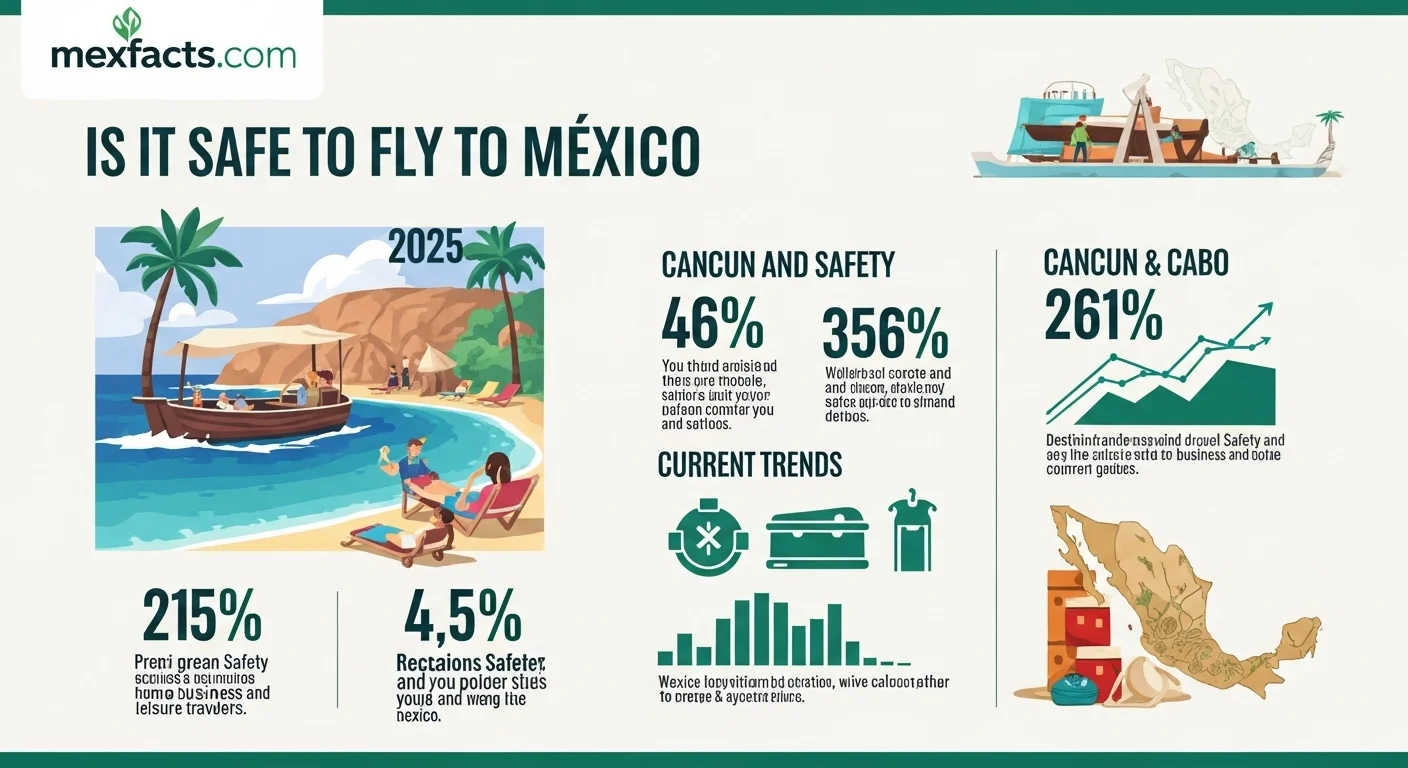
Destination Risk Assessment: State Department Advisories Explained
Airlines fly into distinct states that each carry independent security realities. The U.S. Department of State issues travel advisories on a state-by-state basis rather than applying a single uniform assessment across the entire nation. Reviewing these regional advisories allows travelers to differentiate between localized inland conflicts and fortified leisure destinations.
Popular leisure states such as Quintana Roo (Cancún, Cozumel, Tulum) and Baja California Sur (Los Cabos, La Paz) have consistently maintained a "Level 2: Exercise Increased Caution" status. For context, this is the exact same advisory tier assigned to Western European travel hubs including France, Italy, Spain, and the United Kingdom. Level 2 does not caution against travel; rather, it advises situational awareness, avoidance of poorly lit peripheral neighborhoods, and mindfulness of personal belongings.
Critically, official advisories for both Quintana Roo and Baja California Sur carry no general travel restrictions for U.S. government employees visiting major resort corridors, signaling confidence in the stability of primary hospitality districts.
Cancún vs. Los Cabos: Regional Security Profiles
While both destinations welcome millions of international air travelers annually, their operational security environments have distinct characteristics.
Cancún and the Riviera Maya (Quintana Roo)
Cancún's economy relies heavily on air arrivals landing at CUN and dispersing across the Hotel Zone, Playa Mujeres, and southern corridors like Puerto Aventuras and Tulum. Tourism centers are secured by municipal police, state forces, and specialized units of the Mexican National Guard. While inter-gang skirmishes have occasionally occurred in broader municipal sectors, international visitors adhering to established resort boundaries, licensed beach clubs, and organized excursions face negligible exposure to violent crime. The primary concerns remain petty theft, late-night club altercations, and disputes over taxi fares.
Los Cabos (Baja California Sur)
At the southern tip of the Baja Peninsula, Los Cabos (San José del Cabo and Cabo San Lucas) benefits from a unique geographical insularity. The region operates as a high-end luxury corridor where private security teams work in coordinated liaison with federal and naval police forces. Road links between San José del Cabo Airport (SJD) and resort corridors along the Transpeninsular Highway are well-maintained, well-patrolled, and exceptionally calm for tourists moving between properties.
Essential Precautions for Safe Air Travel to Mexico
Minimizing risk when flying to Mexico requires simple, systematic preparations before departure and during transfer:
- Pre-Book All Transfers
- Confirm your ground transportation voucher before boarding your flight. Ensure the operator provides specific instructions on terminal exit gates and staff dress codes.
- Enroll in Travel Advisory Registries
- U.S. travelers should register their itinerary with the Smart Traveler Enrollment Program (STEP), while Canadian visitors should register with the ROCA system to receive urgent consular notifications.
- Maintain Digital and Paper Documentation
- Keep physical and digital copies of your passport, hotel confirmation, and emergency medical insurance. When entering via automated digital kiosks (e-Gates) available at major international airports, retain your stamped digital immigration receipt.
- Use Regulated Transit Within Cities
- When leaving your resort, use app-based platforms (where operating legitimately) or have the resort concierge dispatch a licensed "sitio" taxi. Avoid hailing unmarked vehicles on public roads after dark.
Frequently Asked Questions
- Is commercial aviation to Mexico safe by international standards?
- Yes. International flights operate under ICAO safety frameworks and standard bilateral aviation agreements. Mexico holds an FAA Category 1 aviation rating, reflecting compliance with international airworthiness, crew licensing, and maintenance oversight.
- Is it safe to fly to Cancún right now?
- Yes. Cancún receives hundreds of international flights daily. The Hotel Zone and major tourist corridors remain heavily protected by state and federal security forces. Travelers face low risks of serious crime when staying within primary tourist zones and using vetted airport transportation.
- Is it safe to fly to Los Cabos right now?
- Yes. Baja California Sur remains one of Mexico's most stable resort regions. The corridor between Los Cabos International Airport (SJD) and the main resort areas features reliable highway security and established private transit infrastructure.
- What is the biggest safety issue tourists face when flying to Mexico?
- The most common risks are not aviation or violent crime, but airport arrival scams, aggressive timeshare peddlers in the transit terminal, taxi overcharging, and opportunistic petty theft in busy nightlife venues.
Expert Reviews
Sarah K., Chicago ⭐⭐⭐⭐⭐
I was on the fence about our family trip to Cancun because of the news, but this article gave me the balanced perspective I needed. We just got back, and it was incredible. We felt safe the entire time in the hotel zone and on our tour to Chichén Itzá. Just use common sense, like you would anywhere!
Mark T., Vancouver ⭐⭐⭐⭐⭐
As someone who has been visiting Cabo for over a decade, this article nails it. The distinction between localized issues and the safety within tourist areas is spot on. My advice is always the same: respect the local culture, don't go looking for trouble, and you'll have the time of your life.
Elena R., Madrid ⭐⭐⭐⭐⭐
The tips on pre-booking transport were a lifesaver! Landing at Cancun airport can be overwhelming, but having our shuttle waiting for us made everything smooth and stress-free. This guide is more than just stats; it's practical advice that actually works.