
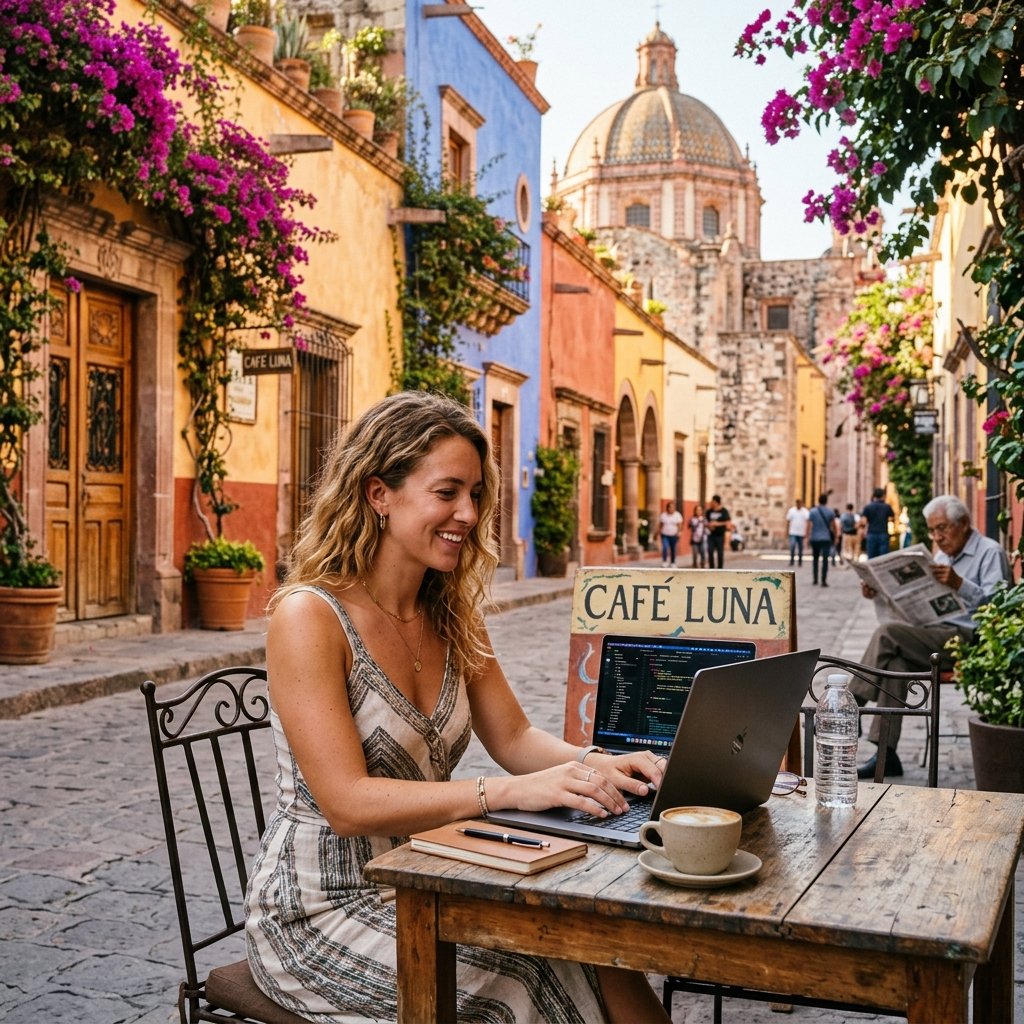
Before moving to San Miguel, test the exact neighborhood on foot, inspect the home during different conditions and confirm internet and healthcare arrangements. Compare total household costs and settle the immigration plan before signing a long lease or buying.
In this guide
- Start with everyday life beyond the historic center
- Compare locations by access, noise and routine
- Cobblestones and home access deserve a real test
- Inspect the home for the seasons you will live there
- Build a budget from the actual rental and services
- Remote work: confirm service at the exact address
- Healthcare: plan routine care and emergencies separately
- Arrange residence permission and review travel routes
- Frequently asked questions
- Sources and scope
Start with everyday life beyond the historic center
The UNESCO listing for San Miguel and Atotonilco explains the town's historic importance and architectural character. For a move, turn that appeal into practical questions: where will you buy groceries, attend appointments, work and meet people?
Stay long enough to try ordinary weekdays as well as weekends. Visit the home and its surrounding streets in the morning and evening. An attractive courtyard does not tell you about nighttime noise, delivery access or water pressure.
Compare locations by access, noise and routine
| Area to investigate | What to test before committing |
|---|---|
| Centro | Street noise, steps, parking, vehicle access and how the building works as a year-round home. |
| San Antonio | The route to shops and activities, the exact block and the property’s condition. |
| Guadalupe | Workday noise, access to services and your walking route to the places you use. |
| Homes farther from the center | Transport availability, time spent driving, included services and dependence on a car. |
Swipe or scroll sideways to compare all columns.
These are starting points for visits, not rent or safety rankings. Compare listings with the same lease length and furnishing. Use the rental due-diligence guide to verify the owner or agent and payment instructions.
Cobblestones and home access deserve a real test
Walk the route in the shoes you normally wear. Check slopes, uneven surfaces, narrow sidewalks and lighting. If you use a cane, walker or wheelchair, test the whole route and the entrance; do not rely on the phrase “walkable neighborhood.”
Inside the home, check stairs to the bedroom, shower entry, handrails and access for an emergency response. A central location may still be unsuitable if you must climb several flights or negotiate a steep street to buy essentials.
If you plan to drive, test parking and the normal route home. Add insurance, servicing and parking to your budget. Bringing a foreign car also requires a separate border and permit plan.
Inspect the home for the seasons you will live there
Ask about cooler nights, roof leaks, drainage, ventilation, water storage and hot-water supply. Visit during more than one season if possible. Find out how previous occupants heated or cooled the rooms and request representative utility bills.
Do not assume all homes need no heating or cooling. Building orientation, construction, room use and your own comfort needs can change the result. If you have a health condition affected by elevation, discuss your move with your clinician before committing.
Build a budget from the actual rental and services
Obtain written quotes in pesos for equivalent homes. Clarify included furniture, utilities, maintenance, parking and internet. Add groceries, transport, healthcare, activities and trips abroad; separate deposits and moving costs.
Use the Mérida worksheet for categories, replacing its sample amounts with local quotes. If you are comparing your current US spending, use the Mexico City comparison method to keep household size and currency consistent.
For a purchase, request independent title and property checks, an explanation of closing costs and advice on planned renovations. Historic status does not guarantee future resale value, and it is not proof that a property's construction or alterations were authorized.
Remote work: confirm service at the exact address
Test the connection in the room where you will work. Ask whether it is private to the home and whether the landlord permits a new installation. Check upload speed, calls with your usual VPN and local power interruptions.
The historic center does not have one uniform internet standard. Avoid assuming UNESCO status means every home uses copper, or that a newer neighborhood guarantees fiber. Follow the property internet checklist and keep a tested backup option.
Healthcare: plan routine care and emergencies separately
Identify local providers for the care you regularly need. Ask about prescriptions, diagnostics, language support and follow-up arrangements. For specialized services, confirm where you would be referred, how you would travel and which facilities your insurer covers.
Do not build an emergency plan around a guaranteed transfer time to Querétaro or another city. Road conditions, availability and the medical situation can change it. Ask your clinician, hospital and insurer about the appropriate emergency route and payment arrangements.
Our healthcare and insurance guides offer planning questions. Verify services and coverage directly rather than treating a hospital name in a guide as an endorsement or accreditation claim.
Arrange residence permission and review travel routes
Check the immigration category appropriate to your stay through the relevant Mexican consulate and INM. If entering with a residency visa, begin the resident-card exchange, or canje, within 30 calendar days of entry, following the official visa instructions. Keep that deadline distinct from your rental and vehicle dates.
For work, a business or rental income, obtain advice on the applicable permissions and tax obligations. Immigration residence and tax residence are separate questions.
Consult the current official Mexico travel advisory for Guanajuato and your routes. A positive experience in the town center does not establish the risk on roads elsewhere in the state. Our city safety guide explains how to compare those different signals.
Frequently asked questions
Is San Miguel de Allende a good place to retire?
It may suit your interests, but test mobility, healthcare, home comfort and total spending during a trial stay. A tourist visit rarely answers all four questions.
Can I work remotely from the historic center?
Check the property's actual service and your employer's requirements. Do not make a connection decision from the neighborhood name alone.
Should I buy as soon as I arrive?
A rental can help you learn the area and compare homes before a purchase. Buying requires separate legal, financial and property checks.
Sources and scope
Reviewed October 7, 2026. UNESCO supports the heritage description; the official travel advisory supplies current state and route guidance. Housing and healthcare sections are practical checks, not surveyed prices, medical recommendations or investment forecasts.