
The Real Mexican Burrito: Unwrapping the True Story Behind the Wrap
Most people think they know the burrito—a massive wrap stuffed with everything but the kitchen sink. But let me tell you, as someone who has spent a lifetime exploring the heart of Mexico, the real Mexican burrito is a different story altogether. It’s a tale born from necessity in the northern deserts, a simple, warm, and flavorful meal for workers and cowboys. This article takes you on a journey to uncover the authentic burrito's soul, tracing its path from the streets of Chihuahua to the menus of international restaurants. We'll explore its powerful economic impact, not just for global chains but for the small farmers and local taquerías in Mexico. For anyone who loves food, culture, or is looking for a unique business opportunity, this is an essential guide to understanding the difference between a trendy wrap and a true piece of Mexican heritage.
Table of Contents
1. The True Origin of the Mexican Burrito
2. What Makes a Burrito Truly "Authentic"?
3. The Burrito's Global Journey and Economic Power
4. The Burrito by the Numbers: A Look at the Market
5. From Farm to Table: The Burrito's Economic Footprint in Mexico
6. The Future of the Burrito: Trends and Opportunities
7. Innovation and Authenticity: The Path Forward
The True Origin of the Mexican Burrito
Let me take you to the dusty landscapes of Northern Mexico, long before the burrito became a global superstar. The story most people hear is about a man named Juan Méndez in Ciudad Juárez during the Mexican Revolution, who supposedly wrapped food in big flour tortillas to sell from his little donkey, or 'burrito.' It’s a lovely story, but the truth is likely older and more practical, rooted in the daily lives of the vaqueros (cowboys). In the vast, arid states of Chihuahua, Sonora, and Coahuila, wheat grows better than corn. For generations, cowboys and field workers needed a hearty, portable lunch. What could be better than wrapping last night's stewed meat and beans in a sturdy flour tortilla? It was a meal born of necessity, simple and durable. This is the real soul of the burrito—not a fancy invention, but a humble solution that was perfected over time.
What Makes a Burrito Truly "Authentic"?
So, what is an el authentico burrito? Forget the giant, overstuffed versions you see abroad. A traditional Mexican burrito is a masterpiece of simplicity. It starts with a thin, soft, and freshly made flour tortilla, usually smaller and more pliable than its international cousins. Inside, you'll find just one or two core ingredients. We're talking about rich, slow-cooked stews (guisados) like deshebrada (shredded beef), maybe with some potatoes, or simply refried beans and cheese. There’s no lettuce, no sour cream, no mountain of rice. The magic is in the quality of the tortilla and the deep flavor of the filling. I'll never forget my first trip to Villa Ahumada in Chihuahua, a town legendary for its burritos. Stopping at a roadside stand, I was handed a warm, slender wrap. The taste was incredible—the perfect harmony of a slightly toasted tortilla and a savory, chile-infused beef stew. That is the experience a genuine taqueria el burrito delivers. It’s a world away from the business model of a large el burrito mexican restaurant chain, which focuses on size and endless customization for a different audience.
The Burrito's Global Journey and Economic Power
The burrito has become one of Mexico's greatest cultural ambassadors, perhaps even more so than the taco in some parts of the world. Its journey really took off in the mid-20th century when it crossed the border into the Southwestern United States. It was there, in the Mission District of San Francisco in the 1960s, that the burrito was transformed into the behemoth we know today, packed with rice, beans, meat, salsa, and more. This 'Mission-style' burrito was a full meal in a convenient package, and it took America by storm. This version became the template for global chains, which is why you can now find an 'el burrito amigo'—that friendly, go-to burrito spot—in cities from London to Tokyo. The burrito's genius is its adaptability. It can be a simple, traditional snack or a complex, gourmet meal, which is why it has traveled so well. But this success also created a deep economic connection back to Mexico. The global demand for burritos has fueled a multi-billion dollar industry. This boom supports Mexican agriculture—the flour for the tortillas, the chiles for the stews, the beef from northern ranches. It's a powerful cycle where global taste drives local prosperity. Gastronomic tourism is now a real thing; people travel to places like Chihuahua just to taste the original, bringing money directly into communities that are off the beaten path. The humble burrito is more than food; it’s an economic engine and a bridge between cultures.
The Burrito by the Numbers: A Look at the Market
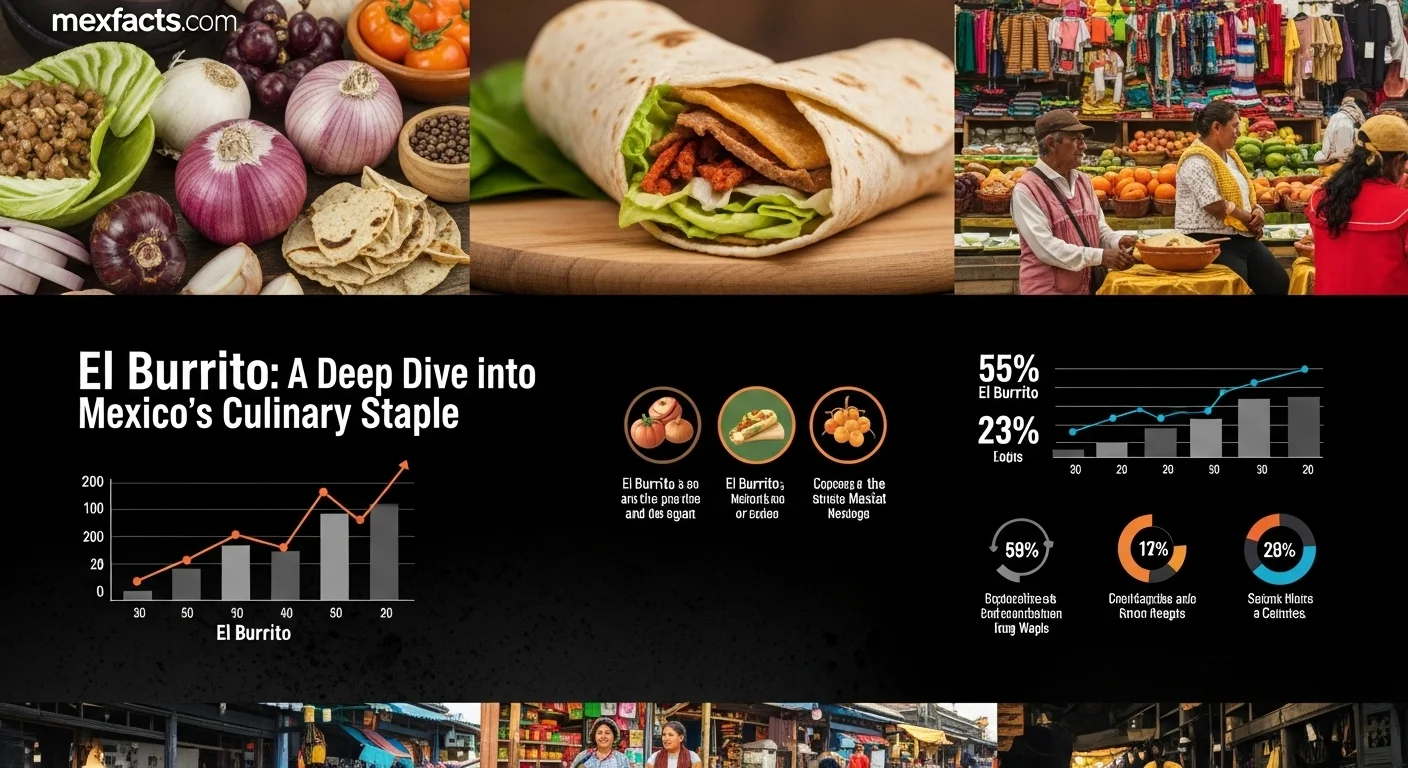
When you look at the numbers, it's truly staggering to see how a simple meal has powered a global industry. The international market for Mexican food is exploding, with forecasts predicting it will grow by over USD 114 billion by 2029 [4]. The burrito is a central pillar of this growth. In the U.S. alone, Mexican restaurants make up about 11% of all eateries, with revenues expected to hit nearly $97 billion by 2025 [2]. These aren't just abstract figures; they represent countless jobs, thriving businesses, and a profound cultural exchange, all sparked by a love for dishes like the burrito.
From Farm to Table: The Burrito's Economic Footprint in Mexico
This global hunger has a direct and positive impact right here in Mexico. The quest for an el authentico burrito, even by international chains trying to capture that magic, increases demand for our ingredients. I’m talking about the specific wheat for our flour tortillas, the dried chiles that give our guisados their unique flavor, and the beef from our northern ranches. Mexico is a world leader in exporting peppers, and a major part of that goes into creating the flavors people crave. This isn't just about farming; it's about the entire supply chain—processing, packaging, and logistics—that creates jobs and builds expertise. The success of a small, local taqueria el burrito in Sonora is built on the same foundation of quality local products that a massive international el burrito mexican restaurant needs to import for its 'authentic' menu. This shared need connects our local economies to the global stage. Even within Mexico, the food service industry is a giant, valued at over $38 billion in 2023, and our beloved burrito joints are a huge part of that, especially in the north [2].
Consumer Trends: Convenience Meets Authenticity
What's fascinating to watch are the two parallel trends in how people enjoy burritos. On one hand, there's the demand for convenience. The fast-casual model—your friendly neighborhood 'el burrito amigo'—is booming because it's quick, easy, and satisfying. Delivery and takeout have become a massive part of this. A recent survey in Mexico showed that while many people feel they don't have time to cook, they still want traditional meals, so they buy them pre-made [9]. This is where convenience wins. On the other hand, a powerful counter-movement is growing: the search for authenticity. People, especially younger generations, are tired of generic 'Tex-Mex.' They want to know the story behind their food and experience the real deal [5]. This elevates the simple, traditional Mexican burrito and creates a market for businesses that focus on heritage. You see this spectrum of opportunity everywhere: from the high-volume el burrito taqueria built for speed, to the premium el burrito mexican restaurant that sells not just a meal, but a cultural experience. Social media buzz about real Mexican food is surging [6], proving that people are hungry for knowledge as much as they are for a great burrito. The data is clear: the burrito has gone global, but its heart and economic soul remain firmly planted in Mexican soil.
The Future of the Burrito: Trends and Opportunities
So, where does the burrito go from here? I believe its future is brighter than ever, filled with incredible opportunities for anyone passionate about food and culture. The outlook is all about smart growth, blending technology, new consumer values, and a deep respect for tradition. For entrepreneurs, the fast-casual burrito model continues to be a winning formula. But the real opportunity now lies in finding a unique angle. Imagine a franchise that specializes in the regional burritos of Mexico, telling the story of each one. I’ve seen new chains find success by focusing on fresh ingredients and a strong brand story centered on finding 'el authentico burrito.' There's a huge appetite for this. A well-marketed el burrito taqueria concept straight from Sonora could be a massive hit in Europe or Asia, where people are incredibly curious about genuine food origins [8].
Innovation and Authenticity: The Path Forward
Technology is changing the game for every el burrito mexican restaurant. Digital ordering, mobile apps, and smart kitchens are becoming standard [16]. I'm particularly excited about 'ghost kitchens,' which are delivery-only operations. Think of it as the modern-day version of Juan Méndez's street cart, but with a digital storefront, allowing businesses to reach customers directly with lower costs. It’s the perfect way for an agile entrepreneur to bring their version of the perfect 'el burrito amigo' to a new city. At the same time, there's a powerful shift towards health and sustainability. The demand for plant-based and healthier options is growing, even here in Mexico [9]. This is a chance to innovate with fillings like grilled vegetables or creative plant-based proteins, all wrapped in that classic tortilla. A restaurant that tells a story of sustainability—using eco-friendly packaging and sourcing from local farms—is building a brand that people will trust and love. This perfectly complements the spirit of el authentico burrito, which has always been about simple, honest ingredients.
Ultimately, the greatest opportunity lies in authenticity itself. The world is full of Americanized burritos. The craving for the real thing is where the magic is. This isn't just about food; it's about sharing our culture. Businesses that can educate customers on the history, the regional differences, and the traditional way of making a burrito will stand out [5, 10]. Imagine a premium restaurant offering a 'tasting flight' of burritos from different northern states, each with its story. That transforms a meal into an unforgettable cultural experience. For Mexico, the future of the burrito isn't just about exporting a product; it's about sharing a piece of our soul with the world. And for anyone listening, it’s an invitation to be part of that beautiful story.
Expert Reviews
Sarah K., Traveler ⭐⭐⭐⭐⭐
I had no idea what a real burrito was until I read this. On my last trip to Chihuahua, I skipped the tourist traps and found a small roadside stand. It was simple, just shredded beef in a warm tortilla, but it was the best thing I ate the whole trip. This article is spot on.
Javier López, Entrepreneur ⭐⭐⭐⭐⭐
As someone trying to open an authentic Mexican eatery in Canada, this article was a goldmine. The breakdown of the supply chain and the emphasis on storytelling gave me a whole new business plan. It's not just about the food, it's about the culture.
David Chen, Food Enthusiast ⭐⭐⭐⭐⭐
A wonderfully written piece that gets to the heart of the matter. It corrected so many of my misconceptions about the burrito. I loved the personal touches and historical context. It feels like you're learning from a true expert who loves their culture.