
Habanero Peppers in Mexico: Varieties, Heat, and Culinary Traditions

The habanero pepper (Capsicum chinense) is celebrated worldwide for its fiery kick and distinctively fruity, floral aroma. Rooted in the agricultural heritage of the Yucatán Peninsula, authentic Mexican habaneros are protected by a prestigious Denomination of Origin. This comprehensive guide explores the habanero's Scoville heat profile, botanical varieties, cultural significance, and essential role in traditional Mexican gastronomy and value-added exports.
What Is the Mexican Habanero Pepper?
The habanero chile belongs to the species Capsicum chinense. Despite a botanical name that mistakenly suggested a Chinese origin to 18th-century European botanists, and a common name referencing Havana, Cuba, the habanero originated in the tropical lowlands of the Amazon basin before finding its true evolutionary home in Mexico's Yucatán Peninsula. Botanical and historical evidence indicates that indigenous Maya communities cultivated chiles across the peninsula for centuries, utilizing them in daily meals, medicinal preparations, and regional trade.
Today, the Mexican habanero is recognized not simply as an intense source of spice, but as an aromatic pillar of Yucatecan culinary identity. Unlike chiles defined solely by pungent capsaicin bite, a fresh habanero delivers an intricate aroma reminiscent of apricot, citrus blossom, and tropical fruit just moments before its potent warmth blooms on the palate.
Heat Profile and Flavor Characteristics
On the Scoville Heat Unit (SHU) scale, a typical habanero measures between 100,000 and 350,000 SHU. For perspective, this makes it approximately 12 to 70 times hotter than an average jalapeño (which typically ranges from 2,500 to 8,000 SHU). Specialized agricultural varieties grown under peak sun and moisture control can occasionally register even higher.
A widespread misconception is that pod color alone determines a pepper's heat level. In practice, color primarily indicates the pod's maturity stage, though specific genetic cultivars also display distinct color profiles:
- Green Habaneros: Harvested immature, green habaneros offer a crisp texture, bright grassy acidity, and direct, sharp heat. They are frequently used in quick-pickled tableside salsas.
- Orange Habaneros: The quintessential commercial variety in Mexico. As the pod ripens to a luminous orange, sweet tropical esters emerge, creating the classic harmony of floral aroma and robust heat.
- Red Habaneros: Fully ripe red pods feature deeper fruit tones, hints of berry-like sweetness, and high capsaicin concentrations.
- Chocolate and Brown Habaneros: A rarer cultivar with an earthy, slightly smoky flavor profile and a deep, lingering burn.
Heat intensity is dictated primarily by plant genetics and environmental factors—such as karst soil mineral content, sunlight exposure, and controlled irrigation—rather than color alone.
Safe Handling and Kitchen Preparation
Because habaneros carry high concentrations of capsaicinoids concentrated within their inner placental ribs and seeds, practical kitchen precautions ensure comfortable preparation:
- Wear Disposable Gloves: Always use food-safe gloves when slicing, seeding, or deveining habaneros to prevent capsaicin transfer to skin or eyes.
- Clean Surfaces Thoroughly: Wash cutting boards, knives, and prep areas with warm soapy water or alcohol-based kitchen sanitizers. Capsaicin is lipid- and alcohol-soluble rather than water-soluble.
- Modulating Culinary Heat: To capture the pepper's delicate fruity aroma with gentle heat, infuse a whole, unpunctured pod into a simmering stew or soup, removing it before plating. Mincing or blending the inner ribs releases maximum fire.
- Neutralizing Excessive Heat: When a dish or mouthful is excessively spicy, reach for full-fat dairy products (like Mexican crema, whole milk, or average queso fresco) or acidic citrus juice. Casein proteins in dairy bind to capsaicin molecules, lifting them away from heat receptors.
Denomination of Origin: Península de Yucatán
In June 2010, the Mexican Institute of Industrial Property (IMPI) published the official declaration establishing the Denominación de Origen (DO) "Chile Habanero de la Península de Yucatán" in the Official Journal of the Federation (Diario Oficial de la Federación). Governed by technical standard NOM-189-SCFI-2012, this legal designation restricts certified commercial labeling strictly to peppers cultivated within the three states of the peninsula: Yucatán, Campeche, and Quintana Roo.
Much like Champagne in France or Parmigiano-Reggiano in Italy, the designation legally protects the product's distinctive terroir. The Yucatán Peninsula features unique calcareous limestone bedrock, thin fertile soils, and high tropical humidity. This precise ecological environment concentrates the pepper's essential oils, capsaicinoids, and aroma. Regional scientific centers like the Centro de Investigación Científica de Yucatán (CICY) support this heritage by cataloging and developing registered regional varieties—such as Mayan Kisin and Mayan Ba'alche'—that improve field resistance while safeguarding authentic taste profiles.
Classic Yucatecan Dishes and Culinary Uses
The habanero is the indisputable crown jewel of Yucatecan gastronomy, providing structural balance to the region's rich, citrus-heavy, and achiote-infused cooking. Rather than serving as an afterthought, habanero is woven into the identity of landmark dishes:
- Cochinita Pibil: Suckling pork marinated in sour Seville orange juice, bitter achiote paste, and regional spices, slow-roasted in banana leaves. It is traditionally served alongside thinly sliced red onions pickled in bitter orange juice and minced habanero.
- Poc Chuc: Citrus-marinated pork cutlets grilled over charcoal, paired with fire-roasted habanero salsa and charred onions.
- Relleno Negro: Turkey or pork simmered in a rich, dark broth flavored with recado negro (charred chiles and spices), accented with habanero heat.
- Fresh Xnipec Salsa: A traditional Mayan relish whose name translates poetically to "dog's snout," playfully noting how the fiery condiment makes the diner's nose sweat. It is crafted from fresh diced habaneros, ripe tomatoes, red onions, cilantro, sea salt, and bitter Seville orange juice.
Habanero peppers also elevate a wide spectrum of Mexican dips and salsas. Traditional cooks frequently toast the peppers on a dry comal until the skin blisters, grinding them by hand in a volcanic stone molcajete Mexico style. This artisanal technique releases rich roasted aromatic oils, imparting a pleasant smokiness that balances the raw sting of the pepper.
Production, Farming, and Export Realities
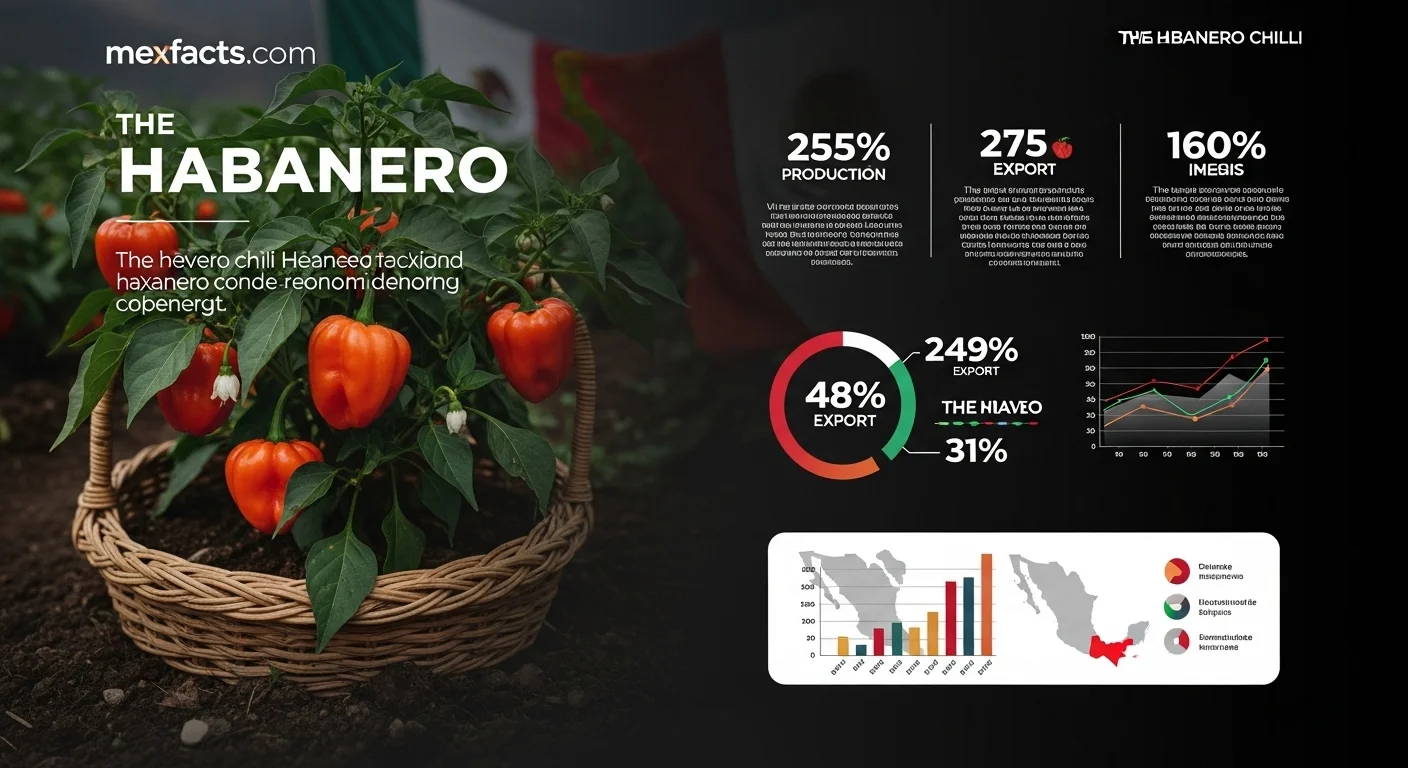
Mexico is one of the world's preeminent chile producers and exporters, with its national fresh and processed pepper exports valued well over $1 billion annually across major agricultural commodities like bell peppers, jalapeños, and poblanos. Within this expansive commercial framework, the habanero occupies a specialized, high-value artisanal niche.
The Yucatán Peninsula remains the epicenter of authentic habanero farming, generating thousands of metric tons of fresh chiles annually. This regional output represents the livelihood of more than 2,000 smallholder farming families and agricultural cooperatives across Yucatán, Campeche, and Quintana Roo. While fresh chiles dominate local markets, export demands from the United States, Canada, Europe, and East Asia continue to rise.
To meet demanding export quality benchmarks and safeguard crops against regional weather extremes, peninsula producers have increasingly integrated modern agronomic techniques. These include shade-house cultivation (mallasombra) to shield delicate blossoms from intense tropical sun, alongside precision drip irrigation systems that optimize water usage over limestone terrain. These investments support consistent harvest yields, stable farmer revenues, and environmental stewardship across traditional rural communities.
Value-Added Products and Future Opportunities
The global trajectory of the habanero extends far beyond fresh market produce. As international consumers cultivate an appreciation for nuanced, gourmet heat, value-added products represent an expanding economic frontier for Mexican agricultural enterprises:
- Artisanal Hot Sauces and Condiments
- Producers blend habaneros with endemic Yucatecan ingredients such as sour orange, honey, charred garlic, and tropical fruits like mango or mamey, delivering distinct flavor profiles that stand out in international hot sauce markets.
- Specialty Dehydrated Seasonings
- Dehydrated habanero flakes, infused sea salts, and finely milled powders provide versatile seasoning options for commercial food service, snack manufacturing, and home kitchens seeking clean, concentrated spice.
- Industrial and Pharmaceutical Applications
- Beyond culinary applications, habanero capsaicin extracts are utilized in pharmaceutical formulations for topical pain-relief creams and arthritis therapies, as well as eco-friendly, non-toxic agricultural pest repellents.
- Culinary Agrotourism
- Educational farm tours in the Yucatán Peninsula invite travelers to tour traditional milpas and modern shade houses, witness heritage harvest techniques, and learn authentic salsa preparation, directly connecting travelers to local agricultural culture.
Ensuring sustainable prosperity requires proactive stewardship. Farmers and regional authorities face the dual responsibilities of combating climate fluctuations and defending the Denomination of Origin against uncertified imitation peppers grown elsewhere. Prioritizing genetic conservation, fair trade compensation, and origin certification guarantees that the habanero continues to thrive as an enduring symbol of Yucatecan heritage.
Frequently Asked Questions
- How hot is a habanero pepper compared to a jalapeño?
- A habanero pepper rates between 100,000 and 350,000 Scoville Heat Units (SHU), making it roughly 12 to 70 times hotter than an average jalapeño, which measures between 2,500 and 8,000 SHU.
- What gives the Yucatán habanero its unique flavor?
- The distinct fruity, floral bouquet of the Yucatecan habanero stems from the peninsula's specific terroir—a combination of limestone-rich karst soil, tropical sun, high humidity, and specialized regional varieties recognized under the official Denomination of Origin.
- Does habanero color determine how spicy it is?
- Not necessarily. Color reflects botanical maturity—progressing from green to yellow, orange, or red—or specific genetic varieties like chocolate habaneros. While ripe peppers often exhibit higher sugar and capsaicin concentrations, heat levels are dictated primarily by plant genetics, soil nutrients, and growing climate.
- How can you cool your mouth after eating habanero?
- Drink whole milk or eat full-fat dairy products like Mexican crema or cheese. Capsaicin is fat-soluble, and dairy contains casein, a protein that binds to capsaicin and washes it off oral pain receptors. Water or beer is ineffective because capsaicin is not water-soluble.
Expert Reviews
Elena Petrova, Travel Blogger ⭐⭐⭐⭐⭐
I traveled to Mérida last year, and this article perfectly captures the magic of the habanero. It's not just about heat! I had a habanero-mango salsa on grilled fish that changed my life. Reading about the Denomination of Origin makes me appreciate that meal even more. Thank you for sharing this beautiful part of your culture.
David Chen, Chef & Restaurateur ⭐⭐⭐⭐⭐
As a chef opening a Mexican restaurant in Canada, this information is pure gold. I was struggling to explain to my partners why we MUST source our habaneros from the Yucatán. This article lays it all out—the history, the unique flavor, the economic importance. It's a fantastic resource.
Sofia Garcia, University Student ⭐⭐⭐⭐⭐
I'm Mexican-American and trying to connect more with my roots. I honestly didn't know the full story behind the habanero. Learning that it's from the Yucatán and not Havana, and all about the Mayan connection, was fascinating. This was written with so much heart. ¡Gracias!