
New Mexican Food in Mexico: A Tale of Shared Roots and Fiery Chiles

As someone who has spent a lifetime exploring the vast tapestry of Mexican food, I often get asked about its relatives. One of the most fascinating is New Mexican cuisine. Though it blossomed in the United States, its soul is woven from the same threads as Northern Mexico's food, thanks to our shared history with the Pueblo peoples and the Spanish. Imagine a time when the Camino Real de Tierra Adentro was the main highway, a lifeline stretching from Mexico City to Santa Fe. This road carried not just goods, but flavors and traditions that mingled and created something new. The heart of New Mexican food is its absolute devotion to red and green chile, a passion we Mexicans understand deeply. Today, as Mexico's food scene explodes with creativity, there's a growing curiosity for these authentic, regional stories. This opens up a beautiful opportunity for concepts like a 'New Mexican grill' or a 'New Mexican restaurant,' especially where tourists and expats gather. It's more than a business venture; it's a chance to explore food tourism, international friendship, and the rich, cross-border heritage that anyone searching for 'New Mexican food near me' is unknowingly tapping into.
Table of Contents
- What is New Mexican Cuisine? A Story of Shared Roots
- The Lifeline: El Camino Real de Tierra Adentro
- The Soul of the Cuisine: Red and Green Chile
- Why It Matters Today: A Culinary Bridge
What is New Mexican Cuisine? A Story of Shared Roots
Whenever I talk to friends from abroad about the incredible diversity of Mexican food, a delicious and often-overlooked cousin comes up: New Mexican cuisine. To truly appreciate the reach of Mexico's cultural influence, you have to get to know this unique culinary tradition. Born in the U.S. state of New Mexico, its DNA is undeniably Mexican. Its importance lies in this shared story—a tale of geography, history, and flavor that modern borders can't erase.
At its core, New Mexican food is a beautiful blend of Pueblo Native American, Hispano-Spanish, and Mexican traditions. It simmered for centuries, shaped by the high desert landscape and a certain isolation that allowed it to develop its own strong identity. You see, unlike Tex-Mex, which often leans on American additions like yellow cheese and ground beef, New Mexican cuisine holds tight to its ancestral ingredients. I always think of it starting with the 'Three Sisters' of ancient American agriculture: corn, beans, and squash. These aren't just foods; they've been the foundation of life here for thousands of years. When the Spanish arrived in the 16th century, they brought wheat, beef, lamb, and garlic, which slowly wove themselves into the local dishes. This fusion created the unique food we know today. So, when someone types 'new mexican food near me' into their phone, they're really searching for a taste of this layered, living history.
The Lifeline: El Camino Real de Tierra Adentro
To understand the 'in Mexico' part of this story, you have to travel back in time along the historic El Camino Real de Tierra Adentro, 'The Royal Road of the Interior Land.' This wasn't just a trail; for over 200 years since its establishment in 1598, it was a 1,600-mile cultural artery connecting the heart of New Spain, Mexico City, with the distant outpost of Santa Fe. I love picturing the caravans moving along this road, carrying not just supplies but ideas, traditions, and the very seeds of future cuisines. It was along this route that our culinary traditions traveled north. The Spanish introduced livestock, but more importantly, they brought chile peppers. Those seeds, carried all the way from Mexico, found a perfect new home in the soil and sun of New Mexico, eventually evolving into the famous varieties they celebrate today. This trail is a powerful reminder that New Mexican food isn't foreign; it's a distinct branch on our great Hispano-American culinary family tree. It was a two-way street, with knowledge flowing in both directions, shaping the cultures of what we now know as Northern Mexico and the Southwestern United States long before a line was drawn on a map.
The Soul of the Cuisine: Red and Green Chile
If there's one thing that defines New Mexican cuisine, it's the profound, nuanced, and passionate use of chile—and they spell it with an 'e' to distinguish it from the Texan stew. The entire cuisine revolves around the New Mexico chile pepper, which is used in two glorious forms: green (when it's young) and red (when it's ripened and dried). This isn't just a spice; it's the main event. In any authentic new mexican restaurant, you'll be asked the official state question: "Red or Green?" This refers to which sauce you'd like smothering your enchiladas or burritos. A little tip from me to you: if you say 'Christmas,' you get to enjoy both!
The preparation is an art. Green chile is roasted over a crackling flame until the skin blisters, then it's peeled and chopped. This gives it a smoky, fruity, and sometimes wonderfully fiery flavor. Red chile, on the other hand, is left to ripen on the vine, then dried into beautiful strings called 'ristras' that you see hanging everywhere. These dried chiles are ground into a powder or rehydrated to create a sauce with a deep, earthy, and incredibly complex flavor. It's a simpler, more direct flavor than many of our complex Mexican moles, focusing purely on the soul of the chile itself, usually with just some garlic and oregano. This focus is why a specialized new mexican grill would offer a taste that is both familiar and excitingly different from other Mexican restaurants. Other signature touches include blue corn for tortillas, piñon nuts, and their unique stacked enchiladas, often crowned with a perfect fried egg.
Why It Matters Today: A Culinary Bridge
The global importance of New Mexican cuisine is growing because food lovers are getting smarter. They don't just want 'Mexican food'; they want the real deal. They want to taste the difference between a mole from Oaxaca and, yes, the chile from a new mexican restaurant. This curiosity creates a fantastic opportunity right here in Mexico. As our own food scene continues to grow, so does our appetite for new experiences. Imagine the delight of a tourist from the U.S. or Canada, vacationing in Mexico and stumbling upon a high-quality new mexican grill. It's a taste of home, but in a new context—a culinary bridge connecting their experience to our shared culture. For us Mexicans, it’s a chance to taste a piece of our own history that took a slightly different path. The search for a 'new mexican restaurant near me' is happening worldwide, and an establishment in Mexico that answers that call is perfectly positioned to share a delicious story of culture, history, and flavor that is, at its heart, a Mexican story too.
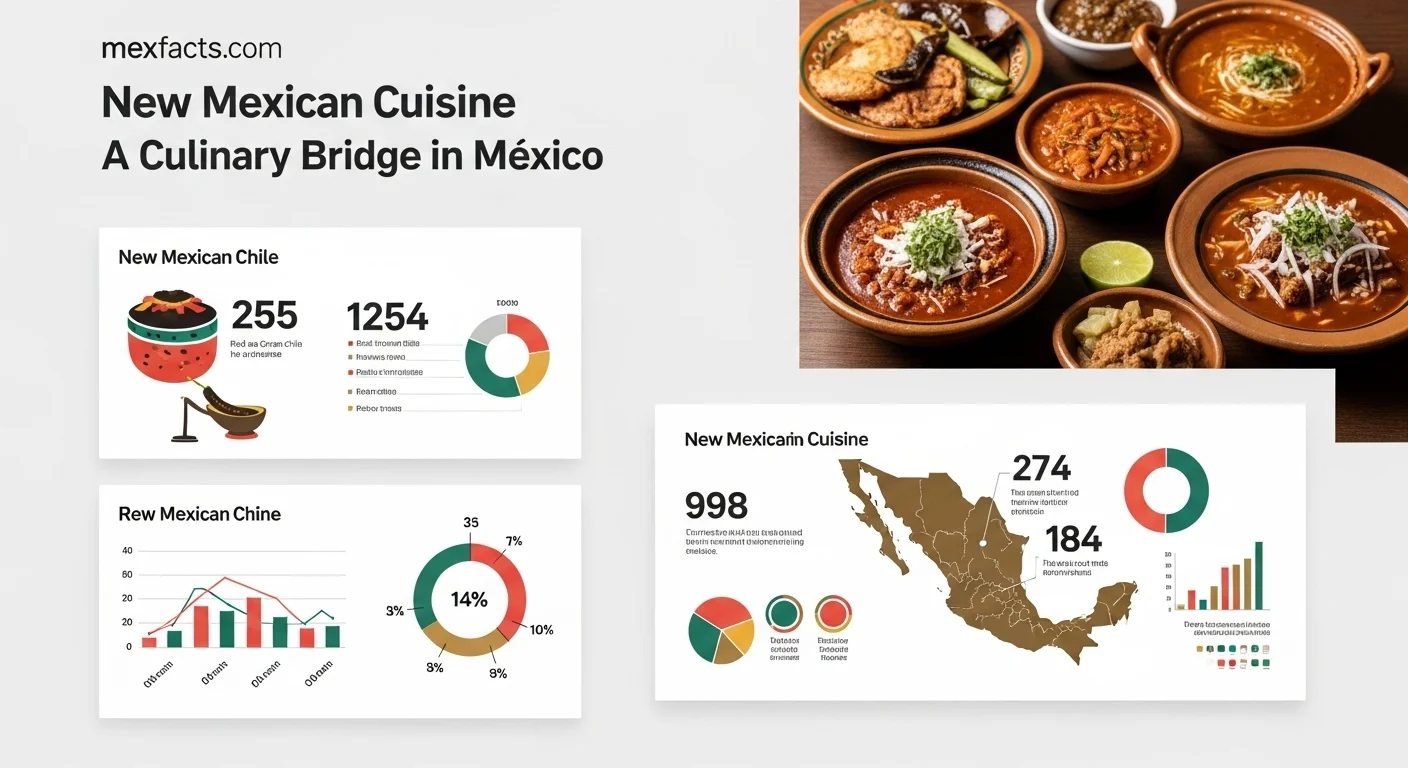
The Lay of the Land: Statistics and Potential for New Mexican Food in Mexico
So, you might be wondering, is there really a place for New Mexican food in Mexico today? Let's look at what the numbers and the culture tell us. While you won't find official data on 'New Mexican restaurants' specifically—it's still a hidden gem—we can see a clear path for success by looking at trends in food tourism, the restaurant industry, and what people want to eat. The data paints a picture of a country that is more than ready for a concept like a new mexican restaurant.
The Incredible Power of Food Tourism in Mexico
Our cuisine is a source of immense national pride and a massive draw for the world. When UNESCO named Mexican cuisine an Intangible Cultural Heritage of Humanity in 2010, it was a recognition of something we've always known: our food is history, community, and art. The economic impact is astounding. Think about this: around 30% of what international tourists spend in Mexico goes toward food. That's billions of dollars every year. In the summer of 2023 alone, our hotels and restaurants brought in an estimated MX$770.5 billion (about $42 billion USD). This isn't just about feeding people; it's about offering experiences.
Culinary tourism here is exploding, and it's projected to keep growing at a breathtaking pace. This tells me that visitors, especially younger travelers, are on a quest for authentic and unique food stories. They come for the tacos and moles of Oaxaca and Jalisco, but they are hungry for more. Imagine a tourist who loves Southwestern food finding an authentic new mexican grill in Los Cabos or the Riviera Maya. It fits perfectly into their journey of culinary discovery. With 18 official 'Gastronomic Routes' across the country, it's clear that celebrating diverse culinary experiences is a national strategy that a new mexican restaurant could easily become a part of.
Mexico’s Dynamic and Growing Food Scene
The foundation for any new restaurant is strong. Mexico's foodservice industry is a juggernaut, expected to grow from over $68 billion USD to more than $110 billion by 2030. This boom is driven by more people living in cities, a growing middle class with disposable income, and our enthusiastic adoption of technology. In 2022, about two-thirds of Mexicans were ordering food delivery up to three times a week! This shows a huge demand for convenience that any new eatery must tap into. Full-service restaurants are the biggest piece of the pie, and while our own Latin American cuisine is king, there's a growing appetite for other flavors. This tells me that our palates are adventurous. The success of chain restaurants also suggests that a high-quality, consistent concept like a new mexican grill could be scaled up if it captures the public's imagination, especially in major hubs like Mexico City, Monterrey, and Guadalajara.
What People Want and the All-Important Chile
Modern Mexican consumers, especially in the cities, love to try new things. We're curious about new cuisines, interesting ingredients, and food with a good story. There's also a big move towards healthier eating, and this is where new mexican cuisine can really shine. Its foundation of corn, beans, and squash, and the simple, natural preparation of its famous chile sauces, fits this trend perfectly. It’s not just about heat; it's about a whole spectrum of flavors from smoky to earthy.
Now, let's talk about the star of the show: the chile. While we in Mexico are masters of chile, the specific varieties grown in New Mexico's Hatch Valley give the cuisine its signature taste. This is both a challenge and a fantastic opportunity. A truly authentic new mexican restaurant in Mexico would probably start by importing Hatch chiles, which would immediately position it as a premium, unique experience. But imagine the next step. I've walked through the fields in Chihuahua, our country's biggest chile producer, and the climate and land feel so similar to New Mexico. Could we cultivate those special chile varieties here? This could spawn a whole new agricultural business, supplying restaurants in Mexico and maybe even for export. It’s a beautiful vision of synergy between a restaurant concept and our own land, creating a sustainable and powerful business model rooted in our shared history.
The Future is Bright: Opportunities for New Mexican Cuisine in Mexico
Looking ahead, the future for introducing and growing New Mexican cuisine in Mexico is incredibly promising. The opportunities go far beyond just opening a restaurant; they touch on celebrating our shared history, innovating in agriculture, and building a unique international brand. For anyone with an entrepreneurial spirit, this is a chance to tap into a profitable niche in one of the most exciting food cultures in the world. The online searches for a new mexican restaurant near me or a new mexican grill are a clear sign of a global curiosity just waiting to be satisfied with an authentic, high-quality experience.
Crafting the 'New Mexican' Experience in Mexico
The main opportunity is, of course, creating a successful new mexican restaurant. I see three key audiences: the large and growing community of North American expats, the millions of international tourists, and curious, adventurous Mexicans. Expat havens like San Miguel de Allende, Lake Chapala, and Los Cabos are perfect starting points, as many residents there already have a nostalgic love for these flavors. In major tourist destinations like the Riviera Maya, a new mexican grill would be a refreshing and unique option, standing out by offering something North American yet deeply tied to Mexican roots. And in cosmopolitan hubs like Mexico City or Monterrey, a sophisticated New Mexican eatery could easily become the next trendy spot.
Of course, execution is everything. The business must be modern, with a strong online presence and easy integration with delivery apps like Rappi and Uber Eats. The menu must be authentic, built around the classic red and green chile dishes. But there's also room for creativity—imagine a dish that combines smoky green chile with our wonderful Oaxacan cheese. The biggest puzzle, and the biggest opportunity, is the chile supply. At first, importing authentic Hatch chiles would be a mark of premium quality. But the long-term dream? Partnering with farmers in Northern Mexico to grow these chiles here. This would lower costs, guarantee freshness, and create a powerful 'Hecho en México' story for the brand.
The Story to Tell: A Culinary Bridge
The marketing for a new mexican restaurant in Mexico should be a story of connection, not importation. The message isn't 'try this American food,' but rather, 'taste a piece of our shared history.' By focusing on the Camino Real de Tierra Adentro and our common indigenous and Spanish heritage, the concept becomes a celebration of a historic bond. It's a story of culinary cousins, not strangers. This narrative would resonate deeply with both tourists seeking culture and Mexicans who are proud of our nation's profound influence. When someone searches for 'new mexican food near me' and finds your place in Mexico, the experience should be a discovery of this link. The restaurant's design, its music, and its stories should all reflect this journey.
Looking Forward: Projections and Hurdles
The outlook for Mexico’s entire foodservice industry is strong and set for continued growth. This means there's a sustained appetite for dining out and new culinary experiences. Younger consumers, in particular, are looking for quality, novelty, and convenience. However, we have to be realistic about the challenges. The main one is education. Most Mexicans are not familiar with the specific flavors of new mexican cuisine. A successful launch would need a smart marketing campaign to explain what makes it so special. I'm imagining tasting events, social media showcasing the beauty of the food, and sharing its incredible history. The other hurdle is the intense competition. Mexico's food scene is world-class. A new mexican grill can't just be good; it has to be exceptional. By delivering an authentic, high-quality experience, telling a powerful story of shared history, and tapping into the strong economic trends, New Mexican cuisine has an amazing and profitable future here in Mexico. It's a chance to bring a long-lost cousin back home.
Expert Reviews
Sarah L., Albuquerque ⭐⭐⭐⭐⭐
My family is from New Mexico, and visiting Mexico City, I never expected to find an article that so perfectly explained the connection between the food I grew up with and its Mexican roots. This piece beautifully explains the history of the Camino Real. It made me feel even more connected to my heritage.
Carlos V., Monterrey ⭐⭐⭐⭐⭐
As a chef in Monterrey, I'm always looking for new inspiration. This article opened my eyes to New Mexican cuisine. It's not foreign; it's a part of our extended culinary family. The business insights are fantastic, making me seriously consider experimenting with Hatch chiles in my kitchen.
Elena R., Mexico City ⭐⭐⭐⭐⭐
I've always been fascinated by the history of the Camino Real de Tierra Adentro. This article brilliantly connects that historic route to the food on our tables today. It's well-researched but reads like a conversation with a passionate expert. ¡Felicidades!