
Sol Mexican: How a Culinary Revolution is Lighting Up the World

When I think of the 'Sol Mexican,' I don't just think of the literal Mexican sun. I remember the feeling of warmth on my skin while walking through a market in Oaxaca, the vibrant colors of fresh produce, and the incredible energy that comes from sharing a meal. That feeling is the true 'Sol Mexican,' a concept that perfectly captures the soul of Mexico's world-famous cuisine. This isn't just about food; it's a global movement built on centuries of history, a UNESCO Intangible Cultural Heritage that has become a powerful economic force. We'll journey through the story of how ancient ingredients and rich traditions grew into a global industry, creating immense opportunities for business and investment. From the humblest street taco stand to the most elegant international restaurants, we'll explore the trends, the numbers, and the immense potential of what I call the 'sunshine' on a plate.
Table of Contents
- What is 'Sol Mexican' and Why Does It Matter Globally?
- The Deep Historical and Cultural Roots
- Global Reach and Modern Adaptation
What is 'Sol Mexican' and Why Does It Matter Globally?
The phrase 'Sol Mexican' is so much more than its translation, 'Mexican Sun.' It’s a powerful metaphor for the life-giving energy and warmth at the heart of Mexican culture, an essence that is perfectly exported through its food. When we talk about Sol Mexican, we are celebrating a culinary tradition so profound that UNESCO recognized it as an Intangible Cultural Heritage of Humanity in 2010. This honor wasn't just for the delicious flavors, but for the entire cultural ecosystem: the ancestral farming methods, the sacred preparation rituals, and the deep sense of community that sharing food creates. Every authentic Mexican restaurant and vibrant taqueria around the world, whether they know it or not, stands on this incredible foundation.
On the world stage, 'Sol Mexican' has become a seal of authenticity and a promise of a lively, genuine experience. It all started with cultural exports like Cerveza Sol, a beer born in Orizaba in 1899, which brilliantly linked its brand to the Mexican sun and took that spirit worldwide. That was just the beginning. Today, the food itself is our greatest cultural ambassador. The importance of Mexican cuisine is huge. Gastronomic tourism is a massive part of Mexico's economy, with some studies showing that about 30% of a tourist's spending goes towards food, adding up to billions of dollars each year. On a cultural level, it's a form of delicious diplomacy, introducing millions of people to the richness of Mexican heritage. Every time someone sits down to eat at a local Mexican spot in another country, they're taking part in a beautiful cultural exchange.
The Deep Historical and Cultural Roots
To truly grasp the 'Sol Mexican' phenomenon, you have to travel back in time. The very soul of Mexican cuisine is built on the pre-Hispanic trinity of maize (corn), beans, and chili peppers. For civilizations like the Aztec and Maya, these weren't just ingredients; they were the pillars of life. Corn, especially, is sacred in the Mexican identity. I've seen firsthand the reverence with which it's treated, from the fields to the kitchen. The ancient process of nixtamalization—soaking corn in an alkaline solution—is a brilliant example of early culinary science, a technique that unlocks vital nutrients and gives a real tortilla its unforgettable flavor and texture. This deep-rooted heritage is the authenticity that people all over the world are searching for.
When the Spanish arrived in the 16th century, they brought new ingredients like pork, beef, chicken, and dairy, sparking a culinary fusion, or 'mestizaje.' This beautiful blend created many of the dishes we now consider iconic. Take the taco al pastor, a global street food sensation. Its story begins with the shawarma brought by Lebanese immigrants to Mexico, which was then brilliantly adapted with local chiles and pork. It is this amazing history of adaptation and creativity that makes Mexican food so complex and exciting. It's a cuisine that is always evolving. This richness is reflected everywhere, from a casual spot grilling up street-style tacos to a high-end restaurant reimagining ancient recipes. Food is woven into the fabric of life here. Holidays and family gatherings are centered around specific dishes—mole for a wedding, tamales for Christmas, and pan de muerto for Día de los Muertos. It’s this connection between food, community, and celebration that makes it so appealing to the world; it offers not just a meal, but a genuine experience.
Global Reach and Modern Adaptation
The journey of Mexican food to global stardom picked up speed in the 20th century, largely thanks to its neighbor, the United States. This gave rise to Tex-Mex, an Americanized version that, while different, served as a crucial gateway for introducing Mexican flavors to a new audience. Some purists might turn their noses up at it, but I believe Tex-Mex was essential in creating a worldwide craving for the real deal. Today, the global palate is much more sophisticated. There's a growing hunger for authentic, regional Mexican dishes. People are no longer content with a generic taco; they want to experience the complex moles of Oaxaca or the fresh seafood tostadas of Baja California. This has opened the door for a new generation of chefs and entrepreneurs to launch specialized restaurants that celebrate the true diversity of Mexico's cuisine.
Why is it so universally loved? The flavors are bold, fresh, and deeply satisfying. The food is beautiful—the vibrant greens of guacamole, the deep reds of salsas—making it perfect for our visual, social media-driven world. There's also a strong association with health, thanks to its reliance on fresh ingredients like avocados, tomatoes, limes, and chiles, which fits perfectly with modern wellness trends. And it’s incredibly versatile. The tradition is naturally rich in plant-based and gluten-free options, like corn tortillas and bean-based dishes, meeting modern dietary needs without even trying. Success stories like the SOL Mexican Cocina chain in the U.S. prove the business potential. They've built a brand by capturing that 'Baja vibe'—fresh, coastal, and fun—and creating an upscale setting that embodies the 'Sol Mexican' ideal of sun, good food, and great times. This culinary movement is more than just a trend; it supports farming communities in Mexico, creates jobs globally, and fosters a deeper love for one of the world's most incredible cultures.
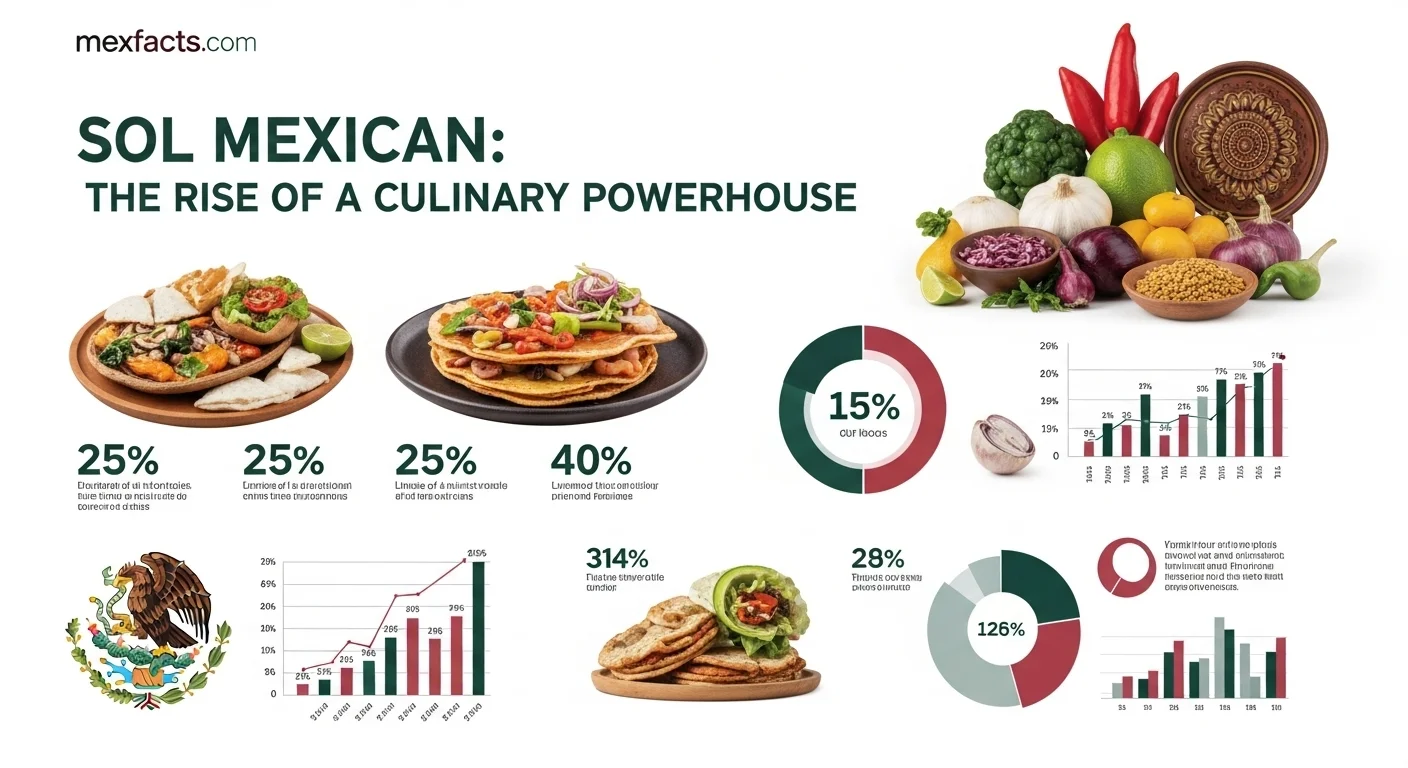
The Radiant Numbers: A Look at the 'Sol Mexican' Economy
The glow of the 'Sol Mexican' concept isn't just a cultural feeling; it's backed by some truly powerful statistics that show just how valuable this sector has become. Let's talk numbers, because the story they tell is astounding. The Mexican restaurant industry, both within Mexico and across the globe, is a massive economic engine. For any investor, entrepreneur, or even just a passionate foodie, understanding these figures reveals a landscape of incredible growth and opportunity. From a small, family-owned restaurant to a global fast-casual chain, the data speaks for itself.
The Global Appetite for Mexican Cuisine
The world's hunger for Mexican food has created a colossal market. In 2024, the global Mexican restaurants market was valued at an impressive USD 72.5 billion. And it's not slowing down. Projections show it climbing to USD 113.6 billion by 2033, growing at a steady rate of about 5.2% annually. Another forecast predicts the wider Mexican food market could surge by over USD 114 billion by 2029. This incredible growth is driven by a few key things: globalized tastes, the healthy perception of its fresh ingredients, and its amazing adaptability to different formats, from a quick-service taco grill to a sophisticated fine-dining experience.
The United States is, without a doubt, the largest and most developed international market. The U.S. Mexican restaurant sector was projected to hit a staggering $96.4 billion by 2025. Think about this: nearly 1 in every 10 restaurants in the U.S. serves Mexican food, adding up to almost 85,000 establishments. This shows that Mexican cuisine isn't some niche trend; it's a fundamental part of the American diet. States with large Hispanic populations, like California and Texas, are the heartlands, hosting 40% of all Mexican eateries in the country. While giants like Chipotle and Taco Bell lead in sales, the market is wonderfully diverse, filled with countless independent restaurants, food trucks, and family-run gems that contribute to the industry's vibrant energy.
Economic Impact Within Mexico
The 'Sol Mexican' phenomenon sends powerful economic ripples back home to Mexico. The food and beverage sector is a pillar of the national economy, contributing over US$300 million to Mexico's GDP in the first quarter of 2023 alone and employing over 2 million people. The entire agri-food sector makes up about 7% of the country's GDP. The international success of our cuisine directly fuels this engine in two main ways: food tourism and agricultural exports.
As I mentioned, culinary tourism is a goldmine, bringing in around MX$183 billion (about US$8.9 billion) each year. I've met so many travelers who come to Mexico specifically to eat—to take street food tours in Mexico City or to explore the culinary treasures of Oaxaca and Yucatán. This stream of visitors supports a massive network of restaurants, hotels, local markets, and guides.
At the same time, the global demand for authentic Mexican food drives a booming export market. In 2023, Mexico's agri-food exports surpassed $50 billion. The U.S. is the biggest customer, importing over 2 billion pounds of avocados from Mexico in a single year, mostly destined for guacamole and tacos. Mexico is also a world leader in producing organic coffee and avocados. This creates a fascinating two-way street; the U.S. sells corn and dairy to Mexico, which are then used in our food industry, while Mexico sells the finished products and core ingredients back. This symbiotic relationship means that a popular restaurant in Chicago or a taco spot in Toronto is directly connected to the livelihoods of farmers in Michoacán and Sinaloa.
Consumer Trends and What People Want Now
To see where this market is going, you have to watch what people are eating. There's a clear and growing demand for authenticity. Younger generations, especially, are looking beyond generic Tex-Mex and are actively seeking out regional specialties and traditional cooking methods. The viral fame of birria tacos, a dish from Jalisco, is a perfect example of how a specific, regional flavor can explode onto the global stage thanks to social media. This is great news for businesses that can offer a true taste of Mexico, whether it's an acclaimed restaurant or a food truck that perfects a single regional style.
Health and wellness is another huge driver. The cuisine's natural foundation of fresh vegetables, lean proteins, and ancient grains like chia and amaranth fits perfectly with modern dietary goals. As a result, we're seeing huge growth in plant-based Mexican food, with chefs getting creative with fillings like jackfruit al pastor or mushroom ceviche. Sustainability is also becoming more important, with diners choosing restaurants that focus on sourcing local ingredients and using eco-friendly practices.
The market is also breaking into different service types. Fast-casual restaurants are a major growth area, offering a higher-quality, made-to-order experience that really appeals to millennials. Of course, full-service restaurants, from casual family spots to upscale dining, still hold a huge share of the market. The rise of high-end Mexican gastronomy, led by world-renowned chefs like Enrique Olvera of Pujol, has elevated the perception of Mexican cuisine from cheap comfort food to sophisticated fine dining. This has created exciting new opportunities at the premium end of the market, proving that the 'Sol Mexican' brand can shine brightly across all price points and preferences.
The Bright Horizon: Future Outlook and Opportunities in 'Sol Mexican'
The future for 'Sol Mexican'—this global culinary movement—is incredibly bright, but it's also filled with exciting complexities. The path forward points to more growth, more diversity, and more innovation. For international investors, entrepreneurs, and business owners, understanding this future landscape is the key to tapping into the immense opportunities. So, where do you fit into this picture? Whether it's franchising a new-style taqueria or investing in sustainable farming for heirloom crops, the ways to get involved are as varied as the cuisine itself. However, we also have to be mindful of the challenges, like preserving authenticity, managing supply chains, and adapting to ever-changing tastes.
Investment and Business Opportunities
The growth of the Mexican restaurant sector is fertile ground for investment. Mexico's strategic location, especially its close ties to the huge U.S. market through the USMCA trade agreement, makes it a prime hub for both production and export. For foreign investors, the process is often straightforward, as they can typically own 100% of a company in service industries like restaurants.
Here are some key opportunities I see:
- Franchising: The Mexican restaurant model is incredibly scalable. There's a real opening for new franchise brands, especially those that can offer an authentic, unique experience that goes beyond what the current giants offer. Imagine a franchise focused specifically on the seafood of Baja California or the incredible street food of Mexico City—the audience is ready for it.
- Premium and Niche Concepts: As the market matures, there's more room for high-end and specialized dining. The success of world-class Mexican restaurants proves that people will pay for exceptional quality and creativity. This opens the door for chef-driven concepts, artisanal mezcal bars, or a restaurant dedicated to preserving and elevating ancient recipes.
- Food Technology and Delivery: Technology is essential for the future. Investing in 'ghost kitchens' that produce high-quality Mexican food for delivery is a smart way to capture the convenience-driven market. There's also an opportunity to create apps or platforms that connect food lovers with authentic, local Mexican eateries, both in their hometowns and while traveling.
- Agriculture and Supply Chain: The demand for authentic ingredients is constant. This creates opportunities in sustainable agriculture in Mexico, particularly for heirloom varieties of corn, rare chiles, and organic produce. I've seen how much this matters to chefs. Investing in logistics and export companies that can safely and efficiently get these fresh products to international markets is another critical piece of the puzzle.
- Consumer Packaged Goods (CPG): The flavors of 'Sol Mexican' don't have to stay in restaurants. There is a growing market for high-quality packaged goods like artisanal salsas, complex mole pastes, high-end ready-to-eat meals, and craft beverages like tepache or horchata. Brands that deliver authentic flavor with clean, simple ingredients have a huge advantage.
Future Trends Shaping the Industry
The evolution of Mexican food will be guided by several powerful trends:
- Hyper-Regionalism: The future is specific. I believe passionate food lovers and chefs will continue to explore Mexico's 32 distinct state culinary traditions. We'll see more restaurants and products proudly identifying as Oaxacan, Yucatecan, or Poblano, offering a deeper and more educational experience.
- Sustainability and Ancestral Practices: A return to our roots will define the next level of authenticity. This includes reviving ancient farming techniques like the 'milpa' system (the symbiotic planting of corn, beans, and squash) and a strong focus on farm-to-table sourcing. A restaurant that can share the compelling story of where its ingredients come from will build a deeply loyal community.
- Health and Wellness Integration: The cuisine will continue to align with health trends. This is more than just offering vegetarian options; it's about creatively incorporating Mexican 'superfoods' like chia, amaranth, and nopal (cactus) into modern menus.
- The Agave Revolution: The world fell in love with tequila, and now it's embracing mezcal. I predict the next chapter will introduce even more agave spirits like raicilla and bacanora to the global stage. This is a massive opportunity for bars and beverage programs.
- Global Fusion: While authenticity is king, fusion is in our blood and it sparks innovation. Creative chefs will keep blending Mexican techniques and flavors with other global cuisines, like the fascinating Mexican-Japanese fusion found in cities from Tijuana to Tokyo. This spirit keeps the cuisine alive and exciting.
Challenges and a Sunny Outlook
Despite the glowing forecast, challenges remain. The logistics of exporting fresh, exotic ingredients can be complex and expensive. Maintaining cultural authenticity in a global market is a constant effort, as there's always a risk of watering down or misrepresenting the culture. Businesses must be respectful of the heritage they are celebrating. And, of course, the market is competitive. A new taco spot has to compete not just with the big chains, but with all the other wonderful international cuisines available. However, the fundamental appeal of Mexican food—its bold flavors, rich history, and celebratory spirit—is timeless. The 'Sol Mexican' brand has firmly established itself as a global culinary powerhouse. Its journey is a beautiful testament to Mexico's profound cultural wealth and its generous spirit of sharing it with the world. For anyone looking to invest in a sector with a rich past and a brilliant future, the world of Mexican food offers a horizon full of opportunity and sunshine.
Expert Reviews
Carlos Fernandez, Entrepreneur ⭐⭐⭐⭐⭐
As someone looking to open a restaurant, this article was a goldmine. It didn't just give me numbers; it gave me the story and the 'why' behind the success of Mexican food. The passion is contagious! I feel so much more prepared to honor the culture in my business.
Samantha Reed, Food Blogger ⭐⭐⭐⭐⭐
I've always loved Mexican food, but I never understood its true depth. After reading this, my perspective has completely changed. I now see the history in every tortilla and the community in every shared meal. A beautifully written and insightful piece.
Dr. Alisha Patel, Cultural Studies Professor ⭐⭐⭐⭐⭐
This article was perfect for my research. It brilliantly connects the dots between ancient traditions, modern economics, and global trends in a way that is both academic and incredibly engaging. It's written with such genuine experience and heart. I'll be sharing this with my students.