
Mexico Resorts: Regions, Guest Needs and Booking Models

Mexican resorts represent one of the world's most mature and diverse hospitality sectors, offering fully integrated beachfront properties that combine accommodations with comprehensive dining, wellness, and recreational amenities. Whether planning an escape to the white-sand coastlines of Quintana Roo or the desert-meets-ocean geography of Baja California Sur, selecting the right resort requires understanding regional differences, booking formats, and seasonal climatic variations.
From expansive all-inclusive family destinations to boutique adults-only retreats, this guide analyzes Mexico's primary resort regions, clarifies the operational distinctions between European Plan and all-inclusive bookings, and evaluates travel seasons using verifiable industry benchmarks. Before departure, confirming required Mexico entry paperwork ensures smooth customs and immigration processing upon arrival.
What Defines a Mexican Resort: Structures and Booking Models
In Mexican tourism, a resort is fundamentally distinct from a standard commercial hotel. While urban hotels primarily provide lodging and basic business services, Mexican coastal resorts operate as self-contained destinations spanning expansive beachfront acreage. These properties integrate multi-tier swimming complexes, private beach concessions, multiple specialty restaurants, full-service wellness spas, athletic facilities, and curated daily activity programs.
A critical consideration when evaluating resorts is the underlying booking model:
- All-Inclusive (AI): The dominant model across Mexican leisure corridors bundles room accommodations, three daily meals, à la carte dining, domestic and international beverages, room service, non-motorized water sports, and daily resort activities into a single upfront rate. Advanced variants of this model, such as the all-inclusive concept at Xcaret, extend inclusions to regional eco-archeological theme parks, transportation, and specialized guided excursions.
- European Plan (EP): Accommodations are billed independently of food, beverages, and recreational amenities. European Plan properties appeal strongly to visitors seeking off-property culinary exploration in renowned gastronomic centers like San José del Cabo, Puerto Vallarta, or Playa del Carmen.
Resort Categories: Family, Couples, and Luxury Hideaways
Resort operators configure amenities, architectural layouts, and entertainment schedules to cater to specific traveler demographics:
- Family-Friendly Resorts: Built around multi-generational travel, these properties feature multi-bedroom family suites, supervised kids' and teens' clubs with structured educational programming, on-site water parks, zero-entry pools, and certified childcare staff. Families comparing destination options frequently examine Mexico family all inclusive resorts to identify properties balancing active youth programming with quiet adult relaxation zones.
- Couples and Adults-Only Resorts: Restricting guests to ages 18 and older, these retreats emphasize peaceful tranquility, romantic dining, swim-up suites, oceanfront cabanas, and couples-oriented wellness rituals, removing the active bustle of family properties.
- Boutique and Ultra-Luxury Resorts: Operating with low key-counts and high staff-to-guest ratios, these properties emphasize architectural distinction, dedicated butler services, private plunge pools, and tailored culinary programs celebrating regional Mexican cuisines.
Core Resort Regions: Caribbean, Pacific, and Baja
Mexico's geographical scale produces distinctly different resort experiences across its coastlines:
- The Mexican Caribbean (Quintana Roo)
- Stretching from Costa Mujeres through Cancún, the Riviera Maya, and Tulum, this region features warm turquoise water, powdery coral sands, and the Mesoamerican Barrier Reef. Cancún's transformation from an uninhabited barrier island into the global icon it is today established the foundation for modern Mexican resort hospitality, offering an exceptional density of five-star all-inclusive resorts.
- Baja California Sur (Los Cabos)
- Situated at the tip of the Baja Peninsula where the Sea of Cortez meets the Pacific Ocean, Los Cabos encompasses the lively marina of Cabo San Lucas and the historic colonial atmosphere of San José del Cabo, connected by the 20-mile Tourist Corridor. Renowned for dramatic desert-mountain backdrops, world-class sportfishing, and championship golf, travelers seeking high-end hospitality often select luxury Los Cabos all inclusive resorts. Note that due to steep underwater drop-offs and strong Pacific undertows, ocean swimming in Los Cabos is restricted to designated protected coves such as Medano Beach and Chileno Bay.
- The Central and Southern Pacific (Riviera Nayarit, Jalisco, Oaxaca)
- Encompassing Puerto Vallarta's Banderas Bay, the coastal enclaves of Riviera Nayarit, Ixtapa-Zihuatanejo, and the peaceful bays of Huatulco, this coast is characterized by golden-sand beaches backed by the lush Sierra Madre mountains, offering rich cultural heritage and seasonal humpback whale migration.
Master-Planned Destinations: FONATUR's Infrastructure Blueprint
The intentional structure of Mexico's resort hubs dates to 1974, when the federal government established the National Fund for Tourism Development (FONATUR, Fondo Nacional de Fomento al Turismo). Prior to FONATUR's inception, coastal tourism was largely uncoordinated. The agency created Integrally Planned Centers (Centros Integralmente Planeados, or CIPs) using strict mathematical, economic, and logistical modeling.
FONATUR secured large tracts of federal land and constructed entire primary utility systems before allowing hotel developers to build. This comprehensive planning encompassed international airport construction, modern electrical distribution, high-capacity water desalination and purification facilities, paved highways, and dedicated service communities for hospitality personnel. Destinations such as Cancún, Ixtapa, Los Cabos, Loreto, and Huatulco were created through this master-planned initiative. Official historical data and current federal urban planning frameworks are cataloged directly through FONATUR.
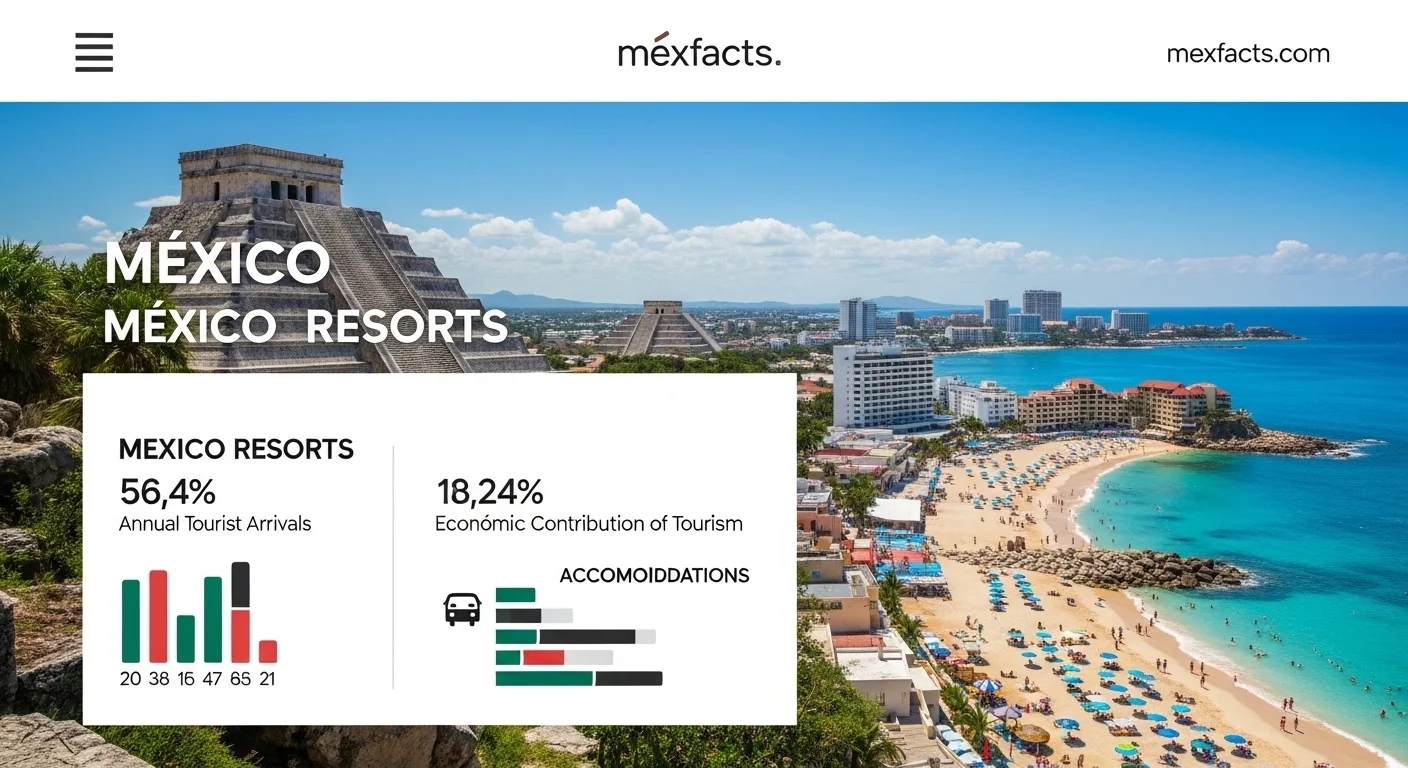
Evaluating Mexico Resorts: Industry Data, Booking Economics, and Travel Timing
Behind Mexico's resort sector is an economic apparatus that supports millions of livelihoods and drives substantial foreign direct investment. Understanding the macroeconomic foundation and operational calendar allows travelers to make well-informed, cost-effective vacation decisions.
Macroeconomic Significance and Infrastructure Quality
According to official data from the National Institute of Statistics and Geography (INEGI) through the Tourism Satellite Account (Cuenta Satélite del Turismo de México) and the Ministry of Tourism (SECTUR), tourism contributes approximately 8.5% to 8.7% of Mexico's national Gross Domestic Product (GDP). The sector accounts for over 4.5 million direct jobs, with coastal resort corridors serving as the primary drivers of employment and foreign currency generation.
Annual international visitor spending in Mexico reliably surpasses $30 billion, with international tourist arrivals exceeding 40 million individuals annually. The vast majority of international leisure travelers transit through three primary resort gateway airports: Cancún International Airport (CUN), Los Cabos International Airport (SJD), and Puerto Vallarta International Airport (PVR). When preparing for international travels to Mexico, visitors benefit from extensive non-stop flight connections across North America and Europe, as well as modernized automated border processing gates at major aerial ports of entry.
Seasonal Pricing, Climate Patterns, and the Booking Calendar
Weather and seasonal demand dictate resort pricing and room availability throughout the year:
- Peak Season (Mid-December through April): Characterized by mild, dry conditions, clear skies, and low relative humidity (temperatures averaging 75°F to 85°F / 24°C to 29°C). This window coincides with peak North American winter travel, resulting in hotel occupancy rates often exceeding 85%. Room rates reach annual highs, particularly during the Christmas, New Year, and Easter (Semana Santa) holiday periods, when reservations require 4 to 6 months of advance planning.
- Shoulder Seasons (May through June; October through November): May and early June bring rising temperatures with manageable crowds, while October and November offer lush vegetation and calm seas following the departure of summer rainfall. Nightly rates during shoulder months average 20% to 35% below peak holiday pricing, making this the optimal window for travelers seeking favorable weather without intense crowds.
- Low / Rainy Season (July through September): Daytime temperatures frequently exceed 90°F (32°C) with elevated humidity and brief, convective afternoon thunderstorms. The official Atlantic and Eastern Pacific hurricane season runs from June 1 through November 30, with historical meteorological data showing storm activity peaking between August and October. Resorts offer their deepest discounts, value-added credits, and complimentary room upgrades during this period. Travelers booking in the low season should secure flexible cancellation terms and comprehensive travel insurance.
Accounting for Inclusions and Incidental Costs
While resort reservations appear straightforward, budgeting accurately requires factoring in secondary fees and customary expenses:
- Environmental Sanitation Taxes: Municipalities in Quintana Roo (including Cancún, Riviera Maya, and Tulum) assess a mandatory Environmental Sanitation Fee (Derecho de Saneamiento Ambiental) per room per night, payable directly to the hotel upon check-in.
- Gratuities: Although all-inclusive packages incorporate mandatory service fees, discretionary tipping in Mexican pesos (MXN) or US dollars (USD) remains standard practice for bartenders, servers, baggage handlers, and housekeeping staff who provide exemplary service.
- Premium Amenities and Upgrades: Standard all-inclusive plans may exclude top-tier vintage wines, certified spa treatments, motorized water sports, and private beachfront cabana rentals. Reviewing inclusions in advance prevents unexpected portfolio additions at checkout.
Future Trends and Practical Selection Guide for Mexico Resorts
Mexico's resort industry continues to evolve in response to changing traveler priorities, expanding infrastructure, and ecological realities. Long-term modernization focuses on sustainable practices, regional rail connectivity, and distinct guest-centric hospitality models.
Emerging Corridors and Connectivity Infrastructure
While Cancún, Los Cabos, and Puerto Vallarta remain the premier anchors of Mexican hospitality, federal and private capital investments are developing emerging coastal corridors:
- Riviera Nayarit Expansion: Coastal master developments along Nayarit's coastline north of Puerto Vallarta—such as Mandarina and Costa Canuva—focus on ultra-low-density luxury resorts integrated into coastal rainforests.
- Yucatán Peninsula Rail and Aerial Links: The Tren Maya passenger rail network links Cancún and the Riviera Maya to historical archeological destinations, inland colonial cities, and southern Quintana Roo resort communities. In tandem, the Felipe Carrillo Puerto International Airport in Tulum offers direct international connectivity to the central and southern Quintana Roo coast.
- Costa Mujeres: Located immediately north of Cancún's established Hotel Zone, this continental enclave has emerged as a major hub for modern, newly constructed master-planned beachfront resorts featuring advanced environmental designs.
Environmental Stewardship and Coastal Management
Resorts throughout Mexico are increasingly judged on ecological stewardship. Marine conservation initiatives are now widely integrated into standard resort operations:
- Sea Turtle Protection: Along both Caribbean and Pacific shores, certified resort biologists monitor nesting grounds of endangered sea turtle species between May and October, safeguarding hatchlings until release.
- Sargassum Mitigation: In the Caribbean basin, pelagic sargassum seaweed arrivals during warmer months are managed via collaborative containment barriers at sea and daily mechanical shore collection coordinated by resort consortiums and maritime authorities.
- Resource Efficiency: Leading properties have phased out single-use plastics, implemented on-site wastewater reclamation systems for golf course irrigation, and deployed solar thermal installations to minimize carbon intensity.
Checklist: How to Select the Ideal Mexican Resort
When comparing candidate resorts, evaluate these core operational criteria before booking:
- Beach Swimmability and Water Conditions
- Confirm whether the property's beachfront offers safe ocean swimming. While Caribbean beaches in Cancún and the Riviera Maya are generally calm, open Pacific shorelines in Los Cabos and Puerto Vallarta often feature strong rip currents and shore breaks that prohibit ocean bathing.
- Dining Protocols and Reservation Policies
- Examine whether à la carte restaurants require morning reservations through a mobile app, have designated formal dress codes, or restrict visits to higher room categories.
- Ground Transportation and Airport Proximity
- Calculate travel distance from the destination airport. While Cancún's Hotel Zone sits within 20 minutes of the airport, Riviera Maya and Tulum resorts can require 45 to 90 minutes of ground transit. Booking verified private transfers in advance avoids excessive walk-up airport taxi fees.
Frequently Asked Questions
- Is an all-inclusive resort or European plan better in Mexico?
- An all-inclusive plan offers predictable budgeting and effortless convenience for travelers planning to spend most of their time on property. A European Plan (room-only) is ideal for visitors who plan to explore local independent restaurants, take day-long excursions, or sample regional gastronomy in town.
- Which Mexican resort region has the calmest swimmable waters?
- The Mexican Caribbean—especially Isla Mujeres, Costa Mujeres, the northern section of Cancún's Hotel Zone, and sheltered bays along the Riviera Maya—features the calmest, clearest waters for swimming and snorkeling. On the Pacific coast, Huatulco's protected bays and Banderas Bay in Puerto Vallarta offer calm waters, whereas Los Cabos features swimmable water only in designated coves like Medano Beach and Chileno Bay.
- What is the best month to visit Mexico resorts for great weather and value?
- November and May represent optimal shoulder months. In November, rainy season has ended, humidity drops, and peak holiday crowds have not yet arrived. May offers warm beach weather with substantial rate discounts before mid-summer heat and rain intensify.
- Do you still need to tip at Mexican all-inclusive resorts?
- Yes. While basic service charges are bundled into all-inclusive pricing, small discretionary cash tips in Mexican pesos (or US dollars) to bartenders, servers, and housekeeping staff are customary and warmly appreciated for attentive service.
Expert Reviews
Sarah and Tom from Chicago ⭐⭐⭐⭐⭐
My husband and I used this guide to plan our anniversary trip to the Riviera Maya. The advice on adults-only resorts was spot on! We found the most incredible place and the tip about visiting in November was perfect—beautiful weather and no crowds. It felt like we had the place to ourselves. ¡Gracias!
Maria G. from California ⭐⭐⭐⭐⭐
Planning a family vacation can be stressful, but this article made it so much easier. The breakdown of family-friendly resorts helped us choose one with an amazing kids' club. I actually got to read a book by the pool! The cultural insights were a great bonus. We'll be back!
David Chen, avid traveler ⭐⭐⭐⭐⭐
As someone interested in Mexico beyond just the beach, I found the history of FONATUR and the future trends fascinating. It's amazing to see the vision behind places like Cancún. It gives you a deeper appreciation for your vacation. A very well-written and insightful piece.