
Playa del Carmen All-Inclusive Resorts: Zones, Model & Industry Data
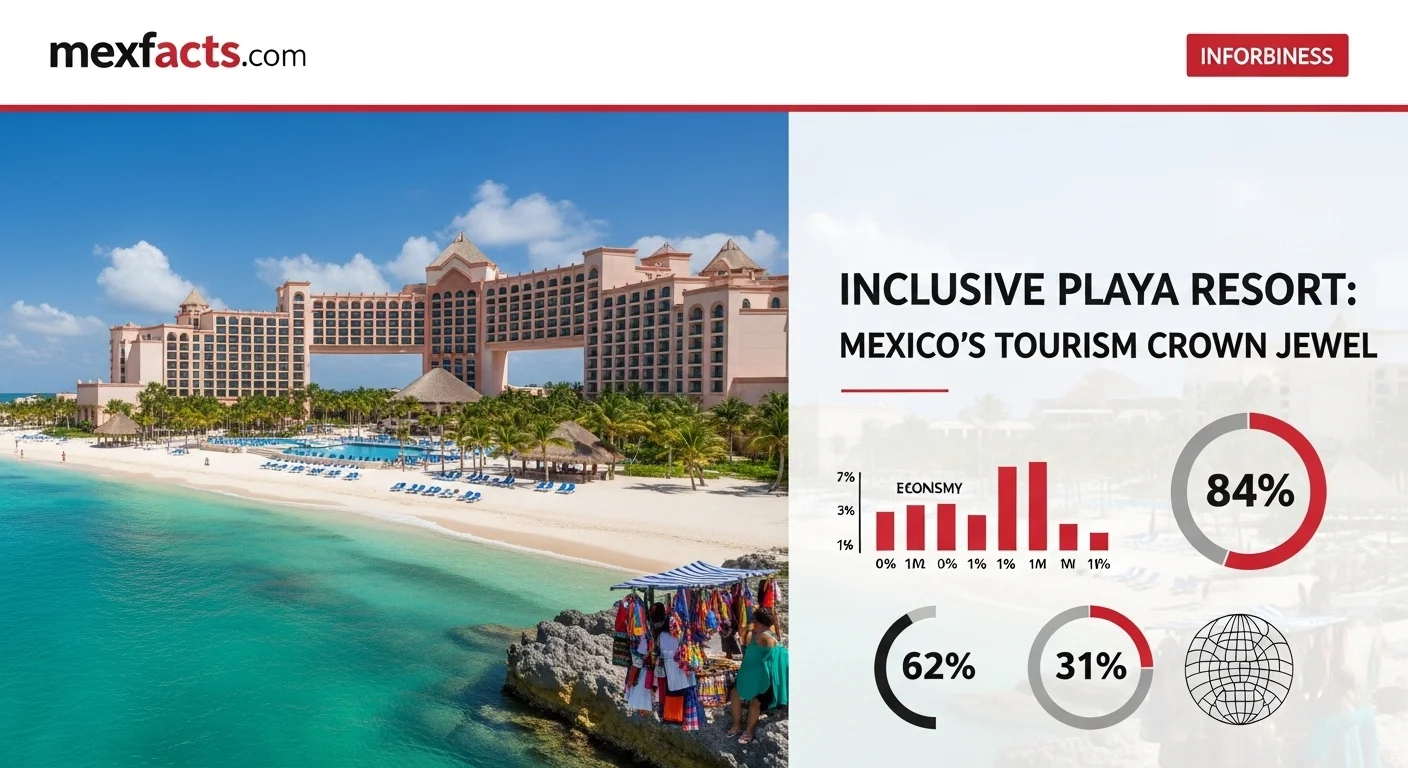
All-inclusive resorts across Playa del Carmen and the broader Riviera Maya represent one of the world's most sophisticated leisure hospitality models. Offering predictable vacation budgeting through bundled lodging, dining, drinks, and entertainment, these properties range from walkable, town-adjacent communities in Playacar to expansive, self-contained coastal compounds such as Playa Paraíso. Beyond guest convenience, the all-inclusive sector serves as the cornerstone of Quintana Roo's economy, driving billions in foreign exchange and supporting hundreds of thousands of formal jobs. This guide outlines how the resort model operates, key geographic zones, economic indicators, and how operators are adapting to modern environmental and experiential demands.
- How the All-Inclusive Model Operates in Playa del Carmen
- Key Resort Zones: Playacar vs. Highway Corridor Compounds
- Adults-Only vs. Family Property Formats
How the All-Inclusive Model Operates in Playa del Carmen
The Mexican Caribbean all-inclusive resort model has evolved far beyond standard buffet dining and basic open bars. In the modern Playa del Carmen market, properties offer tiered culinary programs featuring multi-course à la carte specialty restaurants, international sommelier programs, dedicated wellness facilities, and structured daytime recreation. For North American travelers arriving via Cancún International Airport (CUN), the primary value proposition remains financial transparency: lodging, meals, beverages, non-motorized watersports, and nightly entertainment are covered under a single upfront rate.
However, travelers should note that not every on-site amenity is included. Most properties charge additional fees for specialized spa treatments, Bali bed reservations in prime beach sectors, motor-driven marine activities, and ultra-premium wine and liquor selections. Guests must also budget for local statutory fees, such as the municipal environmental sanitation tax (derecho de saneamiento ambiental) levied per room per night by the municipality of Solidaridad. Many international travelers bundle flights and resort bookings using packaged airfare and resort deals to lock in predictable transportation and lodging costs simultaneously.
Physical inclusivity has also become a priority across premier resorts. Modern developments and recently renovated properties incorporate step-free corridors, roll-in beach access ramps, beach wheelchair availability, and zero-depth entry swimming pools. Travelers seeking specific mobility or accessibility details can consult dedicated resources on accessible Playa del Carmen travel before booking.
Key Resort Zones: Playacar vs. Highway Corridor Compounds
Understanding the geography of the Playa del Carmen hotel zone is critical when selecting a resort, as location directly determines how easily visitors can explore off-property attractions.
Playacar: Situated immediately south of downtown Playa del Carmen, Playacar is a private, gated residential and hotel development. Guests staying at all-inclusive properties here (such as the Riu, Iberostar Tucan/Quetzal, or Royal Hideaway Playacar complexes) enjoy wide beachfronts while remaining within walking distance or a short taxi ride from Quinta Avenida (Fifth Avenue). This allows travelers to combine resort convenience with independent access to local cafés, art galleries, and ferry connections to Cozumel. Review our detailed Playa del Carmen guide for insights into local transit and neighborhood layouts.
The Highway 307 Corridor and Playa Paraíso: Stretching north toward Puerto Morelos and south toward the Akumal resort area, the Federal Highway 307 corridor features expansive mega-complexes. The Iberostar Playa Paraíso cluster—comprising properties like Paraíso Beach, Paraíso del Mar, Paraíso Lindo, Paraíso Maya, and the luxury adults-only Grand Paraíso—functions as an autonomous destination resort. These properties feature championship 18-hole golf courses, multi-acre pool networks, dedicated shopping plazas, and convention facilities. While offering immense self-contained variety, leaving these resorts requires organized excursions, shuttle buses, or rental cars.
Adults-Only vs. Family Property Formats
Segmentation is a defining strength of the Riviera Maya hospitality sector. Adults-only resorts (including Secrets Maroma Beach, Valentin Imperial Riviera Maya, and Hilton Playa del Carmen) focus on tranquility, elevated fine dining without reservations, expansive hydrotherapy spas, and vibrant pool clubs suited for couples and wedding groups. In contrast, family-oriented properties feature multi-room family suites, supervised kids' clubs, teen gaming lounges, and on-site water parks, allowing families with diverse age groups to vacation safely within a secure perimeter.

Economic Contribution and Tourism Statistics
Tourism represents the primary economic engine of Quintana Roo, generating roughly one-third to nearly 40% of the state's total gross domestic product (PIB estatal). The state's economic resilience relies heavily on the steady influx of international vacationers, predominantly originating from the United States, Canada, and Latin America.
Nationally, Mexico welcomed more than 45 million international tourists in 2024, generating upwards of $32 billion in foreign exchange revenue. Cancún International Airport serves as the central conduit for this traffic, processing over 30 million arriving and departing passengers annually, with the majority of international arrivals proceeding directly to coastal all-inclusive resorts via highway shuttles. Average annual resort occupancy in the Riviera Maya typically hovers between 70% and 80%, surging past 85% during peak winter and Easter travel windows and dipping during late spring and early autumn shoulder periods.
Employment Structure and Resort Supply Chains
The operational scale of an all-inclusive property creates substantial formal employment. A full-scale resort complex housing 800 to 1,500 rooms requires an operational workforce of 1,000 to 2,500 direct employees, spanning executive chefs, line cooks, mixologists, housekeeping personnel, landscape engineers, pool technicians, security teams, and bilingual guest service coordinators.
According to federal labor statistics from Mexico's Ministry of Tourism (SECTUR), hospitality is one of the country's leading formal employers of youth and women. The indirect economic impact extends deep into regional supply networks:
- Agricultural & Beverage Sourcing: Daily procurement of fresh produce, citrus, poultry, and regional seafood from producers across Quintana Roo, Yucatán, and Campeche.
- Maintenance & Logistics: Continuous demand for commercial laundry services, HVAC engineering, water desalinization and filtration systems, and facility upkeep.
- Local Artisanship: Curated resort boutiques and seasonal craft exhibitions connecting local Maya woodworkers, textile artisans, and ceramicists with international visitors.
Regional Logistics and Transport Infrastructure
The primary access corridor to Playa del Carmen is the direct drive from Cancún to Playa del Carmen along Federal Highway 307. This four-lane highway connects Cancun International Airport to northern resort complexes (such as Playa Paraíso) within 35 to 45 minutes, reaching downtown Playa del Carmen in approximately 50 to 60 minutes under standard traffic conditions.
Regional connectivity has expanded with the operation of Tulum's Felipe Carrillo Puerto International Airport (TQO) to the south and the progressive rollout of the Maya Train (Tren Maya) passenger rail network. While highway shuttles and pre-booked private transfers remain the primary transit mode for resort guests, new transit alternatives are gradually diversifying regional transit options across the Yucatán Peninsula.
Environmental Priorities: Sargassum, Reefs, and Water Management
Managing high-volume resort operations along fragile tropical coastlines requires constant environmental oversight. The Riviera Maya faces several critical ecological challenges that directly impact daily operations and visitor experience:
Sargassum Monitoring and Beach Management: Seasonal incursions of pelagic sargassum seaweed present a recurring operational hurdle along Caribbean-facing shores during the spring and summer months. Leading resorts invest significant capital in floating offshore barrier booms, daily manual beach raking, and mechanical collection tractors to clear shorelines before seaweed decomposes. Properties located within sheltered bays or behind barrier reefs often experience milder impacts than unprotected coastlines.
Aquifer Protection and Reef Conservation: The Yucatán Peninsula sits atop a porous limestone shelf containing the world's most extensive subterranean river and cenote system, emptying into the Mesoamerican Barrier Reef. In response, modern resorts operate on-site wastewater treatment facilities (PTAR), transition to closed-loop greywater irrigation for golf courses and tropical gardens, ban single-use plastics, and enforce the use of biodegradable, reef-friendly sunscreens.
The Shift Toward Experiential and Eco-Park Integrations
Traveler expectations are shifting away from passive, static resort stays toward active cultural and nature immersion. This shift has given rise to the "experiential all-inclusive" format, popularized by regional innovators such as Grupo Xcaret. Properties like Hotel Xcaret México and Hotel Xcaret Arte incorporate full access to adjacent eco-archaeological parks (Xcaret, Xel-Há, Xplor, and Xenses) into the room rate, blending high-end Mexican gastronomy and architectural heritage with adventure tourism.
Similarly, upscale resorts across Playa del Carmen and Playa Paraíso increasingly incorporate indigenous wellness traditions, such as authentic pre-Hispanic temazcal steam ceremonies guided by resident shamans, alongside local honey-and-cacao spa treatments. This blend of authentic regional heritage with resort convenience represents the future standard of Mexican hospitality.
Frequently Asked Questions
- What is the difference between staying in Playacar versus a highway corridor resort?
- Playacar is a gated community bordering downtown Playa del Carmen, enabling guests to walk or take a brief taxi to Quinta Avenida's restaurants, shops, and ferry terminals. Highway corridor resorts (such as Playa Paraíso) are self-contained mega-complexes situated 15 to 30 kilometers outside the city center, offering extensive on-site amenities (golf courses, shopping plazas, water parks) but requiring motorized transit to reach outside attractions.
- Are tips and local taxes included in all-inclusive room rates?
- Base room rates generally include standard food, beverage, and service gratuities. However, tipping for attentive service (bartenders, housekeeping, bell staff) remains customary in Mexico. Additionally, all guests must pay the municipal environmental sanitation tax (typically 30 to 40 MXN per room per night) directly to the resort upon check-in or check-out.
- When is the best time of year to visit an all-inclusive resort in Playa del Carmen?
- The peak season spans December through April, featuring warm temperatures, minimal rainfall, and generally lower sargassum levels, accompanied by higher room rates. The shoulder months of May and November offer balanced weather with reduced crowd density, while the summer and early autumn months bring higher humidity, occasional tropical showers, and discounted resort promotions.
- How do all-inclusive resorts handle sargassum on their beaches?
- Most premier properties employ continuous coastal maintenance strategies, including marine containment booms anchored offshore, daily hand-raking at sunrise, and dedicated collection machinery. Many resorts also offer alternative swimming amenities, such as multi-tiered pool complexes, beach clubs, and organized excursions to freshwater cenotes when coastal seaweed accumulation is heavy.
Expert Reviews
Emily Carter, First-time Visitor from Chicago ⭐⭐⭐⭐⭐
I'd never been to an all-inclusive before and was a bit hesitant, but our trip to Playa del Carmen was magical. From the moment we arrived, we didn't have to worry about a thing. The food was incredible, the staff treated us like family, and the beach... well, it was paradise. This article perfectly captures why it's such a special way to experience Mexico.
David Chen, Repeat Traveler from Vancouver ⭐⭐⭐⭐⭐
I've been visiting the Riviera Maya for 15 years, and I've seen the evolution this article talks about. It's not just about quantity anymore; it's about quality and authenticity. The move towards sustainability and incorporating real cultural experiences is what keeps me coming back. Great insights here.
Sophia Gonzalez, Investor from Miami ⭐⭐⭐⭐⭐
As someone looking at business opportunities in Mexico, this breakdown was incredibly valuable. It cuts through the marketing fluff and presents the real trends—wellness, eco-tourism, and authentic experiences. It confirms my belief that the future of Mexican hospitality is bright and sophisticated.