
Mexico After Dark: A Guide to Its Vibrant Nights, Safety, and Culture
When the sun goes down in Mexico, a special kind of magic comes to life. This guide is your personal introduction to 'Mexico After Dark'—the bustling, vibrant, and economically crucial world that awakens at night. We'll take you from the legendary nightclubs of Cancun to the charming, music-filled streets of Mexico City. We'll also tackle the important questions every visitor asks, like 'Is it safe to walk in Mexico City at night?' or 'Should I drive after dark?'. We'll explore why '3-night all-inclusive vacation packages' are so popular, offering a perfect blend of excitement and security. This isn't just about tourism; it's about understanding the heart of Mexico's evening culture, whether you're planning a vacation, looking to invest, or are simply curious about the soul of this incredible country.
Table of Contents
What is 'Mexico After Dark' and Why Does It Matter?The Dual Experience: Vibrancy and CautionThe All-Inclusive Solution: A Taste of Nightlife in a Secure BubbleThe Cultural Heartbeat of the Mexican NightWhat is 'Mexico After Dark' and Why Does It Matter?
When we talk about 'Mexico After Dark,' we're describing something much deeper than just parties and bars. It’s the entire ecosystem of culture, life, and business that flourishes when the evening comes. It's a huge part of our national identity and a massive driver for our economy, attracting people from all over the world. I’ll never forget my first time walking through a colonial city's zócalo (main square) after sunset; the air cools, families come out to stroll, vendors sell delicious esquites, and the whole place just feels alive. This experience, from the high-energy clubs in Cancún to a quiet, magical stroll, is what 'Mexico After Dark' is all about. For any tourist, investor, or culture enthusiast, understanding this nocturnal world is key to truly understanding modern Mexico.
Internationally, people know us for our sunny beaches and ancient ruins, but a huge part of Mexico’s charm is the pulse of its cities after dark. This energy is what powers our tourism, which in 2023 made up a massive 8.6% of the national GDP. The nightlife economy itself—restaurants, bars, music venues, and all the transport and security that supports them—is a cornerstone of this success. Just think, a 2022 study showed that a ride-sharing service like Uber helped generate an extra MX$5.6 billion for the night-time economy. That number alone shows you how important it is for us to nurture and protect this vibrant part of our country.
The Dual Experience: Vibrancy and Caution
Experiencing a Mexican night is a beautiful duality. On one side, you have incredible fun and culture. Picture mariachis serenading you in Mexico City's Garibaldi Square, sipping artisanal mezcal in a chic bar in Roma Norte, or dancing on a beach in the Riviera Maya. On the other side, it's natural to have questions about safety. It’s the question I get asked the most: 'Is Mexico City safe at night?' or 'Is it safe to walk around after dark?' My answer is always nuanced, just like it would be for any huge city of 22 million people. Safety depends entirely on where you are. In tourist-friendly neighborhoods like Condesa, Roma, and Polanco, the streets are full of people, restaurants are open late, and there's a visible police presence, making it feel quite safe for an evening walk. However, you should always be cautious, as official travel advisories recommend. Petty crime like pickpocketing can happen in crowded places, so being aware of your surroundings is essential. My personal advice is simple and practical: use trusted ride-sharing apps like Uber instead of hailing a cab on the street late at night, stick to well-lit areas, and don't flash expensive jewelry or cash.
This concern isn't just for the capital. Another common question is, 'is it safe to drive in Mexico at night?' As someone who has driven across much of this country, my advice, along with official recommendations, is to avoid it if you can, especially on the non-toll roads, known as 'libres.' The risks aren't just about crime; they're also very practical. You might encounter unlit roads, massive potholes, unmarked speed bumps (we call them 'topes'), and even livestock wandering into the road. For longer trips, always stick to the toll roads, or 'cuotas.' They are much better maintained and safer, though even then, it pays to be cautious after sunset.
The All-Inclusive Solution: A Taste of Nightlife in a Secure Bubble
In response to this mix of excitement and caution, a specific type of vacation has become incredibly popular: the short, all-inclusive getaway. You see searches for '3 night all inclusive vacation packages mexico' and '3 night mexico all inclusive' everywhere, especially from American and Canadian travelers. These packages offer a fantastic deal: a carefully managed, secure environment where you can enjoy Mexico's wonderful hospitality, including its evening fun, without any of the stress. Resorts in Cancún, Los Cabos, and the Riviera Maya are masters of this. They create a self-contained world with amazing restaurants, lively bars, beach clubs, and nightly shows. They bring the 'Mexico After Dark' experience to you in a protected space. This model is a huge success and a foundation of the tourism industry, making a luxury holiday accessible to many. It perfectly caters to the desire for excitement blended with a strong sense of security.
The Cultural Heartbeat of the Mexican Night
The importance of the night in Mexico is deeply cultural. It's not just a modern tourist trend. Historically, the evening is a time for family and community. In countless towns and cities, as the day's heat fades, people flock to public plazas to chat, eat, and simply enjoy life together. This tradition is a cultural treasure that enriches the tourist experience, turning a simple evening walk into a cherished memory. From the candlelit vigils of Día de Muertos (Day of the Dead) to the simple joy of grabbing street tacos from a late-night vendor, the night is when you can see some of Mexico's most authentic culture. So, understanding 'Mexico After Dark' is more than just planning a trip; it's about appreciating a fundamental part of our social fabric and its powerful appeal to the world.
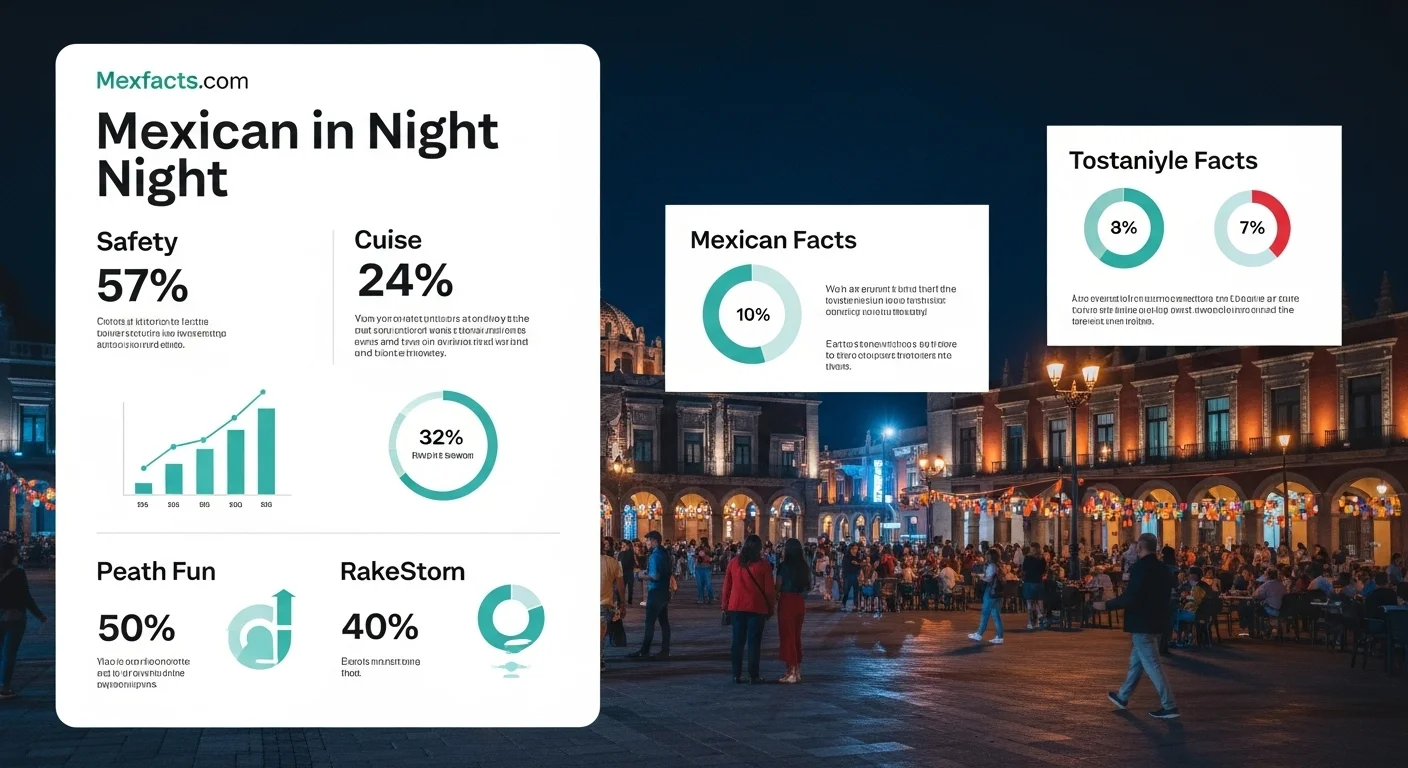
A Look at the Numbers: The Reality of Mexico After Dark
Diving into the statistics of 'Mexico After Dark' shows a powerful and vital part of our economy, driven by tourism but also involving transport, food, and thousands of jobs. The numbers tell a story of a sector that has bounced back with incredible strength after the pandemic, while also highlighting the real challenges of safety and infrastructure that we're working to improve. Understanding these figures helps paint a clear picture of the economic importance and social fabric of Mexico when the sun sets.
Tourism's Night-Time Engine: The Core Figures
Tourism is the beating heart of Mexico's nocturnal economy. In 2024, we welcomed around 45 million international visitors, a huge 7% increase from the year before, bringing us nearly back to pre-pandemic levels. These travelers spent a record $32.96 billion, which shows just how valuable the industry is. A lot of that spending happens at night. If you look at how tourism's contribution breaks down, restaurants, bars, and nightclubs make up 14.9% of the total—a direct line to the nightlife economy. When you add in accommodation (20.6%) and transportation (19.0%), it’s clear that the entire system supporting evening and overnight stays is where the majority of the economic magic happens.
The big tourist hubs are the powerhouses of this night-time engine. Cancún's airport is the gateway for nearly half (48.8%) of all foreign tourists, with Mexico City taking another 19.5%. These cities, along with Los Cabos, are the epicenters of 'Mexico After Dark.' It's no surprise that in 2024, the hotels with the best occupancy rates were in places famous for their 24/7 resort life, like Playacar (87.3%) and Cabo San Lucas (76.9%). The demand for short trips is booming, which is why you see so many '3 night all inclusive vacation packages mexico'. These are perfectly designed for the North American market, offering a quick and intense dose of sunshine and nightlife. The popularity of a '3 night mexico all inclusive' trip is a direct response to what people want: accessible, predictable, and safe fun, which often centers on the dining and entertainment provided right there at the resort.
The Safety Question: Perception vs. On-the-Ground Reality
You can't talk about Mexico at night without talking about safety. The question 'is mexico city safe at night?' is one we have to address with facts, not just feelings. According to the OECD, only about 42% of people in Mexico feel safe walking alone at night, which is much lower than the OECD average of 74%. Our homicide rate is also high. However, it's so important to put these numbers in context. Much of the violent crime is concentrated in specific areas and is often tied to organized crime, with tourists rarely being the targets.
When you look at data specific to tourist zones, the picture becomes clearer. For Mexico City, the U.S. State Department advisory is 'Exercise Increased Caution,' the same level given to major European cities like Paris and London, mainly because of petty crime. This doesn't mean there are no risks, but it frames them as similar to other global megacities. The key is knowing your geography. Neighborhoods like Doctores or Tepito are not places for tourists to wander, but Roma and Condesa have a well-deserved reputation for being safe and very walkable, even late at night. For travelers, the answer to 'is it safe to walk in mexico city at night?' truly depends on *where* you're walking. Ride-sharing apps have become a crucial piece of the safety puzzle. A 2023 report found that 91% of Uber riders in Mexico use the service specifically because they see it as a safe option, creating a trusted network that supports the entire night-time economy.
The issue of 'is it safe to drive in mexico at night?' also has a basis in data and experience. The consistent advice from government bodies and seasoned travelers is simple: avoid it if you can. The risks go beyond crime. The infrastructure itself can be a hazard, with poor lighting, unmarked speed bumps, and damaged roads being common complaints. Our network of private toll roads ('cuotas') exists for this very reason. They are better maintained, patrolled, and are generally considered much safer for night travel than the free ('libre') roads. The choice between them is a clear trade-off: you pay for safety and peace of mind.
The Future of Mexico After Dark: Opportunities and What's Next
The future for 'Mexico After Dark' is incredibly exciting, a mix of huge growth potential and important challenges to overcome. As Mexico cements its place as a top global destination, how we develop our nocturnal economy will be key to our long-term success. The outlook depends on smart investments in safety and infrastructure, creating more diverse nighttime activities beyond the typical nightlife, and embracing new trends like sustainable and wellness-focused tourism. For investors, entrepreneurs, and travelers, the years ahead are full of rich possibilities.
Growth and Investment on the Horizon
The forecasts for Mexican tourism are shining bright, which means fertile ground for any business connected to the night. The World Travel & Tourism Council (WTTC) predicts the sector's contribution to our GDP will hit a massive $281 billion by 2025, making up 15.1% of the national economy and supporting nearly 8 million jobs. This growth will naturally pour into the nocturnal economy. I see opportunities everywhere, especially in luxury and boutique hotels. In 2024, investment in luxury hotels shot up by 50%, with big names like Marriott and Hilton expanding because they see a rising demand for high-end experiences. These hotels are the anchors of 'Mexico After Dark,' offering sophisticated dining, exclusive bars, and safe, beautiful environments for guests to enjoy their evenings.
One of the biggest opportunities is in diversifying the night experience. The future isn't just about nightclubs. There's a growing hunger for unique, authentic cultural activities. I'm talking about curated late-night food tours, intimate mezcal tastings in historic mansions, evening art gallery walks, and live music venues that showcase incredible regional music. For entrepreneurs, this is a golden chance to create niche products for a more curious traveler. We can evolve the '3 night mexico all inclusive' package. Imagine future '3 night all inclusive vacation packages mexico' that are boutique and multi-location, including a guided street food tour, tickets to a thrilling Lucha Libre match, and a visit to a classic cantina, all bundled with safe, private transportation. This is the future: blending convenience with real, memorable authenticity.
Tackling the Main Challenge: Safety and Infrastructure
The greatest challenge—and therefore the greatest opportunity—for the future of Mexico After Dark is safety. Improving both the reality and the perception of safety is everything. Questions like 'is mexico city safe at night?' will remain a hurdle until we make tangible progress and communicate it well. Government plans, like a proposed $20 billion investment in tourism infrastructure by 2030, are a vital step. This money can improve street lighting, increase police presence in tourist zones, and create better public transport. For the question 'is it safe to drive in mexico at night?', the focus must be on maintaining and expanding our secure toll road network and improving conditions on secondary roads. Technology will play a huge role, from GPS systems that warn of road hazards to better emergency apps for tourists.
Solving the safety issue will unlock incredible economic potential. When visitors feel safe, they stay out later, spend more money, and explore beyond the main hotel zones, spreading the economic benefits. It creates a positive cycle: better safety leads to more positive reviews, which attracts more tourists and investment. The private sector can help by investing in its own security, well-lit properties, and safe transport for customers and staff. The best way forward is for public and private groups to work hand-in-hand.
The Rise of Sustainable and Wellness Nights
New global tourism trends are already reshaping Mexico After Dark. Sustainability is no longer a niche; it's an expectation. This opens doors for eco-friendly nightlife, like bars that minimize waste and use local ingredients, or night tours that respect nature, such as bioluminescence tours or stargazing trips. There's a growing market of travelers who want their fun to align with their values. At the same time, wellness tourism is booming. The night doesn't always have to be a party. There is a huge opportunity for businesses that offer peaceful, restorative evening experiences. Think evening yoga retreats, spas with late hours, or restaurants focused on healthy, light dinners. In our busy world, a 'night of wellness' can be just as appealing as a night on the town. These trends allow destinations to attract a wider, more diverse group of visitors.
In the end, the future of Mexico After Dark is a story of growth, innovation, and responsibility. The numbers point to a thriving sector, fueled by a global love for the unique culture we offer. The success of models like the '3 night all inclusive vacation packages mexico' gives us a strong base to build on. But to reach our full potential, we must tackle the safety concerns head-on. By investing in infrastructure, embracing new ideas, and aligning with modern values, we can cultivate a nocturnal economy that is not only profitable but also safe, inclusive, and culturally rich, ensuring the magic of Mexico's nights can be enjoyed for generations to come.
Expert Reviews
Sarah P., First-Time Visitor ⭐⭐⭐⭐⭐
I was so nervous about traveling to Mexico City alone, especially about going out at night. This article gave me the confidence to explore neighborhoods like Condesa and Roma in the evening. The advice to use ride-sharing apps was a lifesaver. I felt completely safe and had the most amazing street tacos at 10 PM!
Carlos Mendoza, Entrepreneur ⭐⭐⭐⭐⭐
A fantastic and realistic overview. I'm looking to start a curated culinary tour business, and this breakdown of the 'nocturnal economy' and the growing demand for authentic experiences is exactly the market validation I was looking for. It goes beyond the generic tourist info.
Mark and Jenna T., Anniversary Trip ⭐⭐⭐⭐⭐
We booked a 3-night all-inclusive in the Riviera Maya, and this article helped us understand what to expect. It also gave us the courage to book one excursion outside the resort to a local restaurant for dinner. It was the highlight of our trip! Great, balanced perspective.