
Is Sinaloa Safe? An Honest Traveler's Guide to Mexico for 2025

Whenever friends or colleagues ask me, 'Is Sinaloa safe?' my answer is never a simple yes or no. It can't be. Sinaloa is a land of incredible contrasts. On one hand, you have the sun-drenched beaches of Mazatlán, a place I've seen full of laughing families, and fertile valleys that feed millions across North America. On the other hand, its reputation as the cradle of the Sinaloa Cartel casts a long, unavoidable shadow. This guide is my attempt to look past the headlines and offer a real, nuanced perspective. Whether you're a tourist dreaming of the 'Pearl of the Pacific' or a businessperson looking to invest in 'Mexico's Breadbasket,' you need to understand the true lay of the land. We'll explore the official travel warnings, not as stop signs, but as important pieces of a larger puzzle. By looking at what life is really like in cities like Culiacán, Mazatlán, and Guasave, my goal is to give you the insight you need to make smart, informed decisions about this captivating and vital piece of Mexico.
Table of Contents
- The Sinaloa Paradox: What 'Sinaloa Safe' Really Means
- The Two Faces of Sinaloa: A Mexican Perspective
- Is Culiacán Safe? A Look at the Capital
- Is Guasave Safe? An Agricultural Hub
- Why Sinaloa's Safety Matters Globally
The Sinaloa Paradox: What 'Sinaloa Safe' Really Means
The question 'Is Sinaloa Safe?' isn't just a search query; it's a conversation starter packed with concern, curiosity, and a hint of fear. I've had this conversation many times. Sinaloa, a beautiful state hugging Mexico's Pacific coast, lives a double life on the world stage. It's globally praised as an agricultural giant, a key reason your winter tomatoes are so fresh, and it’s home to Mazatlán, a tourism jewel. But it's also infamous as the historic heartland of the Sinaloa Cartel. [29] This deep-seated duality is what we need to unpack. When people ask, is it safe to travel to Sinaloa, Mexico, they are trying to understand how these two realities can exist in the same place.
Here’s the first thing to know: safety in Sinaloa isn't a blanket condition. It changes from city to city, and even from neighborhood to neighborhood. The experience of a tourist sipping a margarita in a guarded Mazatlán resort is a world away from the risks faced by someone venturing into the rural highlands. Understanding this is key to having a realistic conversation about visiting or working here.
The Two Faces of Sinaloa: A Mexican Perspective
To get the full picture, you have to appreciate Sinaloa's place in Mexico's heart. We call it 'Mexico's Breadbasket' for a reason. Its rich valleys produce a huge portion of the vegetables we eat in Mexico and export to the U.S. and Canada. [18] I remember driving through the state and being amazed by the endless fields of green—it's an engine of our national economy and a source of great local pride. Fishing and manufacturing are also booming.
For decades, this prosperity has shared space with organized crime. The Sinaloa Cartel is woven into the state's history, creating a social fabric that can be hard for outsiders to understand. The Mexican government has tried many strategies, from deploying the National Guard to targeting cartel leaders. But it's important to understand the nature of the violence. Most of the shocking headlines you read are about conflicts between rival groups or clashes with authorities. [48] While this can create a dangerous environment, it’s different from random crime targeting tourists. Recently, things have been tense due to an internal power struggle within the cartel, causing a spike in violence, especially in the capital. [43, 50]
This brings us to specific places:
Is Culiacán, Sinaloa safe?
Culiacán is the state capital and its vibrant heart. It's a modern city with universities, great food, and bustling commerce. It is also, without a doubt, the cartel's operational center. The city has witnessed explosive events like the 'Culiacanazo' in 2019 and the 2023 capture of Ovidio Guzmán, which led to the entire city being shut down by cartel roadblocks and gunfire. [20] Because of this, when asked 'is it safe to travel to Culiacan, Sinaloa,' the answer has to be a very cautious 'no' for tourists. While most residents go about their daily lives, the risk of getting caught in the crossfire is real and unpredictable. Government warnings, like the U.S. Department of State's, consistently advise against all travel here. [5, 8, 10, 14, 19] If you absolutely must go for business, you need a solid plan, local contacts you trust, and to keep an extremely low profile.
Is Guasave, Sinaloa safe?
Guasave is another key agricultural city, nestled between Culiacán and Los Mochis. It’s not a tourist hotspot; visitors are almost always there for agribusiness. So, 'is Guasave, Sinaloa safe'? It's relative. Guasave doesn't see the kind of dramatic, high-profile violence that Culiacán does. However, it's still in Sinaloa. The same general risks apply. You should be highly cautious, avoid driving on highways after dark, and always be aware of your surroundings. [11] Like Culiacán, it falls under the general 'Do Not Travel' advisory for the state, meaning any trip should be for essential purposes and with safety measures in place.
Why Sinaloa's Safety Matters Globally
Sinaloa's security situation has ripples that are felt far beyond its borders. First, tourism. Mazatlán is a lifeline, drawing hundreds of thousands of Americans and Canadians each year who fuel the economy. [15, 27] There's a concerted effort to keep the tourist areas, like the 'Golden Zone' (Zona Dorada), safe and separate. This creates confusion when tourists see a lively, welcoming resort city but are faced with a stark Level 4: Do Not Travel advisory from the U.S. State Department. [5] My advice to travelers is to understand this: you can have a wonderful, safe vacation by staying within the well-policed tourist zones and being smart (don't flash expensive jewelry, for example), but you must respect that the underlying risks in the state are very real. [22]
Second, trade. Those vegetables from Sinaloa's fields are on dinner tables across North America. The security of the supply chain—from the farm to the border—is a matter of economic importance for several countries. Instability can disrupt this flow. Companies that have invested heavily in Sinaloa's farms and packing plants watch the security situation like hawks. [7, 18, 26]
Finally, this all comes back to official travel advisories. Governments like the U.S., UK, and Canada issue these based on credible intelligence. The U.S. 'Level 4: Do Not Travel' advisory for Sinaloa is their highest warning, citing widespread crime and kidnapping risk. [8, 14] It bluntly states that violent crime is 'widespread and common.' [10] The UK government gives similar advice, though it makes an exception for those flying directly into Mazatlán and staying in the tourist areas. [37]
It's vital to know what these advisories mean. They aren't a travel ban, but a serious warning. They are the official answer to 'is it safe to travel to sinaloa'—and that answer is that the risk is high. It's up to each traveler to weigh that warning against their plans and take every precaution to stay safe.
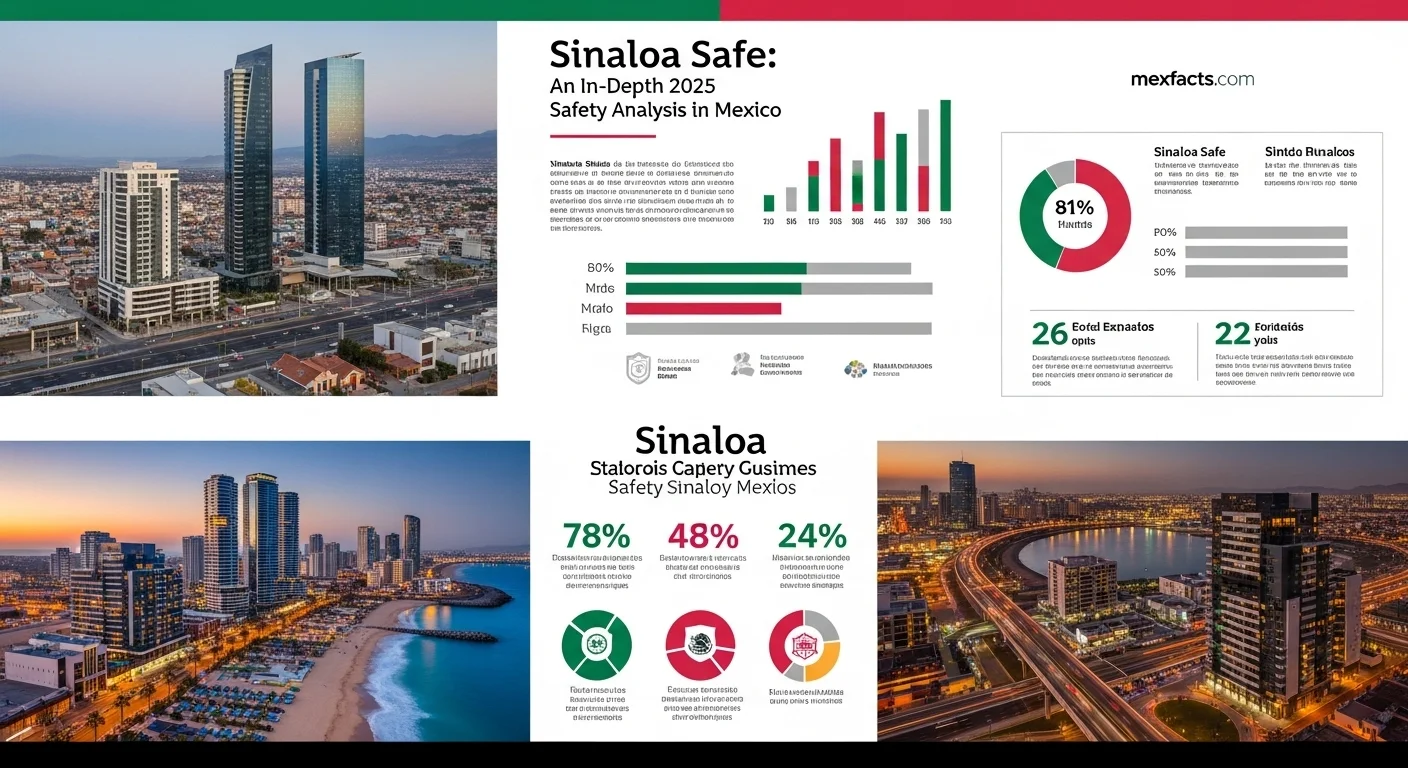
The Real Numbers: A Look at Safety Data in Sinaloa
To truly understand the situation in Sinaloa, we have to look beyond personal stories and dig into the data. Numbers from Mexican government bodies like SESNSP (which tracks crime) and INEGI (the national statistics agency) help paint a clearer, more objective picture. While no crime data is perfect, it gives us the best available look at the trends.
Violent Crime and Homicide Rates
Homicide rates are the statistic everyone points to first. According to the 2024 Mexico Peace Index, things in Sinaloa got a bit worse in 2023, with the homicide rate climbing by 12%. [20] But to put that in perspective, while it's an unsettling increase, it's still dramatically lower than the peak violence the state saw back in 2017. [20] The situation is volatile. More recent events in late 2024 have shown just how quickly things can change. An internal war within the Sinaloa Cartel led to a terrifying spike in murders, with some reports claiming more homicides in a three-month span than in all of 2023. [43] This proves how fragile the peace can be when cartel dynamics shift. [21]
When you ask is Culiacan, Sinaloa safe and look at the stats, the answer is sobering. The capital city is where the majority of the state's violence is concentrated. In 2023, Culiacán's homicide rate was nearly double the state average, placing it firmly among Mexico's more violent cities. [20] It's not the most dangerous in the entire country, but it's a place where risk is statistically high. [49]
In contrast, Guasave doesn't usually make international headlines for violence. For those asking if is Guasave, Sinaloa safe, the perception is that the immediate danger is less than in the capital. However, it's important to know that the 2024 Mexico Peace Index found that the overall rate of violent crime in Sinaloa—robbery, family violence, sexual assault—hit a record high in 2023. [20] This means that even if you're not caught in a cartel shootout, the general level of crime affecting everyday people is a serious concern across the entire state.
Kidnapping, Extortion, and Other Threats
Beyond homicides, other crimes create a climate of fear. The U.S. State Department specifically warns about the high risk of kidnapping and carjacking. [8, 10, 19] The 2024 Mexico Peace Index revealed a truly alarming statistic: the rate of kidnapping and human trafficking in Sinaloa skyrocketed, reaching the highest in the country in the last six years. [20] This isn't just a number; it's a direct and terrifying threat, especially for business travelers or potential residents.
Carjacking is also a known danger, particularly on the highways. U.S. government alerts have specifically mentioned armed carjackings on Federal Highway 15, the main road that cuts through the state. [5] This is crucial information for anyone thinking of driving and reinforces the advice I always give: stick to the toll roads (cuotas) which are better maintained and patrolled, and never, ever drive at night. [11]
The Perception Gap: How Safe It Feels vs. How Safe It Is
One of the most fascinating things about Sinaloa is the difference between how safe it feels depending on who you are and where you are. Locals in many areas have adapted their lives to minimize risk—they know which neighborhoods to avoid and when to be home. Their perception of safety is often low.
Then you have the tourists in Mazatlán. Inside the Zona Dorada or the beautifully restored historic center, with visible police patrols and a relaxed vacation vibe, it can feel like one of the safest places on earth. This is the 'tourist bubble.' [17] The danger is that this feeling can lead to a false sense of security, tempting visitors to let their guard down and wander into areas where the risks are much higher. [12] Answering the question is it safe to travel to Sinaloa, Mexico, means holding both truths at once: respecting the safe experience inside the tourist zones while acknowledging the statistically proven dangers that exist just beyond them.
Economic Health as a Sign of Stability
Finally, let's look at the money. A region in total chaos doesn't attract hundreds of millions in Foreign Direct Investment. In 2024, despite all the security challenges, Sinaloa saw a huge 50.8% jump in Foreign Direct Investment (FDI), with the U.S. and Spain leading the charge. [7] This capital flowed mainly into the state's bedrock industries: agriculture and manufacturing. [7, 28]
This tells me that big international companies, after doing their homework, see manageable risks and viable opportunities here. This doesn't erase the security problems—these companies have their own extensive security teams for a reason. But it does show that Sinaloa is far from a failed state. This continued investment provides jobs and fuels development, which is ultimately the best long-term path toward greater security. [23]
The Future of Sinaloa: A Look at Opportunities and Challenges
So, what does the future hold for safety in Sinaloa? It's a complicated picture, shaped by government action, cartel politics, and economic tides. The path forward will have its ups and downs, and anyone involved with the state, from tourists to investors, will need to stay informed and adaptable.
Future Security: What to Expect
The security forecast for Sinaloa is a mix of hope and hard reality. The biggest challenge, of course, is the deep-rooted presence of organized crime. As we saw in late 2024, a power vacuum or internal feud within the Sinaloa Cartel can ignite intense violence with very little warning. [43, 50] Experts suggest that rival cartels might try to take advantage of this instability, potentially leading to more turf wars. [24] The government's current security strategy is a topic of hot debate, and its long-term success is still an open question. [24]
However, there are glimmers of hope. On a national level, Mexico has seen a slow but steady decline in its overall homicide rate from the peak years. [20, 45] The new presidential administration is emphasizing strengthening institutions and intelligence. [21] For Sinaloa, success will depend on making these national goals a local reality. This means more than just policing; it means tackling the roots of crime—poverty and lack of opportunity—and fighting the corruption that lets it flourish.
Golden Opportunities: Business and Growth
Even with the security concerns, Sinaloa is a land of incredible economic potential. From my experience, its resilience is remarkable. For smart investors and businesses, the trick is to navigate the landscape with open eyes.
1. Agribusiness and a Tech-Powered Future
Sinaloa will always be 'Mexico's Breadbasket.' [23] Its role as a food supplier to the world is secure. The real opportunity now is in innovation: think advanced irrigation, sustainable farming, and high-tech greenhouses. [18] For international firms, the question isn't just 'is it safe to travel to Sinaloa,' but 'how do we operate here safely?' The answer involves solid security plans for staff, secure transport for goods, and building strong relationships within the local community.
2. Mazatlán: Tourism and Real Estate
Mazatlán continues to be the state's shining star, welcoming over 5 million visitors in 2023. [15] Its future depends on protecting the 'safety bubble' that tourists enjoy. Investment in hotels and infrastructure is strong, but everyone knows that perception is fragile. A single major incident could do immense damage. This makes security a top priority for both the government and private businesses. For tourists or real estate buyers, the answer to 'is it safe to travel to Sinaloa, Mexico' often comes down to Mazatlán, which is widely considered safe within its main tourist areas if you use common sense. [17, 27]
3. Nearshoring and a New Industrial Wave
The global trend of 'nearshoring'—moving manufacturing closer to North America—is a huge opportunity for Mexico, and Sinaloa wants a piece of the pie. [23] Its Pacific ports and transport routes are major assets. But to attract big players in electronics or automotive parts, the state must tackle security head-on. A company won't build a factory if it can't guarantee the safety of its people. Questions like 'is Culiacan, Sinaloa safe' or 'is Guasave, Sinaloa safe' become deal-breakers. The state's success here will be directly tied to its ability to provide secure industrial zones.
The Path Forward: A Final Word of Advice
The challenges are real. The power of cartels and corruption can't be understated. It will take a long time and a lot of hard work to change the state's international reputation. But Sinaloa's economic heart beats strong, giving everyone a powerful reason to strive for a safer future.
For any visitor or investor, my final advice is this: do your homework. Don't rely on simple headlines. The real answer to 'is it safe to travel to Sinaloa' is, 'it depends.' It depends on where you are going (the Mazatlán Golden Zone is not the same as a rural highway at midnight), your reason for being there, and the precautions you take. Be smart, stay informed with official travel advisories, don't flash wealth, and if possible, connect with trusted local contacts. With the right approach, you can safely experience the incredible spirit and opportunity this dynamic state has to offer. [9, 11, 22]
For a deeper dive into Mexico's broader economic climate, which directly impacts the resources available for security and development, the Mexico Country Outlook 2025 from the Baker Institute offers valuable projections and analysis. [24]
Expert Reviews
Laura from Vancouver, Tourist ⭐⭐⭐⭐⭐
I was so nervous about visiting after reading the news, but my husband and I wanted to see Mazatlán. This article gave us the confidence to go, but with a plan. We stuck to the Golden Zone and the Historic Center, didn't go out super late, and had the most amazing, relaxing vacation. It's beautiful, and the people were so welcoming. Being informed made all the difference!
Michael Chen, Supply Chain Consultant ⭐⭐⭐⭐
This is the most balanced analysis I've found. My company invests in Mexican agriculture, and Sinaloa is key to our operations. This guide doesn't sugarcoat the risks in places like Culiacán but also correctly highlights the economic resilience. The distinction between cartel-on-cartel violence and the general safety environment was particularly useful for our risk assessment. Great work.
Carlos Gutiérrez, Mexican-American Visitor ⭐⭐⭐⭐⭐
As someone whose family is from Sinaloa, it's painful to see my home state only mentioned for bad news. This article felt... honest. It acknowledged the danger, which is real, but also the beauty, the industry, and the spirit of the people that I know and love. Thank you for showing both sides of the coin. It's a must-read for anyone trying to understand the real Sinaloa.