
Is Cancun's Hotel Zone Safe? A Traveler's Guide to Mexico's Tourist Zones

When people ask about traveling to Mexico, the first question is almost always about safety. This is especially true for beautiful places like Cancun. In this guide, I'll walk you through what we call 'Zone Safe' areas, focusing on the famous Cancun Hotel Zone. We’ll answer the big question: how safe is it, really? I'll share my experiences and insights, moving past scary headlines to show you the reality on the ground. We'll look at the strong security you'll see, compare the vibe inside the Hotel Zone to downtown Cancun, and look at the real numbers. This is for anyone—a family on vacation, an investor, or just a curious traveler—who wants to understand how Mexico keeps its most precious tourist spots safe and welcoming for millions of visitors every year. My goal is to give you a clear, honest picture so you can feel confident and excited about your trip.
Table of Contents
- What is a 'Zone Safe' in Mexico and Why Does It Matter?
- The Anatomy of a 'Zone Safe': The Cancún Hotel Zone Model
- The Crucial Distinction: Is Cancun Safe Outside the Hotel Zone?
- International Perception vs. On-the-Ground Reality
What is a 'Zone Safe' in Mexico and Why Does It Matter?
When you hear the term 'Zone Safe' in Mexico, think of it as a bubble of security created specifically for travelers. These are the tourist areas, or Zonas Turísticas, that have been carefully designed to make sure visitors feel safe and comfortable. The most famous example, and one I know very well, is the Cancún Hotel Zone (or Zona Hotelera). It’s a 14-mile-long strip of paradise that has become the blueprint for tourist destinations worldwide. Understanding how these zones work is key for any traveler, because it directly answers the question that's on everyone's mind: how safe is the Cancun Hotel Zone? The answer isn't just a simple yes or no; it’s a story about smart planning, dedicated security, and the incredible economic importance of tourism to Mexico.
Internationally, these 'Zone Safe' areas are everything. Tourism is a huge part of Mexico's economy, bringing in billions of dollars and creating millions of jobs. Places like Cancun, Los Cabos, and the Riviera Maya are the engines of this industry. Because of this, making sure these places are safe isn't just a good idea—it's a national priority. The world's perception of safety can determine whether a family books a vacation or a company invests in a new resort. That's why the question, is the Hotel Zone in Cancun safe, is taken so seriously. The positive answer you feel when you're there, backed by a very visible security presence, is the foundation of Mexico's status as a top travel destination.
The Anatomy of a 'Zone Safe': The Cancún Hotel Zone Model
To truly get the 'Zone Safe' idea, you have to look at how the Cancún Hotel Zone was built. This wasn't a town that grew over time; it was a massive project started in the 1970s by FONATUR, the government's tourism fund. They took a deserted strip of sand and dreamed up a paradise where safety was built-in from the start. Today, you can see that vision come to life. The Hotel Zone feels like its own world. It has one main road, Boulevard Kukulcan, making it easy to monitor. The world-class hotels, the shopping malls like La Isla are stunning, and the restaurants are top-notch. Because everything a tourist needs is concentrated here, security resources can be concentrated here too. From the moment you arrive, you’ll notice a constant, reassuring presence. You'll see the Tourist Police, State Police, and even the National Guard patrolling the beaches and public areas. I've often seen Mexican Navy boats patrolling the coast as well. This is all on top of the private security at every hotel and nightclub. This whole system is designed to provide a firm 'yes' when you ask, is it safe in the Cancun Hotel Zone?. My experience, and that of millions of others, confirms it. The main things to watch out for are the same as in any tourist hot spot globally: petty theft like pickpocketing or leaving your phone on a beach towel. Violent crime against tourists who aren't looking for trouble is incredibly rare here. The government has poured immense effort into protecting this gem, and it shows.
The Crucial Distinction: Is Cancun Safe Outside the Hotel Zone?
This is a fair and important question. When you leave the tourist bubble, is it still safe? This is where a little nuance comes in. Downtown Cancún, or 'El Centro,' is where most locals live and work. I love visiting El Centro for its authentic feel—the bustling markets, the small family-run taquerias, the beautiful parks. It’s a wonderful cultural experience, but it doesn't have the same blanket of security as the Hotel Zone. Statistically, crime rates are higher in the residential areas outside the Hotel Zone. It's crucial to understand that these incidents are almost always related to local disputes and rarely, if ever, involve tourists. However, it's smart to be more aware. Travel advisories from governments like the U.S. often suggest sticking to well-lit, busy areas, especially after dark, which is good advice for any city in the world. This doesn't mean you should avoid downtown. Not at all! Millions of tourists safely explore it every year. The key is simply to use common sense. Use licensed taxis or trusted apps like Uber, don't flash expensive jewelry, stay where the crowds are, and be cautious at night. The difference between the Hotel Zone and El Centro really highlights how effective the 'Zone Safe' concept is. One is a perfectly curated environment for tourism, and the other is a real, vibrant city. Knowing this lets you enjoy both safely and on your own terms.
International Perception vs. On-the-Ground Reality
The image of Mexico in international news can be intense. Headlines about crime in specific parts of the country can make it seem like the entire nation is unsafe. I've had friends from abroad ask me if it's okay to even visit. This is the constant challenge: bridging the gap between perception and reality. The truth on the ground, especially in the 'Zone Safe' areas, is a world away from those scary headlines. For perspective, the U.S. Department of State's travel advisory for Quintana Roo (where Cancun is) is 'Level 2: Exercise Increased Caution.' This is the same level given to places like France, Italy, and the UK. This context is everything. The advisory simply means 'be aware of your surroundings,' not 'don't go.' The answer to how safe is the Cancun Hotel Zone is often best found in the stories of the millions of people who visit every year without a single issue. In 2023, over 30 million passengers passed through Cancun's airport. That’s a massive vote of confidence. The government knows that perception matters, so they've invested heavily in making security visible. The Tourist Security Battalion, a special unit of the National Guard, patrols these areas not just to keep people safe, but to show people they are safe. It's a powerful and practical statement that helps ensure the reality of a wonderful, welcoming vacation wins out over the headlines.
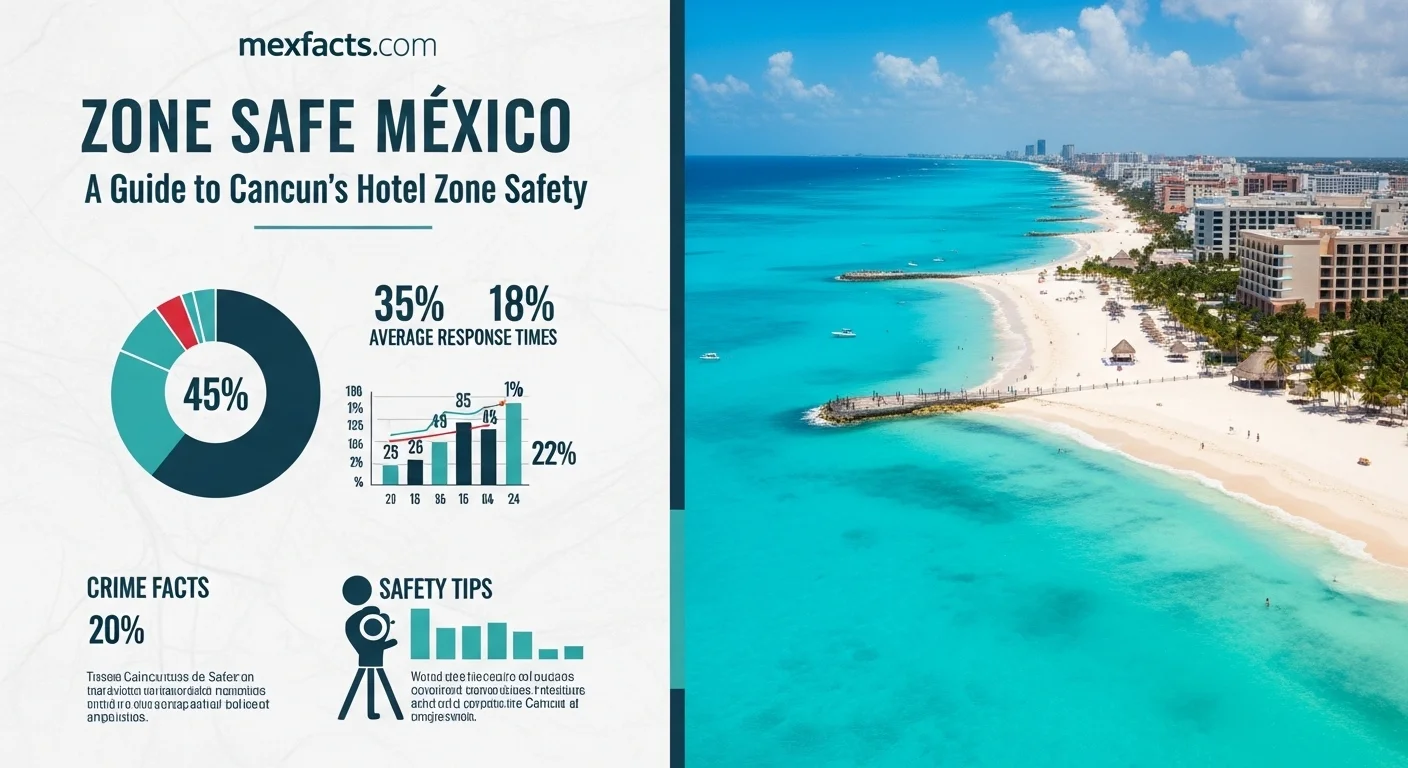
Current statistics and data about Zone Safe in Mexico
When we talk about safety, feelings and experiences are important, but numbers tell a powerful story too. To really understand the 'Zone Safe' idea, especially in a place like Cancun, we need to look at the data. The question is Cancun Hotel Zone safe can be answered more clearly by examining tourism numbers, crime data, and official government reports. For smart travelers and international businesses, these numbers are the best way to see the real picture and understand how well Mexico's security strategy is working. The state of Quintana Roo, which includes Cancun, Playa del Carmen, and Tulum, is the heart of Mexican tourism, so it's the perfect place to analyze.
Economically, keeping these zones safe is non-negotiable. In the first half of 2024 alone, Quintana Roo attracted over $786 million in foreign direct investment for tourism. That kind of money only flows into places where investors feel confident about stability and security. This confidence is built on years of incredible visitor numbers. In 2023, Cancun's airport broke its own records for passenger traffic. These aren't just numbers on a page; they represent a bustling economy of hotels, restaurants, tour guides, and families who depend on tourists feeling safe enough to visit. The consistently high hotel occupancy rates tell you that the vast majority of travelers worldwide already see the Cancun Hotel Zone as a safe and desirable place to be. The data proves that the 'Zone Safe' is more than a concept—it's a successful business model that keeps people and investments flowing in.
Analyzing Crime Statistics: A Tale of Two Cancuns
To give an honest answer to how safe is the Cancun Hotel Zone, we have to look at crime stats with a bit of local knowledge. It's vital to separate what happens inside the heavily guarded tourist zone from what happens elsewhere. Reports from the State Attorney General's office show that the overwhelming majority of violent crime happens far away from the Hotel Zone. These incidents are typically tied to local gang rivalries and do not target tourists. While it's a tragic reality that these conflicts exist in greater Cancun, they are statistically insignificant within the Hotel Zone itself. A 2024 analysis showed that most robberies in the municipality happen in downtown neighborhoods, not the resort areas. Inside the Hotel Zone, the most common issues are things you'd find in any popular tourist spot: petty theft if you're not careful, tourist scams, or arguments fueled by too much tequila. While no one wants their trip ruined by any crime, the chance of a tourist becoming a victim of violence in the Hotel Zone is extremely low, often lower than in major U.S. cities. So when someone asks me, is it safe in the Cancun Hotel Zone, the data lets me say 'yes' with confidence, adding the same advice I'd give for visiting Rome or Paris: be smart and stay aware of your surroundings.
Government Initiatives and Security Infrastructure
The safety you feel in the Cancun Hotel Zone is no accident. It’s the result of a massive, ongoing effort by all levels of the Mexican government. They know how important tourist security is, and they've rolled out some very visible programs. The most important is the Tourist Security Battalion (Batallón de Seguridad Turística), a special branch of the National Guard created just to patrol tourist hubs like Cancun and Tulum. I’ve seen them on ATVs on the beach and walking down the main boulevards; their presence alone is a huge deterrent. It’s the government’s way of answering 'is the Hotel Zone in Cancun safe' with a show of force and commitment. Beyond the battalion, there's a whole network of security:
- Advanced Surveillance: A huge network of C5 (a fancy term for command and control center) cameras watches over public areas in the Hotel Zone, sending live feeds to a central hub.
- Multi-Agency Patrols: You'll often see joint patrols of municipal police, state police, the National Guard, and even the Navy working together. This means if something happens, help is close by and coordinated.
- Hotel Security: The resorts themselves invest a fortune in private security and have direct lines to local police, ensuring guest safety is their top priority.
- Tourist Assistance: Mexico also has the 'Ángeles Verdes' (Green Angels), a bilingual team that patrols highways to help tourists with car trouble, adding another layer of security for those who rent a car to explore.
Deciphering Travel Advisories: Context is Key
Many travelers check their home country's travel advisories, which is a smart thing to do. The U.S. Department of State is a common reference. However, it's vital to read them with context. Quintana Roo is currently at 'Level 2: Exercise Increased Caution.' That might sound worrying, but as I mentioned before, this is the same level as many top European destinations like Spain and the UK, often due to risks of terrorism or protests. The advisory for Quintana Roo correctly states that crime can happen anywhere, but it also notes that tourists are not common targets. It specifically advises travelers to “exercise increased caution after dark in Cancun...and remain in well-lit pedestrian streets and tourist zones.” In a way, this advice confirms the 'Zone Safe' model by suggesting that the risk is much lower inside these areas. It helps answer the question is Cancun safe outside the Hotel Zone by advising extra care there. The advisory doesn't say 'don't go'; it says 'be smart.' It's a call for situational awareness, which is good advice no matter where in the world you travel. The advisories acknowledge the regional issues while steering travelers toward the safer, well-protected tourist zones, which ultimately reinforces how effective they are.
Future outlook and opportunities regarding Zone Safe in Mexico
The 'Zone Safe' model, with the Cancun Hotel Zone as its star player, is always evolving. Looking ahead, Mexico isn't just focused on keeping its current tourist areas safe; it's looking to innovate and expand this successful model to other beautiful regions. This is how the country will solidify its place as a global tourism leader. The future involves smarter technology, stronger partnerships between the government and private companies, and tackling social challenges to create even more business opportunities. The questions that travelers always ask—how safe is the Cancun Hotel Zone and is the Hotel Zone in Cancun safe—will continue to shape policies and investments, keeping security at the heart of Mexico's tourism strategy. This is all about ensuring long-term growth and protecting the magic that brings people here.
The Role of Technology in Enhancing Tourist Security
The next great leap in tourist safety will be powered by technology. Mexican authorities and their partners are already exploring integrated security systems to stay one step ahead of any problems. The future of the 'Zone Safe' will be shaped by exciting advancements:
- Smarter Surveillance: Imagine the existing camera networks being enhanced with Artificial Intelligence (AI). These systems could spot potential trouble in real-time, like an unattended bag or an unusual gathering, and alert security before anything happens.
- Predictive Security: By analyzing data—like crime history, social media trends, and hotel bookings—authorities can predict where and when security is needed most. This means sending patrols where they can do the most good, rather than just reacting to incidents.
- Unified Communication: A huge opportunity is creating a single communication platform connecting all levels of security, from the National Guard to hotel staff, and even tourists. Think of a simple app where you could discreetly report a concern, get a real-time safety alert, or call for help instantly.
- Digital and Biometric ID: Using biometrics at airports or attractions could make security checks faster and more effective, helping to screen for known troublemakers while making the experience smoother for everyone else.
Business and Investment Opportunities in the Security-Tourism Nexus
This intense focus on safety has created a booming market for security-related businesses. This provides incredible opportunities for both Mexican and international companies. The demand for a secure environment is, in itself, a powerful economic engine. Key areas for investment include:
- Professional Security Services: As more luxury resorts and entertainment venues open, the need for top-tier private security grows. There’s a huge market for firms that offer comprehensive risk assessment, trained guards, and executive protection.
- Cybersecurity for Hotels: Hotels handle a treasure trove of sensitive guest data. Companies that specialize in protecting this data from cyberattacks have a massive and growing market in Mexico's tourist zones.
- Security Tech Sales: The sale and maintenance of high-tech gear—from HD cameras and drones to advanced communication systems—is a thriving industry.
- Specialized Training: There is a need for programs that can train security personnel, from tourist police who need language and cultural skills to hotel staff who need emergency response training.
- Safe Transportation: Many visitors are happy to pay a premium for guaranteed safe transport. This opens the door for certified luxury car services, secure transport for VIPs, and ride-sharing apps that feature fully vetted drivers and tracked vehicles.
Expanding the 'Zone Safe' Model and Addressing Challenges
While Cancun is the gold standard, Mexico's tourism future relies on successfully applying the 'Zone Safe' model to other destinations. Places like Los Cabos, Puerto Vallarta, and emerging spots in Nayarit are already using similar strategies. Big infrastructure projects like the Tren Maya are also being built with security at their core, aiming to create a safe corridor for tourists to explore the wonders of the Yucatan. However, this growth has its challenges. The biggest one is bridging the economic gap between the beautiful, wealthy tourist zones and the local communities that surround them. This disparity can lead to the social problems that are at the root of crime. A truly sustainable 'Zone Safe' model for the future must include investing in these local communities. This means ensuring locals benefit from tourism through fair wages, better schools and hospitals, and opportunities to start their own businesses. By making life better for the people who are the heart and soul of these destinations, Mexico can build a more authentic and lasting form of security. That will be the ultimate and most positive answer to the question that every visitor asks: Is Mexico a safe and welcoming place for my family and me?
Expert Reviews
Jenna K., First-Time Visitor ⭐⭐⭐⭐⭐
I was so nervous before our first family trip to Cancun after reading some news headlines. This article really calmed my nerves by explaining the situation honestly. We stayed in the Hotel Zone and it was exactly as described—we felt completely safe walking around with our kids, even at night. The visible police and guard presence was very reassuring. It allowed us to just relax and enjoy the beautiful beaches. Thank you!
Mark T., Investor ⭐⭐⭐⭐⭐
As someone looking at opportunities in the Mexican tourism sector, this breakdown was invaluable. It cuts through the media noise and presents a data-driven, realistic look at the security infrastructure. The distinction between the Hotel Zone and the rest of the city is crucial for risk assessment. Very well-written and balanced, it's exactly the kind of analysis we needed.
Carlos R., Frequent Traveler ⭐⭐⭐⭐⭐
We've been to Cancun many times and this article absolutely nails it. My wife and I love the perfection of the Hotel Zone, but we also love catching a taxi to El Centro for authentic tacos at Parque de las Palapas. You just have to be smart about it, like in any big city. This guide gives realistic, non-sensational advice for travelers who want to experience more than just the resort. Highly recommend this read.