
Mexican Steak: More Than a Meal, It's a Way of Life

In Mexico, steak is a language of community. It's the sound of sizzling arrachera on a grill in a backyard in Monterrey, the centerpiece of a family Sunday. This isn't just about eating; it's a ritual called 'carne asada' that brings us together. This tradition, which began when the Spanish brought cattle here centuries ago, has grown into a powerful part of our economy. Today, Mexico is a major global beef producer, and cuts like arrachera are famous worldwide. This article takes you on a journey into the heart of Mexico's steak culture. We'll explore its history, its role in our daily lives, and the numbers that show its importance to the world, offering a real taste of Mexican heritage and opportunity.
Table of Contents
- What is Steak in Mexico and Why It Matters
- The Birth of a Tradition: Vaqueros and Ranches
- The Heart of the Culture: The Carne Asada Ritual
- Mexico's Gift to the World: Tacos, Arrachera, and More
What is Steak in Mexico and why is it important internationally?
When you talk about Mexican food, your mind might jump to tacos or mole, but for many of us, especially in the north, the heart and soul of our cuisine is steak. Here, 'bistec' isn't just a piece of beef. It’s the centerpiece of celebrations, a taste of our history, and a reason to gather. To truly understand Mexico, you have to understand our connection to the land, to our ranches, and to the fire that grills our steak. It’s a story that starts centuries ago and is now being told in restaurants all over the world.
The Birth of a Tradition: Vaqueros and Ranches
Our story with steak began with the arrival of the Spanish in the 16th century. They brought cattle to the New World, and nothing was ever the same. The vast, open plains of northern Mexico—in states like Sonora, Chihuahua, and Nuevo León—were perfect for ranching. This is where the original cowboy, the 'vaquero', was born. My own great-grandfather was a vaquero, and he used to tell stories of long days on the range, a life built around cattle. This deep-rooted ranching culture cemented beef as a fundamental part of our identity and diet, not just as food, but as a way of life.
The Heart of the Culture: The Carne Asada Ritual
If you really want to feel the spirit of northern Mexico, you need to be invited to a 'carne asada'. This isn’t just a barbecue; it’s a cherished social ritual. The name means 'grilled meat', but it signifies so much more. It's the gathering of family and friends on a Sunday afternoon, the laughter echoing in the yard, the tantalizing smell of mesquite smoke in the air. Someone is always on grill duty, carefully cooking cuts like arrachera or diezmillo to perfection, while others prepare fresh guacamole, spicy salsas, and frijoles charros. Being invited to a carne asada means you’re part of the family, a gesture of welcome and friendship. It’s where memories are made, one perfectly grilled steak at a time.
Mexico's Gift to the World: Tacos, Arrachera, and More
The world's love for authentic Mexican food has put our steak on the global stage. Think about the simple perfection of mexican steak tacos. That search for 'steak tacos near me' from anywhere in the world creates a direct line back to our ranches. A true taco de asada, with freshly grilled steak on a warm corn tortilla topped with onion, cilantro, and a squeeze of lime, is a piece of our culture served to the world.
A star of this story is the 'arrachera' (skirt steak). It was a little-known cut until a visionary restaurateur in Monterrey, José Inés Cantú, popularized it in the 1970s. He knew its potential. Marinated in lime, beer, and garlic, this tough cut becomes incredibly tender and flavorful. Today, arrachera is the go-to for any quality mexican steak experience, from backyard grills to fancy restaurants. It's a testament to our culinary ingenuity.
But we don’t stop at tacos. We wrap tender steak in corn tortillas and smother them in chili sauce to make incredible steak enchiladas, a dish that beautifully marries the grilling traditions of the north with the rich sauces of the south. And let’s not forget the big chains like Chipotle. The 'chipotle mexican grill steak' might be a simplified version, but it has introduced millions of people to the idea of Mexican-style grilled steak. It acts as a gateway, sparking curiosity and encouraging people to seek out more authentic experiences. This global exposure fuels a cycle of cultural and economic exchange, cementing the international importance of steak in Mexico's ongoing story.
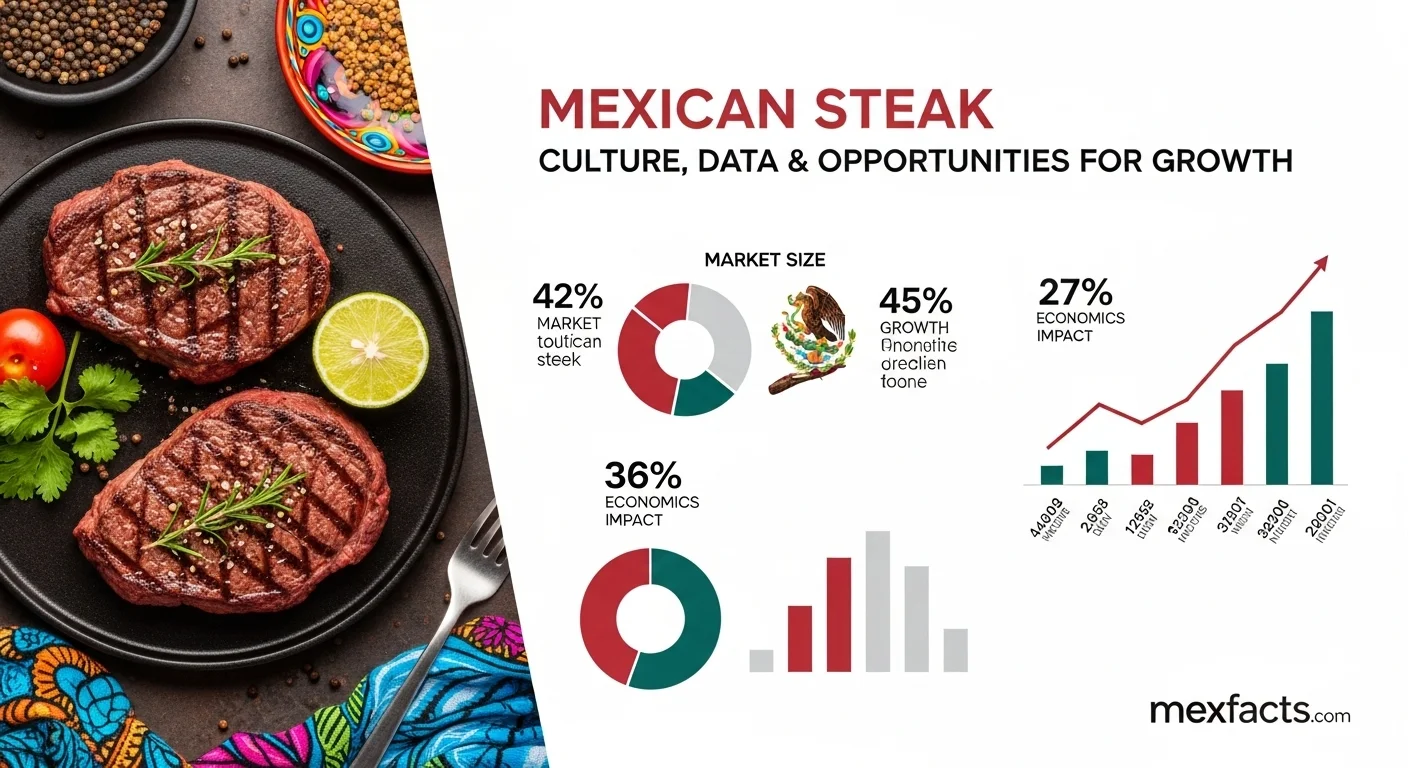
Current statistics and data about Steak in Mexico
Behind the rich culture of Mexican steak lies a powerful economic engine. The numbers tell a story of a robust industry that not only feeds our nation but also plays a major role on the world stage. These statistics aren't just figures on a page; they represent the livelihoods of millions and the enduring global appeal of dishes from mexican steak tacos to hearty steak enchiladas.
The Numbers Behind the Tradition
Mexico is a beef powerhouse. We are the seventh-largest producer of beef globally, with ranching activities covering over half of our country's territory. This isn't just big business; it's a family legacy in states like Veracruz, which leads our national production, and Jalisco. Generations of ranchers in these regions have perfected their craft, blending tradition with modern techniques to sustain this vital industry. This immense scale is what makes it possible for families across Mexico to fire up the grill for a weekend carne asada.
A Nation of Beef Lovers
In Mexico, we love our meat. While chicken and pork are eaten more frequently, beef holds a special place in our hearts and on our tables as a high-value protein. The average Mexican enjoys about 16 kg of beef per year. This steady domestic demand is the foundation of our entire industry. It keeps local butcher shops ('carnicerías') thriving and ensures that the ingredients for a quick weeknight dinner of mexican steak tacos are always within reach. This love for beef supports a vast network of jobs, from the vaquero on the ranch to the taquero on the street corner.
Mexico's Steak on the Global Market
Our pride in our beef extends far beyond our borders. Mexico is a leading exporter of high-quality steak, with the United States being our biggest partner. It's a fantastic relationship; we send them world-class live cattle and specific cuts they love, and we import others. This creates a deeply integrated and efficient North American market. I've seen firsthand in states like Chihuahua and Sonora how this cross-border trade is a lifeline for local communities. We've also successfully entered discerning Asian markets like Japan and South Korea, which demand the highest quality. This global reach is possible because of our commitment to excellence, with federally inspected (TIF) processing plants that meet the strictest international standards.
The 'Chipotle Effect' and Market Growth
You can't talk about the modern steak market without mentioning the influence of major chains. The 'chipotle mexican grill steak' has introduced our flavors to a massive global audience. While it's a fast-casual interpretation, its popularity creates enormous demand and awareness. When a company as large as Chipotle serves Mexican-style steak in thousands of locations, it helps build a global appetite. This encourages people to then seek out a local spot for authentic 'steak tacos near me.' It creates a powerful feedback loop where mass-market appeal drives interest in genuine, high-quality mexican steak, benefiting everyone from large-scale producers in Mexico to independent restaurant owners abroad.
Future outlook and opportunities regarding Steak in Mexico
The road ahead for Mexico's steak industry is full of exciting possibilities. We are at a crossroads where tradition can meet innovation, creating a future that is both prosperous and responsible. For anyone looking to invest or partner with Mexico, the opportunities are as rich as our culture, driven by the world's unending love for authentic food like mexican steak tacos.
A Greener Future for Ranching
One of the greatest opportunities is to become a world leader in sustainable beef. More and more, people want to know their food is produced ethically and with respect for the environment. This is a chance for us to shine by promoting regenerative ranching. In places like Chiapas and Jalisco, amazing projects are already underway to integrate trees with pastures (silvopastoral systems), which restores land and improves animal welfare. By investing in these 'climate-smart' practices, we can offer a premium product that tells a powerful story of quality and care. It's about protecting the very land that has sustained our ranching heritage for centuries.
Technology and Tradition Hand-in-Hand
The future is also digital. Imagine using technology to enhance our age-old traditions. Ag-tech innovations can bring incredible efficiency to our ranches. Drones can monitor the health of cattle, data analytics can help us manage pastures better, and blockchain can provide a transparent story of a steak's journey from a ranch in Sonora to a plate in Paris. This technology can also help small ranchers get the financing they need to grow and adopt more sustainable methods. This fusion of tech and tradition will ensure we can consistently produce the high-quality beef needed for everything from the local taqueria making the best 'steak tacos near me' to gourmet restaurants serving premium mexican steak dishes.
New Horizons: Expanding Our Reach
While our partnership with the U.S. is strong, there's a whole world out there waiting for a taste of Mexico. We're actively looking to expand into new markets in Asia and other emerging economies. This means understanding what different cultures want and perhaps creating new products, like ready-to-grill marinated arrachera for home cooks. Our best marketing tool is our culture itself. Sharing the story of the carne asada or the complex flavors of steak enchiladas creates a connection that goes beyond price. We are selling not just steak, but an experience.
Challenges on the Road Ahead
Of course, there are challenges. Climate change and water scarcity are real threats to our industry. We must be smart and invest in water-efficient practices. But by facing these challenges with innovation and strategic partnerships, we can build an even stronger future. For those interested in a deeper dive into Mexico's trade environment, the Santander Trade portal is an excellent resource for detailed information. By embracing sustainability, technology, and our rich cultural story, Mexico's steak industry is set to not just grow, but to flourish, remaining a source of pride and prosperity for generations to come.
Expert Reviews
Jessica Miller, Tourist ⭐⭐⭐⭐⭐
I was invited to a real 'carne asada' on my trip to Sonora, and this article perfectly captures that feeling of community and incredible flavor. It brought back such wonderful memories! Reading about the history of the vaqueros made the experience even richer.
Carlos Gonzalez, Mexican-American Chef ⭐⭐⭐⭐⭐
As a chef trying to honor my roots, this piece was invaluable. It connected the dots between the arrachera I cook in my restaurant and the deep traditions of my grandparents. The data on exports also gives me great ideas for sourcing. A truly authentic read.
David Chen, Business Investor ⭐⭐⭐⭐⭐
I was researching the Mexican agribusiness market, and this article was a fantastic starting point. It provides the cultural context behind the numbers, which is crucial for any successful venture. The section on future opportunities was particularly insightful.