
The Soul of Snorkeling in Mexico: A Deep Dive into a Vital Industry

Snorkeling in Mexico is so much more than a simple vacation activity; it's the lifeblood of coastal communities and a huge part of what makes our country so special to visitors from around the world. I've spent years exploring our coasts, and I can tell you there's nothing like it. From the calm, turquoise waters of the Caribbean to the wild, adventurous spirit of the Pacific, Mexico offers underwater worlds that capture the imagination of millions. This article is my personal guide to understanding the true impact of snorkeling—how it drives our economy, creates jobs, and shapes entire regions. We'll take a close look at famous spots like Cancún, home to the breathtaking Mesoamerican Reef and the incredible MUSA underwater museum, and then travel to Sayulita, a Pacific gem where the marine life near the Marietas Islands offers a completely different thrill. We'll explore the numbers, the impact on local families, and the ecosystem of businesses—from tour guides to hotel staff—that depend on this industry. It's a story of opportunity, but also of the crucial challenge of protecting these natural wonders for generations to come.
- The Magic of the Caribbean: Why Cancún is a Global Snorkeling Hub
- The Wild Spirit of the Pacific: The Rise of Sayulita
- A Delicate Balancing Act: Economy vs. Environment
The Magic of the Caribbean: Why Cancún is a Global Snorkeling Hub
When people think of snorkeling, their minds often jump straight to the crystal-clear, warm waters of the Mexican Caribbean, and for good reason. I've had the privilege of guiding people through these waters, and the look on their face when they first see the Mesoamerican Barrier Reef is something I'll never forget. This isn't just any reef; it's the second-largest in the world, a sprawling underwater city teeming with life that stretches along our coast. This natural wonder is the main reason why snorkeling in Cancun is world-famous. It's incredibly accessible, making it perfect for families trying it for the first time or seasoned experts wanting to lose themselves in a world of parrotfish, sea turtles, and majestic coral gardens. Tourism is the engine of this entire region, and a huge slice of that pie comes directly from people wanting to experience our marine world. Millions of visitors flock here each year, and their presence supports a massive web of local businesses, providing jobs for countless families in Quintana Roo.
But the magic of this region goes beyond the reef. We have natural phenomena you won't find anywhere else, like the cenotes—sacred freshwater sinkholes that the ancient Maya believed were gateways to the underworld. Snorkeling in a cenote is a surreal, almost spiritual experience, with sunbeams piercing through the gin-clear water to illuminate ancient rock formations below. And then there's the brilliant creativity of the Museo Subacuático de Arte (MUSA). I remember when it was first being developed; it was a bold idea to build an underwater museum with over 500 sculptures to draw tourists away from the fragile natural reefs. Now, it's an international landmark, a perfect fusion of art and conservation that has given the natural corals a chance to breathe and recover. When you're looking for the best snorkeling in Cancun, you're choosing between these incredible, distinct experiences—a vibrant natural reef, a mystical cenote, or a unique underwater art gallery.
The Wild Spirit of the Pacific: The Rise of Sayulita
Now, let's journey across the country to the Pacific coast, to the vibrant town of Sayulita in Nayarit. The vibe here is completely different from the Caribbean. The Pacific feels wilder, more untamed. The growth of the Riviera Nayarit has been astounding, and snorkeling in Sayulita offers a taste of this rugged charm. The main draw here is the magnificent Islas Marietas National Park, a protected sanctuary of volcanic islands that are home to incredible birdlife, including the famous Blue-footed Booby. I've taken many panga boat trips out to these islands, and the energy of the Pacific is palpable. The underwater world is different, too. On a good day during one of the Sayulita snorkeling tours, you might find yourself swimming alongside giant manta rays, playful dolphins, or, in the winter months, hearing the haunting songs of humpback whales echoing through the water.
A Delicate Balancing Act: Economy vs. Environment
The story of both Cancún and Sayulita is a powerful tale of balancing immense economic opportunity with the critical need to protect our natural treasures. The very ecosystems that draw millions of visitors are incredibly fragile. In Sayulita, the fame of the "hidden beach" at the Marietas Islands exploded thanks to social media, and for a while, the sheer number of visitors threatened to destroy it. Strict limits had to be put in place. In Cancún, the challenges are on a larger scale—pollution, over-tourism, and the effects of climate change are constant threats to the reef. The international importance of snorkeling in Mexico isn't just about the money it brings in; it's a living case study in the global challenge of sustainable tourism. How we care for our oceans will define our future, not just as a top travel destination, but as custodians of a priceless natural heritage.
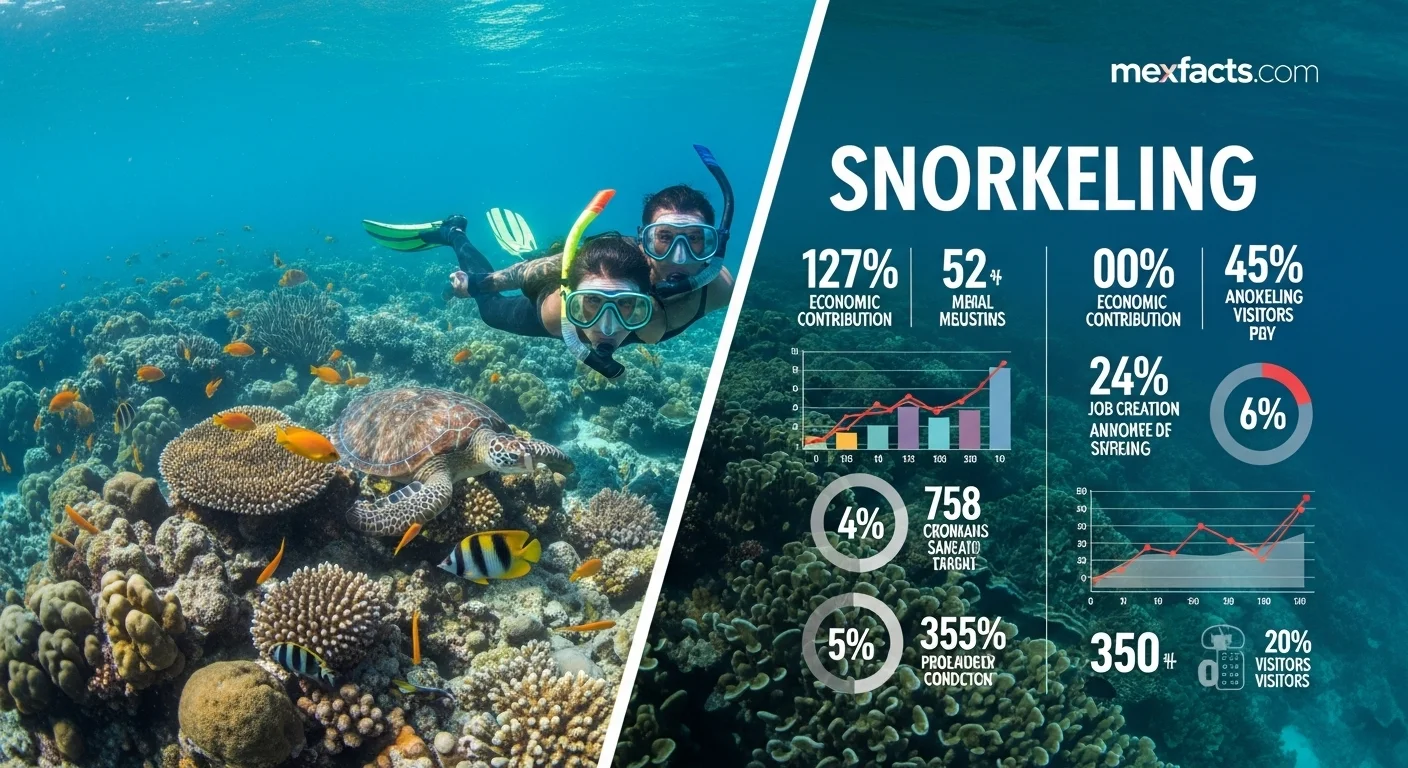
Cancún by the Numbers: A Tourism Powerhouse
To truly grasp the scale of this industry, you have to look at the numbers, but think of them as people and livelihoods. Mexico welcomes tens of millions of international tourists annually, bringing in billions of dollars that support our economy. A massive portion of that is centered in Quintana Roo, where Cancún and the Riviera Maya are located. For this region, tourism isn't just a sector; it's the entire economy. When you see a bustling hotel or a packed restaurant, remember that marine tourism, especially snorkeling in Cancun, is what makes it all possible. The Cancun airport is a major international hub, a gateway for people seeking sun and sea. This demand fuels a huge industry of tour operators, from large companies to small, family-run panga boats. It's a ripple effect that supports jobs in construction, food supply, retail, and so much more.
The MUSA underwater museum is a perfect example of smart management. It was created back in 2009 specifically to protect the heavily visited Manchones Reef. Today, it draws hundreds of thousands of its own visitors each year. This brilliant project created a new site for the best snorkeling in Cancun, giving the natural reef much-needed relief. Even better, the sculptures are made from a special marine-grade concrete that actually encourages new coral growth, turning it into a living, breathing artificial reef. It's a win-win for conservation and business. However, the health of the natural Mesoamerican Reef is a constant worry. We know that a large percentage of our reefs are struggling due to pollution, warming waters, and disease. This is why conservation isn't just an environmental issue; it's an economic imperative. Protecting the reef means protecting our future.
Sayulita's Boom: Managing Sudden Popularity
Over on the Pacific side, the Riviera Nayarit and Sayulita are writing their own success story. While the scale is smaller than Cancún, the growth has been explosive. The entire local economy has transformed, built on tourism and investment. For this area, snorkeling in Sayulita is a flagship experience. The hotspot, of course, is the Islas Marietas National Park. I remember when you could visit the famous "Playa del Amor" or hidden beach quite easily. But its popularity surged so fast, fueled by social media, that visitor numbers became unsustainable, causing real environmental damage. Authorities had to step in and implement strict limits—only 116 people per day are now allowed, and only with licensed operators. This was a tough but necessary lesson in the dangers of over-tourism. It forced the Sayulita snorkeling tours to adapt, shifting the focus from just one beach to the incredible marine life all around the islands, which ultimately provides a richer experience for visitors.
Shared Challenges: From Sargassum to Sustainability
Both coasts share the challenge of sustainability. In Cancún, the annual arrival of sargassum seaweed has become a major issue. It's a natural phenomenon, but in recent years the sheer volume has been overwhelming, costing millions to clean up and affecting the pristine image of our beaches. In Sayulita, the challenge was managing a sudden explosion of popularity before it destroyed the very thing people came to see. In both places, the future of snorkeling as an economic driver depends entirely on how well we manage and protect these marine environments. It's a constant negotiation between welcoming the world and preserving the soul of what makes Mexico's underwater world so magical.
The Future is Green: Opportunities for Smart Investment
Looking ahead, the future of snorkeling in Mexico is incredibly bright, but it has to be green. Our government has big ambitions to grow tourism, and that means huge opportunities for investment in the snorkeling sector. The real potential isn't just in building more hotels, but in building smarter. There's a growing global demand for responsible travel, and this is where Mexico can shine. We're talking about eco-friendly tour operations, resorts that prioritize water conservation and waste management, and a shift towards sustainable practices. This isn't just good for the planet; it's good for business. I see a future where the best snorkeling in Cancun is offered by companies that actively participate in reef restoration, turning a tour into an educational and impactful experience. Tourists are increasingly willing to pay more for an adventure that feels meaningful and gives back to the local environment.
Innovation from Necessity: Solving the Sargassum Problem
In the Cancún area, the challenge of sargassum is forcing us to innovate. It’s a huge problem, but I've been inspired by the creativity of Mexican entrepreneurs and scientists. They're not just seeing it as seaweed to be cleaned up; they're seeing it as a raw material. People are developing ways to turn sargassum into biofuel, fertilizer, and even bricks for construction. It’s a perfect example of turning a major threat into a potential new industry based on a circular economy. Imagine that—a problem washing up on our shores could one day build our homes and fuel our cars. This is the kind of forward-thinking that will secure the region's future.
Our Collective Responsibility: Protecting Mexico's Underwater Soul
For the Pacific coast and snorkeling in Sayulita, the future is about embracing a high-value, low-impact model. The Riviera Nayarit is positioning itself as a luxury eco-tourism destination. This means that Sayulita snorkeling tours should focus on quality over quantity: smaller groups, expert guides who can teach about conservation, and unique experiences that combine snorkeling with bird watching or seasonal whale watching. It's about preserving the wild, authentic spirit of the place. Ultimately, however, the greatest threat to snorkeling everywhere in Mexico is climate change. Rising sea temperatures cause coral bleaching, which is devastating to the reefs that are the very foundation of this industry. This is not a problem Mexico can solve alone, but we can lead the way in protection. The future of snorkeling in Mexico is more than a business forecast; it's a call to action. It requires a commitment from everyone—the government, private businesses, local guides, and every tourist who puts on a mask and fins. We have a shared responsibility to protect this incredible underwater world, the very soul of our coasts, for all the generations to come.
Expert Reviews
Carlos Gutiérrez, Co-founder of Maya EcoAdventures ⭐⭐⭐⭐⭐
As someone looking to invest in ecotourism in the Riviera Maya, this article was invaluable. It went beyond the typical tourist fluff and gave a real, honest look at the opportunities and the environmental challenges. It felt like getting advice from a seasoned expert. We've actually shifted our business model based on the insights about sustainable attractions.
Emily Vance, Traveler ⭐⭐⭐⭐⭐
I read this before my trip to Sayulita, and it completely changed my perspective. I understood why access to the 'hidden beach' was limited and chose a tour that focused on the surrounding marine life instead. It was incredible! Seeing the article's points about conservation in action made my experience so much more meaningful.
Javier Morales, Marine Guide ⭐⭐⭐⭐⭐
This explains our reality perfectly. For years, I've guided snorkeling tours in Cozumel. We see the beauty and the damage firsthand. It’s important for visitors to understand that this isn't just a playground; it's our livelihood and our heritage. This article respects that. ¡Ojalá que más gente lo lea! (I hope more people read it!)