
Tulum Travel and Living Costs: Complete Realistic Budget Guide

Understanding the true cost of visiting or living in Tulum requires looking past promotional social media imagery and examining the distinct economic divide between the inland town center (Tulum Pueblo) and the beachfront strip (Zona Hotelera). While boutique beach clubs and eco-resorts charge rates comparable to high-end European or North American destinations, budget-conscious travelers and remote residents can keep expenses manageable by staying and dining in town. A realistic daily travel budget ranges from $55 to $85 USD for backpackers, $160 to $320 USD for mid-range travelers, and upward of $650 USD for luxury stays. For digital nomads and expats, monthly living expenses generally run between $1,600 and $3,500 USD, dictated primarily by neighborhood selection, air-conditioning electricity usage, and local transportation choices.
Understanding Tulum's Price Spectrum: Pueblo vs. Hotel Zone
Tulum does not operate on a single price level. Instead, the municipality functions across two distinct micro-economies separated by several kilometers of jungle: the inland municipal center (Tulum Pueblo) and the coastal beach strip (Zona Hotelera), along with emerging planned residential developments like Aldea Zamá and La Veleta. Comparing your travel or living costs to broader Mexico travel costs reveals that coastal Quintana Roo commands a premium, but how much you spend depends heavily on where you sleep, eat, and spend your afternoons.
Tulum Pueblo (The Town Center)
Located along Federal Highway 307 roughly 4 to 6 kilometers inland, Tulum Pueblo is the functional core of the community. Here, day-to-day commerce operates primarily in Mexican Pesos (MXN). The town features local tortillerías, produce markets, regional supermarkets such as Super Chedraui and Super Aki, and family-owned taquerías. In the Pueblo, a hearty lunch of tacos or regional Yucatecan specialties typically costs between $70 and $180 MXN ($4 to $10 USD). Guesthouses, boutique hostels, and mid-range apartments in town offer substantial savings compared to coastal lodgings, though visitors must budget time and transportation to reach the water.
The Zona Hotelera (Beach Strip)
The Hotel Zone sits on the narrow Carretera Tulum-Boca Paila, flanked by the Caribbean Sea and protected mangrove reserves. Because this strip developed off the municipal electrical grid, properties rely heavily on private generators, solar arrays, and trucked-in freshwater and waste removal, significantly raising operating overhead. These infrastructure expenses, paired with international demand, translate into steep consumer pricing. Casual beach club lunches frequently start at $500 to $900 MXN ($30 to $50 USD) per entree, craft cocktails regularly range from $250 to $450 MXN ($15 to $25 USD), and beachfront resorts charge international luxury rates. Many private beach clubs also impose a consumo mínimo (minimum spend requirement) between $800 and $3,000 MXN ($45 to $170 USD) per person to use loungers and facilities.
Developing Residential Hubs: Aldea Zamá and La Veleta
Positioned between the Pueblo and the ocean, Aldea Zamá is a planned, paved community with underground utilities, paved roads, and modern apartment complexes. Further south in the town limits lies La Veleta, an eclectic neighborhood characterized by contemporary residential builds mixed with unpaved jungle streets. Both corridors cater heavily to remote workers and long-term expatriates, offering coffee shops, coworking spaces, and modern rental buildings with fiber-optic internet. Rental prices here are lower than on the beach but higher than in older residential sections of the Pueblo.
Seasonality and Currency Dynamics
Seasonality directly dictates accommodation and tour costs throughout the Riviera Maya:
- High Season (December through April): Dry, pleasant weather draws peak international crowds. Accommodation rates rise by 30% to 50%, and premier beachfront properties often require minimum stays of three to five nights around Christmas and New Year.
- Shoulder Season (May, June, and November): Warmer temperatures and lower visitor density bring balanced rates, moderate restaurant discounts, and easier reservation access.
- Low Season (July through October): Higher humidity, afternoon tropical rain showers, and Atlantic hurricane season prompt the lowest lodging rates of the year. Travelers planning trips during late spring and summer should also monitor regional sargassum seaweed forecasts along the beaches.
When budgeting, always calculate costs in Mexican Pesos rather than relying strictly on USD pricing. While beach clubs and boutique hotels accept major credit cards and sometimes quote prices in US Dollars, card terminal exchange rates often carry hidden foreign transaction fees. Using local currency or paying with a credit card that waives foreign exchange conversion fees prevents unnecessary markups. For a comprehensive overview of local highlights, consult our detailed Tulum destination guide.
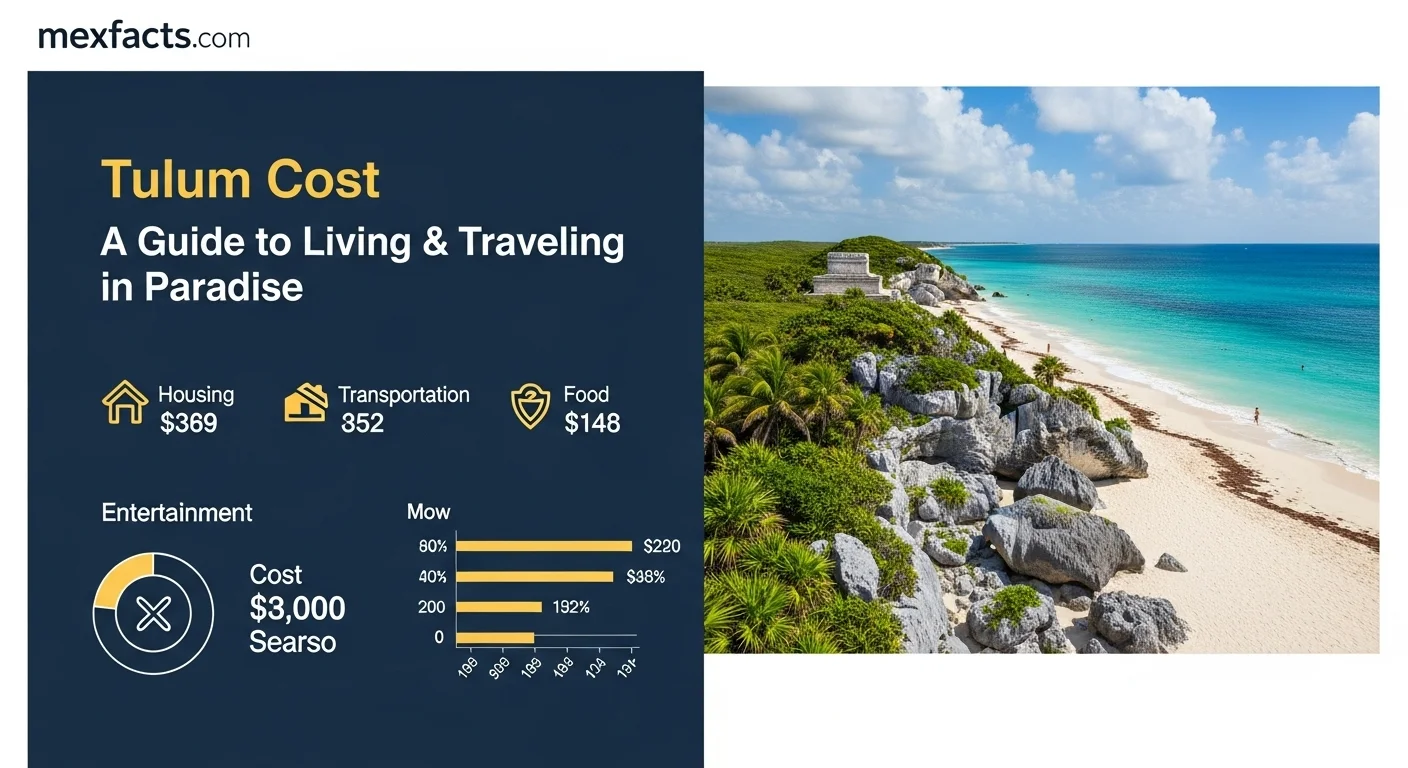
Daily and Weekly Trip Budgets: Three Traveler Profiles
Trip expenses depend on lodging choices, dining habits, and transport methods. The following estimates exclude international airfare to provide an accurate on-the-ground cost profile.
1. Backpacker / Shoestring Traveler ($55 – $85 USD / 1,000 – 1,600 MXN per day)
- Accommodation: Dorm bed or basic private room in a town hostel ($20 – $40 USD / 380 – 760 MXN).
- Food: Street taquerías, local fondas, and light self-catering from supermarkets ($15 – $25 USD / 280 – 475 MXN).
- Transportation: Rented bicycle or shared local colectivo vans ($8 – $15 USD / 150 – 280 MXN).
- Activities: Public beach visits (Playa Paraíso or Playa Pescadores), entrance to the national park, and low-cost public cenotes ($10 – $15 USD / 190 – 285 MXN).
- Estimated 7-Day Total: $385 – $595 USD per person.
2. Mid-Range Traveler ($160 – $320 USD / 3,000 – 6,000 MXN per day)
- Accommodation: Boutique hotel or modern apartment in the Pueblo, Aldea Zamá, or La Veleta ($90 – $180 USD / 1,700 – 3,400 MXN per night, based on double occupancy).
- Food: Sit-down breakfasts in town cafes, casual dinners in the Pueblo, and occasional beach club drinks ($45 – $80 USD / 850 – 1,500 MXN).
- Transportation: Scooter rental or occasional local taxi rides ($20 – $45 USD / 380 – 850 MXN).
- Activities: Entry to landmark cenotes (such as Gran Cenote or Cenote Dos Ojos) and the Tulum ruins ($25 – $45 USD / 475 – 850 MXN).
- Estimated 7-Day Total: $1,120 – $2,240 USD per person.
3. Luxury Beachfront Traveler ($650 – $1,500+ USD / 12,000 – 28,000+ MXN per day)
- Accommodation: Beachfront eco-resort or private villa on the Carretera Tulum-Boca Paila ($450 – $1,100+ USD / 8,500 – 21,000+ MXN per night).
- Food: Chef-driven tasting menus, beach club minimum spends, and craft cocktail lounges ($150 – $300 USD / 2,800 – 5,700 MXN).
- Transportation: Private pre-arranged chauffeur transfers or air-conditioned private vehicle rentals ($50 – $100 USD / 950 – 1,900 MXN).
- Activities: Private boat charters, guided Sian Ka'an biosphere tours, and private wellness sessions ($100 – $250 USD / 1,900 – 4,750 MXN).
- Estimated 7-Day Total: $4,550 – $10,500+ USD per person.
Detailed Breakdown of Common Expenses
Food and Dining Costs
- Street Tacos & Local Markets: $18 – $35 MXN ($1.00 – $2.00 USD) per taco for pastor, carnitas, or cochinita pibil.
- Casual Town Breakfast / Lunch: $120 – $220 MXN ($7 – $13 USD) for chilaquiles, eggs, fresh juice, and coffee.
- Mid-Range Dinner in Town: $300 – $600 MXN ($17 – $35 USD) per person, including an entree and one drink.
- Hotel Zone Dining: Entrees frequently cost $550 – $1,200 MXN ($32 – $70 USD); craft cocktails run $250 – $420 MXN ($15 – $25 USD). Note that while tipping in Mexico typically ranges from 10% to 15%, check bills in the Hotel Zone carefully to ensure an unauthorized propina has not been added automatically.
Transportation and Getting Around
Navigating local transit requires careful planning, as traditional rideshare applications do not operate freely within municipal Tulum due to local union regulations:
- Taxis: Fares are regulated by the local taxi syndicate by zone, but meters are not used. A one-way ride between Tulum Pueblo and the Hotel Zone typically costs between $400 and $800 MXN ($23 to $47 USD). Late-night rides or trips to remote beach stretches frequently reach $1,000 MXN ($58 USD) or higher. Always agree on the fare before stepping into the vehicle.
- Bicycle Rentals: Rented bikes cost $150 – $250 MXN ($9 – $15 USD) per day, making them ideal for daytime trips between town and northern public beaches via the dedicated paved cycle path.
- Scooter Rentals: Scooters run $500 – $800 MXN ($29 – $47 USD) per 24 hours, with weekly rates offering 20% to 30% savings.
- Colectivos: White shared passenger vans run up and down Highway 307 toward Playa del Carmen and south toward Felipe Carrillo Puerto, charging $30 – $60 MXN ($1.75 – $3.50 USD) for short hops.
- Rental Cars: Rental vehicles cost $35 – $75 USD per day. Remember that mandatory Mexican third-party liability insurance is legally required and can double the baseline booking price quoted online. Beach road parking lots also charge $200 – $500 MXN ($12 – $29 USD) per day.
Activities and Entry Fees
- Tulum Archaeological Zone: Entry requires the federal INAH admission fee plus the Parque Nacional del Jaguar access fee, totaling roughly $160 – $210 MXN ($9 – $12 USD) per person.
- Cenotes: Admission fees vary significantly based on amenities and popularity. Intimate local sinkholes like Cenote Cristal charge $150 – $200 MXN ($9 – $12 USD), while heavily developed sites such as Gran Cenote or Cenote Dos Ojos range from $350 to $700 MXN ($20 – $40 USD). Active travelers can review more regional excursion ideas in our guide to adventure travel in Mexico.
- Vacation Rentals: Those opting for self-catered stays can explore independent accommodation platforms like vacation rentals in Mexico to compare private apartments with hotel alternatives.
Monthly Cost of Living for Expats and Digital Nomads
Tulum has evolved into a major base for remote professionals, but living here on a monthly basis carries specific operating expenses that differ substantially from other Mexican cities.
Housing and Long-Term Rents
Lease agreements are typically structured as short-term (1 to 3 months) or long-term (6 to 12 months), with long-term contracts offering 20% to 35% monthly savings:
- Studio or 1-Bedroom in Pueblo Centro: $12,000 – $20,000 MXN ($700 – $1,150 USD) per month.
- 1-Bedroom in La Veleta or Aldea Zamá: $18,000 – $30,000 MXN ($1,050 – $1,750 USD) per month, usually furnished and including pool, gym access, or 24-hour security.
- 2-Bedroom Apartment in Residential Corridors: $28,000 – $50,000 MXN ($1,650 – $2,900 USD) per month.
Utilities and Operational Overhead
Monthly utility charges contain one notable variable: electricity.
- Electricity (CFE): Quintana Roo's tropical climate necessitates air conditioning. If usage pushes consumption into the government utility's Domestic High Consumption (DAC) tariff without residential subsidies, bi-monthly electricity bills can range from $1,500 to over $4,500 MXN ($90 to $260 USD). Managing air conditioning use is the single most effective way to control fixed living costs.
- Water and Cooking Gas: Piped water is inexpensive, averaging $150 – $350 MXN ($9 – $20 USD) monthly. Refillable 20-liter drinking water garrafones cost $40 – $55 MXN ($2.30 – $3.20 USD) each. Cooking gas refills average $300 – $500 MXN ($18 – $30 USD) every two to three months.
- Internet and Connectivity: Modern developments feature fiber-optic internet through providers like Totalplay or Telmex, costing $500 – $900 MXN ($30 – $55 USD) per month for speeds between 100 and 300 Mbps. Starlink satellite service is widely utilized in outer developments where hardwired lines have not yet arrived ($1,100 MXN / ~$65 USD per month).
- Mobile Data: An unlimited or high-data prepaid SIM plan through Telcel or AT&T Mexico costs roughly $200 – $300 MXN ($12 – $18 USD) per month.
Transportation Logistics: Tulum Airport (TQO) vs. Cancún (CUN)
Transporting yourself to Tulum represents an upfront budget consideration. Travelers have two primary airport options when scheduling flights into Mexico:
- Felipe Carrillo Puerto International Airport (TQO): Tulum's dedicated international airport is located approximately 40 kilometers southwest of the town center. While convenient, airport taxis charge between $1,200 and $2,000 MXN ($70 to $115 USD) to reach the Pueblo or beach. The ADO shuttle bus connects the terminal directly to the downtown Tulum ADO bus station for roughly $175 – $220 MXN ($10 – $13 USD) per passenger.
- Cancún International Airport (CUN): Located roughly 120 kilometers north, Cancún offers higher flight frequency and lower airfare. Direct ADO express buses run from all Cancún terminals to Tulum for $300 – $420 MXN ($18 – $25 USD) one-way, with a travel time of approximately 2 to 2.5 hours.
- Tren Maya (Mayan Train): The Tren Maya network connects Tulum with Cancún Airport, Playa del Carmen, Valladolid, and Mérida. Train service provides a scenic, affordable transit alternative for regional day excursions and intercity travel across the Yucatán Peninsula.
Real Estate Investment Realities and Market Maturity
Tulum's real estate sector experienced rapid expansion over the last decade, leading to substantial development in areas such as Region 8, Region 15, and outer jungle subdivisions. Prospective buyers and long-term investors should evaluate operational risks alongside marketing forecasts:
- Inventory and Occupancy: The influx of newly constructed condominium complexes has created high short-term rental competition. Average annual occupancy rates for vacation units fluctuate, requiring realistic net yield calculations after deducting platform fees, professional property management cuts (often 20% to 30%), and homeowner association (HOA) dues.
- Infrastructure and Environmental Diligence: Building in sensitive jungle ecosystems requires verifying environmental impact permits (MIA), clear land titles, municipal water grid access, and sustainable sewage solutions. For broader national macroeconomic trends affecting Mexican commerce and construction, review Deloitte's Mexico Economic Outlook.
Frequently Asked Questions About Tulum Expenses
- Is Tulum more expensive than Cancún or Playa del Carmen?
- On average, yes. While Cancún and Playa del Carmen offer dense urban infrastructure, diverse hotel competition, and widespread public transit, Tulum's decentralized layout and luxury boutique positioning make beach club dining and local taxi transport noticeably pricier.
- Can you visit the beach in Tulum without paying for a beach club?
- Yes. Under Mexican federal law, all ocean beaches are public property up to the high-tide line. Public beach access is available at Playa Paraíso, Playa Pescadores, and through designated points within the Parque del Jaguar reserve. Visitors can bring their own towels, umbrellas, and drinks to enjoy the beach without paying a private beach club minimum spend.
- Do businesses in Tulum accept credit cards, or is cash mandatory?
- Major hotels, established restaurants, and supermarkets accept Visa and Mastercard. However, street-food vendors, colectivos, small cenotes, and taxis operate strictly on cash in Mexican Pesos. Carry sufficient pesos withdrawn from official bank ATMs located in the Pueblo (such as BBVA, Santander, or Banorte) rather than standalone tourist ATMs on the beach road, which charge high transaction and conversion fees.
- How much should you tip in Tulum?
- Tipping practices in Tulum follow standard Mexican hospitality customs: 10% to 15% is standard for satisfactory restaurant service, while 15% to 20% is customary for exceptional service in high-end venues. Tipping is not expected for metered public transport or grocery retail purchases, although small change is standard for supermarket baggers.
Expert Reviews
Jessica L., Freelance Designer ⭐⭐⭐⭐⭐
As someone who just moved to Tulum, this guide was a lifesaver. The breakdown of living costs between La Veleta and Aldea Zama was spot-on and helped me set a realistic monthly budget. I was prepared for my CFE bill thanks to this article! Gracias!
Mark & Sarah Thompson, Tourists ⭐⭐⭐⭐⭐
My husband and I just got back from our first trip to Tulum. We read this before we went and it completely shaped our vacation for the better. We stayed in the Pueblo, rented bikes, and ate at the incredible local spots mentioned. We felt like we got a much more authentic and affordable experience than if we had just stuck to the Hotel Zone.
Carlos Gutiérrez, Real Estate Consultant ⭐⭐⭐⭐
An excellent and sober analysis of the Tulum market. The insights on the new airport's impact and the potential condo oversupply are crucial for anyone looking to invest. This article provides the kind of balanced perspective that is often missing in overly hyped reports. Very valuable.