
Tulum: From Mayan Jewel to a Global Hotspot for Travel & Investment

Tulum is more than just a place on a map; it's a feeling, an energy. I remember visiting years ago when it was a quiet Mayan port, and to see it transform into this global symbol of eco-chic luxury has been nothing short of astonishing. Perched on the cliffs of the Yucatán Peninsula's Caribbean coast, it mesmerizes everyone with its ancient ruins watching over turquoise waters. It’s a unique blend of rustic jungle charm and sophisticated living. Its importance today isn't just about the flood of tourists; it's a magnet for real estate investment, a haven for digital nomads, and a sanctuary for wellness seekers. With the recent launch of its own international airport and the arrival of the Tren Maya, the old journey from Cancun has been redefined, opening up brand new avenues for growth. This article is my take on Tulum's story, exploring its economy, sharing its history, and looking at the real numbers and future opportunities for anyone, traveler or investor, wanting to understand this vibrant corner of Mexico.
Table of Contents
- What is Tulum and Why is it So Important?
- The Genesis of a Global Brand: From Mayan Port to Eco-Chic Paradise
- Navigating the Corridor: The Vital Connection from Cancun to Tulum
- A Spectrum of Experiences: Unforgettable Things To Do in Tulum
- The Accommodations Landscape: Finding the Best Hotels in Tulum
What is Tulum in Mexico and why is it important internationally?
Once a hidden gem on the vast Yucatán Peninsula, Tulum has blossomed into a global tourism powerhouse and a beacon for a very specific kind of lifestyle investment. Its international fame is a rich tapestry woven from ancient history, breathtaking nature, and a carefully crafted modern identity. To truly understand Tulum, you have to look beyond the picture-perfect postcards of its cliffside ruins and see the powerful economic and cultural engine it has become for Mexico's Riviera Maya.
The Genesis of a Global Brand: From Mayan Port to Eco-Chic Paradise
The story of Tulum is rooted deep in the Mayan world. Originally called Zama, or 'City of Dawn,' it was one of the last cities the Maya built and lived in, thriving between the 13th and 15th centuries. Its strategic perch on 12-meter cliffs over the Caribbean Sea made it the lifeblood of a sprawling trade network for the inland city of Coba, moving goods like obsidian by sea and land. This walled city was a major hub for commerce and spirituality. After surviving for about 70 years after the Spanish arrived, it was eventually abandoned, its magnificent stone structures slowly reclaimed by the jungle.
For centuries, Tulum was just a quiet village, known only to a handful of archaeologists and the most adventurous travelers. Its modern story began in the 1970s. Spurred by Cancún's success, the Mexican government began developing the Riviera Maya's tourism potential. But Tulum took a different path. Instead of towering resorts, it first drew backpackers captivated by its raw, untouched beauty. This laid the groundwork for its current identity. As its fame grew, a unique philosophy emerged: one that prioritized a deep connection with nature. This 'eco-chic' or 'bohemian luxury' aesthetic became the heart of the Tulum brand. Think boutique hotels, beachfront cabanas, and jungle lodges that favor sustainability and rustic elegance over concrete giants. This distinct identity is what launched Tulum, Mexico onto the world stage, attracting a discerning crowd of wellness seekers, fashion influencers, digital nomads, and celebrities all looking for an experience that feels both authentic and luxurious.
Navigating the Corridor: The Vital Connection from Cancun to Tulum
Tulum's growth has always depended on its accessibility. For years, the main gateway was Cancún International Airport (CUN). I've made the journey from Cancun to Tulum, about 130 kilometers, countless times, and it has become a true economic corridor. Travelers have several options. The most budget-friendly is the ADO bus—a comfortable, reliable coach that takes you right from the airport to Tulum's main station. For more ease, private transfers offer door-to-door service, though they cost more. Renting a car is also a great choice, giving you the freedom to explore the whole Riviera Maya at your own pace. This two-hour trip is more than a transfer; it's a route lined with resorts and towns that have all thrived on the stream of tourists heading south. Now, with the Tren Maya and Tulum's new airport, this corridor is being transformed, making Tulum a primary destination in its own right.
A Spectrum of Experiences: Unforgettable Things To Do in Tulum
Tulum's global pull comes from the incredible variety of experiences it offers. The list of things to do in Tulum is a captivating mix of nature, history, and modern pleasure. The most iconic attraction is still the Tulum Archaeological Zone. Standing there, seeing the ancient Mayan temples against the turquoise Caribbean, is a moment that stays with you. You can wander through El Castillo and the Temple of the Frescoes before taking the steps down to the stunning beach below.
Beyond the ruins, the region's unique cenotes are a must-see. These are natural sinkholes, sacred to the Maya, that open up to a massive underground river system. Imagine swimming in the cool, crystal-clear waters of Gran Cenote, Dos Ojos, or Cenote Calavera—it's like entering another world. Snorkeling and even diving here are unforgettable.
The beaches, of course, are a main draw. From the lively public beaches to the exclusive stretches along the hotel zone, Tulum's coast is famous for its powder-white sand. Just south lies the Sian Ka'an Biosphere Reserve, a UNESCO World Heritage site. Here, you can take eco-tours to see dolphins, sea turtles, and countless birds in pristine mangrove forests and lagoons.
In recent years, Tulum has also become a world-class food destination, offering everything from authentic street tacos to high-end, farm-to-table restaurants. The wellness scene has exploded, with yoga retreats, meditation centers, and traditional Mayan healing ceremonies catering to a global audience. This rich tapestry ensures Tulum has something for everyone.
The Accommodations Landscape: Finding the Best Hotels in Tulum
The hotel scene in Tulum is a huge part of its identity. The best hotels in Tulum are those that perfectly capture that eco-luxury spirit. They are mainly found in a few distinct areas:
- The Beach Zone (Zona Hotelera): This is the heart of Tulum's glamour, a narrow road with the jungle on one side and the sea on the other. It’s where the pulse of Tulum beats loudest. It's home to world-famous boutique hotels like Nômade Tulum, Azulik, and Casa Malca, known for their stunning design, wellness programs, and direct beach access.
- Downtown Tulum (Pueblo): A few kilometers inland, the 'Pueblo' offers a more grounded, affordable experience. Here you'll find a lively mix of budget-friendly hotels, hostels, and great local restaurants and shops. It’s perfect for long-term travelers and those who want to feel the local vibe.
- Aldea Zama: This master-planned community sits between the beach and town. It’s a blend of modern condos, stylish vacation rentals, and chic hotels, offering a middle ground with modern amenities and paved roads.
- La Veleta: South of downtown, La Veleta is a rapidly growing neighborhood known for its new boutique hotels and luxury villas. It’s quieter and more residential but still close to the action.
From family-friendly all-inclusive resorts like Dreams Tulum to adults-only luxury escapes like The Beach Tulum, the variety is vast. This diversity allows Tulum to welcome everyone, from honeymooners to backpackers. The common thread among the most successful places is a commitment to creating an experience, an ambiance that is uniquely 'Tulum'.
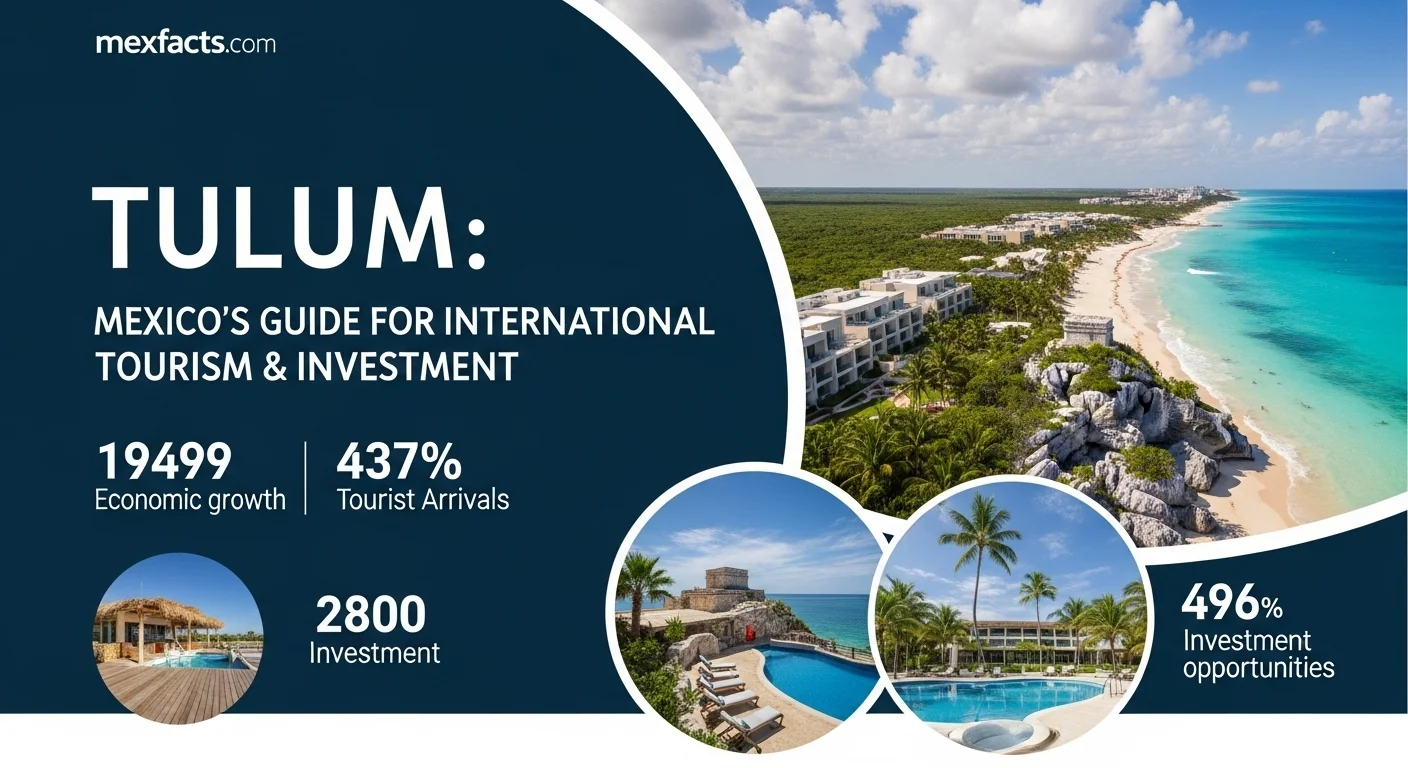
The Numbers Tell the Story: A Current Snapshot of Tulum, Mexico
To truly grasp Tulum's global standing, you need to look past the bohemian aesthetic and into the data that drives its economy. The last few years have been a whirlwind for Tulum, Mexico, with massive infrastructure projects and a shifting market creating a fascinating story told in numbers. For anyone looking to invest, do business, or simply visit, these statistics offer a clear-eyed view of where Tulum is and where it's headed.
Tourism and Occupancy: The Heartbeat of Tulum's Economy
Tourism is, without a doubt, the lifeblood of Tulum. The destination has seen incredible growth. By 2023, Tulum was welcoming over 3.5 million tourists a year, cementing its place as a jewel of the Yucatán Peninsula. The area boasts around 8,000 hotel rooms and a booming vacation rental market of about 5,000 properties. But the ground is shifting. While the post-pandemic era saw a huge surge in demand, the market is now more competitive. For summer 2024, hotel occupancy on the coast hovered between 50% and 60%. While the Tulum Hotel Association calls this 'acceptable,' it shows a dip from previous highs, signaling competition from other destinations and the rise of Airbnb.
However, the outlook for the end of 2024 is bright, with forecasts expecting occupancy to climb past 90% during the high season, boosted by the new infrastructure. The average hotel occupancy in 2023 was a solid 75%. In the short-term rental market, data from mid-2025 shows impressive year-round occupancy averaging 65-75%, and soaring to 85-95% during the peak season from December to April. This tells me the demand remains strong, especially for well-managed properties. It's also interesting to see who is coming; Tulum has become a favorite for Europeans, especially from Spain, who are drawn to its focus on wellness and community.
The Real Estate Market: A Tale of Explosive Growth and a Healthy Correction
The real estate story in Tulum has been one of incredible growth, now entering a phase of stabilization. For years, we saw property values climb by 10-20% annually. By mid-2025, the market is best described as more 'mature.' The wild gold rush days of guaranteed 20% returns may be over, but analysts now see more sustainable growth of 5-10% a year, which is a healthy sign.
Prices reflect this. A condo that averaged $235,419 USD in 2015 jumped to $340,755 USD by 2023. Today, a good two-bedroom condo in a prime spot like Aldea Zama typically lists for between $250,000 and $300,000 USD. The market is highly segmented. Luxury villas with beach access still command millions. However, the market for smaller condos, particularly studios, is facing an 'oversupply.' This has sparked a price war in rentals and led to more resale listings, creating real opportunities for savvy, long-term investors. Foreign buyers are a huge force here, making up an estimated 60% of all transactions, mostly from the USA, Canada, and Europe.
Investment yields are still a major draw. A well-placed Airbnb can generate an ROI of 8-15% annually. Projections suggest the overall rental yield could hit 8% by 2025, among the highest in Mexico. This profitability continues to fuel development, especially in emerging zones like Region 15 and La Veleta.
Game Changers: The Tulum Airport and Tren Maya
The biggest story for Tulum in the mid-2020s is its new infrastructure. The Felipe Carrillo Puerto International Airport (TQO), opened in December 2023, has completely changed the game. For decades, the road from Cancun to Tulum was the only way in for international travelers. The new airport, just south of the city, slashes travel time and establishes Tulum as its own international gateway.
The impact was immediate. Built to handle 5.5 million passengers annually, it blew past its first-year forecast, welcoming its one-millionth passenger in November 2024. This success is thanks to the 11 airlines that quickly set up routes, connecting Tulum to 15 national and international cities. For winter 2024, 6 new routes were announced, including a vital connection to Europe via Lufthansa. This isn't just great for tourism; it has sparked a development boom and raised property values in the surrounding areas.
Working in tandem with the airport is the Tren Maya, a massive project connecting the entire peninsula. With a station at the new airport, the train integrates Tulum into a wider regional circuit. This will likely attract different types of visitors and smooth out the seasonal highs and lows. Together, these projects represent a huge vote of confidence from the Mexican government in the future of Tulum.
Economic Impact and the Environmental Question
The economic growth is undeniable, with property values jumping 15% in 2023 alone. But this rapid expansion comes with serious challenges, especially for the environment. The issue of sargassum, the seaweed that washes ashore, remains a major concern that can affect tourism.
The strain on water and electricity, and the impact of construction, are critical issues. In response, there’s a growing push for sustainability. The Mexican government has designated a 3,486-hectare area as a Potential Sustainable Tourism Development Zone (ZDTS), a first for the country, to promote a 'green economy.' I see many new developments marketing themselves as 'eco-friendly,' preserving over 60% of the land and using solar power and rainwater harvesting. This trend towards sustainability is becoming a key part of the investment story, appealing to a new generation of eco-conscious buyers. Balancing explosive growth with sustainable development is the defining challenge—and opportunity—for Tulum, Mexico today.
The Horizon for Tulum: Future Outlook and Opportunities
The future of Tulum is at a fascinating turning point, shaped by massive new infrastructure, a maturing real estate market, and the crucial challenge of sustainable growth. The international outlook for Tulum, Mexico is filled with immense potential, but it's also complex. For anyone looking to invest, start a business, or simply be a part of its future, understanding these projections and challenges is key.
Projections for Growth: A New Era of Connection
Tulum's future is now forever tied to its new airport (TQO) and the Tren Maya. These aren't just conveniences; they are fundamentally reshaping the region's economy. Projections point to a steady rise in tourism. With a capacity of 5.5 million passengers and direct flights from Europe, the airport positions Tulum as a global destination in its own right, no longer in Cancún's shadow. This will likely bring in a more diverse, high-spending international crowd, fueling demand across the board.
The Tren Maya further brightens this outlook by making it easy to explore the entire Yucatán Peninsula from a base in Tulum. This should encourage longer stays and spread the economic benefits more widely. Some analysts predict residential property sales in Tulum will grow by 15% annually for the next three years, driven by international buyers. In fact, real estate transactions could double by 2027 as the market adapts to this new reality. The future of tourism here is set to be even more international, backed by solid federal investment.
Investment and Business Opportunities in a Maturing Market
While the explosive 'gold rush' phase might be settling, Tulum still offers a wealth of opportunities for those with a strategic, long-term vision.
- Beyond the Condo: The New Frontier in Luxury Living: The oversupply in standard condos has created a clear opening elsewhere. I've seen a real hunger for luxury villas and high-end, custom-built homes. Investors focusing on quality and premium finishes in well-located areas like Region 8 or quieter parts of La Veleta can find real value. The 'eco-luxury' niche is more powerful than ever. Developments that genuinely preserve the jungle, use renewable energy, and treat their water will command premium prices.
- Wellness and Authentic Experiences: The 'Tulum brand' is all about wellness. This goes far beyond yoga. There are huge opportunities for holistic health retreats, specialized spas, authentic Mayan healing ceremonies, and organic farm-to-table dining. As Tulum draws more discerning travelers, the demand for unique things to do in Tulum will only grow. Think private cenote tours, bespoke culinary adventures, and personalized wellness journeys.
- Hospitality and Professional Property Management: With thousands of vacation rentals, there's a critical need for high-quality, professional property management. Companies that can handle everything from marketing and pricing to maintenance and guest services will thrive in this competitive market. There's also still room for innovation among the best hotels in Tulum, especially in the boutique space, for those who can offer a truly unique experience.
- Incentive Tourism and Corporate Events: Tulum is quickly becoming a top destination for 'incentive tourism,' where companies reward their top employees with luxury trips. The fact that Tulum was chosen to host the Global Conference SITE 2025, a major event for the industry, shows its growing appeal for high-end corporate events. This opens up a lucrative market for hotels and tour operators.
The Mexican government, through agencies like the Ministry of Economy, continues to encourage foreign investment, offering frameworks and guidance to help navigate the process.
The Great Challenge: Balancing Growth and Preserving the Magic
The biggest challenge for Tulum's future is managing its own success. The very things that make it so special—its pristine beaches, fragile jungle, and sacred cenotes—are under threat from rapid, sometimes thoughtless, development. The soul of Tulum is at stake, and its prosperity depends on addressing these critical issues:
- Environmental Guardianship: The sargassum problem, coastal erosion, and protecting the Mesoamerican Reef are urgent priorities. Future success depends on implementing large-scale solutions and enforcing strict environmental rules on all development. The Sustainable Tourism Zone is a great step, but its enforcement will be the real test.
- Infrastructure Strain: The boom in population and tourism is straining essential services like water, sewage, and electricity. Significant investment in public infrastructure is needed now to avoid environmental crises and ensure a good quality of life.
- Real Estate Risks and Due Diligence: The condo oversupply is a risk for investors expecting quick, high returns. It's a buyer's market for resales, but thorough due diligence is crucial. A persistent risk in this region has been buying 'ejido' land (communally owned) that hasn't been properly privatized. From my experience, working with reputable legal counsel is non-negotiable.
- Preserving Authenticity: As Tulum grows, there's a risk of losing the bohemian magic that started it all. The future requires a delicate balance between modern amenities and the unique cultural vibe. Supporting local communities and ensuring they benefit from tourism is a vital part of this, promoting a responsible tourism that respects the culture and heritage.
In conclusion, Tulum's future is incredibly bright but demands a conscious, strategic approach. The opportunities are robust, especially for those who align with its evolving identity of sustainable luxury and authentic experiences. The journey from Cancun to Tulum is no longer just a drive; it's a passage to one of the world's most exciting frontiers. By facing its challenges head-on, Tulum can become a global model for sustainable tourism, preserving the magic that made the world fall in love with it. For more details on investment frameworks, resources from the Mexican Secretariat of Economy are an excellent starting point.
Expert Reviews
Alex R., Investor, Toronto ⭐⭐⭐⭐⭐
As someone considering a real estate investment in Mexico, this article was invaluable. It didn't just sell the dream; it gave me the real numbers and pointed out the risks, like the oversupply of condos and the importance of sustainable development. It felt honest and truly helpful.
Sofia G., Seasoned Traveler, Barcelona ⭐⭐⭐⭐
I first visited Tulum 15 years ago when it was just a sleepy beach town. This piece perfectly captures its incredible transformation. It's sad to see some of the old charm go, but the article explains the 'why' behind the growth with so much insight. It made me appreciate the new Tulum in a different way.
Ben Carter, Digital Nomad ⭐⭐⭐⭐⭐
Finally, a guide that gets it! I've been living in La Veleta for six months, and this article nails the different vibes of each neighborhood. The data on the new airport and the future projections confirmed what I'm seeing on the ground. A fantastic resource for anyone thinking of making the move.